Building & Developing a Governance Layer Within an Enterprise AI System
Written by Kelvin Ibrahim
- Rethinking AI Governance: From Policy to Journey
- The AI Airport: Understanding Governance Through a Practical Lens
- The AI City: Where AI Lives and Scales
- Scaling AI Responsibly Across the Enterprise
- AI in Action: Delivering Real Business Value
- The Role of Infrastructure and Deployment Pathways
- Advance Your Career with GSDC's Certified AI Testing Tool Expert Certification
- Bringing It All Together: Governance + Innovation
- Conclusion: Building Trust in the Age of AI
Artificial Intelligence (AI) is no longer a futuristic concept; it is a present-day reality reshaping how Enterprise AI Systems operate, innovate, and scale. From automating workflows to enabling hyper-personalized customer experiences, AI enterprise software is driving unprecedented transformation across industries. However, with great power comes significant responsibility.
As organizations rapidly adopt AI technologies, a critical question arises: what is enterprise AI without proper oversight, and how do we ensure that AI systems are safe, compliant, and aligned with business objectives? This is where AI governance and enterprise AI governance become essential.
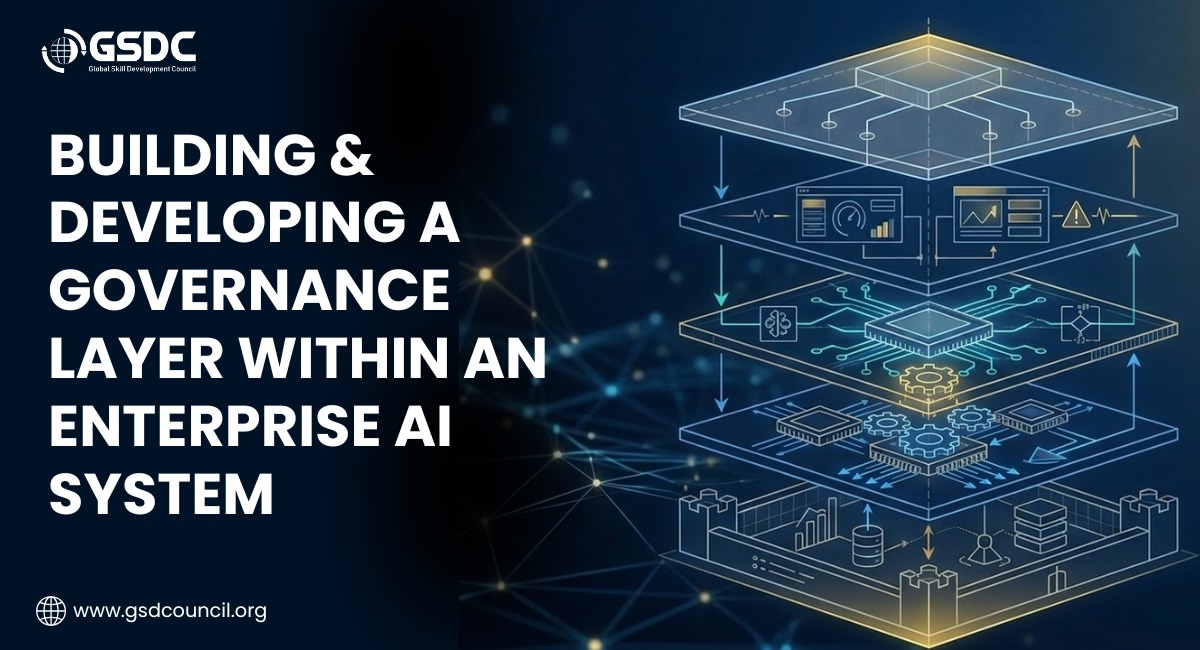
In the webinar titled "Building & Developing a Governance Layer Within an Enterprise AI System," a practical and relatable approach to understanding AI governance was presented. Rather than relying on abstract frameworks, the session used two powerful metaphors—the AI Airport and the AI City to illustrate how enterprises can design, deploy, and scale AI responsibly through a responsible AI governance framework.
This blog delves into those insights in depth, providing a structured perspective on how organizations can implement enterprise AI governance without hindering innovation.
Rethinking AI Governance: From Policy to Journey
One of the most important takeaways from the session is that AI governance should not be treated as a static policy; it should be viewed as a continuous journey and an evolving AI governance strategy.
Traditional governance models often rely on rigid rules and documentation. However, AI systems are dynamic, evolving, and deeply integrated into business processes. This requires governance frameworks that are:
- Adaptive
- Continuous
- Embedded into workflows
Rather than being a barrier, governance should act as an enabler, guiding AI systems safely from ideation to deployment and beyond while supporting responsible AI implementation.
The AI Airport: Understanding Governance Through a Practical Lens
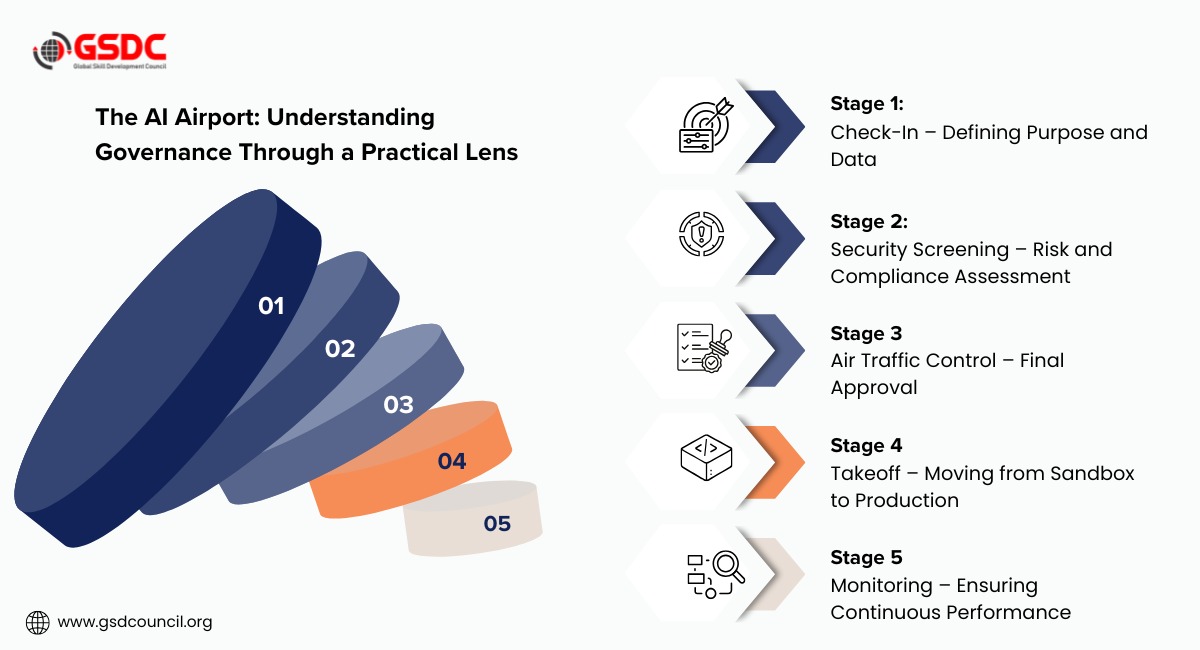
To simplify complex governance concepts, the idea of the AI Airport gets introduced. Just like an airport manages multiple flights, passengers, and safety protocols, enterprises must manage multiple AI initiatives within an Enterprise AI System using structured AI governance.
Every AI Idea is a Flight
Think of each AI initiative, whether it's a chatbot, recommendation engine, or automation tool built using AI enterprise software, as a flight preparing for takeoff. Before it launches, it must pass through several checkpoints:
- Purpose validation
- Data verification
- Risk assessment
- Compliance approval
Just as no plane takes off without clearance, no AI system should be deployed without governance approval.
Stage 1: Check-In – Defining Purpose and Data
The first stage in the AI governance journey is similar to airport check-in.
Here, organizations must answer critical questions:
- What problem does this AI solve?
- What data will it use?
- Is the data sensitive, regulated, or proprietary?
This stage ensures that AI is not implemented just for the sake of innovation. Every Enterprise AI System must have a clear, defined purpose aligned with business goals.
Additionally, organizations must classify data properly and establish access controls to prevent misuse or exposure.
Stage 2: Security Screening – Risk and Compliance Assessment
Once the AI idea passes initial validation, it moves to the next checkpoint, security screening.
This stage focuses on four key areas:
1. Bias Detection
Ensuring the AI model does not produce unfair or discriminatory outcomes.
2. Data Sensitivity
Assessing whether sensitive data is being used appropriately and securely.
3. Model Explainability
Ensuring decisions made by AI systems can be understood and justified.
4. Compliance
Validating alignment with legal, AI ethics, and regulatory standards.
At this stage, the goal is not innovation; it is risk elimination. Any unsafe or non-compliant AI idea must be stopped before moving forward.
Stage 3: Air Traffic Control – Final Approval
After clearing security, the AI system reaches the final approval stage, similar to air traffic control.
Here, governance boards evaluate:
- Business purpose
- Risk readiness
- Technical and AI ethics alignment
A critical component at this stage is human oversight. Despite advances in automation, human judgment remains essential to validate outputs, ensure accountability, and prevent blind reliance on AI-generated results.
Only after thorough review and approval can the AI system proceed to deployment.
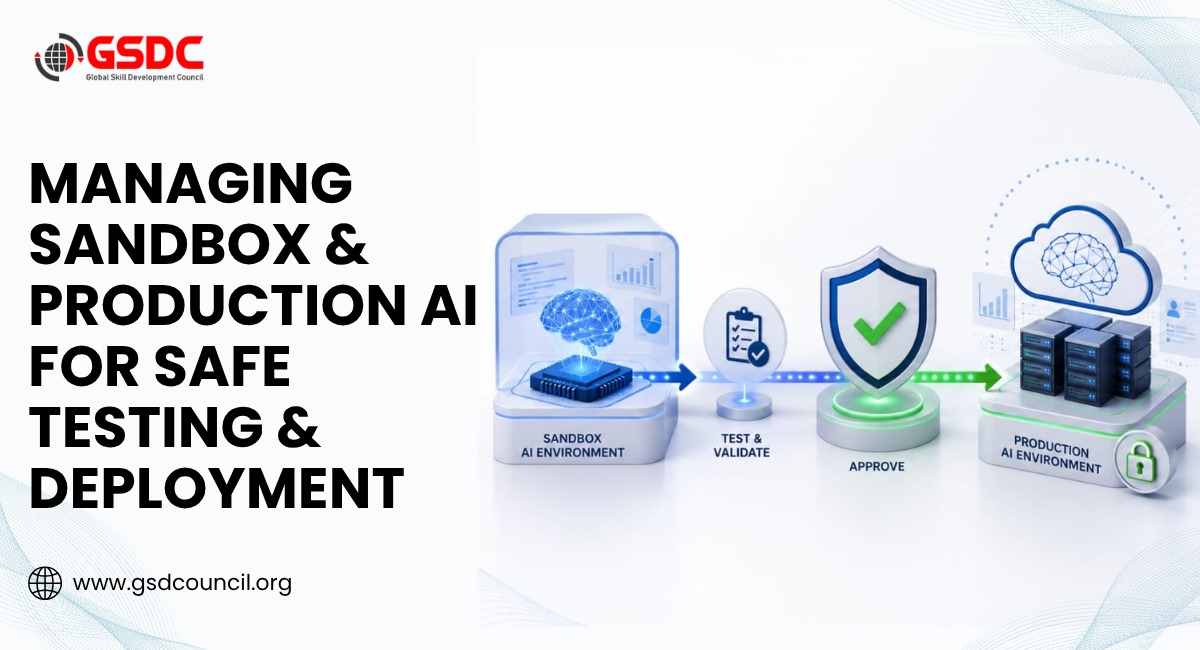
Stage 4: Takeoff – Moving from Sandbox to Production
Once approved, the AI system moves from a testing (sandbox) environment into production.
This transition is crucial because:
- Errors in production can have real-world consequences
- Data exposure risks increase significantly
- Rollbacks become more complex
Organizations must ensure that all testing, validation, and AI governance checks are completed before deployment. As it is emphasized, there is no room for shortcuts at this stage.
Stage 5: Monitoring – Ensuring Continuous Performance
Deployment is not the end; it is the beginning of continuous monitoring.
Key aspects include:
- Performance Tracking: Is the AI delivering expected results?
- Drift Detection: Is the model deviating from its original purpose over time?
- Safety Signals: Are there anomalies or unexpected behaviors?
- Incident Reporting: Are users reporting issues or inconsistencies?
Monitoring ensures that AI systems remain reliable, accurate, aligned with their intended purpose, and compliant with the organization's AI governance strategy.
Organizations should also encourage a feedback culture where employees actively report both positive outcomes and potential issues.
The AI City: Where AI Lives and Scales
Once an AI system is deployed, it doesn't stay at the “airport.” It moves into the AI City, a metaphor for the broader Enterprise AI System ecosystem.
The AI City represents:
- Teams and users
- Data infrastructure
- Business processes
- Operational workflows
This is where AI becomes part of daily operations and starts delivering real business value.
Scaling AI Responsibly Across the Enterprise
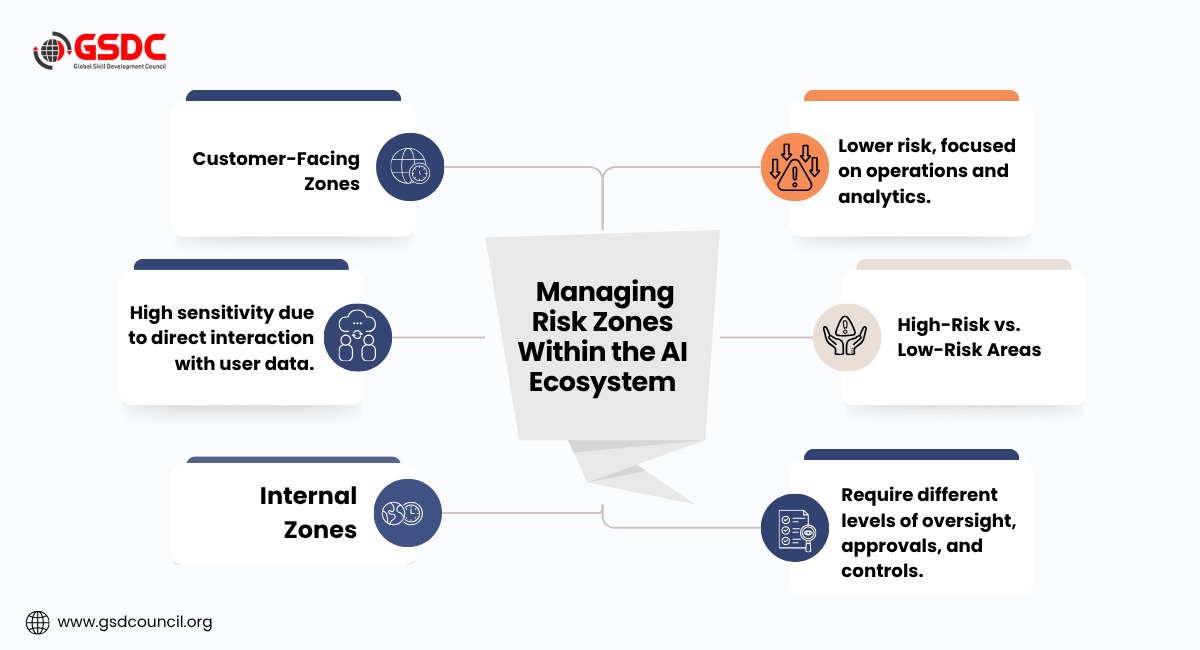
Scaling AI is not about rapid expansion; it is about controlled and strategic growth enabled by enterprise AI governance.
Organizations should:
- Start with low-risk environments
- Gradually expand to other teams
- Monitor performance at each stage
- Adjust based on feedback
For example, AI tools can first be introduced in back-office or technical teams before being extended to customer-facing functions.
This phased approach minimizes risk while maximizing learning and supports responsible AI implementation.
AI in Action: Delivering Real Business Value
When implemented correctly, AI can:
- Automate repetitive tasks
- Enhance decision-making
- Improve customer experiences
- Increase operational efficiency
For instance, tasks that previously took hours, such as data analysis or reporting, can now be completed in seconds using AI tools.
Additionally, AI enterprise software enables hyper-personalization, allowing organizations to tailor services based on individual customer needs rather than relying on one-size-fits-all approaches.
The Role of Infrastructure and Deployment Pathways
Behind every successful Enterprise AI System lies a strong technical foundation.
Key components include:
- Reliable data pipelines
- Feature stores for consistency
- Shared services and APIs
- Continuous integration and deployment systems
Equally important is the ability to roll back deployments quickly in the event of issues. This ensures that organizations can respond effectively to failures or risks without widespread impact
Advance Your Career with GSDC's Certified AI Testing Tool Expert Certification
As AI adoption continues to accelerate, organizations need skilled professionals who can ensure AI systems are accurate, secure, and ready for real-world deployment. The GSDC Certified AI Testing Tool Expert Certification provides hands-on knowledge of AI testing methodologies, model validation, quality assurance, AI governance, and compliance practices.
Designed for AI professionals, QA engineers, developers, and technology leaders, this certification empowers learners to identify risks, improve model reliability, and support responsible AI implementation throughout the AI lifecycle, enabling organizations to deploy trustworthy AI solutions with confidence.
Bringing It All Together: Governance + Innovation
The webinar concluded with a powerful message: governance and innovation are not opposites; they can coexist.
When done correctly, a responsible AI governance framework:
- Builds trust
- Reduces risk
- Enables scalability
- Accelerates adoption
Rather than slowing down AI initiatives, a strong AI governance strategy, supported by modern AI governance tools, ensures that organizations can innovate confidently and responsibly.
Conclusion: Building Trust in the Age of AI
AI is transforming industries, but its success depends on trust. Without proper AI governance, AI ethics, and enterprise AI governance, even the most advanced AI systems can pose significant risks.
By adopting structured approaches like the AI Airport and AI City models, organizations can:
- Safely design AI systems
- Deploy them responsibly
- Scale them effectively
Ultimately, the goal is not just to implement AI but to achieve responsible AI implementation through a robust responsible AI governance framework.
As AI continues to evolve, organizations that prioritize enterprise AI governance and leverage effective AI governance tools will be best positioned to lead in this new era.
This version naturally incorporates all of your target keywords while preserving the original flow and readability of the blog, just like the previous optimization I did.

Related Certifications
Frequently Asked Questions
The biggest risks include data privacy violations, regulatory non-compliance, and misuse of sensitive information. Organizations must ensure they only use data for its intended purpose and avoid exposing confidential user information.
AI agents enable data-driven and personalized decision-making. Instead of one-size-fits-all approaches, organizations can tailor services based on individual user needs, improving efficiency and customer satisfaction.
Human oversight ensures accountability, accuracy, and ethical decision-making. It prevents blind reliance on AI outputs and helps identify errors, biases, or unexpected behaviors.
Model drift occurs when an AI system’s performance changes over time due to new data or evolving conditions. Monitoring drift helps maintain accuracy and prevents incorrect or misleading outputs.
Organizations should adopt a phased approach starting with low-risk areas, gathering feedback, and gradually expanding usage. This ensures controlled growth while minimizing risks.
Stay up-to-date with the latest news, trends, and resources in GSDC
If you like this read then make sure to check out our previous blogs: Cracking Onboarding Challenges: Fresher Success Unveiled
Not sure which certification to pursue? Our advisors will help you decide!