How an AI Testing Professional Enhances Quality Assurance in Generative AI
Written by Matthew Hale
The emergence of generative AI technologies is revolutionizing industries across the world. Generative AI has introduced innovative approaches to interaction between technology and businesses and individuals, from the creative tools that can be used to create art and music to machine learning models that can generate human-like text.
The necessity of thorough AI testing and quality control has never been as important as now, as these systems become inseparable parts of Society.
An AI testing expert is also instrumental in the monitoring of generative AI systems to operate in a proper, effective, and ethical manner. These experts reduce risks, enhance AI-driven application performance, and establish trust in AI-based applications by conducting tests in AI models in a systematic, detailed manner.
This article discusses the importance of AI testers in the context of generative AI and the ways they improve processes of quality assurance in order to promote ethical and effective implementation of such technologies.
The Role of AI Testing in Generative AI Development
Generative AI, which includes technologies like GPT-3, DALL-E, and similar models, relies on sophisticated machine learning algorithms that generate content based on the input data they receive.
These systems are designed to produce outputs that mimic human-like creativity, such as text generation, image creation, and even video production.
However, the complexity and unpredictability of generative AI models pose unique challenges for developers and users alike.
This is where AI testing comes into play. AI testing refers to the process of evaluating AI systems for performance, accuracy, reliability, security, and ethical concerns.
In the context of generative AI, testing professionals ensure that the AI models produce accurate and contextually appropriate outputs while minimizing biases, errors, and harmful consequences.
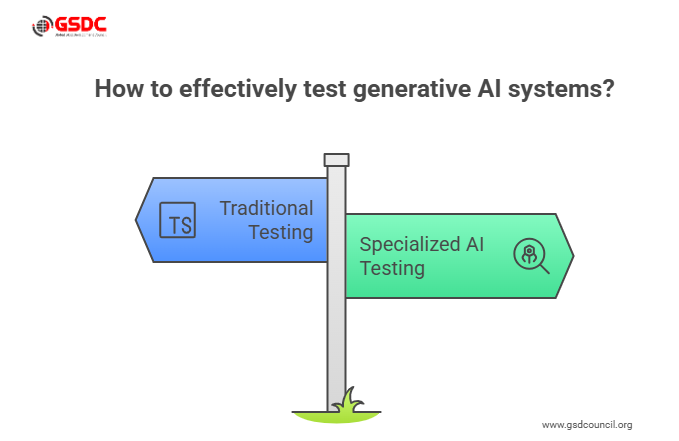
Testing AI systems requires more than just traditional software testing methodologies. The non-deterministic nature of generative AI means that outputs can vary significantly even for the same input, making it challenging to predict and verify the outcomes.
This complexity demands a specialized set of skills and knowledge, particularly when it comes to how to test AI systems effectively.
Key Skills for an AI Testing Professional
To understand the value AI testing professionals bring to quality assurance, it's important to consider the skills and tools they employ. In 2025, there is a marked emphasis on AI-related skills for testing professionals.
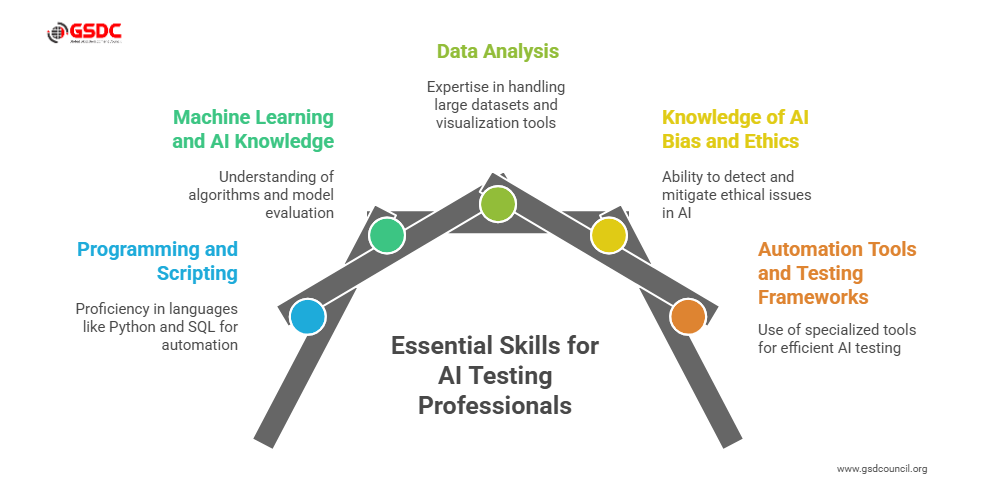
The rapid evolution of AI technologies requires that AI testing experts possess a combination of technical proficiency, domain expertise, and analytical capabilities. Here are some of the most important skills:
- Programming and Scripting: AI testing professionals need a strong foundation in programming languages like Python, R, and SQL, as well as scripting skills to automate tests and handle large datasets effectively.
- Machine Learning and AI Knowledge: A deep understanding of machine learning algorithms and AI technologies is crucial. Testing professionals need to be able to evaluate how a model’s training data influences its behavior and performance.
- Data Analysis: AI testing relies heavily on data analysis, so professionals must be adept at working with large volumes of data and using tools like Tableau, Power BI, and other data visualization platforms.
- Knowledge of AI Bias and Ethics: With generative AI models producing content that can be biased or ethically questionable, testing professionals must be skilled at detecting and mitigating issues related to fairness, transparency, and accountability.
- Automation Tools and Testing Frameworks: To efficiently handle AI testing at scale, professionals use automated testing frameworks and specialized AI testing tools designed for evaluating machine learning models.
The Importance of AI Testing Certification
As AI technologies continue to advance, the demand for skilled AI testing professionals has surged. AI testing certification has become a valuable credential for those looking to demonstrate their expertise in the field.
Certifications provide a standardized measure of proficiency, assuring employers and clients that a tester has the necessary skills to evaluate AI systems accurately and effectively.
Several organizations and platforms offer AI testing certification programs. These programs cover a broad spectrum of topics, including machine learning principles, AI model evaluation, and ethical testing practices.
By earning such certifications, professionals can stay current with emerging trends and demonstrate their expertise in AI testing services.
How AI Testing Enhances the Development of Generative AI
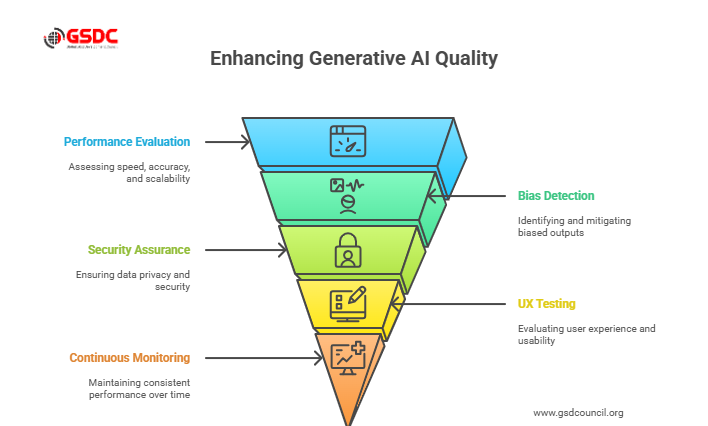
Generative AI systems are at the forefront of technological innovation, but they are not without their challenges.
Here’s how an AI testing professional enhances the development of these systems and ensures their quality:
- Performance Evaluation and Optimization: Generative AI models are often complex and resource-intensive. AI testing professionals evaluate the performance of these models across various metrics, such as speed, accuracy, and scalability. They ensure that the AI model produces quality output without overloading resources or slowing down performance.
- Bias Detection and Mitigation: One of the most significant risks in generative AI is the potential for biased outputs. AI models are trained on large datasets, and if those datasets contain biases, the model can generate biased content. An AI testing professional uses techniques such as fairness audits and data analysis to detect and mitigate bias in the outputs, ensuring that generative AI systems align with ethical standards and produce fair content.
- Security and Privacy Assurance: Generative AI models can sometimes unintentionally generate harmful content or reveal sensitive information. AI testing professionals evaluate these risks and implement security measures to prevent the misuse of AI systems. They also ensure that the AI models adhere to data privacy regulations, safeguarding user data and preventing security breaches.
- User Experience (UX) Testing: For generative AI to be effective, it must meet the needs of its users. AI testing professionals conduct user experience testing to ensure that AI-generated outputs are coherent, relevant, and useful. They assess the usability of AI-powered interfaces and make recommendations for improving user interaction with the system.
- Continuous Monitoring and Feedback: AI models are constantly evolving as they learn from new data. AI testing professionals help implement continuous testing and feedback loops to ensure that the model's performance remains consistent over time. This ongoing evaluation is critical for generative AI systems deployed in real-world environments, where data can shift and models must adapt.
AI Testing Certification and Career Growth
With more and more industries undergoing AI transformation, there is a swift increase in the need for people with AI testing expertise. GSDC AI Testing Professional Certification is an internationally accredited qualification that confirms competency in this highly demanded area.
As the AI is expected to generate more than 4 million new employment opportunities by 2024, with 3 million of them directly in the field of AI testing, certified specialists are in demand.
This certification empowers candidates with the advanced skills to test and validate AI systems, to ensure that they meet high standards of accuracy, performance, and ethical standards. Professionals who have been issued the certification stand in a better position to enhance the responsible introduction of AI technologies in the spheres.
Certified AI testing workers may also earn up to $135,000 each year in addition to job security, and open the doors to the exciting world of work. The GSDC AI Testing Certification shows an approach to learning the AI testing methods and making a great contribution to the success of the organization.
AI Testing Services for Generative AI Models
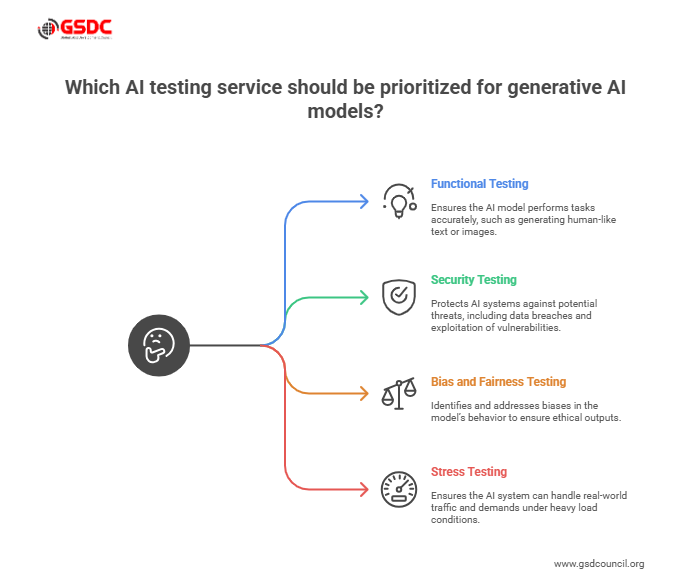
In the world of generative AI, AI testing services play an essential role in the deployment and maintenance of AI systems.
Many companies now offer specialized AI testing services, which include end-to-end testing solutions for generative AI models.
These services help organizations test their AI systems in a controlled environment before they are deployed, ensuring that they function as expected and meet performance and security requirements.
Some of the most prominent AI testing services include:
- Functional Testing: This includes evaluating whether the AI model performs the intended tasks accurately through automated functional testing, such as generating human-like text or images.
- Security Testing: Ensuring that AI systems are secure and protected against potential threats, including data breaches and exploitation of model vulnerabilities.
- Bias and Fairness Testing: Identifying and addressing biases in the model’s behavior to ensure ethical outputs.
- Stress Testing: Testing the AI system under heavy load conditions to ensure that it can handle real-world traffic and demands.
The Future of AI Testing in Generative AIThe future of AI testing looks bright, especially as generative AI continues to make waves across industries.
As AI technologies evolve, so too will the strategies and tools used for testing. AI testing professionals will need to stay ahead of the curve by embracing the latest advancements in AI, automation, and analytics.
Key trends to watch in AI testing include the integration of AI-powered testing tools, the use of AI-driven forecasting to predict system performance, and the increasing emphasis on ethical AI practices.
Additionally, as AI becomes more integrated into learning and development (L&D) processes, the demand for AI testers with expertise in these areas will only grow.

Conclusion
The role of AI testing professionals is considered essential in order to achieve the best quality, security, and ethical responsibility standards in the generative AI model development.
Their efforts contribute to enabling companies to introduce efficient, reliable, and bias-free AI systems, which is why they cannot be ignored in the modern, rapidly improving AI environment.
With AI technology moving forward, AI testing will therefore be front and center in ensuring trust within AI-powered systems, and therefore, the AI testing services and AI testing certification will be important for future-proofing any AI-based initiative.
With constant testing and certification, coupled with a focus on innovation, AI testing professionals will keep defining the future and effectiveness of the generative AI systems in the years to come.
FAQs:
- How to test AI systems for accuracy and performance?
This is one of the most common questions as organizations strive to ensure that their AI models perform well in real-world scenarios.
- What are the best practices for testing AI models?
This question helps guide AI professionals and developers on how to implement effective testing practices to ensure their AI systems are reliable and efficient.
- What tools and techniques are used to test AI systems?
A common question for those looking to understand the software and techniques available for AI system testing.
- How to test AI systems for bias and fairness?
Given the growing concerns around AI bias, this question is frequently searched by those looking to ensure their AI systems produce fair and unbiased results.
- What is the role of AI testing in machine learning applications?
This helps explain the relationship between AI testing and machine learning, which is crucial for validating and improving AI performance.
- How to ensure the security of AI systems during testing?
With AI becoming an integral part of many industries, ensuring that AI systems are secure during development and testing is crucial.
- How to test AI systems in real-world environments?
Testing AI systems in live environments presents unique challenges, and this question addresses how professionals can effectively handle them.
- What certifications are available for AI testing professionals?
A highly searched query by those looking to enhance their qualifications and career prospects in AI testing.
- What are the challenges of testing AI systems?
This addresses the complexities and obstacles encountered during AI testing, such as unpredictability in outputs and the difficulty in ensuring performance across diverse datasets.

Related Certifications
Stay up-to-date with the latest news, trends, and resources in GSDC
If you like this read then make sure to check out our previous blogs: Cracking Onboarding Challenges: Fresher Success Unveiled
Not sure which certification to pursue? Our advisors will help you decide!