The Trust Equation: Governance, Risk, Compliance and the Future of AI
Written by Ahmed El Wessimy
- Why Trust Matters More Than Ever in AI
- Understanding the AI Trust Equation
- Governance: The Backbone of Responsible AI
- Security and Privacy Cannot Be an Afterthought
- Why Human Oversight Still Matters
- AI Risk Management Requires a New Mindset
- Governance Frameworks Supporting Responsible AI
- A Practical Roadmap for AI Governance
- Lead Trusted AI with AI GRC Expertise
- Conclusion
Artificial Intelligence has evolved from an emerging technology into a strategic business capability, transforming how organizations operate, innovate, and compete. From banking and healthcare to manufacturing, retail, education, and government, businesses are increasingly integrating AI into their operations to automate processes, enhance customer experiences, and make faster, data-driven decisions. As organizations embrace this transformation, understanding what is the future of AI and preparing for compliance and the future of AI have become top priorities for business leaders worldwide.
As AI adoption continues to accelerate, one question is becoming more important than ever: How can organizations build trust in AI while continuing to innovate responsibly? This challenge has elevated Governance, Risk, and Compliance (GRC) from a traditional business function to a critical pillar of AI strategy. Understanding what is AI governance and implementing a robust AI governance framework are no longer optional—they are essential for ensuring AI systems remain transparent, secure, accountable, and aligned with organizational goals. Following proven AI governance principles and AI governance best practices helps organizations build confidence while meeting evolving regulatory expectations.
This webinar explored The Trust Equation: Governance, Risk, Compliance and the Future of AI, highlighting how organizations can establish trust by embedding governance, risk management, and compliance into every stage of the AI lifecycle. The discussion demonstrated practical strategies for balancing innovation with accountability while reinforcing why compliance and the future of AI will define responsible, secure, and sustainable AI adoption in the years ahead.
Why Trust Matters More Than Ever in AI
People hesitated to purchase products online because they questioned whether payments were secure or whether products would actually arrive. Today, online shopping is a normal part of daily life because trust was gradually established through secure systems, regulations, and consistent customer experiences.
AI is following a similar journey.
Modern AI systems are increasingly capable of making recommendations, drafting emails, planning travel, approving transactions, analyzing medical data, and supporting business operations. As AI agents become more autonomous, organizations must answer a fundamental question: How can organizations build trust while implementing an AI governance framework based on strong AI governance principles and an effective AI risk management framework?
Can users truly trust AI decisions?
Trust becomes especially important when AI begins making decisions that affect finances, healthcare, hiring, compliance, or customer experiences.
If an AI assistant books the wrong flight, denies an eligible loan applicant, or exposes confidential business information, users will not blame the algorithm they will blame the organization deploying it.
That is why trust must be intentionally designed into every AI system.
Understanding the AI Trust Equation
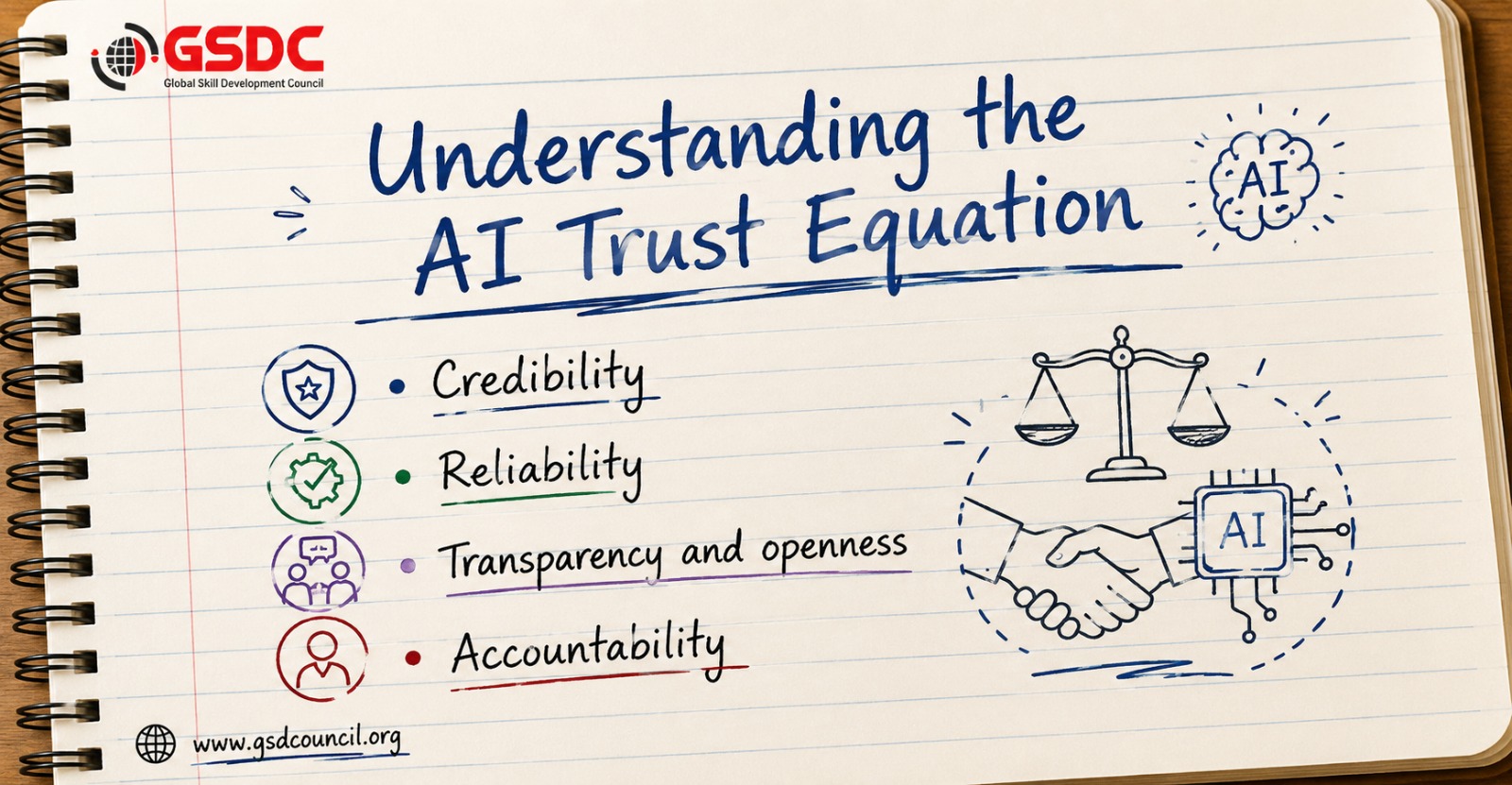
Credibility
Users must believe that AI produces accurate and dependable information based on trustworthy data sources rather than unreliable or manipulated information.
Reliability
AI should deliver consistent performance instead of producing unpredictable or contradictory outputs for similar situations.
Transparency
Organizations should understand how AI reaches its conclusions. While complex models may not always be fully explainable, sufficient transparency must exist to justify critical business decisions.
Accountability
Perhaps the most important principle discussed during the webinar was accountability.
When AI makes a mistake, someone must remain responsible.
Organizations cannot simply attribute failures to algorithms. Every AI system should have clearly defined owners who are accountable for its operation, outputs, and business impact.
Governance: The Backbone of Responsible AI
AI governance extends far beyond documentation or regulatory compliance.
It creates the structure that ensures AI systems operate safely, ethically, and consistently throughout their lifecycle.
The webinar outlined several foundational governance components organizations should establish before deploying AI at scale.
Build an AI Inventory
Many organizations unknowingly create Shadow AI, where employees independently use AI tools without organizational approval.
This introduces significant security and compliance risks.
A comprehensive AI inventory helps organizations understand:
- Which AI tools are being used
- Which departments are using them
- Their business purpose
- Associated data sources
- Assigned owners
- Risk classification
Without this visibility, governing AI becomes nearly impossible.
Establish Strong Data Foundations
AI quality depends entirely on data quality.
Poor-quality data inevitably produces poor AI outcomes.
Organizations should therefore focus on:
- Identifying trusted data sources
- Monitoring data quality
- Validating information
- Tracking data lineage
- Classifying sensitive information
The familiar principle remains true:
Garbage In = Garbage Out (GIGO).
Even the most advanced AI model cannot compensate for inaccurate or poorly governed data.
Manage the AI Model Lifecycle
AI governance must continue long after deployment.
Every model should follow a structured lifecycle that includes:
- Model registration
- Validation
- Testing
- Deployment approval
- Continuous monitoring
- Drift detection
- Retraining
- Retirement or rollback
Without ongoing monitoring, AI systems may gradually produce inaccurate or biased outputs as business conditions evolve.
Security and Privacy Cannot Be an Afterthought
One of the webinar's strongest messages was that AI introduces entirely new cybersecurity and privacy challenges.
AI systems often process:
- Customer information
- Employee records
- Financial transactions
- Medical data
- Strategic business information
Organizations must therefore ensure:
- Data encryption
- Secure storage
- Access control
- Identity management
- Authentication
- Privacy protection
- Secure communication between AI systems
Since many AI platforms connect to external services or public internet resources, organizations must carefully evaluate where their data travels and how it is protected.
Why Human Oversight Still Matters
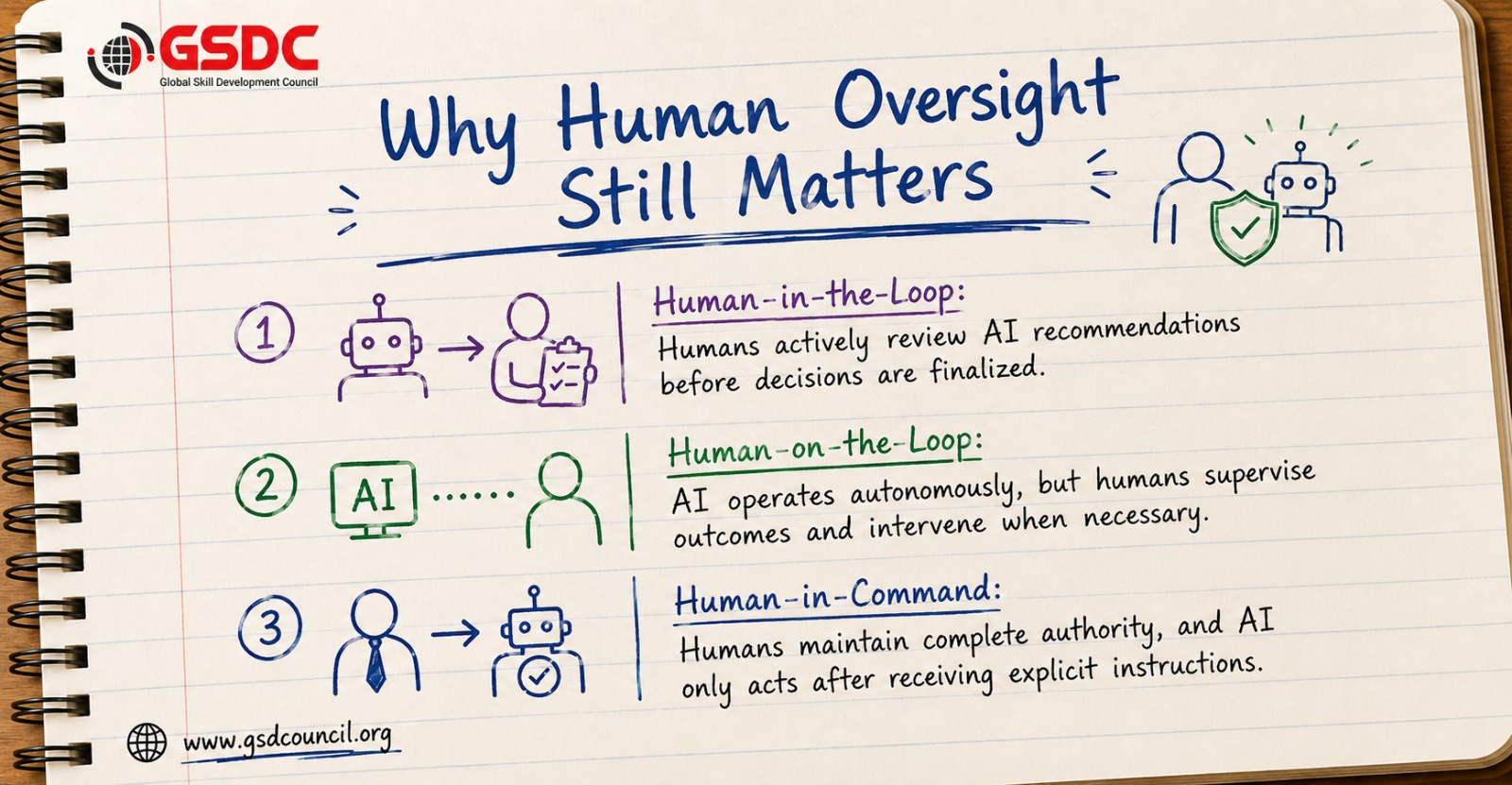
Despite rapid advances in autonomous AI agents, the webinar emphasized that humans must remain involved in critical decision-making.
Three common governance approaches were discussed.
Human-in-the-Loop
Humans actively review AI recommendations before decisions are finalized.
Human-on-the-Loop
AI operates autonomously, but humans supervise outcomes and intervene when necessary.
Human-in-Command
Humans maintain complete authority, and AI only acts after receiving explicit instructions.
For high-risk use cases such as banking, healthcare, legal decisions, or compliance activities, maintaining meaningful human oversight remains essential.
AI should augment human expertise not replace accountability.
AI Risk Management Requires a New Mindset
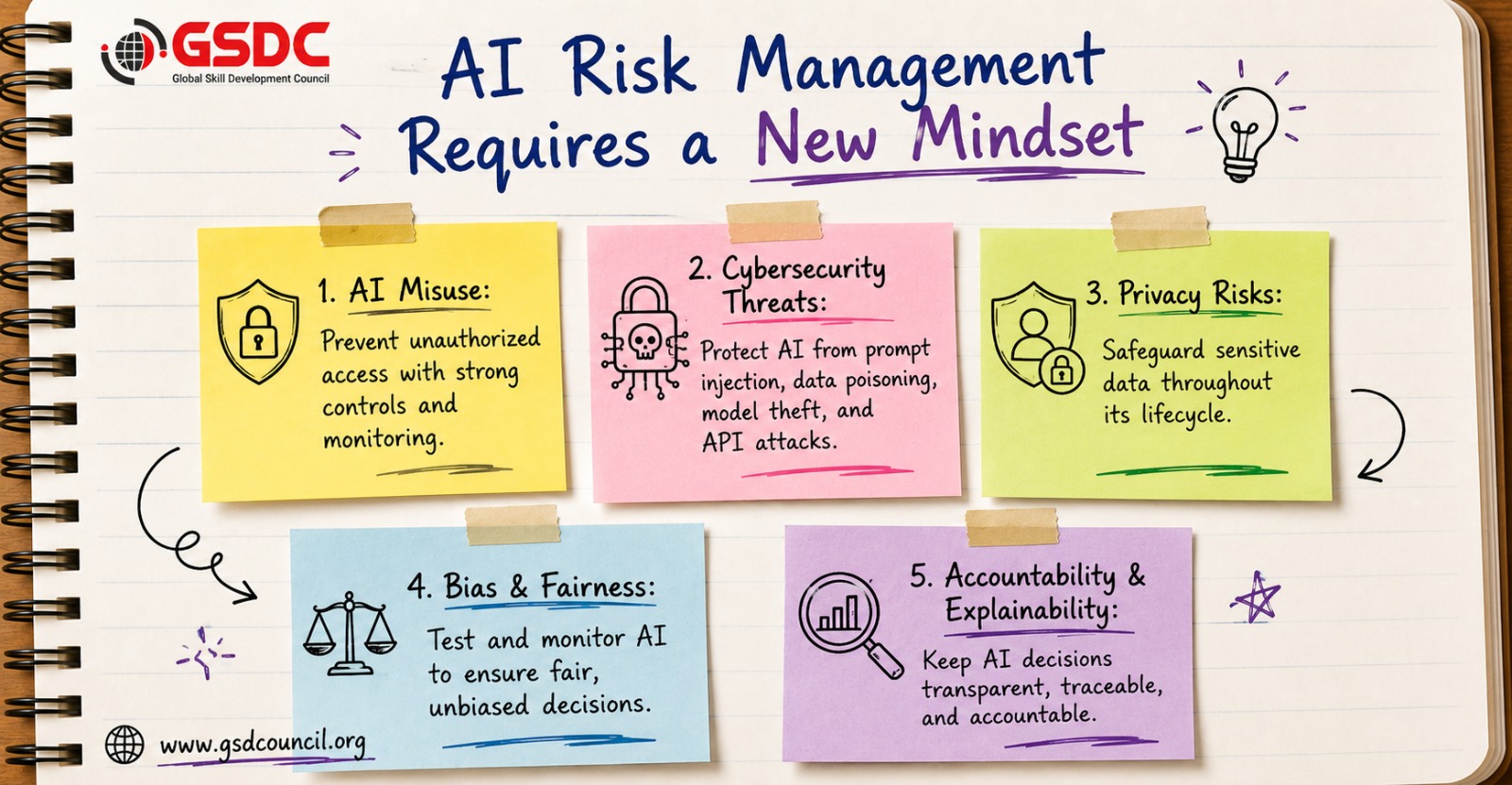
Traditional IT risk management does not fully address AI-specific risks.
Organizations must consider entirely new categories of risk.
AI Misuse
Employees or external actors may intentionally misuse AI tools, leading to unauthorized actions or exposure of sensitive information.
Proper access controls and monitoring become essential.
Cybersecurity Threats
AI systems themselves can become attack targets.
Threats include:
- Prompt injection
- Data poisoning
- Model theft
- Unauthorized API access
- Adversarial attacks
Protecting AI requires both cybersecurity expertise and governance controls.
Privacy Risks
AI systems often accumulate extensive knowledge about users' preferences, communications, travel, health, and work.
Organizations must carefully govern how this information is collected, stored, processed, and shared.
Bias and Fairness
AI decisions should never discriminate unfairly against individuals or groups.
Before deployment, organizations should rigorously test bias models and continuously monitor fairness throughout production.
The webinar highlighted examples where AI incorrectly rejected eligible loan applicants, demonstrating how biased decisions can quickly damage customer trust and organizational reputation.
Accountability and Explainability
Every AI decision should be traceable.
Organizations need documented ownership, decision records, governance processes, and clear accountability structures.
Responsibility may be shared across teams, but accountability should always rest with a clearly identified owner.
Governance Frameworks Supporting Responsible AI
Organizations do not need to build governance strategies from scratch. Several internationally recognized frameworks already provide guidance.
These include:
- ISO/IEC 42001 for AI Management Systems
- NIST AI Risk Management Framework (AI RMF) for managing AI risks throughout the lifecycle
- OECD AI Principles for promoting human-centered, trustworthy, and ethical AI
- EU AI Act, which introduces a risk-based regulatory approach for AI systems
Although regulations continue to evolve, these frameworks consistently emphasize the same core principles:
- Transparency
- Accountability
- Risk management
- Human oversight
- Documentation
- Continuous monitoring
- Responsible governance
Organizations that begin aligning with these principles today will be far better prepared for future regulatory requirements.
A Practical Roadmap for AI Governance
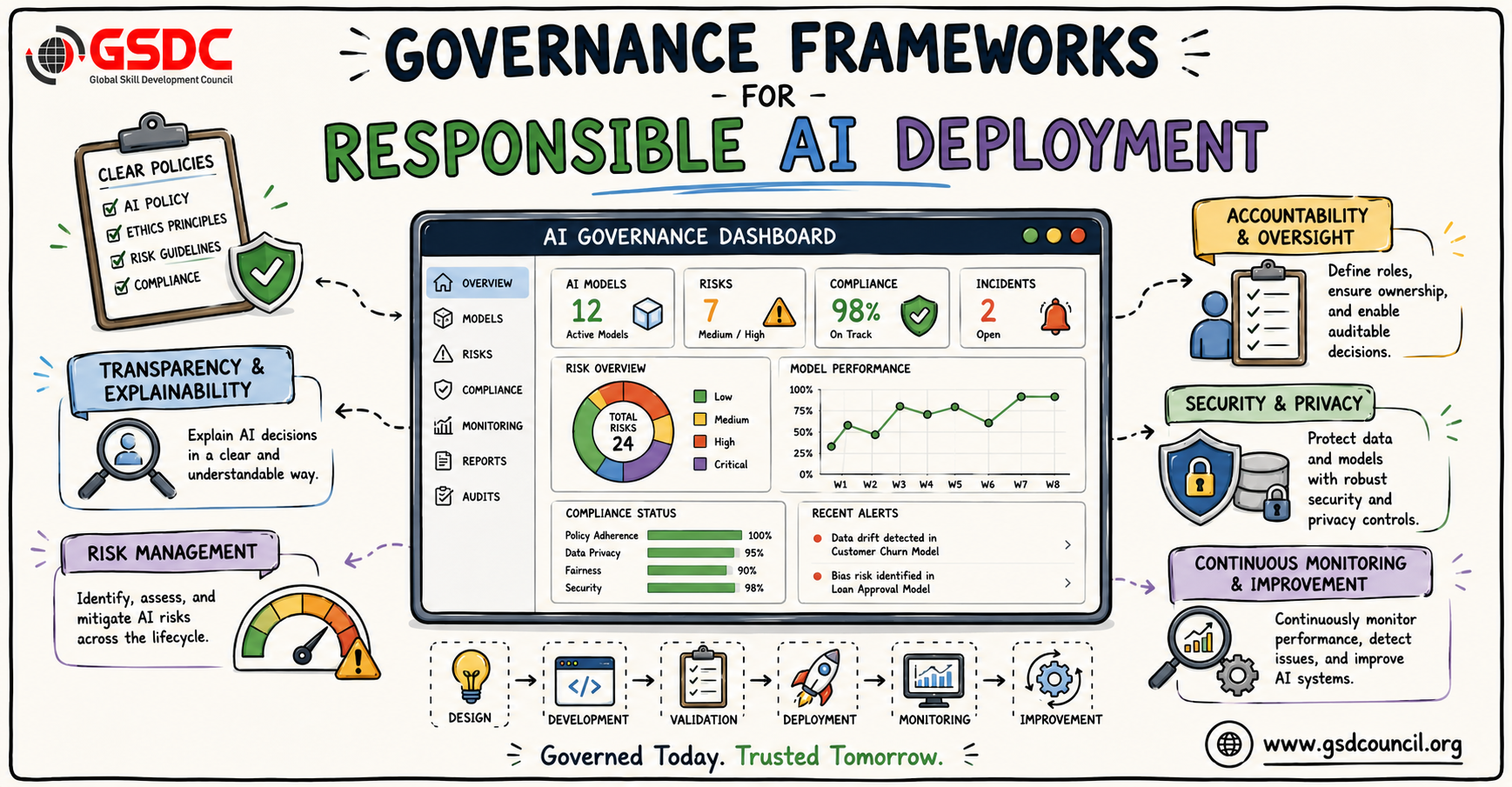
Rather than implementing AI without structure, organizations should follow a phased AI governance framework.
The webinar suggested a practical sequence:
- Discover all AI systems across the organization and build a complete inventory.
- Identify potential risks related to security, privacy, bias, compliance and AI, and business impact.
- Map regulatory requirements to organizational policies and AI controls.
- Implement governance mechanisms, including documentation, access controls, explainability measures, and oversight processes aligned with AI governance best practices.
- Continuously audit AI systems, monitor performance, and improve governance over time using an AI risk management framework.
This iterative approach enables organizations to scale AI responsibly while minimizing operational and compliance risks.
Lead Trusted AI with AI GRC Expertise
GSDC’s Certified AI GRC Professional Certification is designed to help professionals build expertise in AI governance, risk management, compliance, and responsible AI adoption.
The Certified AI GRC Professional Certification provides comprehensive training on AI governance frameworks, AI lifecycle management, AI risk assessments, governance policies, and internationally recognized standards such as ISO/IEC 42001 and the NIST AI Risk Management Framework (AI RMF).
By combining practical knowledge with real-world AI GRC use cases, the certification prepares learners to establish effective governance strategies, ensure regulatory compliance, and enable the secure, ethical, and trustworthy deployment of AI across organizations.
Conclusion
Artificial intelligence is reshaping how organizations operate, compete, and innovate. Yet its long-term success depends not only on technological capability but also on the confidence users place in its decisions. As organizations prepare for compliance and the future of AI, implementing a robust AI governance framework is becoming essential.
Governance, Risk, and Compliance provide the structure needed to ensure AI systems remain transparent, secure, ethical, and accountable throughout their lifecycle. Organizations that invest in AI inventories, strong data foundations, human oversight, security controls, continuous auditing, and an AI risk management framework will be better positioned to adopt AI responsibly while meeting evolving regulatory expectations.
Ultimately, the future of AI is not defined solely by smarter models it is defined by trusted AI. Organizations that make trust a core design principle today will be better prepared for tomorrow's increasingly autonomous AI landscape.

Related Certifications
Frequently Asked Questions
Trust ensures that AI systems produce reliable, transparent, and accountable outcomes. Organizations that implement an effective AI governance framework and follow AI governance principles reduce operational risks, improve customer confidence, and support responsible innovation.
Shadow AI refers to employees using AI tools without organizational approval or governance. It can expose sensitive data, create compliance and AI challenges, increase cybersecurity risks, and make AI usage difficult to monitor.
What is AI governance? It extends beyond managing technology infrastructure. It includes model lifecycle management, bias testing, explainability, human oversight, ethical considerations, continuous monitoring, and accountability for AI-driven decisions.
Widely adopted frameworks include ISO/IEC 42001, the AI risk management framework (NIST AI RMF), the OECD AI Principles, and the EU AI Act, all of which guide governing AI responsibly.
Yes. AI governance can be integrated into existing enterprise governance and GRC structures by extending current policies, controls, risk management framework processes, and audit practices to address AI-specific risks such as bias, explainability, data governance, and autonomous decision-making.
Stay up-to-date with the latest news, trends, and resources in GSDC
If you like this read then make sure to check out our previous blogs: Cracking Onboarding Challenges: Fresher Success Unveiled
Not sure which certification to pursue? Our advisors will help you decide!