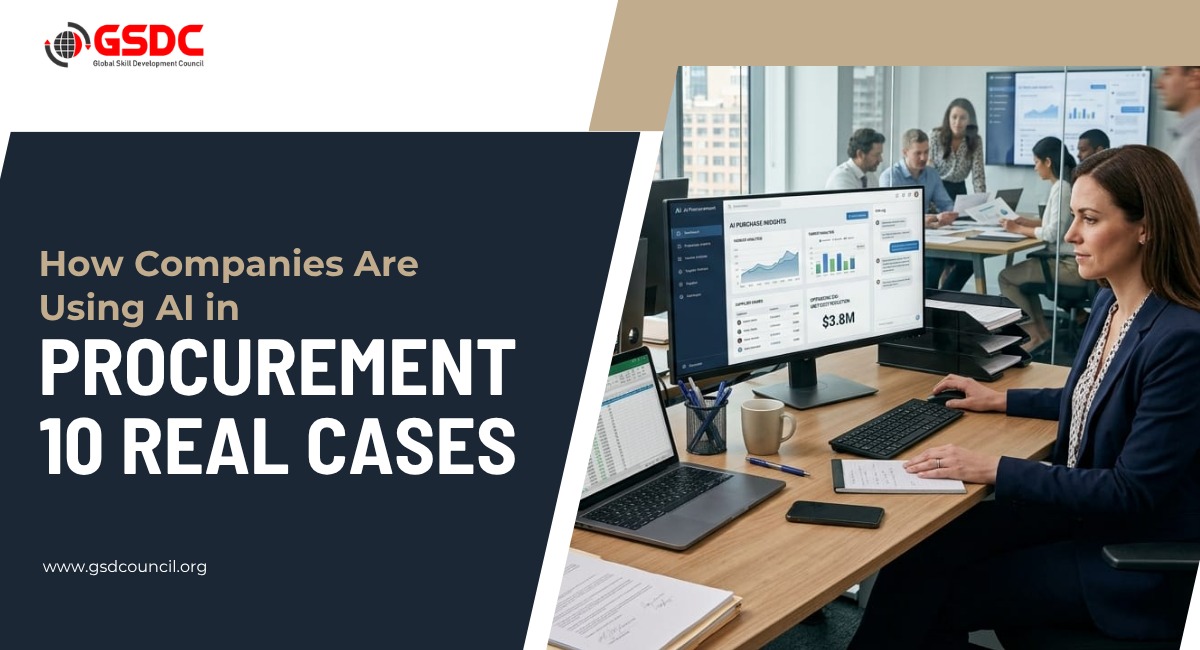
How Companies Are Using AI in Procurement: 10 Real Cases
Written by Matthew Hale
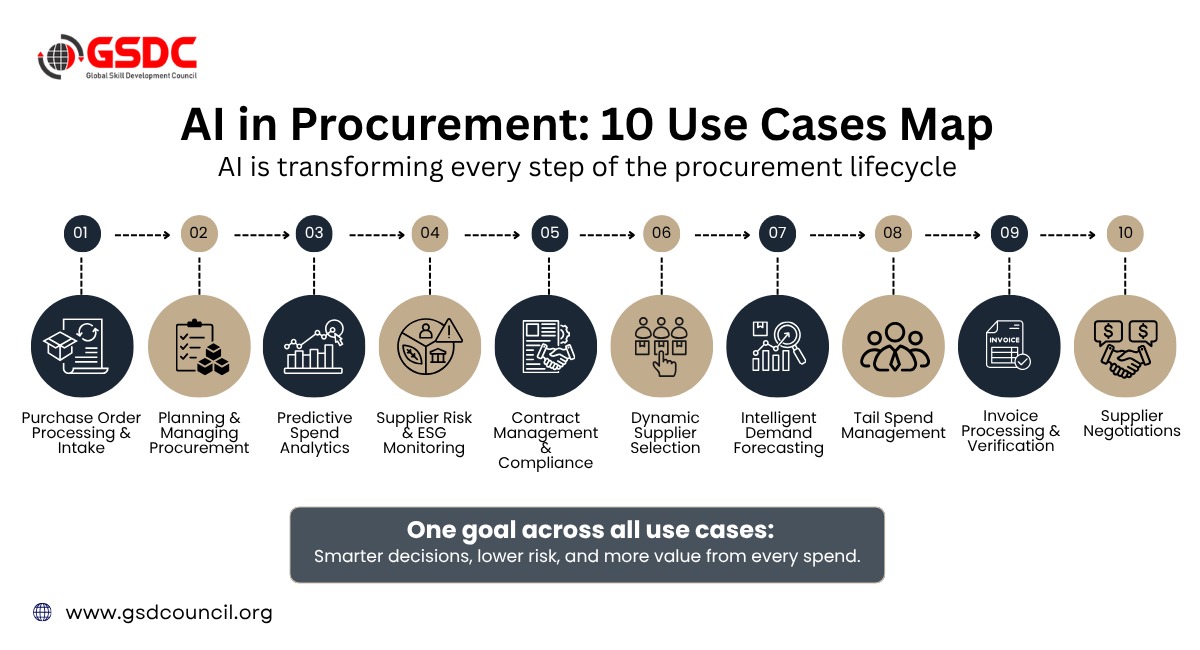
- 1. Purchase Order Processing and Intake - OpenAI
- 2. Planning and Managing Procurement Work: Anthropic
- 3. Predictive Spend Analytics: Chevron
- 4. Supplier Risk and ESG Monitoring: H&M
- 5. Contract Management and Compliance: Pfizer
- 6. Dynamic Supplier Selection: Samsung
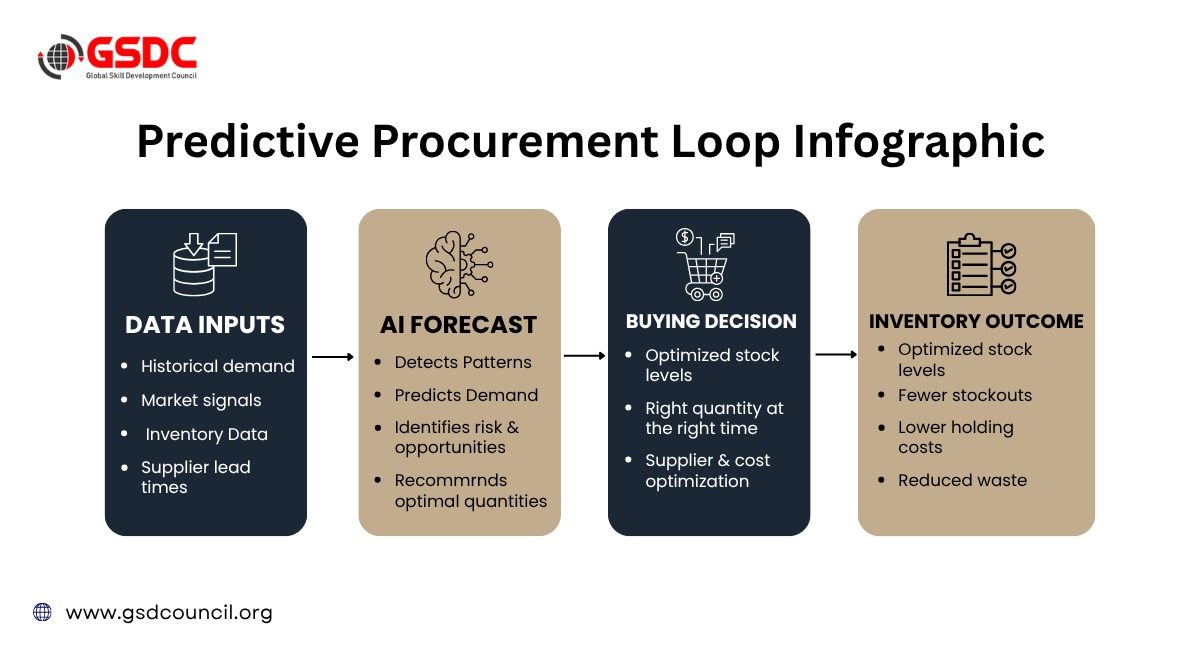
- 7. Predictive Demand Forecasting: Costco
- 8. Tail Spend Management: Walmart and Maersk
- 9. Invoice Integrity and Fraud Prevention: GameStop
- 10. Supplier Negotiations at Scale: Honeywell
- The Real Pattern Across All Ten
- Where This Leaves Procurement Professionals
- The Bottom Line
Most "AI in procurement" content describes what the technology can do. This one covers what it's already done in ten use cases, each anchored to a real company and a result that's been publicly reported. The evidence isn't uniform: some of these are independently confirmed across multiple sources, others rely on a single report, and one is framed as an operating model rather than a hard number. Each is labeled accordingly, so you can weigh them for what they actually are rather than treat all ten as equally airtight.
1. Purchase Order Processing and Intake - OpenAI
- The problem: Manual, repetitive intake tasks - routing requests, validating details, checking policy compliance - were slowing OpenAI's procurement team during a period of rapid company growth.
- The deployment: More than 10 specialized AI agents, built on Zip's orchestration platform, now handle this layer of the process, including a dedicated Intake Validation Agent that checks requests before they ever reach a human reviewer.
- The result: OpenAI has reported saving around 1,400 hours annually from that one agent alone.
2. Planning and Managing Procurement Work: Anthropic
- The problem: Scaling a procure-to-pay function to keep pace with roughly 5x headcount growth, without procurement becoming the bottleneck that slows the rest of the company down.
- The deployment: Anthropic partnered with Zip to replace fragmented, ad hoc purchasing processes with a structured, AI-enabled platform built to absorb growth rather than requiring a proportional increase in procurement staff.
- The result: This one is an operational outcome, not a measurable stat; there's no published percentage or hours-saved figure. What's documented is the design goal itself: a procure-to-pay function built to scale with the business rather than with headcount, which is worth including precisely because it shows what "success" looks like before the metrics catch up.
3. Predictive Spend Analytics: Chevron
- The problem: In a volatile commodity and energy market, Chevron needed faster supplier cycle times and better visibility into cost volatility risk across its sourcing categories.
- The deployment: Chevron adopted Arkestro's predictive procurement platform, which combines historical spend data and market trends to suggest data-backed opening offers before a negotiation even begins, instead of starting from scratch each time.
- The result: Chevron has reported accelerated supplier cycle times and reduced sourcing cost volatility, again a qualitative result rather than a published percentage.
4. Supplier Risk and ESG Monitoring: H&M
- The problem: Tracking sustainability and compliance performance across a supplier base spread over hundreds of vendors is nearly impossible to do manually with any consistency.
- The deployment: H&M implemented an AI-driven sustainability monitoring system that tracks more than 100 sustainability metrics across over 750 suppliers, using continuous monitoring rather than periodic manual review.
- The result: H&M has reported a 25 percent improvement in its overall sustainability score since implementation. (This example is drawn from third-party industry coverage rather than an H&M-published case study; treat the specific figure as reported rather than independently audited.)
5. Contract Management and Compliance: Pfizer
- The problem: Reviewing and managing contracts at pharmaceutical scale is resource-intensive, and inconsistent terms across agreements create real compliance and legal risk.
- The deployment: Pfizer implemented an AI-powered contract management system that uses natural language processing to extract terms, flag deviations from standard language, and track obligations and renewal dates automatically.
- The result: Pfizer has reported cutting contract review time by 40 percent. (As with the H&M example above, this figure comes from third-party industry reporting rather than a Pfizer-published case study.)
6. Dynamic Supplier Selection: Samsung
- The problem: Samsung's sourcing process relied on manual, Excel-based comparison fine for simple decisions, but not built to weigh sourcing events with several competing variables (price, risk, lead time) at once.
- The deployment: Samsung adopted Keelvar's AI sourcing optimization platform, which scores and ranks supplier bids across multiple variables simultaneously instead of requiring a category manager to compare them by hand.
- The result: Samsung has reported an 85 percent reduction in the time spent running sourcing events.
7. Predictive Demand Forecasting: Costco
- The problem: Maintaining a low-cost, high-volume membership model against macroeconomic uncertainty requires tight inventory discipline; too much stock ties up capital; too little means empty warehouses.
- The deployment: Costco has deployed machine learning models for predictive demand forecasting and real-time inventory tracking across its global supply chain, integrated with robotics and automated guided vehicles in its distribution centers to streamline restocking decisions.
The result: Procurement Magazine reports, citing Costco's 2025 performance data, a 6.8 percent rise in total net sales and 11.6 percent growth in e-commerce, alongside a reduction in perishable food waste from sharper inventory turnover. As with H&M and Pfizer above, this is reported performance data tied to a broader AI initiative rather than a controlled, isolated experiment. Sales growth has more than one input, and the article doesn't isolate forecasting's contribution from the rest of Costco's operations.
8. Tail Spend Management: Walmart and Maersk
- The problem: The long tail of low-value, high-volume contracts usually costs more to negotiate manually than it's worth, so it tends to get ignored entirely.
- The deployment: Walmart and Maersk both piloted Pactum's AI negotiation system specifically for high-volume, low-value supplier agreements, automating the parts of contract negotiation that would otherwise never get dedicated human attention.
- The result: An academic case study documenting the pilots found notable efficiency gains and cost savings, along with higher supplier engagement than the manual process it replaced, though researchers also noted the trade-off of maintaining supplier relationships through an automated process, a reminder that not every gain comes free.
9. Invoice Integrity and Fraud Prevention: GameStop
- The problem: High-volume invoice processing is where duplicate payments, mismatched amounts, and manual data-entry errors most commonly slip through - the exact conditions that create both fraud exposure and simple financial leakage.
- The deployment: GameStop deployed Coupa's AI-powered accounts payable automation to handle invoice matching and eliminate manual entry across its purchase-to-pay process.
- The result: According to Coupa's published case study, GameStop eliminated 750,000 manual entries and achieved an 82 percent first-time invoice match rate, a direct reduction in the volume of unverified, error-prone entries that fraud and payment leakage typically hide inside.
10. Supplier Negotiations at Scale: Honeywell
- The problem: Standardizing terms and capturing savings across a long tail of indirect spend is the kind of work that rarely gets dedicated negotiating attention, because there's too much of it for a human team to cover individually.
- The deployment: Honeywell uses Pactum's autonomous negotiation agents, which operate within predefined guardrails and can negotiate directly with suppliers rather than just preparing talking points for a person.
- The result: Honeywell has reported concluding more than 2,500 supplier negotiations autonomously through this approach. This figure is publicly reported by Pactum and the industry press but isn't independently broken out in Honeywell's own financial disclosures, so it's worth treating as a single-sourced number rather than a fully corroborated one.
The Real Pattern Across All Ten
Individually, these are ten separate stories about ten separate companies. Together, they point to one shift: procurement AI is moving from decision support toward controlled execution.
For years, "AI in procurement" meant tools that helped a person decide faster, better dashboards, better forecasts, better summaries. What OpenAI, Honeywell, Walmart/Maersk, and Samsung have in common is that the AI isn't just informing a decision anymore. It's carrying out the intake validation, the negotiation, the sourcing comparison, and the actual transaction within boundaries a person has defined in advance. The human hasn't been removed from the loop. The human's job has moved from performing the transaction to setting the rules the AI operates within and reviewing the cases it flags as exceptions.
That's a more specific claim than "AI automates repetitive work," and it's the one the strongest cases here actually support. It also explains why the weaker cases in this list - Anthropic, Chevron, Costco - read differently: they're earlier in that same shift, with the operating model in place but the hard metrics not yet fully published. That's not a flaw in the pattern. It's what the pattern looks like while it's still unfolding.
Where This Leaves Procurement Professionals
The shift documented across these ten cases isn't just a technology story; it's a role story. As AI agents take over intake validation, sourcing comparisons, and even negotiation itself, the value of a procurement professional shifts from executing the transaction to knowing when to trust the system and when to override it. That's a different skill set than the one most procurement careers were built on, and it's not one people tend to pick up by accident.
This is the gap the Global Skill Development Council has been watching closely, and it's part of why the Certified Procurement Professional Certification exists in its current form, built around the judgment and oversight skills that this next phase of procurement actually demands, rather than the manual execution skills AI is increasingly handling on its own.

The Bottom Line
Ten use cases, ten real companies, and a consistent trajectory once you look past the individual numbers. Some of these results are independently verified across multiple sources; a few rely on a single report or describe an operating model rather than a measured outcome, and both are labeled that way above rather than presented with equal certainty. Read together, they're a more honest and more useful picture of where AI in procurement actually stands in 2026 than a generic "top use cases" list can offer, not because AI is replacing procurement decisions, but because it's increasingly executing them, within limits a person still sets.

Related Certifications
Frequently Asked Questions
Not quite. Automation follows fixed rules - think invoice matching or PO routing. AI in procurement goes further, making judgment calls: Arkestro predicting Chevron's opening negotiation offer, or Keelvar scoring Samsung's supplier bids across price, risk, and lead time at once.
A procurement AI agent usually does one job, like OpenAI's Intake Validation Agent, checking requests before a human sees them. Agentic AI in procurement goes a step further - Honeywell's Pactum-based agents don't just prep talking points; they negotiate directly with suppliers inside preset guardrails. That's the real line between RPA and agentic AI: one executes steps; the other executes decisions.
Plenty, with names attached. Pfizer uses generative AI to flag contract deviations and cut review time. GameStop's Coupa deployment eliminated 750,000 manual invoice entries. These are documented outcomes, not hypotheticals.
Mostly time and risk reduction - Samsung cut sourcing event time by 85 percent, and OpenAI saved about 1,400 hours a year from one agent. Best practice: start with narrow, bounded tasks like intake or invoice matching before handing over negotiation authority, and keep a human reviewing exceptions.
Less decision support, more controlled execution. The strongest cases here - Honeywell, Walmart, OpenAI - already have AI running the intake, negotiation, or sourcing comparison itself, within limits a person sets. The human's job shifts from doing the transaction to setting the rules.
Stay up-to-date with the latest news, trends, and resources in GSDC
If you like this read then make sure to check out our previous blogs: Cracking Onboarding Challenges: Fresher Success Unveiled
Not sure which certification to pursue? Our advisors will help you decide!