AI-Powered Learning: Transforming Workplace Training & Development
Written by Charity McDonald
- The Shift from Traditional Training to Intelligent Learning
- Why AI Is Becoming Essential in Learning & Development
- Solving the Biggest Challenges in Corporate Training
- The Evolution of the L&D Function
- Applications of AI in Workplace Learning
- Measuring the Impact: Engagement, Productivity, and Outcomes
- Ethical Considerations: Keeping Humans at the Center
- Overcoming Implementation Challenges
- The Future of Learning: From Training Programs to Learning Ecosystems
- Conclusion
Artificial Intelligence is no longer a futuristic concept; it is actively reshaping how organizations train, upskill, and retain their workforce. The growing impact of AI in learning and development is transforming traditional training approaches, enabling organizations to deliver more personalized, data-driven, and effective learning experiences. Learning and Development, once reliant on static training modules and standardized learning paths, is undergoing a profound transformation powered by intelligent technologies.
As organizations face accelerating skill gaps, workforce mobility challenges, and increasing demands for personalization, AI-powered learning programs are emerging as a strategic solution to build agile, future-ready teams. The rise of AI and learning technologies is helping organizations develop AI employees who can adapt to evolving business requirements while enhancing productivity and innovation. Furthermore, the integration of AI in workplace learning initiatives enables continuous skill development, supports employee growth, and creates a more resilient workforce prepared for future challenges.
The Shift from Traditional Training to Intelligent Learning
For decades, corporate training followed a one-size-fits-all model:
- Standardized courses delivered to all employees
- Limited personalization based on role or experience
- Minimal connection between training and business outcomes
- Low engagement and retention rates
This approach often resulted in wasted learning hours, disengaged employees, and weak return on investment.
AI changes this paradigm by enabling adaptive, data-driven learning ecosystems that respond to individual learner needs in real time.
Why AI Is Becoming Essential in Learning & Development
Recent workforce insights show a growing demand for AI-enabled learning. Reports from organizations like LinkedIn highlight that professionals increasingly want to build AI skills, while executives are significantly increasing investments in learning initiatives to address retention challenges and skill shortages. As businesses identify the most valuable AI skills to learn, they are turning to advanced learning management system platforms that can deliver personalized and scalable learning experiences.
At the same time, global research cited by Reuters suggests AI-driven workflows can save several hours per employee each week, creating opportunities to reinvest that time into strategic learning, innovation, and employee growth. Organizations are also adopting AI training tools to streamline content creation, assess learner progress, and support continuous workforce development.
AI is not replacing learning professionals; it is amplifying their ability to deliver scalable, personalized development. This evolution is redefining what is employee development by enabling organizations to provide targeted learning pathways, improve engagement, and equip employees with the skills needed for long-term success.
Solving the Biggest Challenges in Corporate Training
1. Personalization at Scale
Every employee learns differently; some prefer visual formats, others hands-on practice, or guided instruction. Traditional systems were unable to accommodate this diversity.
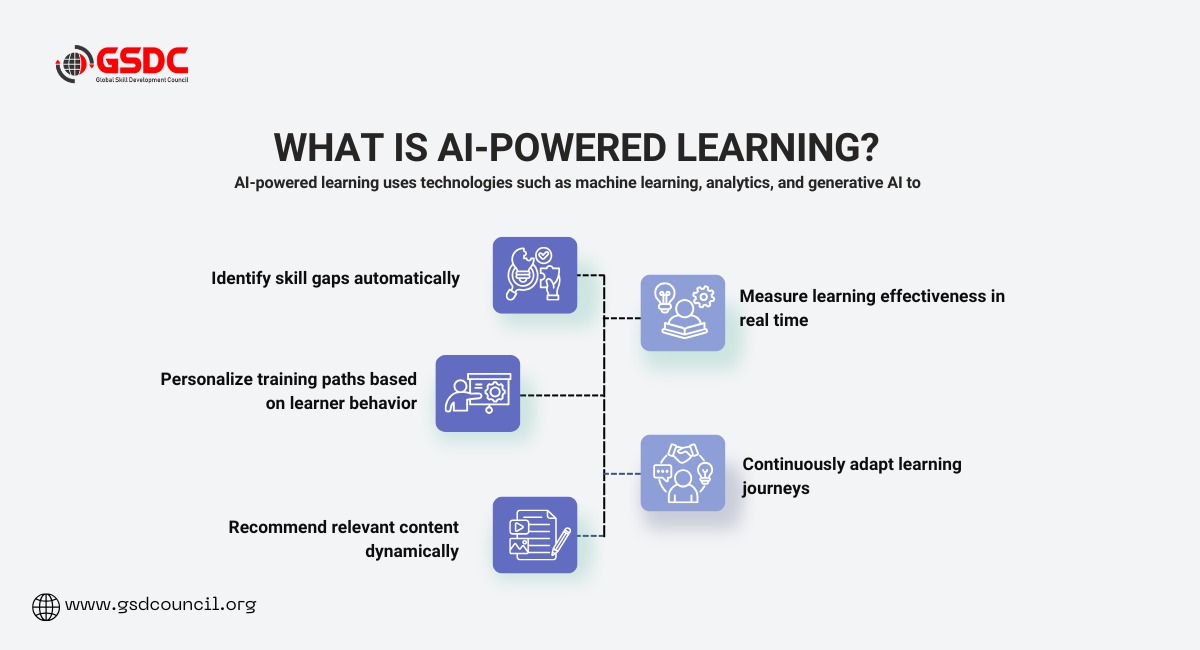
AI analyzes:
- Prior knowledge
- Job role and performance data
- Engagement patterns
- Career aspirations
This enables hyper-personalized learning experiences aligned with individual and organizational goals.
2. Bridging Skill Gaps Faster
The pace of technological change is outstripping traditional talent development cycles. According to research from Deloitte, organizations must continuously map emerging skills to remain competitive.
AI accelerates this process by conducting automated gap analyses, allowing companies to proactively develop capabilities rather than reacting to shortages.
3. Improving Employee Retention Through Internal Mobility
A major reason employees leave organizations is the lack of growth opportunities. AI-powered learning creates clear development pathways, enabling employees to see how they can progress within the company.
This strengthens internal mobility and transforms learning into a retention strategy rather than a compliance exercise.
4. Enhancing Learning Efficiency
AI dramatically reduces the time required to design and deliver training programs. Tasks that once took weeks, such as content creation, assessments, and progress tracking, can now be completed in hours.
This allows L&D leaders to focus on strategic initiatives such as leadership development, culture building, and workforce transformation.
The Evolution of the L&D Function
AI is redefining the role of learning leaders. Previously, L&D often operated as a support function focused on course delivery and compliance. Today, it is becoming a strategic driver of business performance.
Modern L&D leaders are expected to:
- Align learning strategies with measurable business outcomes
- Build AI literacy across the organization
- Ensure ethical and inclusive use of learning technologies
- Act as workforce futurists, shaping long-term talent readiness
The shift is from training administration to capability orchestration.
Applications of AI in Workplace Learning
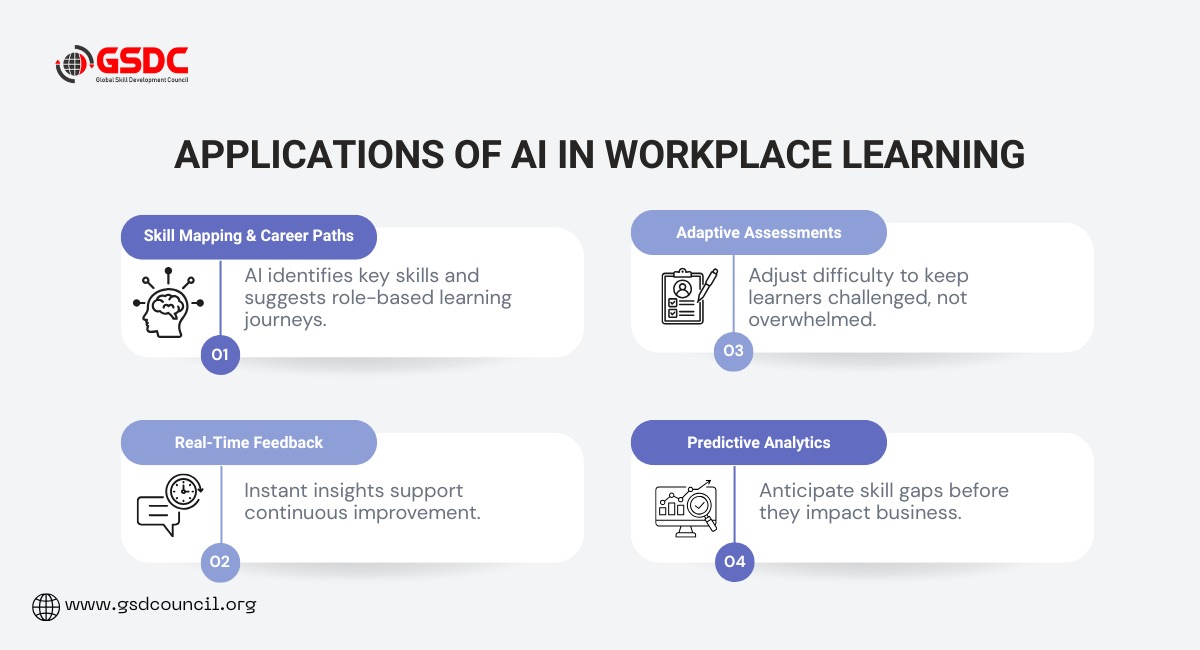
AI-powered learning is already being applied in several impactful ways:
Skill Mapping and Career Pathing
AI-powered learning systems analyze organizational data to identify critical skills, uncover competency gaps, and recommend personalized learning journeys aligned with future roles. This capability strengthens AI in corporate training by helping organizations create structured career development pathways for employees.
Adaptive Assessments
AI-driven assessments dynamically adjust difficulty levels based on learner responses, ensuring employees remain challenged without becoming overwhelmed. These intelligent evaluations enhance AI in employee training by delivering more accurate insights into learner capabilities and progress.
Real-Time Feedback and Coaching
Modern AI training programs leverage intelligent coaching tools to provide instant feedback, personalized recommendations, and actionable insights. This enables continuous improvement and skill development rather than relying on delayed performance evaluations.
Predictive Learning Analytics
AI-powered learning platforms use predictive analytics to forecast skill shortages, identify emerging workforce needs, and recommend proactive training interventions. By addressing capability gaps before they impact operations, organizations can build a more agile and future-ready workforce.
Measuring the Impact: Engagement, Productivity, and Outcomes
AI-powered learning is delivering measurable improvements:
- Higher learner engagement due to personalization
- Faster skill acquisition aligned with job requirements
- Stronger connections between learning and business KPIs
- Improved workforce readiness for digital transformation
Studies referenced by institutions such as the Federal Reserve Bank of St. Louis show increasing adoption of generative AI across workplaces, signaling a broader shift toward AI-enabled productivity and development.
Ethical Considerations: Keeping Humans at the Center
Despite its advantages, AI in learning must be implemented responsibly.
Key ethical priorities include:
- Transparency: Employees must understand how AI recommends learning content.
- Bias Mitigation: Training datasets must be monitored to avoid reinforcing inequities.
- Privacy Protection: Learner data must be handled securely and ethically.
- Human Oversight: AI supports decision-making it does not replace it.
Platforms powered by technologies such as those developed by OpenAI emphasize that AI outputs require human validation, reinforcing the importance of responsible usage.
Overcoming Implementation Challenges
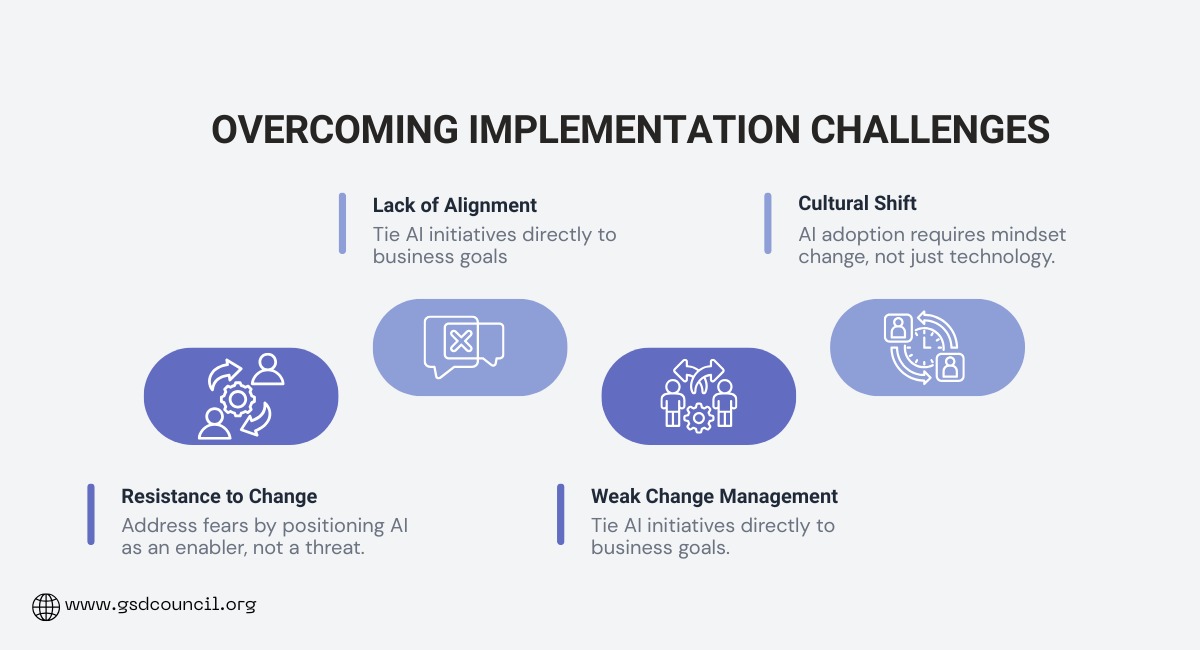
Organizations often face barriers when introducing AI-powered learning, including:
Resistance to Change
Employees may fear that automation will replace their roles. Clear communication is essential to position AI as an enabler, not a threat.
Lack of Strategic Integration
Simply purchasing AI tools without aligning them to business objectives leads to underutilization.
Insufficient Change Management
Successful adoption requires training, leadership sponsorship, and cross-functional collaboration.
AI implementation is not just a technology project it is a cultural transformation.
The Future of Learning: From Training Programs to Learning Ecosystems
AI is turning corporate learning into a continuous, embedded experience rather than a periodic activity.
Future learning environments will feature:
- Always-on development integrated into daily workflows
- Intelligent career navigation for employees
- Real-time reskilling aligned with market demands
- Human-AI collaboration shaping leadership capabilities
Organizations that embrace this transformation will move from reactive talent management to proactive workforce innovation.
Advance Workforce Growth with GSDC’s Learning and Development Certification

GSDC’s Certified Learning and Development Certification is designed for professionals seeking to develop, implement, and manage effective learning strategies that enhance employee performance and organizational growth. The certification provides comprehensive knowledge of learning and development frameworks, instructional design, talent development, training needs analysis, learning technologies, and performance management principles.
Participants gain practical insights into creating impactful training programs, fostering continuous learning cultures, and aligning workforce development initiatives with business objectives. Ideal for L&D professionals, HR leaders, training managers, talent development specialists, and business leaders, this Certified Learning and Development Certification equips learners with the skills needed to build agile, skilled, and future-ready workforces in today's rapidly evolving business environment.
Conclusion
AI-powered learning programs are redefining how organizations build talent, close skill gaps, and drive business performance. Through the strategic use of AI in training and development, organizations can deliver personalized, scalable, and measurable learning experiences that transform Learning and Development (L&D) into a powerful engine for growth.
As the adoption of AI in training continues to accelerate, businesses are better equipped to develop workforce capabilities, improve employee engagement, and respond to evolving market demands.
The real value of AI lies not in automating learning but in making learning more human, relevant, and impactful. Organizations that successfully combine technological intelligence with ethical oversight, strong leadership, and transformation training initiatives will be best positioned to lead the next era of workforce development and organizational transformation.

Related Certifications
Frequently Asked Questions
Stay up-to-date with the latest news, trends, and resources in GSDC
If you like this read then make sure to check out our previous blogs: Cracking Onboarding Challenges: Fresher Success Unveiled
Not sure which certification to pursue? Our advisors will help you decide!