How FDEs Help Retailers Improve Operations With AI
Written by Emily Hilton
AI is becoming an important part of the retail industry. Today, retailers are using it to understand customer buying habits, predict product demand, manage inventory, improve supply chains, and automate everyday tasks. From online shopping recommendations to AI-powered stock management, technology is changing how retail businesses handle their operations.
But using AI in retail is not just about adopting new tools. Retailers need to make sure these solutions work with their existing systems, connect different sources of data, and address actual business requirements. This requires both technical knowledge and an understanding of retail operations.
Forward Deployed Engineers (FDEs) help bridge this gap. They work with retail businesses to understand their requirements, implement AI solutions, and make sure these solutions work in real operational environments. In this blog, we will explore the key applications of AI in retail and how FDEs help retailers improve their operations.
What Is a Forward Deployed Engineer?
A Forward Deployed Engineer works closely with customers and business teams to understand their requirements and implement practical technical solutions. In retail, an FDE helps connect business operations with AI technologies, data systems, and engineering applications.
For example, a retailer may want to use AI to forecast product demand or automate inventory replenishment. An FDE works with the relevant teams to understand the requirement, connect the necessary data sources, integrate the technology, and ensure that the solution fits into existing workflows.
The role is not limited to developing AI models. It also involves solving implementation challenges and making sure the technology works as expected in actual retail operations.
AI Use Cases in Retail Operations
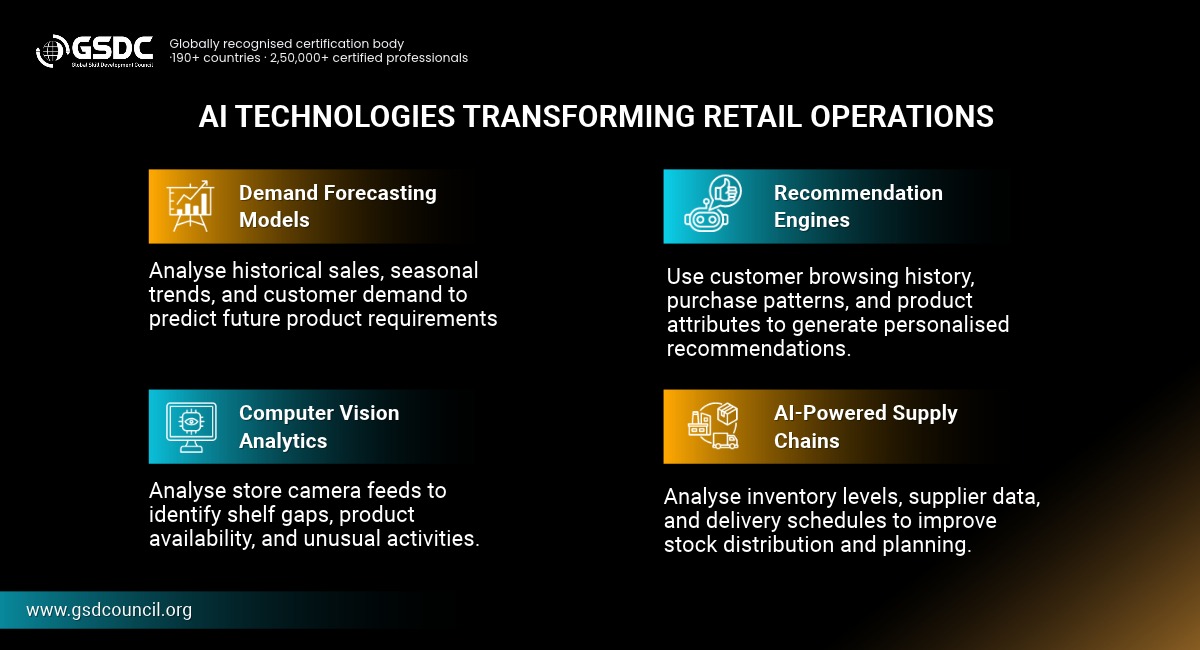
Retail AI is being used across different business functions to improve efficiency, customer experience, and decision-making. Here are some important AI use cases in retail.
AI-Powered Inventory Management
Retailers need to maintain the right stock levels across stores and warehouses. AI models can analyse previous sales, seasonal demand, promotions, and purchasing patterns to estimate how much stock will be needed.
These predictions help retailers identify products that may run out of stock or remain unsold. AI can also recommend when to replenish products and how to distribute inventory across different locations.
Retail Supply Chain Management
AI helps retailers analyse supplier performance, delivery schedules, transportation data, and warehouse operations. Predictive analytics can identify possible delivery delays, estimate demand across locations, and support better stock distribution.
AI agents in retail can also monitor supply chain activities, identify delays, and recommend actions based on available information and business rules.
Personalised Shopping Experiences
AI personalization in retail uses customer preferences, browsing activity, and purchase history to provide relevant product recommendations.
Retailers can use recommendation engines to suggest products, personalise offers, and improve product discovery across websites and mobile applications.
Retail Automation
Retail automation helps reduce manual work across order processing, inventory updates, returns management, and customer support.
Agentic AI in retail can take this further by handling tasks that involve multiple steps. For example, an AI agent could identify low stock, check warehouse availability, and recommend a stock transfer for approval.
AI-Powered Loss Prevention
Retailers experience losses through theft, billing errors, refund irregularities, and inventory discrepancies. AI can analyse transaction records, inventory movements, and video data to identify unusual patterns.
These systems can flag potentially suspicious activities for further review by retail security and operations teams.
How Forward Deployed Engineers Help Retailers Improve Operations With AI
Implementing AI in retail requires more than choosing a model or automation tool. Retailers need to connect AI applications with existing POS systems, inventory platforms, warehouse management systems, e-commerce applications, and customer databases.
A Forward Deployed Engineer works with retail stakeholders and engineering teams to understand these requirements and turn them into practical technical solutions.
Here are five ways FDEs can contribute.
1. Connect Disconnected Retail Systems
Retail businesses use different systems to manage sales, inventory, warehouses, online orders, and customer information.
For example, sales records may be stored in a point-of-sale (POS) system, stock details in an inventory platform, and customer information in an e-commerce application. When these systems do not share information properly, retailers may struggle to get an accurate picture of their operations.
An FDE helps connect these systems so that information can move between them.
This may involve:
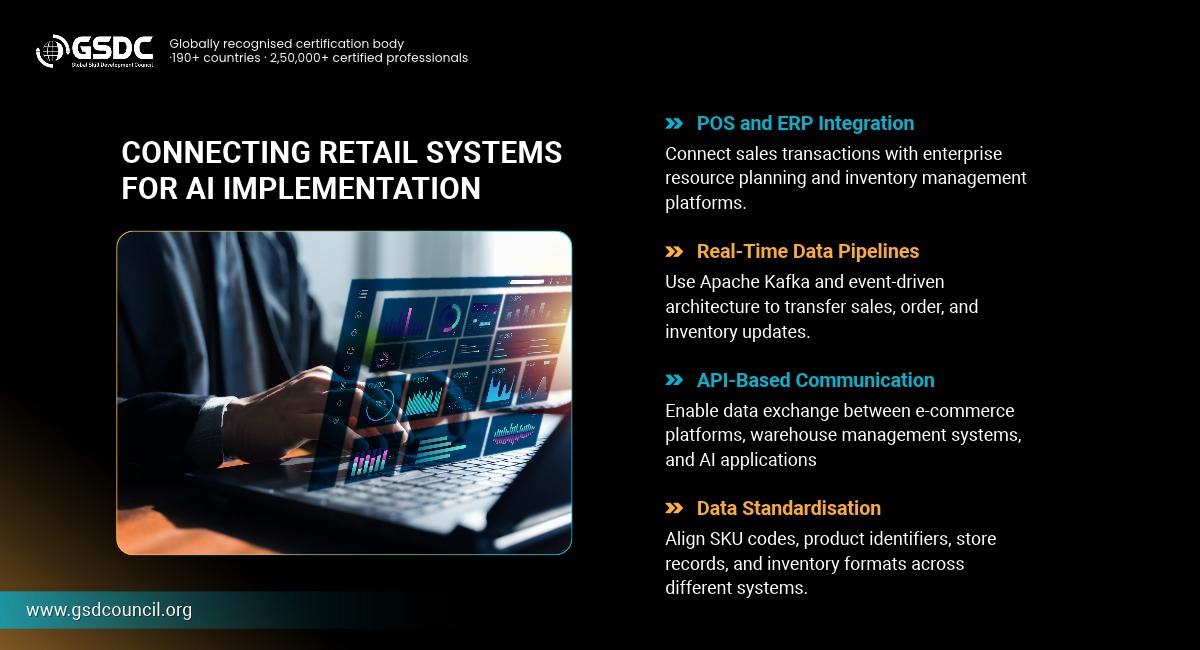
- Connecting POS, ERP, and inventory systems through APIs.
- Linking warehouse and e-commerce platforms.
- Making product IDs, SKU codes, and store records consistent.
- Setting up data pipelines to share sales and inventory updates.
- Checking for missing, duplicate, or incorrect records.
Technologies such as Apache Kafka can help transfer sales and inventory updates between systems as events happen. The FDE also needs to account for common problems, such as delayed updates, failed connections, and differences in how systems store product information.
The objective is to give retailers a more complete view of their operations and provide AI applications with the data they need.
2. Improve Inventory Management and Demand Forecasting
Keeping the right products available at the right stores is a constant challenge for retailers. Some products may sell out quickly, while others remain in warehouses or on store shelves for too long.
AI can help retailers understand how much stock they may need by analysing sales history, seasonal demand, promotions, and customer buying patterns.An FDE works with retail and data science teams to connect this information with demand forecasting and inventory management systems.
For example, consider a retail chain where one store regularly runs out of a popular product while another store has more stock than it needs.
The system can analyse:
- Previous sales and product demand.
- Current stock across stores and warehouses.
- Seasonal changes and promotional offers.
- Supplier delivery times.
- Customer buying patterns across different locations.
Based on this information, AI models can forecast demand and help retailers decide when to restock products or move inventory between stores. The FDE helps connect these predictions with existing inventory systems so that store managers and supply chain teams can use them in their daily work.
The goal is to help retailers make better stock decisions and avoid unnecessary shortages or excess inventory.
3. Use AI to Automate Retail Workflows
Retail teams handle several repetitive tasks, such as updating inventory, processing orders, managing returns, and responding to customer queries. Many of these activities can be automated with AI.
However, automation needs to follow the retailer's actual business rules.
For example, when a product is running low, an automated system should check warehouse stock, supplier availability, delivery timelines, and existing purchase orders before recommending a replenishment.
An FDE helps connect these steps and make sure the automation works with the retailer's existing systems.
This may involve:
- Connecting AI models with inventory and order management platforms.
- Setting rules for automated recommendations.
- Using APIs to trigger approved actions.
- Handling errors and incomplete information.
- Adding approval steps for important decisions.
- Checking whether automated workflows are working correctly.
AI agents in retail can also handle tasks that involve multiple steps. For example, an inventory agent could identify a product running low, check stock at nearby stores, and recommend a transfer.
The FDE connects the agent with the required systems and defines what it can access or do. Actions such as placing orders or approving stock transfers can still require human approval.
This helps retailers reduce manual work while keeping important business decisions under control.
4. Improve Customer Recommendations With AI
Retailers collect customer information through websites, mobile apps, loyalty programmes, and physical stores. This information can help them understand what customers like, what they buy, and how their preferences change.
AI personalization in retail uses this information to recommend relevant products, personalise offers, and improve the shopping experience.
An FDE helps connect customer data with recommendation engines and retail applications.
The system may use information such as:
- Previous purchases and browsing history.
- Products customers search for or view.
- Frequently purchased product categories.
- Responses to earlier recommendations.
- Shopping preferences across different channels.
For example, an online retailer can use this information to recommend products based on a customer's previous purchases and browsing activity.
FDEs work with technical teams to connect recommendation models with e-commerce platforms and mobile applications. They also help ensure that recommendations appear at the right time and that customer information is handled securely.
This makes it easier for retailers to use customer insights in their actual shopping platforms rather than keeping them limited to analytics reports.
5. Improve Loss Prevention and Monitor AI Performance
Retailers lose money through shoplifting, billing errors, refund irregularities, and inventory discrepancies. AI can help identify unusual activities by analysing sales transactions, stock records, and video data.
An FDE works with retail operations, security, and engineering teams to connect these AI applications with existing systems.
This may involve:
- Connecting POS transactions with inventory records.
- Integrating video analytics with store security systems.
- Identifying unusual refund or transaction patterns.
- Finding differences between recorded and physical stock.
- Sending suspicious activity alerts to the relevant teams.
- Maintaining records of alerts and investigation outcomes.
For example, an AI system may identify repeated refunds involving the same product or unusual transaction patterns at a particular store. The system can flag this activity so that the concerned team can review it.
The FDE also helps retailers check whether these AI solutions continue to work properly after deployment.
This includes:
- Alert accuracy: Checking whether the system identifies relevant activities or generates too many false alerts.
- Data quality: Checking for missing, incorrect, or delayed sales and inventory records.
- System performance: Monitoring failed integrations, processing delays, and API errors.
- Model performance: Identifying changes in customer behaviour or transaction patterns that may affect AI results.
- Workflow results: Checking whether alerts reach the right teams and help them take appropriate action.
Regular monitoring helps retailers identify problems early and make changes when their business requirements or operating conditions change.
Practical Example: Using AI to Prevent Stock Shortages
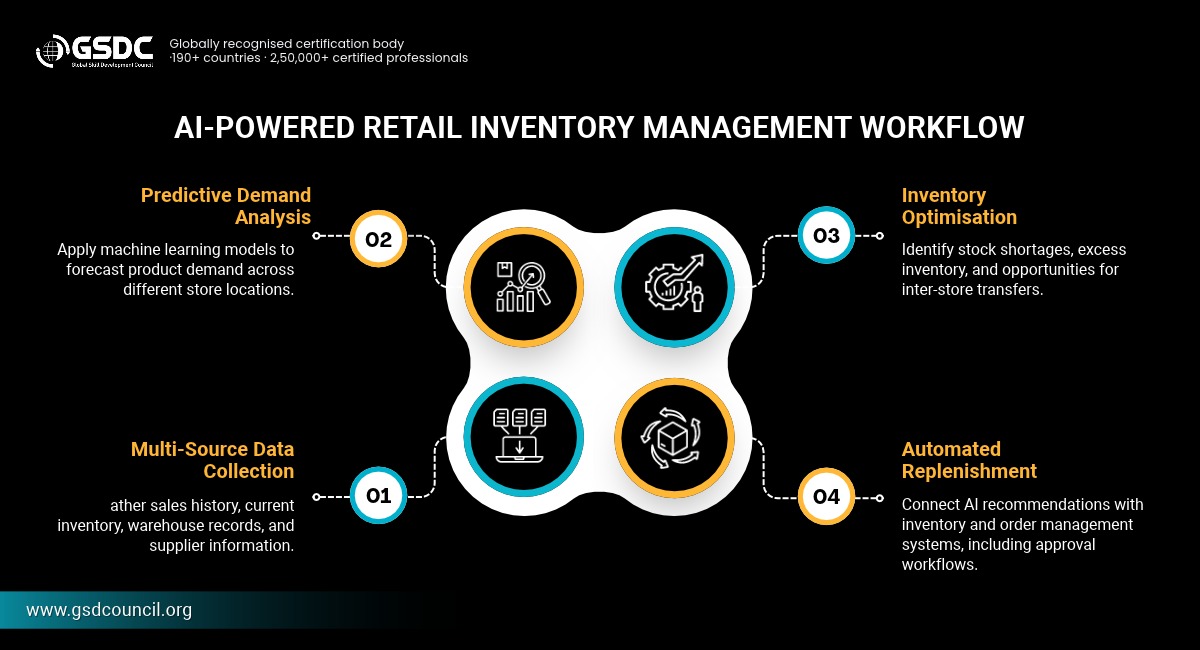
Consider a retail chain managing multiple stores and warehouses. Some stores frequently run out of popular products, while others have more stock than they need. The retailer wants to use AI to improve inventory planning and product distribution.
An FDE can help implement this solution through the following stages:
- Collect Retail Data: Connect POS systems, inventory platforms, warehouse databases, and sales records to bring the required information together.
- Forecast Product Demand: Use AI models to analyse previous sales, seasonal trends, promotions, and location-specific purchasing patterns.
- Identify Inventory Risks: Detect products that may run out of stock or remain unsold based on demand forecasts and current inventory levels.
- Recommend Stock Allocation: Combine demand predictions with warehouse availability, supplier delivery times, and store requirements to recommend replenishment or stock transfers.
- Connect Operational Workflows: Integrate recommendations with inventory and order management systems. Send important decisions through the appropriate approval process.
- Monitor Results: Track stock availability, forecast accuracy, replenishment performance, and inventory levels to identify areas that need improvement.
In this example, AI provides demand insights, while the FDE makes sure that data, forecasting models, and inventory workflows work together within the retailer's existing systems.
Technical Challenges in AI Retail Operations
Although AI offers several opportunities for retailers, implementing it across existing business operations comes with technical challenges.
- Fragmented Data: Sales, inventory, customer, and supply chain information may exist across separate platforms. Connecting and standardising this data is necessary for reliable AI results.
- Real-Time Data Processing: Inventory and order information must remain updated across stores and warehouses. Delayed updates can lead to incorrect stock availability and replenishment decisions.
- System Integration: Connecting AI applications with existing POS, ERP, warehouse, and e-commerce systems may require custom APIs and integration workflows.
- Data Privacy and Security: Customer and payment information must be protected through access controls, encryption, and secure data handling practices.
- Model Drift: Changes in customer demand, product trends, and seasonal behaviour can affect forecasting and recommendation accuracy. Regular monitoring helps identify when models need attention.
- AI Agent Control: AI agents need clearly defined permissions, validation rules, and human approval steps to prevent incorrect or unauthorised actions.
GSDC FDE Certification
The GSDC Certified Forward Deployed Engineer Certification is designed for professionals who want to develop knowledge of AI implementation, system integration, customer-focused engineering, and solving real-world business problems.
It is relevant to software developers, AI and machine learning professionals, solutions engineers, technical consultants, and technology professionals interested in implementing AI solutions across business environments.
Through this certification, professionals can build an understanding of how to:
- Connect business requirements with practical engineering solutions.
- Understand AI implementation and enterprise system integration.
- Work with APIs, technical workflows, and business applications.
- Approach complex implementation challenges involving data, AI, and enterprise systems.
Explore the GSDC Certified Forward Deployed Engineer Certification to learn more about the certification and its learning objectives.
Conclusion
AI is giving retailers new ways to manage inventory, improve supply chain operations, personalise customer experiences, automate routine work, and identify potential losses.
But getting these solutions to work in everyday retail operations requires more than adopting AI tools. Retailers need connected systems, reliable data, well-designed workflows, and regular performance monitoring.
Forward Deployed Engineers help bring these elements together. By working with business and technical teams, they help retailers turn AI capabilities into practical solutions that address real operational challenges.

Related Certifications
Stay up-to-date with the latest news, trends, and resources in GSDC
If you like this read then make sure to check out our previous blogs: Cracking Onboarding Challenges: Fresher Success Unveiled
Not sure which certification to pursue? Our advisors will help you decide!