Is Your Business Ready for AI? 5 Things a Forward Deployed Engineer Would Check
Written by Emily Hilton
- What Is AI Readiness?
- 1. Are Your Business Goals Clear?
- 2. Is Your Data and Infrastructure Ready?
- 3. Do You Have the Right AI Governance and Security Practices?
- 4. Are Your Employees Ready to Adopt AI?
- 5. Do You Have a Practical AI Implementation Roadmap?
- AI Readiness Checklist: Is Your Business Prepared?
- How a Forward Deployed Engineer Supports AI Readiness
- Build Your Forward Deployed Engineering Skills With GSDC
- Final Thoughts
Artificial intelligence is becoming an important part of business operations. Organisations are exploring AI to automate repetitive tasks, improve customer service, analyse data, and make better decisions. However, adopting AI successfully requires more than purchasing a tool or choosing a model.
Before implementing AI, businesses need to understand whether their data is reliable, their systems can support integration, their governance practices are established, and their employees are prepared to use the technology. Without this preparation, even a promising AI project can encounter delays, unexpected costs, security concerns, or limited adoption.
This is where AI readiness becomes important. An AI readiness assessment helps an organisation evaluate its current capabilities, identify gaps, and determine what needs to be addressed before moving forward.
A Forward Deployed Engineer (FDE) can bring a practical perspective to this process by examining business requirements, technical infrastructure, data, and workflows. Rather than looking at AI in isolation, an FDE considers how it will operate within the organisation's existing environment.
So, how can you determine whether your business is ready for AI? Here are five areas a Forward Deployed Engineer would check
What Is AI Readiness?
AI readiness refers to an organisation's ability to adopt, integrate, manage, and maintain AI solutions effectively.
It involves more than having access to AI tools. A business also needs suitable data, compatible systems, clear objectives, appropriate governance, and employees who understand how to work with AI.
For example, a company may want to introduce an AI assistant to help employees find information across internal documents. Before implementation, it must determine whether those documents are accurate, whether employees have the right access permissions, and whether the assistant can retrieve relevant information reliably. If these conditions are not met, introducing an AI tool may create more problems than it solves.
1. Are Your Business Goals Clear?
The first thing a Forward Deployed Engineer would check is whether the organisation has a clearly defined business problem to solve.
Many companies are beginning to explore AI because it is gaining attention across their industry. They may experiment with chatbots, automation tools, or generative AI applications without identifying the specific business outcome they want to achieve.
This can lead to projects that demonstrate technical capabilities but fail to address an important operational need. Before selecting an AI solution, an organisation should identify the problem, understand the current process, and define what success would look like.
For example, a customer service department may want to reduce the time employees spend searching for information. An AI-powered knowledge assistant could help, but only if employees can access accurate information and the assistant provides relevant answers.
A Forward Deployed Engineer would work with stakeholders to understand the workflow, identify bottlenecks, and determine whether AI is an appropriate solution.
What Should You Check?
- Business objectives: Is there a specific problem that AI is expected to solve?
- Success metrics: Can you measure the expected improvement in time, cost, accuracy, or customer experience?
- Use-case priority: Is this a high-value problem that justifies the investment?
- Technical feasibility: Can the proposed solution work within your existing systems and operational requirements?
Why it matters: Clear objectives help businesses prioritise suitable AI use cases and evaluate whether an implementation delivers meaningful results.
2. Is Your Data and Infrastructure Ready?
AI applications depend on the data and systems they use. If information is incomplete, outdated, inconsistent, or difficult to access, the resulting solution may not perform as expected.
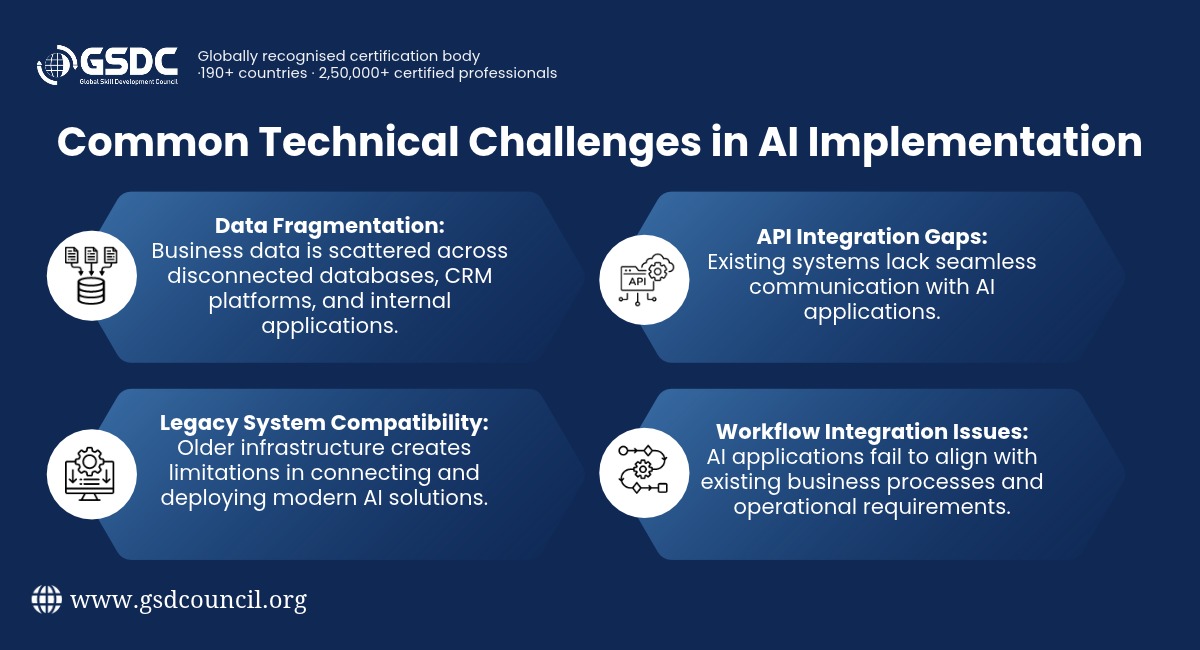
A business might have years of customer records, internal documents, sales data, and operational reports. However, if this information is spread across disconnected platforms, it may be difficult to use effectively in an AI application.
Technical infrastructure is another important consideration. An AI solution may need to connect with databases, APIs, cloud platforms, customer relationship management systems, or internal applications.
A Forward Deployed Engineer examines these dependencies before implementation. The goal is to understand whether the organisation has the technical foundation required to build and operate the proposed solution.
What Should You Check?
- Data quality: Is your data accurate, consistent, relevant, and regularly updated?
- Data accessibility: Can the AI application retrieve the information it needs from approved sources?
- System integration: Can your existing applications connect with the proposed AI solution?
- Infrastructure capacity: Can your environment support the expected workload, performance, and operating costs?
Why it matters: A reliable data and infrastructure foundation reduces integration problems and helps AI applications deliver more consistent results.
3. Do You Have the Right AI Governance and Security Practices?
AI readiness also depends on how an organisation manages risk, protects information, and establishes accountability.
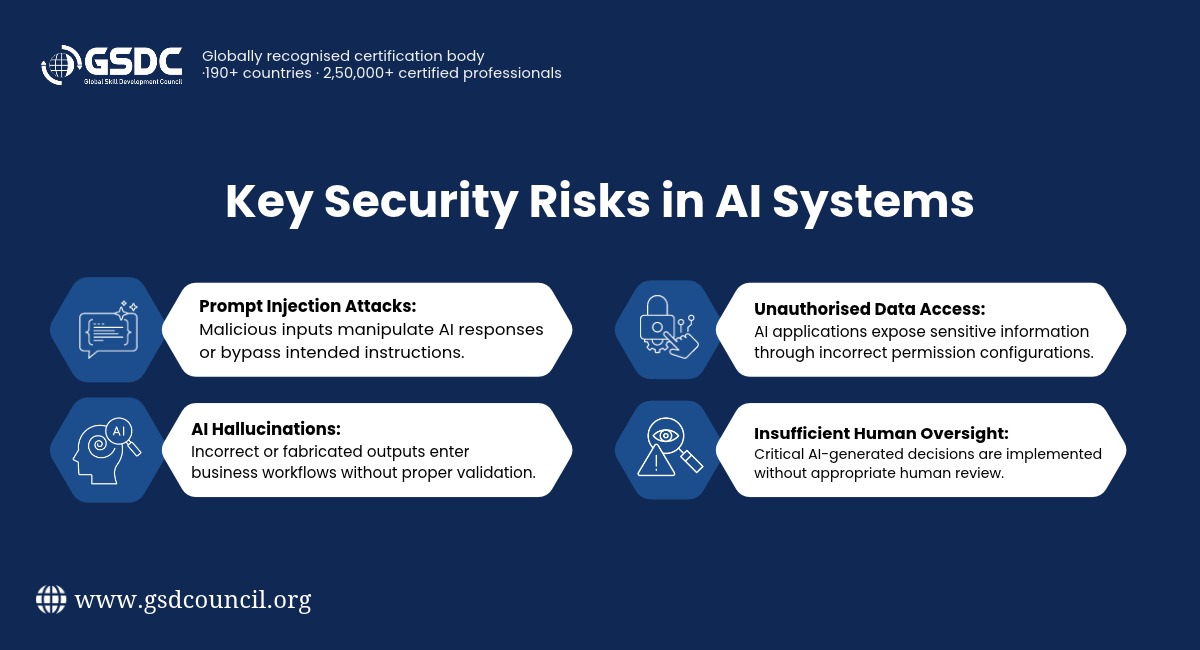
AI applications may process confidential business information, customer records, employee data, or other sensitive material. Without appropriate controls, an organisation could expose information, provide unauthorised access, or introduce unreliable outputs into important workflows.
Businesses should establish clear rules for how AI can be used, which information it can access, who is responsible for reviewing its outputs, and what happens when something goes wrong.
An enterprise AI governance framework can help define these responsibilities. Its implementation should reflect the organisation's industry, regulatory obligations, data sensitivity, and intended AI use cases.
A Forward Deployed Engineer can contribute by identifying technical risks, reviewing system permissions, testing failure scenarios, and working with security, legal, compliance, and business teams.
What Should You Check?
- Data protection: Are sensitive business and customer information protected through appropriate access controls?
- Accountability: Is it clear who owns the AI system and who is responsible for its outcomes?
- Human oversight: Are there situations where AI outputs require human review or approval?
- Risk management: Have potential failures, security vulnerabilities, and inappropriate outputs been considered?
AI Governance Framework Best Practices
Effective AI governance should be incorporated into implementation rather than treated as a final approval step.
Organisations should establish clear policies for AI use, assign responsibilities, assess risks, document important decisions, and monitor system performance. They should also review these controls as the technology, business requirements, and risk environment change.
Why it matters: A practical governance approach helps organisations manage AI-related risks while creating clearer expectations for responsible use.
4. Are Your Employees Ready to Adopt AI?
Even when the technology works, AI implementation can struggle if employees do not understand how to use it or why it is being introduced.
Some employees may worry that AI will replace parts of their jobs. Others may lack the technical knowledge needed to use new tools effectively. In some cases, employees may simply prefer existing workflows because the new solution does not fit their daily responsibilities.
These are common AI adoption challenges, and they cannot always be solved through technical improvements alone.
Organisations need to consider training, communication, workflow changes, and employee feedback as part of their readiness assessment.
A Forward Deployed Engineer can help identify where users experience difficulties, explain technical limitations, and work with stakeholders to adjust the solution. However, organisation-wide training and change management may also require support from managers, HR, and dedicated change management teams.
What Should You Check?
- AI skills gap: Do employees have the knowledge needed to use the proposed tools?
- Training requirements: Is there a plan to help employees learn new workflows and understand AI limitations?
- Employee concerns: Have questions about accuracy, responsibility, and changes to existing roles been addressed?
- Workflow compatibility: Does the AI solution simplify work, or does it introduce additional steps?
The Role of AI Change Management
AI change management helps employees understand why a new solution is being introduced, how it affects their work, and what support is available.
Businesses should communicate the purpose of the implementation, provide relevant training, gather feedback, and monitor whether employees are using the solution effectively.
Why it matters: Employee readiness can influence whether an AI solution becomes part of everyday operations or remains an underused tool.
5. Do You Have a Practical AI Implementation Roadmap?
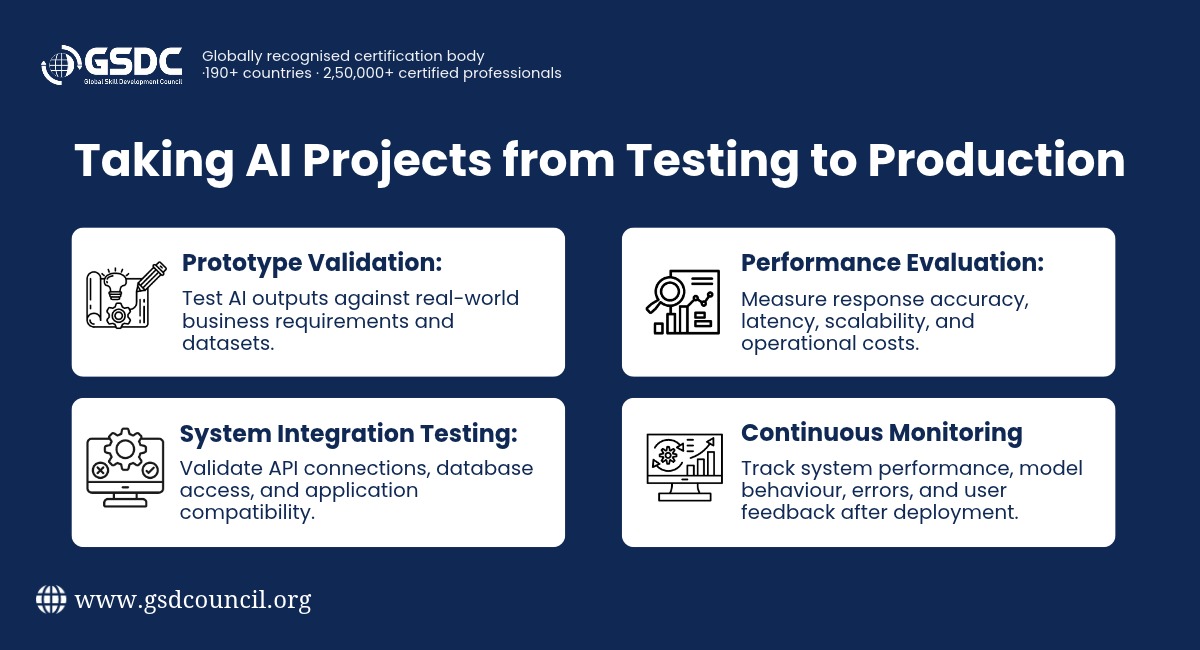
After reviewing business goals, data, infrastructure, governance, and workforce readiness, the next step is to determine how implementation will proceed.
Without a clear roadmap, organisations may attempt to introduce too many AI applications at once. This can make it difficult to manage dependencies, measure progress, control costs, and identify problems early.
A practical AI implementation roadmap should define the initial use case, required resources, technical dependencies, testing process, deployment plan, and performance measures.
A Forward Deployed Engineer can help translate these requirements into technical tasks and work with stakeholders to move from an initial concept to a working solution.
For example, rather than deploying an AI assistant across an entire organisation immediately, a company could begin with one department. The team could test the solution using approved data, measure response quality, gather employee feedback, and address problems before expanding its use.
What Should You Check?
- Implementation priorities: Have you selected a suitable use case for an initial project?
- Available resources: Do you have the people, budget, tools, and infrastructure required?
- Testing and validation: Is there a plan to evaluate accuracy, security, reliability, and cost?
- Performance monitoring: Have you defined how the solution's business impact will be measured after deployment?
Why it matters: A phased implementation approach allows organisations to test assumptions, learn from actual results, and address problems before expanding AI adoption.
AI Readiness Checklist: Is Your Business Prepared?
Use this AI readiness checklist to review your organisation's current position before starting an AI project.
Readiness area | Questions to ask |
| Business objectives | Have you identified a clear business problem and defined measurable success criteria? |
| Data and infrastructure | Is your data reliable, accessible, and compatible with the proposed solution? |
| Governance and security | Are responsibilities, access controls, and risk management practices established? |
| Employee readiness | Do employees have the training, support, and information needed to adopt AI? |
| Implementation planning | Have you defined priorities, resources, testing requirements, and performance measures? |
For each area, classify your organisation's readiness as Ready, Needs Improvement, or Not Yet Assessed.
Areas marked Needs Improvement or Not Yet Assessed should be investigated before making major implementation commitments.
This checklist provides an initial review, not a complete technical, security, or compliance audit. Organisations with complex requirements may need a more detailed AI readiness audit involving technical teams, business stakeholders, security specialists, and governance professionals.
How a Forward Deployed Engineer Supports AI Readiness
A Forward Deployed Engineer helps connect the findings of an AI readiness assessment with the technical work required to implement a solution.
Rather than assessing technology independently of business operations, an FDE considers how the proposed solution will interact with users, data sources, applications, and existing workflows.
Depending on the project, this work may involve:
- Reviewing business requirements and identifying suitable AI use cases.
- Examining data sources, system dependencies, and integration requirements.
- Identifying technical risks and implementation constraints.
- Prototyping and testing solutions against real business needs.
- Gathering feedback and improving the solution before and after deployment.
An FDE may also collaborate with data engineers, security specialists, product managers, and business leaders. The role does not replace every specialist involved in AI readiness, but it helps connect business requirements with practical engineering decisions.
For organisations that need external support, AI readiness consulting can provide additional expertise in evaluating existing capabilities, identifying gaps, and prioritising next steps. The appropriate approach depends on the organisation's size, internal skills, technical environment, and intended use cases.
Build Your Forward Deployed Engineering Skills With GSDC
As businesses move from AI experimentation to implementation, they need professionals who understand both technical requirements and practical business problems.
Forward Deployed Engineers work at this intersection. They collaborate with customers, business stakeholders, and engineering teams to develop solutions that fit real operational environments.
The GSDC Certified Forward Deployed Engineer Certification is designed for professionals who want to understand the FDE role and develop relevant knowledge in customer-focused engineering and technical implementation.
What Can You Gain From the GSDC FDE Certification?
- Understand the FDE Role: Learn how Forward Deployed Engineers connect business requirements with technical implementation.
- Explore AI Implementation: Develop an understanding of how AI technologies can address practical business challenges.
- Strengthen Technical Knowledge: Explore relevant engineering concepts, tools, APIs, and system integration.
- Bridge Business and Engineering: Understand how technical solutions can support organisational goals and existing workflows.
- Explore the FDE Career Path: Learn about the responsibilities and skills associated with Forward Deployed Engineer opportunities.
The certification is worth exploring for software developers, AI and machine learning professionals, solutions engineers, technical consultants, and other technology professionals interested in applying engineering to real-world business problems.
Final Thoughts
Being ready for AI does not simply mean having access to the latest tools. It means understanding the business problem, preparing the data and infrastructure, establishing governance, supporting employees, and planning how the solution will be tested and maintained.
A structured AI readiness assessment helps organisations identify gaps before they become expensive implementation problems. It also provides a foundation for prioritising projects and developing an AI implementation roadmap that reflects business needs.
A Forward Deployed Engineer can help turn that preparation into practical engineering work by connecting stakeholder requirements with data, systems, and working AI applications.
Before investing in your next AI initiative, review these five areas and identify what your organisation needs to address first. A clear understanding of your current readiness can help you make more informed decisions about where and how to implement AI.

Related Certifications
Stay up-to-date with the latest news, trends, and resources in GSDC
If you like this read then make sure to check out our previous blogs: Cracking Onboarding Challenges: Fresher Success Unveiled
Not sure which certification to pursue? Our advisors will help you decide!