How to Create a Balanced Scorecard: A Practical Strategy Guide
Written by Matthew Hale
- What Is a Balanced Scorecard?
- Why Organizations Still Maintain the Use of the Balanced Scorecard in 2025
- The Balanced Scorecard Framework: Four Core Perspectives
- Step-by-Step: How to Build a Balanced Scorecard
- Where the Balanced Scorecard Works - and Where It Doesn’t
- Common Balanced Scorecard Mistakes to Avoid
- Why Balanced Scorecard Certification Matters
- Final Thoughts
Ask most leaders whether they have a strategy-and the answer is yes.
Ask whether that strategy is clearly reflected in daily decisions across the organization, the answer is far less certain.
In fact, research shows that 60–90% of business strategies fail before they produce meaningful results.
The challenge isn’t ambition or planning-it’s alignment. Financial metrics often dominate reviews, while customer experience, operational effectiveness, and workforce capability get fragmented attention.
This imbalance is precisely why interest in how to create a balanced scorecard continues to grow. The Balanced Scorecard translates strategy into measurable, actionable priorities-without reducing performance to financial outcomes alone.
This blog explains what a Balanced Scorecard is, what is the purpose of a balanced scorecard, and how to build a balanced scorecard for sustainable performance in 2025 and beyond.
What Is a Balanced Scorecard?
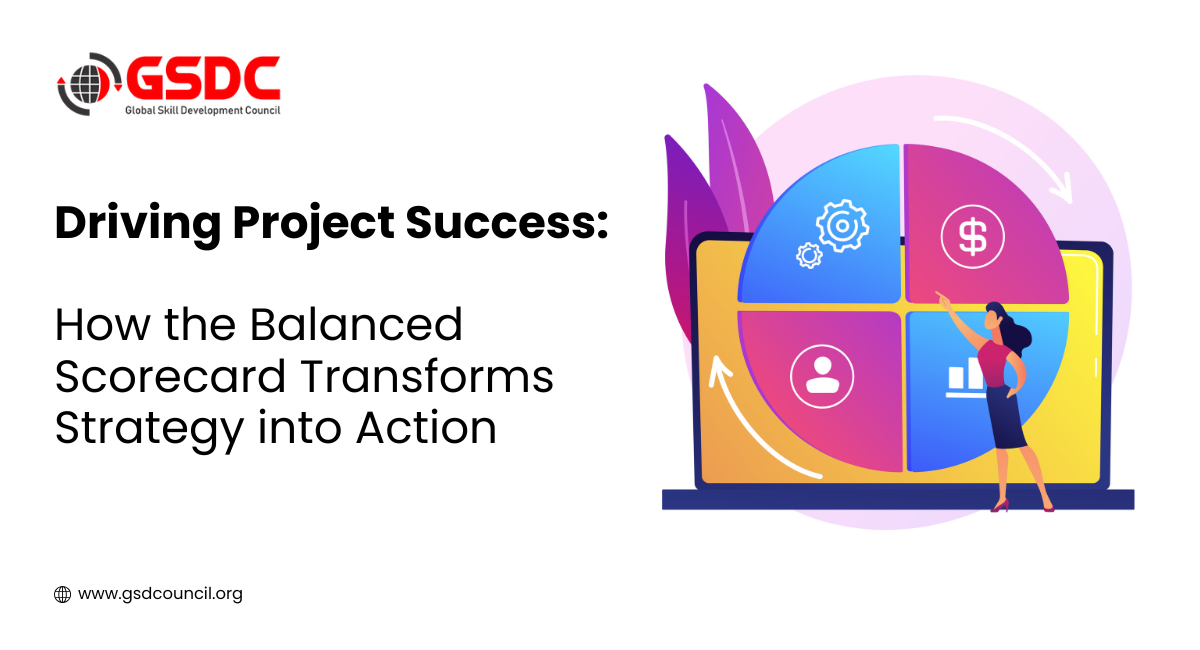
A Balanced Scorecard involves different measures apart from financial numbers to show how well the organization is performing. The balanced scorecard framework enables companies to understand their performance from every angle.
It looks at four key areas:
- Financial – revenue, costs, and long-term financial stability
- Customer – customer satisfaction and value delivered
- Internal Process – how efficiently work gets done
- Learning & Growth – employee skills, innovation, and future readiness
This approach fixes a common problem with traditional performance tracking.
When organizations focus only on financial KPIs, they often notice issues too late-after customers are unhappy or key capabilities have weakened.
Understanding what is the purpose of a balanced scorecard is important.
It helps connect long-term strategy with daily work, balancing short-term results with long-term growth.
Why Organizations Still Maintain the Use of the Balanced Scorecard in 2025
In spite of the elevated use of OKRs, dashboards, and analytics tools, the Balanced Scorecard is still able to deliver value because it:
- Enhances strategic alignment through the connection of objectives, measures, and implementation
- Generates unambiguous accountability throughout the teams and levels of leadership
- Enables execution discipline, particularly in SMEs and public-sector organizations
- Facilitates long-term performance management rather than short-term reporting
Although the current adoption is more cautious, the Balanced Scorecard is still considered one of the most potent strategic management instruments.
This is why leaders continue to focus on how to develop a balanced scorecard that supports informed decision-making rather than just tracking metrics.
The Balanced Scorecard Framework: Four Core Perspectives
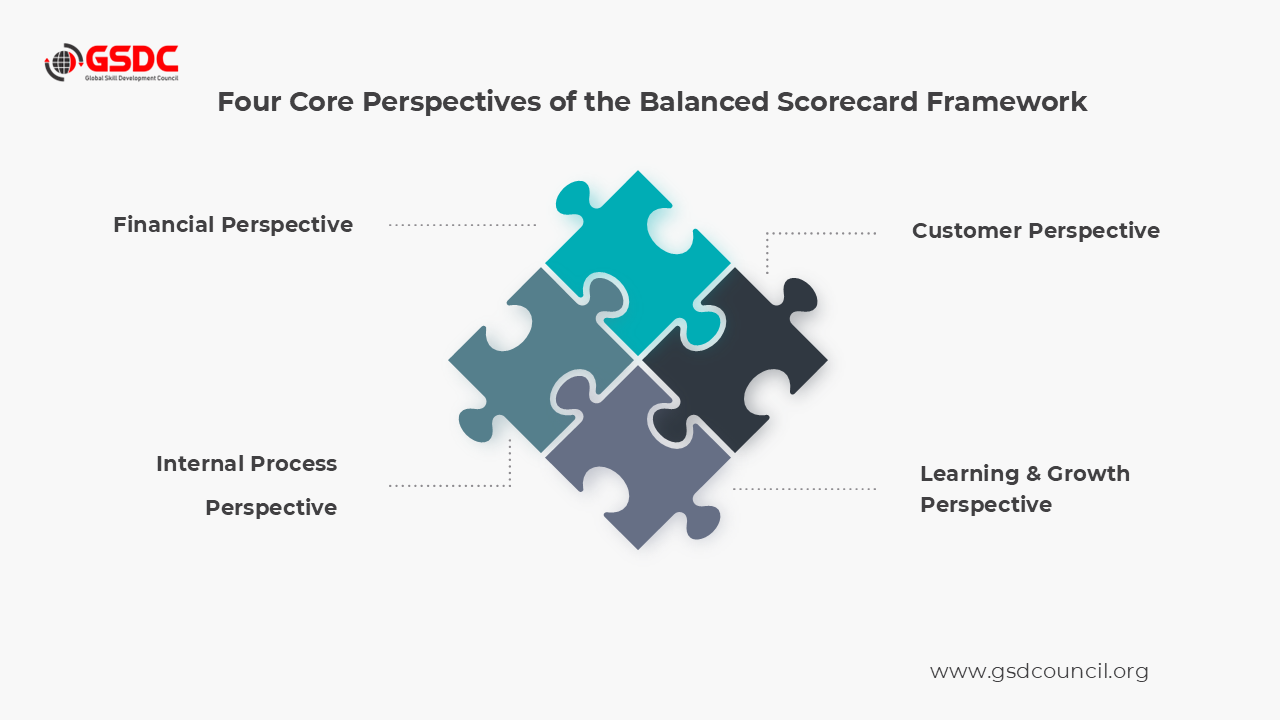
The balanced scorecard framework helps organizations look at performance from four connected angles, giving a clearer picture than financial results alone.
- Financial Perspective: Focuses on profitability, cost control, revenue growth, and overall financial health.
- Customer Perspective: Covers customer satisfaction, retention, service quality, and the value delivered to customers.
- Internal Process Perspective: Examines how well internal workflows, operations, and processes support strategic goals.
- Learning & Growth Perspective: Looks at employee skills, training, innovation, leadership capability, and organizational culture.
Step-by-Step: How to Build a Balanced Scorecard
A simple, practical approach is necessary for businesses looking to learn how to create a balanced scorecard. A balanced scorecard is only useful when it depicts the business's actual operations rather than just its outward appearance.
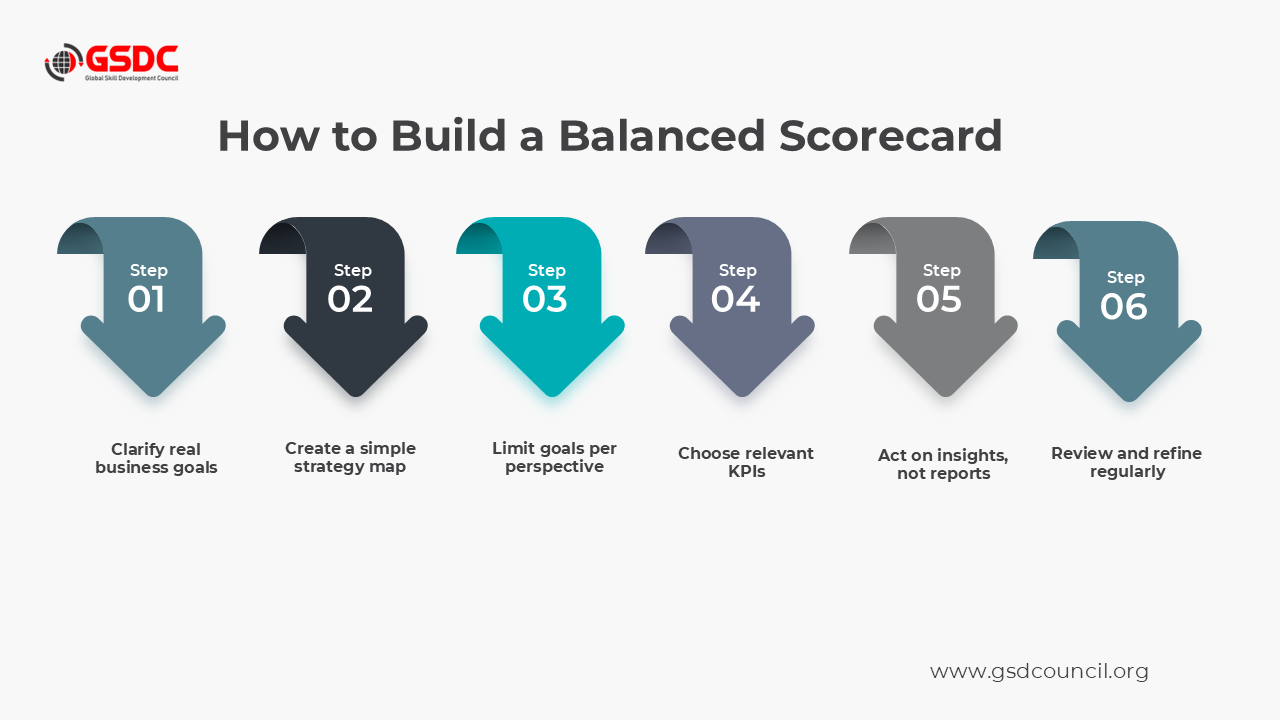
- Start by determining the organization's true goals.
Leaders should establish a clear definition of success for the next one to three years before choosing KPIs. Compared to teams that pursue too many objectives at once, those that operate from clearly defined priorities typically produce more consistent results.
- Make a basic strategy map out of your strategy.
Teams can see the connections between goals with the aid of a balanced scorecard strategy map.
For instance, more effective training enhances procedures, more efficient procedures enhance customer satisfaction, and improved customer satisfaction influences financial outcomes. This visual link eliminates confusion and enhances cross-functional alignment, according to numerous organizations.
- Select only a few important goals.
There should only be a few goals for each viewpoint. Nothing is a priority when everything is. Limiting goals helps teams stay accountable and focused.
For instance, a retail company might concentrate on enhancing front-line customer service abilities. Progress can be monitored by training completion and post-training performance rather than ambiguous objectives. Within a few quarters, this frequently results in noticeable increases in customer satisfaction.
- Use the appropriate KPIs to monitor progress.
A straightforward question should be addressed by KPIs: Are we headed in the right direction? Reducing the number of KPIs and directly connecting them to strategy facilitates decision-making and remedial action for organizations.
5. Don't just report the results; take action.
Additional training, process fixes, or system modifications are necessary when performance is inadequate. Instead of merely filling out reports, the Balanced Scorecard ought to inspire decisions.
6. Review frequently and make necessary adjustments.
Priorities in business shift. Teams can stay in sync and adapt to changes in markets, clients, or operations by routinely reviewing the Balanced Scorecard.
This approach explains how to develop a balanced scorecard that supports real execution-helping teams move from planning to results.
In practice, organizations often rely on trained professionals to guide Balanced Scorecard implementation. Programs offered by the Global Skill Development Council (GSDC) focus on practical application, helping teams translate strategy into measurable and actionable scorecards.
Access the Complete Balanced Scorecard Starter Pack 📊
Plus: real-world scorecard examples to help you build yours with confidence 🚀
Where the Balanced Scorecard Works - and Where It Doesn’t
Where the Balanced Scorecard Works
The Balanced Scorecard works best in organizations that have clear goals and want better alignment between strategy and execution.
It is especially effective when:
- The strategy is not only well-defined but also communicated to all stakeholders.
- Management is looking for a systematic method to monitor financial as well as non-financial performance.
- Employees require the alignment of their daily activities with long-term goals.
- Companies wish to enhance accountability and the discipline of execution.
Use cases include leadership and strategy teams, operations and performance managers, HR and organizational development teams, public-sector and non-profit organizations, and growing SMEs.
Adaptations such as a balanced scorecard for developer or IT teams also work well when technical performance needs to be linked to business outcomes.
Where the Balanced Scorecard Doesn’t Work Well
The Balanced Scorecard is not a tool that can be used in every case.
Its effectiveness may be limited when:
- The organization is very early-stage, and the strategy is still evolving
- Objectives are vague or keep changing
- Departments are attempting to monitor an excessive number of KPIs that do not have clear strategic links
- The scorecard is only utilized for reporting purposes, and not for decision-making
At such instances, the structure may seem complicated and require more effort without yielding better outcomes
In organisations where the Balanced Scorecard is appropriate, the implementation is often facilitated, and the alignment is stronger due to the structured support of experts holding a Certified Balanced Scorecard Professional credential.Common Balanced Scorecard Mistakes to Avoid
Even those organizations that are capable of designing a balanced scorecard may face difficulties when their tool is not properly used.
- Using the Balanced Scorecard only as a reporting tool, while it is a strategy system
- Monitoring too many KPIs, which leads to noise and confusion
- Concentrating solely on financial results and neglecting the development of skills and capabilities
- Poor communication between teams results in low levels of ownership and buy-in
- Not taking the necessary steps when performance targets are not met
The ability to successfully use a Balanced Scorecard is largely dependent on strong governance, leadership engagement, and disciplined follow-up rather than on the framework itself.
Why Balanced Scorecard Certification Matters
It takes a well-organized approach and the discipline of carrying out the plan to successfully implement a Balanced Scorecard. It's at this point that the Balanced Scorecard certification gains significance.
The Global Skill Development Council (GSDC) Certified Balanced Scorecard Professional program helps professionals to create strategy-driven scorecards, develop the balanced scorecard strategy maps that engage, choose the KPIs that make the most sense, and be aware of the typical implementation errors. So, for organizations, it is a way of lessening the risk of the execution; for individuals, it shows their ability to figure out the strategy and that they are ready to take up the leadership role.
Final Thoughts
Using templates is not the key to learning how to create a balanced scorecard. It involves creating a system that links strategy, execution, and outcomes. It is insufficient to rely solely on financial indicators in a business environment that is changing quickly.
The balanced scorecard framework becomes more than just a tool for measurement when it is used clearly and consistently. It aids in bringing people, procedures, and output into line with what really counts.
The Balanced Scorecard continues to be a useful tool for converting strategy into long-term outcomes, both now and in the future.

Related Certifications
Stay up-to-date with the latest news, trends, and resources in GSDC
If you like this read then make sure to check out our previous blogs: Cracking Onboarding Challenges: Fresher Success Unveiled
Not sure which certification to pursue? Our advisors will help you decide!