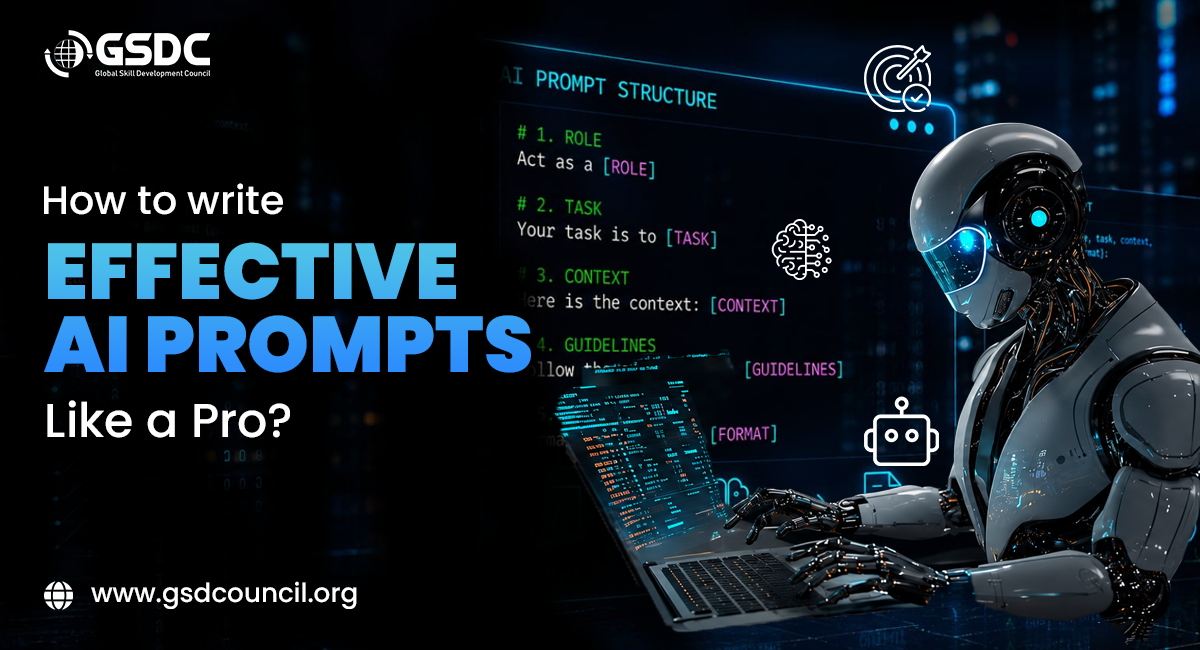
How to Write Effective AI Prompts Like a Pro?
Written by Emily Hilton
Artificial Intelligence has evolved from a futuristic concept into an everyday productivity tool. Whether you're drafting emails, writing code, creating marketing campaigns, analyzing data, or brainstorming ideas, AI assistants like ChatGPT, Claude, Gemini, and Microsoft Copilot are transforming how we work. However, one thing determines whether these tools produce exceptional results or disappointing ones: the quality of your AI prompt.
An AI model can only respond based on the instructions it receives. If your request is vague, incomplete, or confusing, the output will likely be the same. On the other hand, a well-structured prompt provides the AI with the context, direction, and expectations it needs to generate accurate, relevant, and useful responses.
Learning how to write effective AI prompts has therefore become one of the most valuable digital skills. Whether you're a student, marketer, software developer, business analyst, or entrepreneur, understanding how to write AI prompts can significantly improve your productivity and the quality of your work.
In this guide, you'll learn how to write an AI prompt, explore practical examples, discover prompt engineering best practices, and understand how professionals communicate effectively with AI systems.
What Is an AI Prompt?
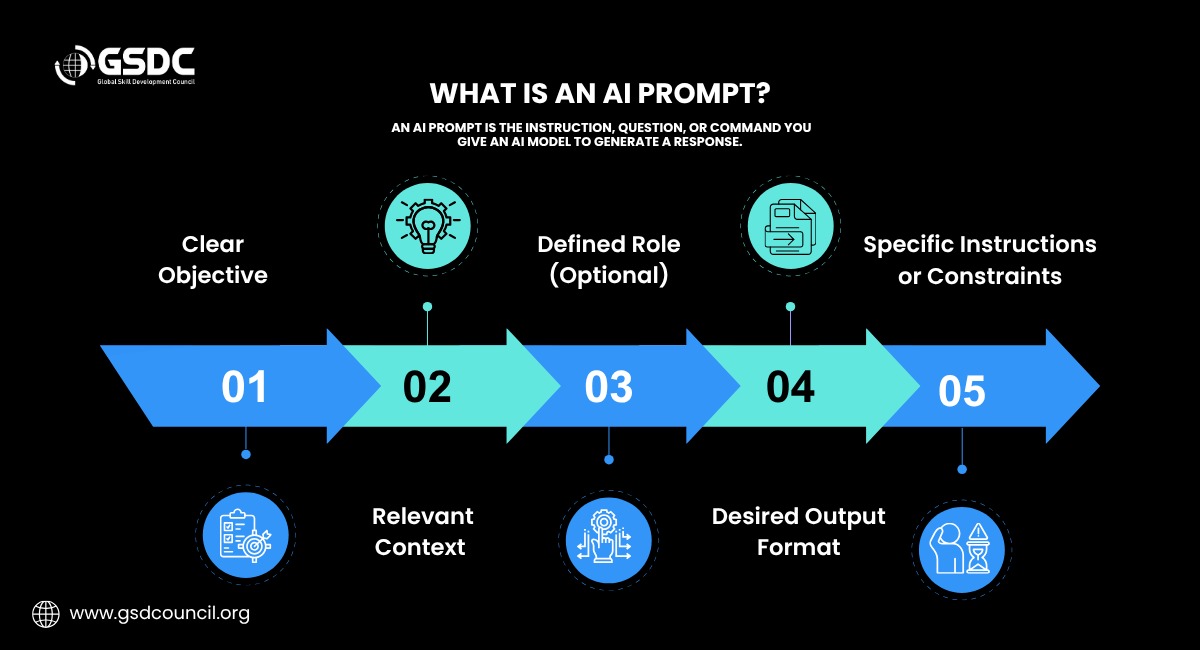
An AI prompt is simply the instruction, question, or command you provide to an artificial intelligence system to generate a response. Think of it as giving directions to a highly knowledgeable assistant. The clearer your directions, the better the outcome.
For example, imagine asking:
Poor Prompt
Write about marketing.
While the AI may generate content, the response will likely be generic because it lacks direction.
Now compare it with:
Better Prompt
Write a 500-word beginner-friendly article explaining digital marketing for small business owners. Include SEO, social media marketing, and email marketing with practical examples.
The second prompt gives the AI much more information about the audience, objective, length, and topics to include. As a result, the response becomes far more useful.
Understanding how to write prompt for AI isn't about using complicated language. It's about communicating clearly so the AI understands exactly what you're trying to accomplish.
Most modern AI models including ChatGPT can generate text, images, code, summaries, reports, presentations, and much more. Their performance depends largely on how effectively you prompt them.
Why Prompt Quality Makes Such a Big Difference
Many users assume AI is "smart enough" to understand incomplete instructions. In reality, AI doesn't read your mind it predicts the most likely response based on the information you provide.
A strong prompt helps AI:
- Understand your objective.
- Identify the intended audience.
- Produce responses in the correct tone.
- Follow the desired format.
- Reduce inaccuracies and irrelevant information.
- Save time by minimizing revisions.
This is why businesses are increasingly investing in prompt engineering techniques. Well-designed prompts improve consistency, reduce manual editing, and help organizations achieve better results from AI-powered workflows.
Whether you're writing reports, generating software code, creating marketing copy, or conducting research, learning how to prompt AI effectively can dramatically improve both efficiency and output quality.
How to Write Effective AI Prompts
Writing an effective prompt doesn't require technical expertise. Instead, it follows a simple structure that provides AI with enough information to understand exactly what you need.
Step 1: Clearly Define Your Goal
Start by identifying what you want the AI to accomplish.
Instead of asking:
Tell me about cybersecurity.
Try:
Explain the basics of cybersecurity to college students using simple language and real-world examples.
A clear objective eliminates ambiguity and helps AI focus on the right information.
Step 2: Provide Context
Context allows AI to tailor its response to your specific situation.
For example:
I'm preparing a presentation for HR managers about AI in recruitment. Explain how AI improves candidate screening and mention two potential challenges.
The additional background helps the AI generate more relevant and targeted content.
Step 3: Assign the AI a Role
One of the simplest yet most effective prompt engineering techniques is role prompting.
Examples include:
- Act as an SEO expert.
- Act as a financial advisor.
- Act as a senior software engineer.
- Act as a university professor.
For example:
Act as an experienced content strategist and create a blog outline about Generative AI in healthcare.
Giving AI a role influences the depth, tone, and perspective of the response.
Step 4: Specify the Output Format
Don't assume AI knows how you want the answer presented.
You can request:
- Bullet points
- Tables
- Step-by-step guides
- Blog articles
- Social media captions
- Email drafts
- JSON
- Markdown
Example:
Create a comparison table showing the advantages and disadvantages of cloud computing.
The more specific your formatting request, the less editing you'll need later.
Step 5: Include Constraints
Constraints help narrow the response and make it more useful.
Specify details such as:
- Word count
- Reading level
- Tone of voice
- Target audience
- Number of examples
- Language style
Example:
Write a 300-word LinkedIn post for business leaders using a professional but conversational tone. Include three key takeaways and a call-to-action.
These small details significantly improve the final output.
Step 6: Refine and Improve Your Prompt
Even experienced users rarely get the perfect response on the first attempt.
Instead of starting over, continue the conversation by asking AI to refine its output.
For example:
- Make it more concise.
- Add practical examples.
- Explain it in simpler language.
- Rewrite it for executives.
- Convert it into a checklist.
- Include recent trends.
Prompt writing is an iterative process. Each refinement helps AI better understand your expectations and produce higher-quality results.
Mastering AI writing prompts isn't about memorizing templates; it's about learning how to communicate your ideas clearly. As you practice, you'll naturally develop better prompting habits that save time and deliver more accurate, relevant, and professional AI-generated content.
How to Write Prompts for ChatGPT
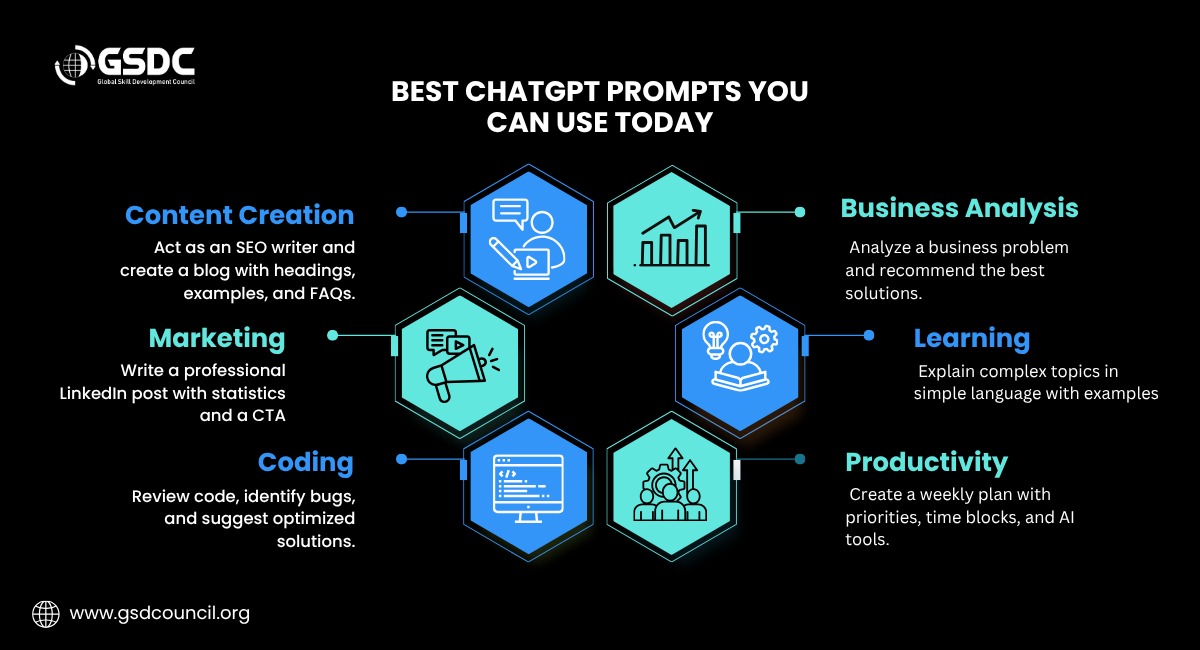
While the fundamentals of prompting apply to most AI tools, learning how to write prompts for ChatGPT can help you unlock even better results. ChatGPT is designed to follow detailed instructions, maintain context during conversations, and refine responses based on follow-up requests.
Instead of treating ChatGPT like a search engine, think of it as a collaborative assistant. The more context and guidance you provide, the more relevant and personalized the output becomes.
Here are a few examples:
Content Writing
Basic Prompt:
Write a blog about remote work.
Improved Prompt:
Act as an HR consultant and write a 1,000-word blog explaining the benefits and challenges of remote work for startups. Include practical examples, best practices, and five FAQs.
Email Writing
Basic Prompt:
Write an email.
Improved Prompt:
Write a professional email to a client informing them that the project deadline has been extended by one week. Keep the tone positive and reassuring.
Learning & Research
Basic Prompt:
Explain blockchain.
Improved Prompt:
Explain blockchain technology to a beginner using simple language and real-world examples. Compare it with a traditional database in a table.
These examples show that the best prompts for ChatGPT clearly communicate the objective, audience, format, and level of detail expected.
Prompt Engineering Best Practices
Prompt engineering is more than asking good questions it's about designing prompts that consistently produce high-quality outputs. Following prompt engineering best practices can help you save time and improve AI performance.
1. Be Clear and Specific
Avoid vague instructions. Instead of saying:
Tell me about AI.
Try:
Explain how Generative AI is transforming healthcare using five real-world examples.
Specific prompts reduce ambiguity and improve accuracy.
2. Give AI Enough Context
Context allows AI to generate responses that are relevant to your situation.
For example:
I'm preparing a presentation for business executives with no technical background. Explain AI governance in simple terms.
Without context, AI may provide overly technical or irrelevant information.
3. Assign a Role
Role prompting is one of the most widely used prompt engineering techniques.
Examples include:
- Act as a cybersecurity consultant.
- Act as an experienced recruiter.
- Act as a marketing strategist.
- Act as a university professor.
Role prompting helps AI adopt the appropriate tone, vocabulary, and expertise.
4. Request Structured Outputs
AI can present information in many formats.
Examples include:
- Tables
- Checklists
- Bullet points
- JSON
- FAQs
- Step-by-step guides
- Comparison charts
Structured outputs make information easier to read and use.
5. Break Complex Tasks into Smaller Steps
Instead of asking AI to complete everything at once, divide large tasks into manageable stages.
For example:
- Generate an outline.
- Expand each section.
- Improve readability.
- Optimize for SEO.
- Proofread the article.
This approach often produces better results than requesting everything in a single prompt.
6. Iterate and Refine
Your first response doesn't have to be your final one.
Follow-up prompts such as:
- Add more examples.
- Simplify the explanation.
- Rewrite for beginners.
- Include statistics.
- Make the tone more professional.
can significantly improve the quality of AI-generated content.
Common Mistakes to Avoid When Writing AI Prompts
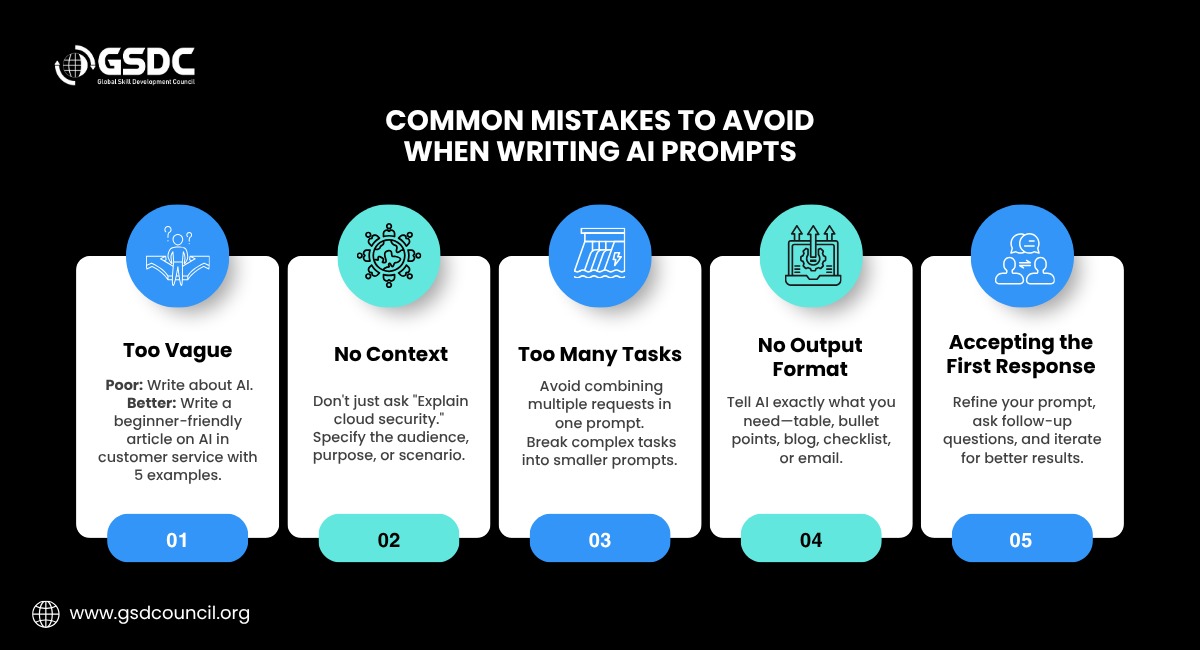
Even experienced users occasionally write ineffective prompts. Recognizing common mistakes will help you create better AI prompts from the start.
Mistake 1: Being Too Vague
Poor Prompt
Write about artificial intelligence.
Better Prompt
Write a beginner-friendly article explaining how artificial intelligence is transforming customer service. Include five practical examples and a conclusion.
Mistake 2: Providing No Context
Explain cloud security.
Explain cloud security to small business owners who have little technical knowledge.
Knowing the audience changes the entire response.
Mistake 3: Asking Multiple Questions at Once
Explain AI, compare machine learning and deep learning, discuss ethics, provide examples, and create a presentation.
This often produces shallow answers.
Instead, break the task into smaller prompts.
Mistake 4: Forgetting the Output Format
If you don't specify the format, AI decides for you.
Instead, request exactly what you need.
Example:
Create a comparison table with five rows highlighting the differences between Agile and Waterfall methodologies.
Mistake 5: Accepting the First Response
One of the biggest mistakes is assuming the first output is the best.
Professionals rarely stop after the initial response. They refine prompts, ask follow-up questions, request improvements, and continue iterating until the content meets their expectations.
Developing this habit is what separates casual users from skilled prompt engineers.
How to Become an AI Prompt Engineer
As Generative AI continues to transform industries, prompt engineering has become a highly sought-after skill. Organizations are looking for professionals who can write effective prompts that improve AI accuracy, productivity, and decision-making across business functions.
To become an AI prompt engineer, start by understanding how Large Language Models (LLMs) like ChatGPT, Claude, Gemini, and Microsoft Copilot interpret and respond to prompts. Practice creating prompts for different use cases, such as content creation, coding, research, customer support, and business analysis. As your skills grow, explore advanced prompt engineering techniques like role prompting, few-shot prompting, prompt chaining, and structured output prompting to generate more reliable AI responses.
Building a personal prompt library and continuously experimenting with new AI tools will help you refine your skills and stay current with the rapidly evolving AI landscape.

For professionals looking to validate their expertise, the GSDC Prompt Engineering Certification offers a structured learning path covering prompt design, prompt engineering best practices, AI communication strategies, and real-world applications. Earning this globally recognized certification demonstrates your ability to work effectively with AI systems and prepares you for emerging roles in the AI-driven workforce.
Conclusion
Writing effective AI prompts is more than just asking questions it's about providing clear instructions that help AI deliver accurate, relevant, and high-quality results. By understanding prompt engineering fundamentals, applying proven techniques, and continuously refining your prompts, you can unlock the full potential of AI tools like ChatGPT and improve productivity across a wide range of tasks. As AI becomes an essential part of modern workflows, prompt engineering is quickly emerging as a valuable professional skill. Investing in continuous learning and certifications, such as the GSDC Prompt Engineering Certification, can help you build expertise and stay competitive in the evolving AI landscape.

Related Certifications
Stay up-to-date with the latest news, trends, and resources in GSDC
If you like this read then make sure to check out our previous blogs: Cracking Onboarding Challenges: Fresher Success Unveiled
Not sure which certification to pursue? Our advisors will help you decide!