AI Governance Trends: How GRC Is Changing Risk and Compliance
Written by Emily Hilton
Governance, risk, and compliance teams have spent the last two years watching AI move from a side project to a boardroom line item. That shift has a price tag attached to it. Spending on dedicated AI governance platforms is on track to hit $492 million in 2026, and it's expected to cross $1 billion by 2030. That kind of growth doesn't happen because a topic is trendy. It happens because organizations got burned, or came close to it, and decided that managing AI risk needed its own budget line.
If you work in risk, compliance, audit, or security, you've probably felt this shift already. AI governance used to be a footnote in the broader GRC conversation. Now it's often the main event. This piece looks at what AI governance actually means, why it's become urgent, and the shifts changing how GRC teams operate.
What Is GRC, in Plain Terms
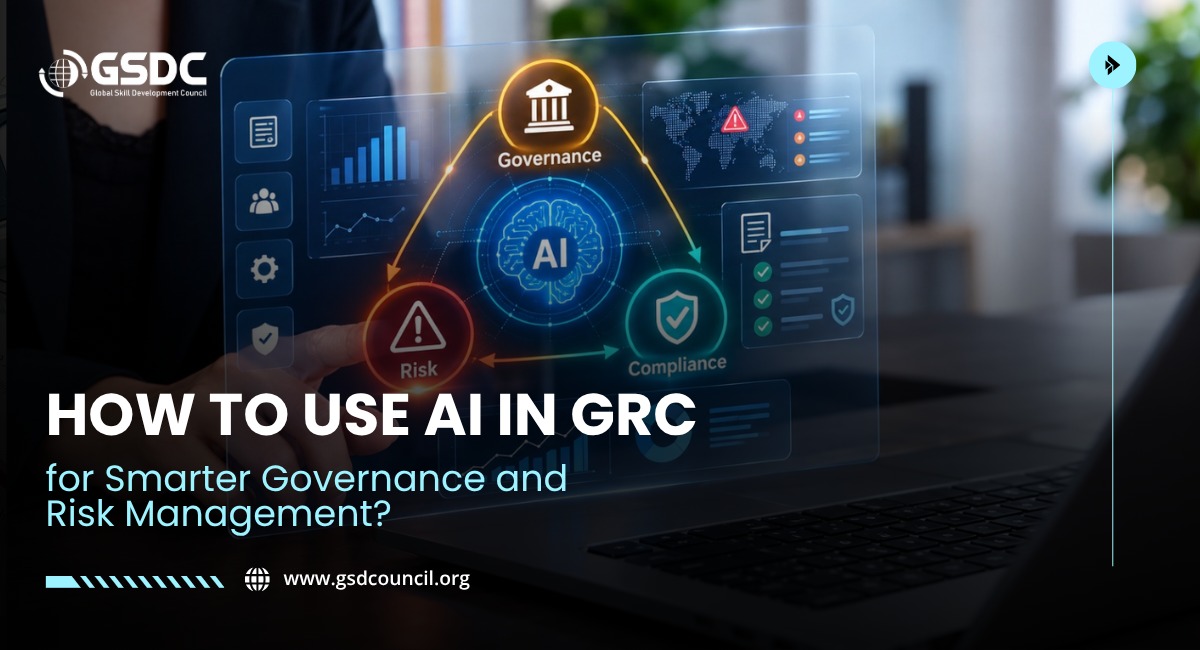
GRC stands for governance, risk, and compliance. It's the umbrella term for how an organization sets direction (governance), identifies and manages threats to that direction (risk), and makes sure it follows the laws, standards, and internal policies that apply to it (compliance).
Traditionally, GRC covered things like financial controls, data privacy, cybersecurity policy, and regulatory reporting. Teams ran periodic audits, filled out questionnaires, and reported up to a board committee a few times a year. It worked reasonably well when risk moved slowly.
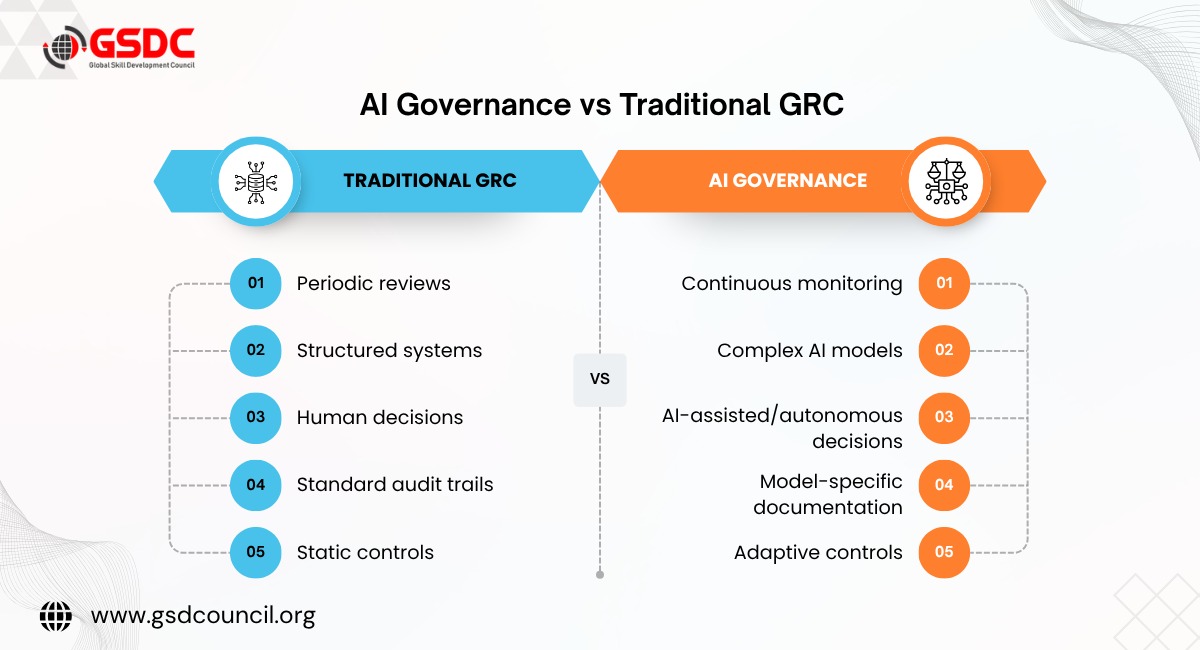
AI doesn't move slowly. A model can be retrained overnight. An AI agent can make thousands of decisions before a human ever reviews one of them. That mismatch, fast-moving technology against a governance process built for annual cycles, is the root of most AI governance problems today.
What Is AI Governance, and How Is It Different From Traditional GRC?
AI governance is the set of policies, controls, and oversight structures an organization puts in place to make sure its AI systems are used safely, fairly, and in line with regulations. An AI governance framework typically covers things like model documentation, bias testing, data lineage, human oversight requirements, and incident response for AI-specific failures.
The difference from classic GRC comes down to three things:
Speed.
AI systems change continuously through retraining and fine-tuning, so a control that was accurate last quarter might already be stale.
Opacity.
Many AI models, especially large language models, don't offer a simple explanation for why they produced a given output. That makes traditional audit trails harder to build.
Autonomy.
Newer AI agents don't just recommend a decision, they can execute it. That collapses the usual gap between "flagged risk" and "risk that already happened."
This is why AI governance isn't simply GRC with an AI label stuck on it. It's a genuinely new discipline that borrows structure from GRC while solving problems GRC frameworks were never designed to catch.
Why AI Governance Is Suddenly a Board-Level Priority
Confidence and adoption are moving in opposite directions right now, and that gap is exactly what's pushing AI governance up the priority list. In Deloitte's most recent CFO Signals survey, 93% of finance leaders said their organizations use AI extensively or modestly across multiple functions, yet only 43% said they felt confident in their organization's current AI governance.
That gap shows up in GRC-specific research too. MetricStream's 2025 GRC Practitioner Survey found that while 47% of risk professionals recognized AI's value, only 14% had fully integrated AI into their GRC frameworks. Most teams know they need to act. Fewer have actually built the plumbing to do it, and that gap is exactly what's pulling outside consulting expertise into the picture, a point worth keeping in mind as we get to the trends themselves.
A few forces are converging to close that gap fast:
Regulation is no longer hypothetical.
The EU AI Act's enforcement deadlines, alongside sector-specific rules in finance, healthcare, and government, mean non-compliance now carries real financial exposure.
Boards are asking harder questions.
AI incidents involving bias, hallucinated outputs, or unauthorized data use now make headlines quickly, and directors don't want to be caught flat-footed.
Insurers and auditors are catching up.
Cyber insurance renewals and external audits increasingly ask for documented AI governance controls, not just a policy statement.
Where AI Governance Is Actually Heading: Three Shifts
Individually, the changes happening in AI-powered GRC can look like a list of unrelated trends. Looked at together, they form three broader shifts: risk oversight is becoming continuous, AI itself is getting harder to govern, and AI governance is turning into its own business and career discipline.
Shift 1: AI Risk Oversight Is Becoming Continuous
- Risk management is moving from periodic to continuous.
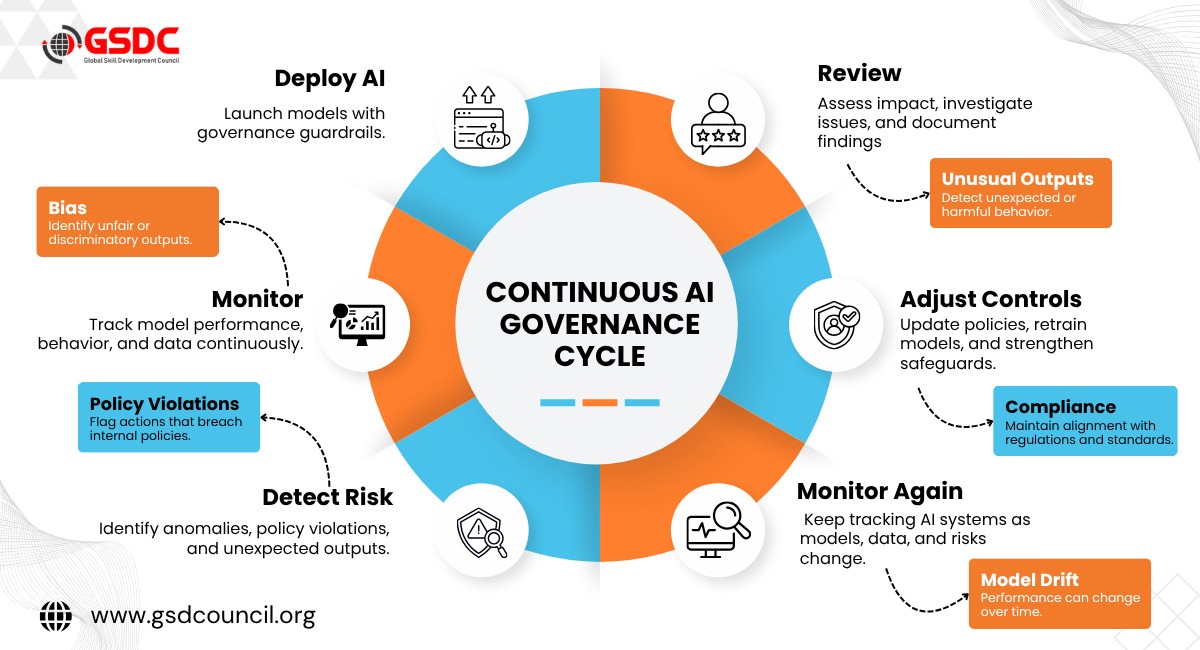
AI in risk management used to mean running a model to score risk once a quarter. That's changing. GRC platforms are increasingly built to monitor AI systems continuously, flagging drift, unusual outputs, or policy violations as they happen instead of during the next scheduled review. A model that was fair and accurate at launch can drift within weeks as the data it encounters changes, and continuous monitoring is what catches that before it turns into an incident report.
- Purpose-built AI governance tools are replacing spreadsheets.
For a long time, "AI governance" meant a shared spreadsheet tracking which models existed and who owned them. That approach doesn't scale once an organization has dozens or hundreds of models and agents running in production. A new category of AI governance tools and solutions has emerged to fill that gap, covering model inventories, automated bias and fairness testing, policy enforcement, and audit-ready documentation. Gartner's research backs up why this matters: organizations that deployed AI governance platforms were 3.4 times more likely to achieve high effectiveness in their governance programs compared to those relying on manual processes. It's also why bodies like the Global Skill Development Council (GSDC) have built continuous monitoring and tool evaluation directly into their AI governance curriculum, on the assumption that picking the right platform is a skill in itself, not just a procurement decision.
| Approach | How risk is tracked | Typical gap |
| Spreadsheet-based | Manual updates, periodic review | Stale data, no real-time alerts |
| Purpose-built AI governance tools | Automated monitoring, policy enforcement | Requires upfront setup and integration |
| No formal tracking | Ad hoc, reactive | Highest exposure, no audit trail |
Shift 2: AI Itself Is Getting Harder to Govern
- Agentic AI is creating a governance blind spot.
AI agents that can plan, act, and complete multi-step tasks without waiting for human sign-off are being adopted quickly, but governance hasn't kept pace. Gartner predicts that by 2027, 40% of enterprises will demote or decommission autonomous AI agents after governance gaps surface through production incidents. The core issue is that many organizations apply the same governance rules to every AI system, regardless of how much autonomy it actually has. A chatbot that drafts email replies and an agent that can initiate wire transfers need very different levels of oversight. Treating them the same is where failures start.
- Responsible AI is becoming a procurement requirement, not just an ethical one.
A few years ago, publishing a responsible AI governance framework was a way to stand out. Now enterprise buyers and procurement teams routinely ask vendors to show their framework, covering fairness testing, transparency, accountability, and escalation paths, before a contract gets signed. That's a fast, commercially driven shift: responsible AI governance has moved from a values statement to a checkbox on a vendor security questionnaire, and organizations without one may increasingly find themselves at a disadvantage during procurement, not just under scrutiny after the fact.
- Regulation is pulling AI governance and GRC into one discipline.
For a while, AI governance sat somewhat separately from the broader GRC function, often owned by a data science or innovation team. That's changing as regulators start treating AI risk as an extension of existing compliance obligations rather than a standalone category. In practice, AI governance frameworks are increasingly built as a module within a broader GRC framework, sharing the same reporting lines, risk taxonomy, and audit processes as financial and operational risk, rather than living in a separate silo. This is the direction the whole field is moving in: AI risk isn't becoming a discipline that sits beside GRC. It's becoming part of how organizations manage risk, period. That convergence is also why newer credentials, like the Certified AI GRC Professional program, are built around AI and GRC as one combined skill set rather than treating them as two separate tracks to learn.
Shift 3: AI Governance Is Becoming a Business and Career Discipline
- Consulting is filling the skills gap.
Most organizations don't have the internal expertise to build an AI governance framework from scratch, especially one that satisfies multiple overlapping regulations across regions. That gap is fueling demand for AI governance consulting, particularly around EU AI Act readiness, model risk assessments, and third-party AI vendor audits. As regulatory frameworks continue to multiply across jurisdictions, that demand is likely to stay elevated simply because few in-house teams can track every applicable rule on their own.
- The skills gap is pushing GRC professionals toward AI-specific certification.
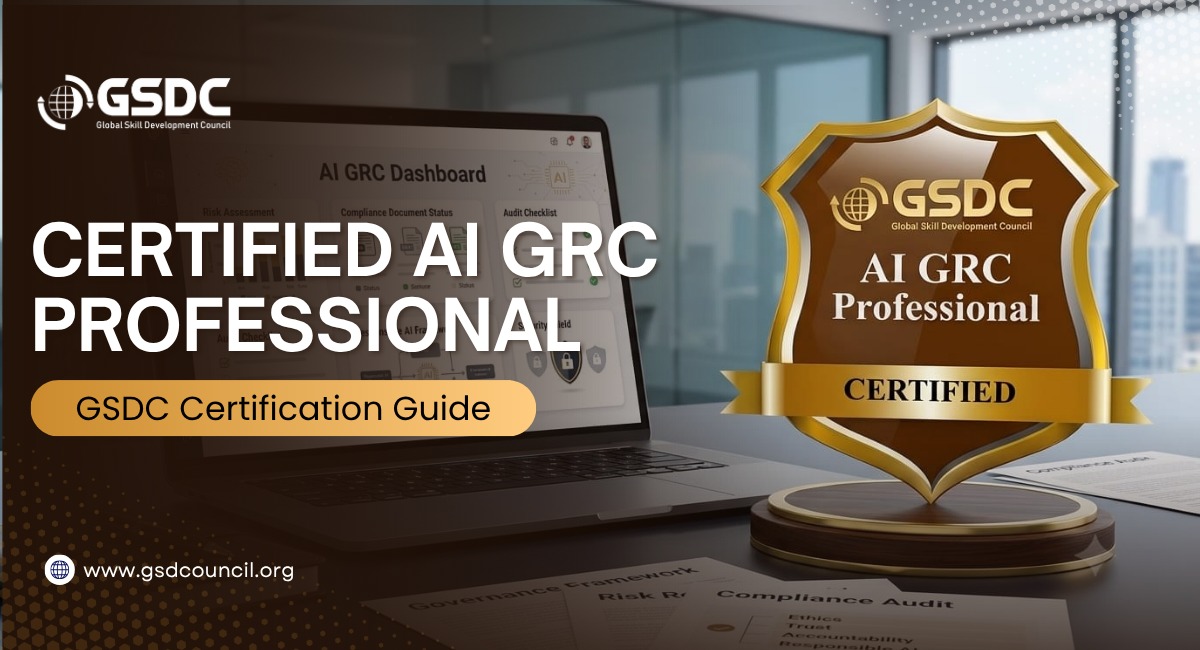
Job postings increasingly list AI governance experience as a requirement rather than a nice-to-have, and existing GRC professionals are being asked to upskill quickly. This is where a certification like GSDC's Certified AI GRC Professional program becomes relevant. It's built specifically for this gap, covering how to design AI governance frameworks, assess AI-specific risks, and apply requirements from regulations like the EU AI Act alongside standards like ISO 42001, rather than treating AI as an add-on to a generic risk management course.
How GRC Teams Can Get Ahead
A few practical starting points, roughly in order:
- Build a model and agent inventory first - You can't govern what you can't see. Start with a simple, accurate list of every AI system in production.
- Tier your oversight by autonomy level - A recommendation engine and an autonomous transaction agent shouldn't sit under the same review process.
- Fold AI risk into existing GRC reporting - Avoid creating a parallel governance track that never talks to the main risk committee.
- Invest in training before tools - A governance platform is only as good as the people interpreting its alerts. This is one of the reasons structured programs like the Global Skill Development Council's (GSDC) Certified AI GRC Professional course have gained traction: teams that go through a shared framework together tend to evaluate and adopt governance tools more consistently than teams that learn the concepts ad hoc, on the job.
- Revisit vendor contracts - Ask AI vendors directly how they test for bias and how they handle model updates that could affect your compliance posture.
Teams that treat these as infrastructure to build steadily, rather than a checklist to complete once, tend to fare better than teams scrambling to react after an incident. The people side of that, giving risk and compliance staff a common vocabulary for AI-specific risk, often matters as much as the tooling itself.
Conclusion
AI governance isn't a side project bolted onto GRC anymore. It's becoming the way organizations manage risk in the first place, from continuous monitoring and purpose-built tools, to agentic AI oversight and procurement-driven responsible AI standards, to the consulting demand and certification paths now forming around it. The teams that get ahead won't be the ones that adopted AI fastest. They'll be the ones that built governance into how they operate before regulators, auditors, or a bad incident forced the issue.

Related Certifications
Frequently Asked Questions
Governance, risk, and compliance: how an organization sets direction, manages threats to it, and stays within relevant laws and policies.
The policies and oversight structures that keep AI systems safe, fair, and compliant, covering things like model documentation, bias testing, and human review.
Because AI can make decisions faster than traditional oversight was built to catch, which raises the cost of getting it wrong: regulatory penalties, reputational damage, and unpredictable operational risk.
A model inventory, risk classification by use case, bias and fairness testing, human review requirements, and an incident response process for AI-specific failures.
A general GRC certification is a solid base, but a credential built specifically for AI GRC, such as GSDC's Certified AI GRC Professional program, tends to close the gap faster.
Data governance covers how data is collected, stored, and used. AI governance covers that plus how models themselves are built, tested, deployed, and retired.
Stay up-to-date with the latest news, trends, and resources in GSDC
If you like this read then make sure to check out our previous blogs: Cracking Onboarding Challenges: Fresher Success Unveiled
Not sure which certification to pursue? Our advisors will help you decide!