How AI is Redefining Cybersecurity: From Threat Detection to Real-Time Response?
Written by Akshad Modi
- The Evolving Cyber Threat Landscape
- What AI Brings to Modern Cybersecurity?
- AI-Powered Threat Detection
- Real-Time Response and Automated Defense
- How Can Generative AI Be Used in Cybersecurity?
- Challenges and Risks of AI in Cybersecurity
- The Future of AI and Cybersecurity
- How will Generative AI in Cybersecurity Certification Will Help You in the Future?
- Conclusion
Cyber threats are evolving at an unprecedented pace. From ransomware-as-a-service and AI-powered phishing campaigns to sophisticated zero-day exploits, today’s attackers move faster, adapt quicker, and strike harder than ever before. Traditional security tools, which rely heavily on static rules and known threat signatures, are no longer sufficient to protect modern digital environments.
This is where Cybersecurity powered by Artificial Intelligence is changing the game. By analyzing massive datasets, learning from behavior patterns, and responding in real time, AI is revolutionizing risk analysis in cybersecurity and redefining how organizations detect, prevent, and respond to threats.
More importantly, the rise of Generative AI in Cybersecurity is enabling smarter defenses, ones that can simulate attacks, predict vulnerabilities, and assist security teams in decision-making. This blog explores how AI is reshaping cybersecurity, from advanced threat detection to real-time automated response, while examining challenges, risks, and future possibilities.The Evolving Cyber Threat Landscape
- Cyber threats have evolved into more sophisticated, automated, and aggressive forms during the last ten years.
- Attackers use AI-driven techniques, social engineering, and automation to bypass traditional security defenses that protect systems.
- Modern malware develops new variants at high speed, while phishing attacks use tailored methods to target their victims, and threats maintain concealed existence for extended timeframes.
- Traditional risk analysis methods in cybersecurity depend on historical data and static indicators of compromise (IoCs) and manual processes.
- Today’s attacks exceed the capability of these outdated methods to handle their operational speed and expanded reach, and advanced attack techniques.
- Threat actors use AI to perform automatic vulnerability assessments while they create phishing campaigns with AI-generated content.
- The ongoing arms race between security experts and cybercriminals requires organizations to implement AI-based systems for cyber threat detection and prevention.
- Organizations must implement predictive security models that use AI in cybersecurity and risk analysis processes instead of relying on reactive defense mechanisms.
What AI Brings to Modern Cybersecurity?
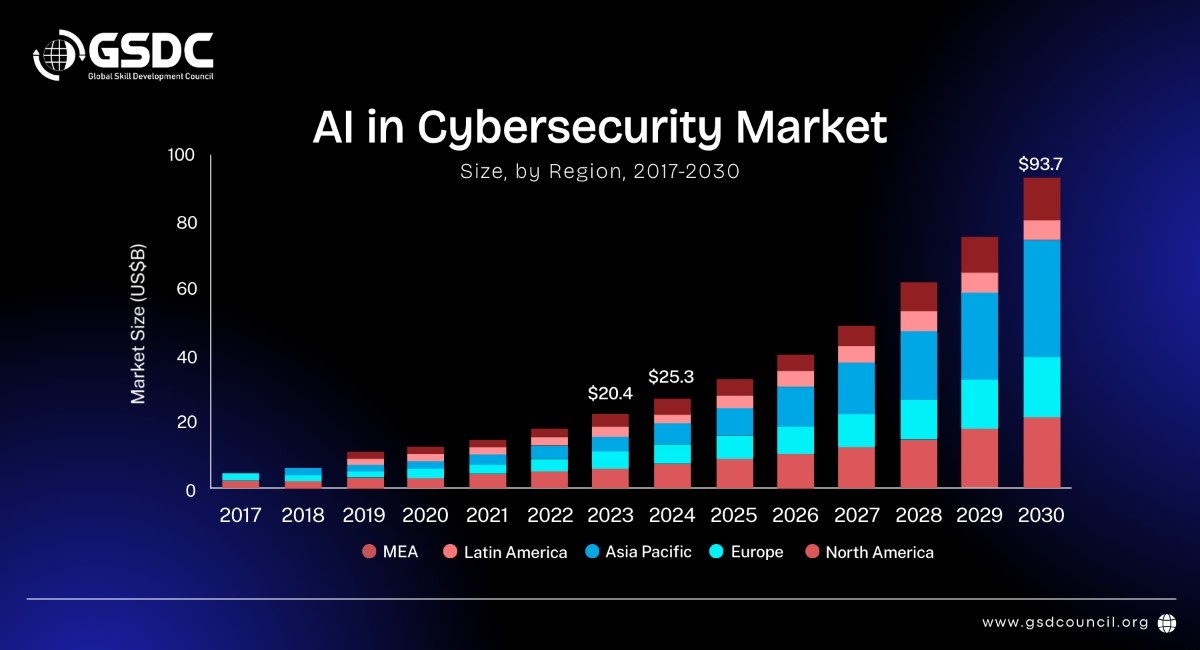
First, let's go through AI in cybersecurity. The global AI in cybersecurity market size was estimated at USD 25.35 billion in 2024 and will grow to USD 93.75 billion by 2030, which will result in a compound annual growth rate of 24.4 percent from 2025 to 2030. Organizations now utilize AI technologies, which include natural language processing and machine learning, to improve their cybersecurity protection systems.
Now, Artificial Intelligence in cybersecurity is not a single technology; it’s a combination of machine learning, deep learning, natural language processing, and increasingly, generative AI models.
At its core, AI enables:
- Continuous monitoring of systems, networks, and endpoints
- Behavioral analysis instead of signature-based detection
- Rapid correlation of security events across environments
- Automated decision-making based on risk context
By processing vast volumes of data in real time, AI dramatically enhances risk analysis in cybersecurity, allowing organizations to identify threats that human analysts might miss.
This shift is revolutionizing risk analysis in cybersecurity by transforming it from a periodic, manual process into a continuous, adaptive function that evolves alongside threats.
AI-Powered Threat Detection
Real-Time Behavioral Monitoring
67% of the organizations use AI tools in their information security operations for enhanced detection and response. AI-driven cybersecurity platforms continuously monitor user behavior, network traffic, endpoints, and application activity. Instead of asking, “Is this a known threat?”, AI asks, “Is this behavior normal?”
For example:
- A user logging in from an unusual location
- A server accessing sensitive data at odd hours
- Sudden spikes in outbound traffic
These deviations trigger alerts based on behavioral anomalies, not predefined rules. This approach significantly improves using AI to predict and prevent attacks before damage occurs.
Detecting Unknown and Zero-Day Threats
One of AI’s greatest strengths is its ability to detect previously unseen threats. Unlike traditional tools, AI models learn from patterns and can flag suspicious activity even when no known signature exists.
This capability is critical for modern Cybersecurity, where zero-day vulnerabilities and fileless malware are increasingly common. AI-driven detection enhances AI in cybersecurity and risk analysis by identifying threats based on intent rather than identity.
AI-Enhanced SIEM and Analytics
Security Information and Event Management platforms now use AI to correlate millions of events across systems. Instead of overwhelming analysts with alerts, AI prioritizes incidents based on risk severity and business impact, further revolutionizing risk analysis in cybersecurity.Real-Time Response and Automated Defense
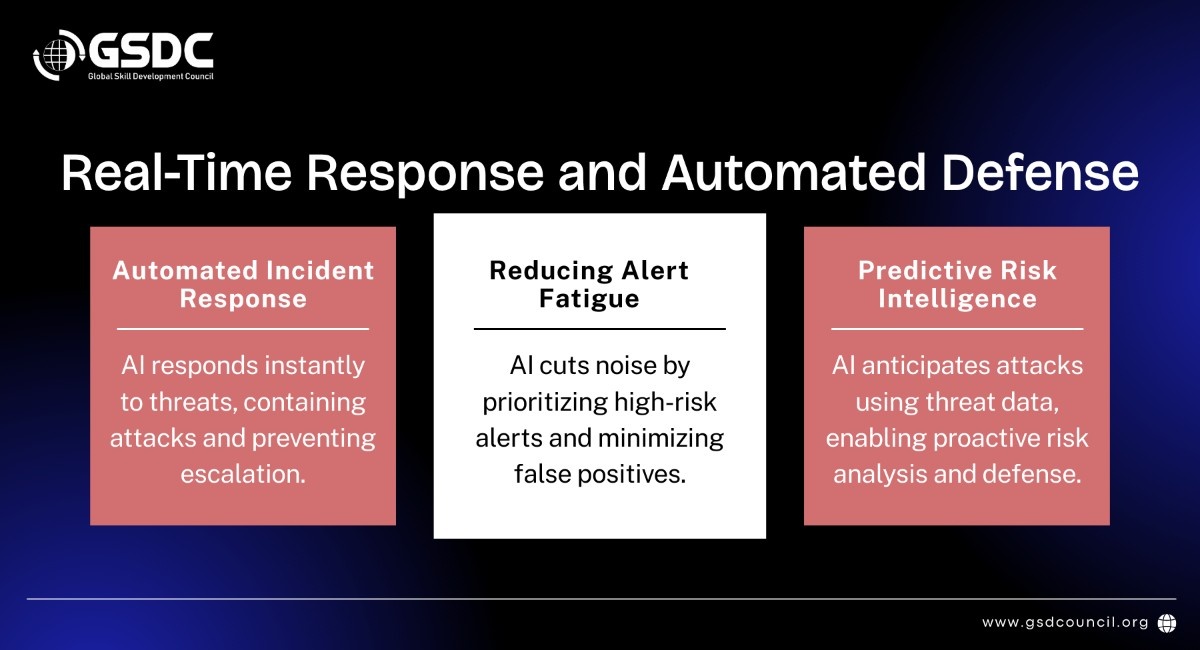
Automated Incident Response
Speed matters in cybersecurity. AI-powered systems can respond to threats in seconds, isolating compromised devices, blocking malicious IPs, or disabling suspicious accounts automatically.
This real-time action drastically reduces dwell time and limits potential damage. By using AI to predict and prevent escalation, organizations move from reactive defense to proactive protection.
Reducing Alert Fatigue
Security teams often face thousands of alerts daily. AI helps filter noise, reduce false positives, and surface only high-risk incidents. This improves productivity and ensures human expertise is applied where it matters most.
Predictive Risk Intelligence
AI doesn’t just respond, it anticipates. By analyzing historical trends, vulnerabilities, and threat intelligence feeds, AI models forecast where attacks are likely to occur. This predictive capability strengthens risk analysis in cybersecurity and enables preemptive defense strategies.How Can Generative AI Be Used in Cybersecurity?
Generative AI Explained
Generative AI models such as large language models can generate text, code, simulations, and scenarios. But how can generative AI be used in cybersecurity?
The answer lies in its ability to enhance decision-making, automate analysis, and simulate threats.
Key Use Cases of Generative AI in Cybersecurity
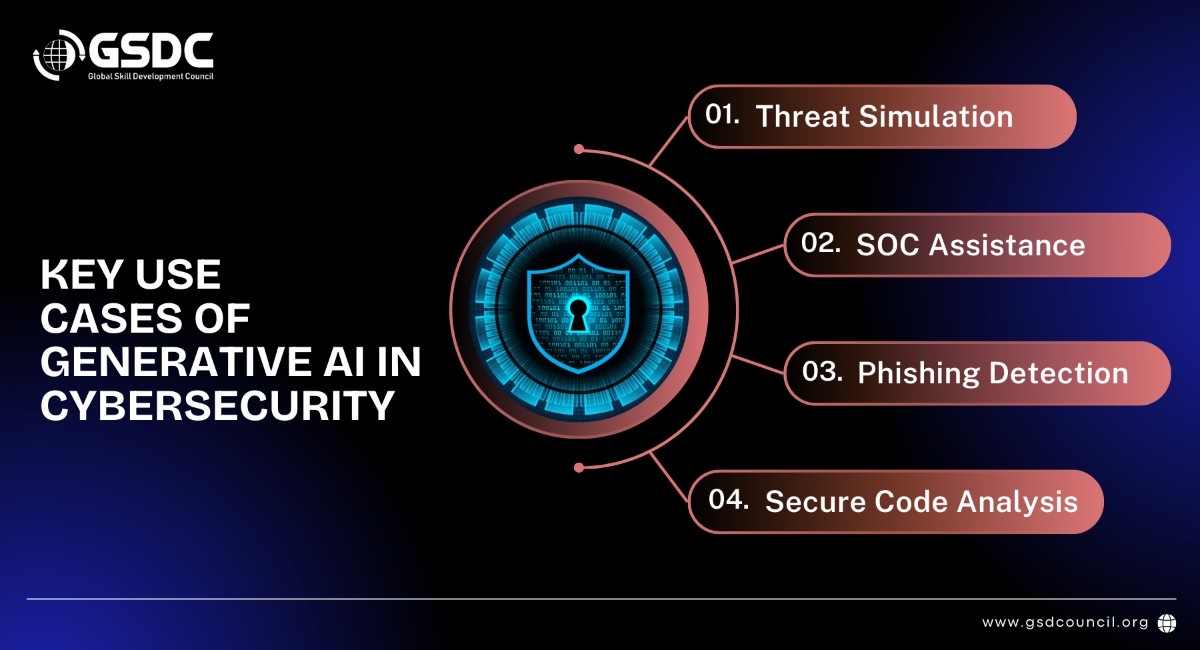
- Threat Simulation and Attack Modeling: Generative AI can simulate realistic attack scenarios, helping organizations test defenses and identify weaknesses, revolutionizing risk analysis in cybersecurity.
- Security Operations Assistance: AI copilots assist analysts by summarizing incidents, explaining root causes, and recommending mitigation steps, enhancing AI in cybersecurity and risk analysis.
- Phishing Detection and Awareness: By analyzing language patterns, Generative AI in Cybersecurity helps identify AI-generated phishing emails and trains employees with realistic simulations.
- Secure Code Analysis: Generative AI reviews source code to identify vulnerabilities early in the development lifecycle.
So when asked, “how can generative AI be used in cybersecurity?”, the answer spans detection, prevention, response, and resilience, making generative AI and cybersecurity a powerful combination.
Challenges and Risks of AI in Cybersecurity
AI provides revolutionary advantages to society, yet it creates obstacles that need to be addressed.
- Data Quality and Bias: AI models depend on the quality of their training data because their performance depends on that data. Risk analysis in cybersecurity, which uses poor-quality data and biased data, results in incorrect risk assessments.
- Adversarial AI Attacks: Attackers use input manipulation techniques to create misleading situations for AI systems. The defense of AI models has become an essential component of contemporary cybersecurity practices.
- Explainability and Trust: Many AI systems operate as "black boxes," which creates challenges for explaining their decisions and leads to governance and compliance problems.
- Skill Gaps and Costs: The implementation of AI in cybersecurity and risk analysis requires organizations to invest in specialized skills, which creates financial burdens that smaller organizations struggle to manage.
The Future of AI and Cybersecurity
The future of cybersecurity will be defined by collaboration between humans and intelligent systems. As Generative AI in Cybersecurity matures, we will see:
- Autonomous security agents managing routine incidents
- AI-driven cyber risk forecasting
- Deeper integration of generative AI and cybersecurity into governance and compliance
- Stronger ethical and regulatory frameworks
Ultimately, using AI to predict and prevent threats will become the standard, not the exception.
How will Generative AI in Cybersecurity Certification Will Help You in the Future?
The GSDC program on Certified Generative AI in Cybersecurity teaches professionals to use generative AI for advanced threat detection, risk assessment, and automated security response. The program uses practical case studies together with AI security operations and ethical management practices to help students build cyber defense systems, make better choices, and protect against emerging digital threats.
Benefits:
- Builds practical expertise in applying Generative AI for threat detection, simulation, and incident response.
- Enhances cyber risk analysis through AI-driven insights, predictive intelligence, and automation.
- Helps professionals improve SOC efficiency by reducing alert fatigue and accelerating response times.
- Strengthens governance, ethics, and compliance readiness for AI-powered cybersecurity systems.

Conclusion
The implementation of AI technology has become essential for cybersecurity operations because it has become a core element of their work. AI technology transforms cybersecurity risk assessment processes through its ability to deliver real-time threat detection and automated defense response systems, together with its capacity to generate predictive intelligence and create simulation models.
Organizations use AI technology to maintain protection against emerging threats because it improves their cybersecurity operations through better threat detection, faster response times, and more precise identification of dangers.
The use of Generative AI in Cybersecurity needs to be combined with human knowledge because it enables organizations to build security systems that can protect against future cyber threats. Organizations need to implement AI-powered defense systems because their cyber threat protection efforts have become essential for maintaining business success in the current digital environment.

Related Certifications
Stay up-to-date with the latest news, trends, and resources in GSDC
If you like this read then make sure to check out our previous blogs: Cracking Onboarding Challenges: Fresher Success Unveiled
Not sure which certification to pursue? Our advisors will help you decide!