Designing Ethical AI Systems Using ISO 42001 Without Legal Complexity
Written by Orifha Joan
- Why Ethical AI Matters More Than Ever
- The Growing AI Governance Gap
- Core Principles of Ethical AI Systems
- Ethical AI Around the World: Different Approaches to Enforcement
- Understanding ISO 42001
- The Plan-Do-Check-Act Framework in ISO 42001
- Governing the AI Lifecycle
- Become a Certified ISO 42001 Lead Auditor with GSDC
- Conclusion
Artificial Intelligence is no longer a futuristic concept. It is already transforming industries such as healthcare, finance, recruitment, cybersecurity, and customer service. Organizations worldwide are rapidly integrating AI systems into their operations to enhance efficiency, automate processes, and deliver improved user experiences.
However, with this rapid growth comes a major concern: how do organizations ensure that AI systems remain ethical, transparent, and trustworthy while supporting ethical AI development and responsible AI implementation?
This was the central focus of the webinar, “Designing Ethical AI Systems Using ISO 42001 Without Legal Complexity.” The session explored the growing governance gap in AI, the importance of ethical frameworks, and how the ISO 42001 standard and ISO 42001 AI management system help organizations build ethical AI systems through a structured AI governance framework and AI compliance framework without getting trapped in unnecessary legal complications.
The webinar highlighted a critical truth: AI systems are only as reliable as the data, governance, and oversight behind them. Effective ai risk management, responsible ai governance, ai transparency, and ai governance and ethics are essential for building trustworthy AI solutions.
Why Ethical AI Matters More Than Ever
AI systems learn from historical data and user interactions. While this allows them to become powerful decision-making tools, it also introduces a significant risk: inherited bias.
If an AI system is trained on flawed or incomplete data, it will reflect those flaws in its outcomes. For example, healthcare AI systems trained primarily on limited population groups may produce inaccurate diagnoses for underrepresented communities. These mistakes are not minor technical glitches; they can lead to delayed treatment, incorrect medical recommendations, and serious consequences for patients.
Similarly, AI systems used in hiring, lending, or law enforcement can unintentionally discriminate against certain groups if bias exists within the training data.
The webinar emphasized that AI itself is not inherently unethical. The real issue lies in how the systems are designed, governed, monitored, and trained. Without proper oversight, AI can amplify existing human flaws at scale. This highlights the importance of ethical AI development, ai transparency, and responsible AI implementation throughout the AI lifecycle.
This is why ethical AI is no longer optional. It has become a business, operational, and societal necessity. Organizations must adopt ethical AI systems supported by an AI governance framework, AI risk management practices, and responsible AI governance to ensure fairness, accountability, and trust.
The Growing AI Governance Gap
One of the strongest points discussed during the webinar was the “AI governance gap.”
Organizations are rapidly deploying AI technologies, but governance structures are not evolving at the same pace. Many businesses adopt AI simply because competitors are doing so, without clearly defining why they need it or what problems they are trying to solve.
Before building any AI system, organizations must answer a fundamental question:
Why are we building this AI system?
This “why” forms the foundation of responsible AI implementation and ethical AI development. Without a clearly defined purpose, organizations risk creating systems that lack direction, accountability, and ethical boundaries.
The webinar compared this challenge to the early days of cybersecurity, when security was treated as an afterthought. Today, organizations are paying the price through increasingly sophisticated cyberattacks and data breaches. The same mistake cannot be repeated with AI governance.
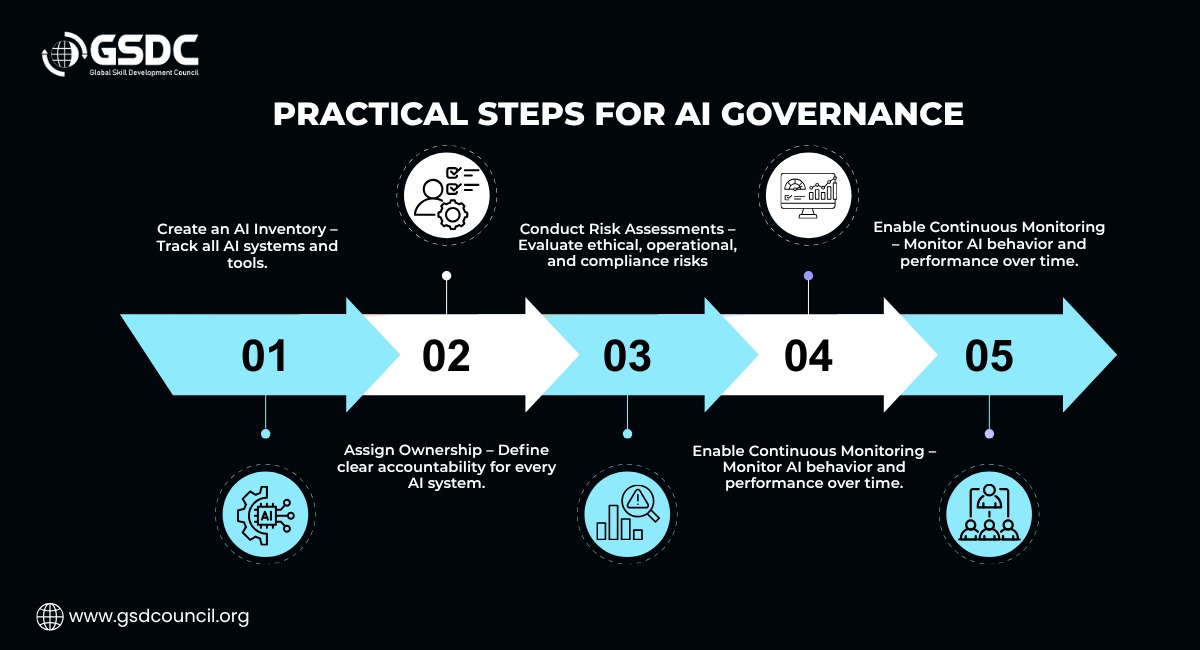
Unfortunately, many organizations currently operate without:
- AI governance frameworks
- Ethical risk assessments
- Accountability structures
- AI monitoring processes
- Clear ownership responsibilities
This lack of governance creates operational, reputational, and legal risks that can severely damage organizations in the future. To address these challenges, organizations need a structured AI governance framework, AI compliance framework, ai risk management processes, responsible ai governance practices, and ai governance tools that support ai transparency and ai governance and ethics across the organization.
Core Principles of Ethical AI Systems
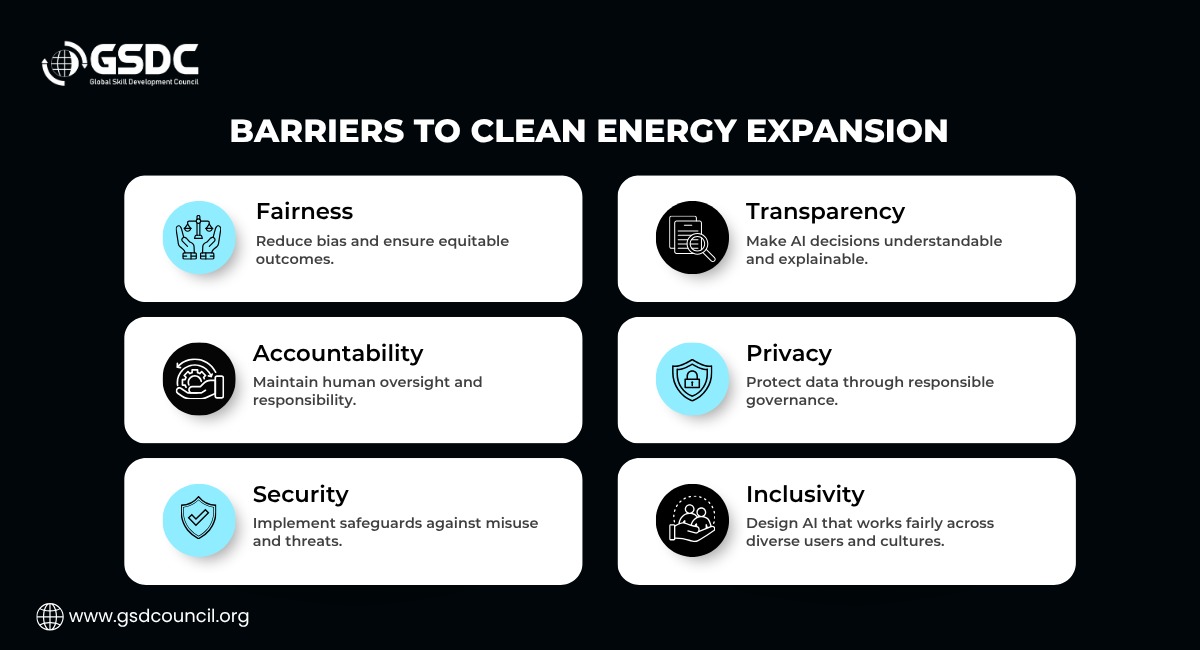
The webinar outlined several foundational principles that ethical AI systems should reflect as part of an effective AI governance framework and responsible AI implementation.
Fairness
AI systems must be trained on carefully reviewed datasets to minimize discrimination and bias. If the training data itself is flawed, the AI outcomes will also be flawed.
Organizations must continuously evaluate datasets to ensure fairness across different populations, demographics, and user groups. This is a critical aspect of ethical AI development and ai risk management.
Transparency
AI should never operate as a “black box.”
Users should be able to understand why decisions were made. For example, if a financial institution rejects a loan request through AI-based evaluation, customers should receive understandable explanations behind the decision.
AI transparency builds trust and reduces confusion around automated systems.
Accountability
AI systems cannot operate independently without human oversight.
The webinar repeatedly stressed the importance of having a “human in the loop.” Organizations must assign individuals or teams responsible for monitoring AI behavior, reviewing decisions, and intervening when systems behave unexpectedly.
Accountability ensures that AI remains controlled rather than autonomous beyond supervision and supports responsible ai governance.
Privacy
Since AI systems rely heavily on data, organizations must establish structured methods for handling user information securely and responsibly.
Poor data governance can lead to privacy violations, regulatory penalties, and loss of customer trust. Strong governance practices within an AI compliance framework help address these challenges.
Security
Ethical AI systems require strong security guardrails that prevent misuse.
These guardrails define acceptable and unacceptable AI behavior. For instance, many AI systems refuse harmful or unethical prompts because developers have implemented predefined safeguards.
Without such controls, AI systems can become vulnerable to abuse, manipulation, or malicious exploitation. Security controls should be integrated throughout ai lifecycle management.
Inclusivity
Organizations developing global AI solutions must consider cultural diversity, regional ethics, and population differences.
An AI system that works effectively in one region may unintentionally exclude or disadvantage users in another region if inclusivity is ignored. Inclusivity strengthens ai governance and ethics while supporting the development of ethical AI systems that serve diverse user communities.
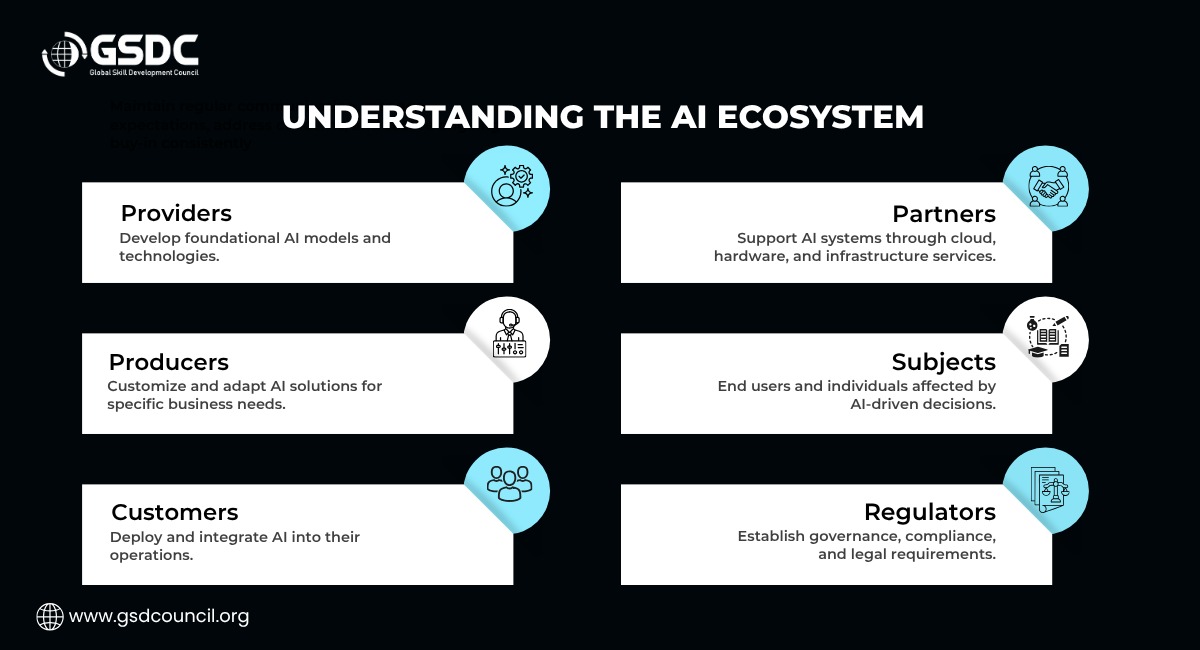
Ethical AI Around the World: Different Approaches to Enforcement
A particularly insightful section of the webinar explored how different regions approach AI regulation and governance.
While most countries agree on universal ethical principles such as fairness, safety, transparency, and accountability, enforcement differs significantly across regions.
European Union (EU)
The European Union has taken one of the strictest approaches to AI governance through the EU AI Act and GDPR.
The EU prioritizes:
- Data privacy
- User rights
- Algorithm transparency
- Risk-based AI classification
- Regulatory accountability
Organizations failing to comply may face legal penalties, reputational damage, and loss of public trust.
United States
The United States follows a more innovation-driven model.
Many leading AI companies, such as OpenAI, Google, and DeepMind, are based in the US. Instead of strict centralized regulations, the US often relies on sector-specific policies where healthcare AI, financial AI, and other industries may be regulated differently.
China
China focuses heavily on state oversight, national security, and social stability.
AI governance in China emphasizes monitoring and centralized control more than individual data protection.
Emerging Economies
Regions such as Africa are still developing AI governance frameworks. Challenges include:
- Limited digital literacy
- Weak governance infrastructure
- Rapid technology adoption
- Lack of mature regulatory systems
The webinar highlighted that while ethics may be universal, enforcement is heavily influenced by regional priorities and governance maturity.
Understanding ISO 42001
One of the key clarifications made during the session was that ISO 42001 is not a standard for AI products themselves.
Instead, GSDC’s ISO 42001 is a management system standard that guides organizations on how to responsibly design, develop, deploy, and manage AI systems.
It functions similarly to ISO 27001, which governs information security management systems.
ISO 42001 focuses on:
- AI governance frameworks
- Risk management
- AI lifecycle oversight
- Documentation practices
- Compliance structures
- Responsible AI management
Essentially, it helps organizations create structured systems for managing AI responsibly across different regulatory environments.
The Plan-Do-Check-Act Framework in ISO 42001
The webinar explained that ISO 42001 follows the continuous improvement model commonly used in ISO standards.
Plan
Organizations define the purpose, objectives, and governance structure for AI implementation.
Do
Responsible AI practices are implemented during development and deployment.
Check
AI performance, risks, and outcomes are continuously monitored and evaluated.
Act
Organizations improve systems based on lessons learned, detected biases, and operational findings.
This cycle ensures that AI systems evolve responsibly over time rather than remaining static and unmanaged.
Governing the AI Lifecycle
Another important concept discussed was AI lifecycle governance.
AI systems evolve continuously, and organizations must govern every phase responsibly.
The lifecycle includes:
- Ideation and purpose definition
- Design and development
- Validation and testing
- Deployment
- Continuous monitoring
- Improvement and refinement
- Revalidation
- Retirement and secure decommissioning
The webinar emphasized that deployment is not the end of the AI journey. Real-world usage often exposes issues that testing environments fail to detect.
Continuous monitoring is therefore critical to identifying bias, unexpected behavior, and system drift.
Become a Certified ISO 42001 Lead Auditor with GSDC
The GSDC Certified ISO 42001 Lead Auditor Certification is designed for professionals who want to assess, audit, and improve AI management systems based on the ISO 42001 standard. This certification provides comprehensive knowledge of ISO 42001 AI management system requirements, audit principles, AI governance frameworks, AI risk management, and compliance practices.

Participants learn how to plan, conduct, report, and follow up on audits while ensuring responsible AI implementation, AI transparency, and ethical AI development. The certification equips auditors, compliance professionals, consultants, and AI leaders with the skills needed to support effective AI governance and organizational trust.
Conclusion
Artificial Intelligence is reshaping industries, workplaces, and society itself. But innovation without governance creates risk, while governance without innovation creates stagnation.
The webinar strongly reinforced that ethical AI is not about slowing down technological progress. Instead, it is about ensuring that innovation happens responsibly through ethical AI development, responsible AI implementation, and responsible ai governance.
ISO 42001 provides organizations with a practical framework to build AI systems that are not only powerful but also transparent, accountable, secure, and ethical. The ISO 42001 standard establishes an ISO 42001 AI management system that supports ai transparency, ai lifecycle management, ai risk management, and a robust AI governance framework.
The future of AI will not belong solely to the fastest innovators. It will belong to those who can innovate responsibly through effective AI governance frameworks, ai governance tools, and the structured guidance provided by ISO 42001. Organizations that pursue ISO 42001 certification can also realize significant iso 42001 certification benefits by strengthening trust, accountability, and long-term AI governance capabilities.

Related Certifications
Frequently Asked Questions
Stay up-to-date with the latest news, trends, and resources in GSDC
If you like this read then make sure to check out our previous blogs: Cracking Onboarding Challenges: Fresher Success Unveiled
Not sure which certification to pursue? Our advisors will help you decide!