Global Leadership Skills: Real Case Studies and Insights
Written by Matthew Hale
- What Global Leadership Excellence Really Means
- Case Study 1: Satya Nadella - Leading Microsoft’s Comeback with Empathy
- Case Study 2: Ajay Banga - Driving Financial Inclusion at Mastercard
- Case Study 3: Paul Polman - Embedding Sustainability into Strategy at Unilever
- What These Leaders Teach Us About Global Excellence
- How Anyone Can Start Building Global Leadership Skills
- Building Credible and Future-Ready Global Leaders
- Conclusion: Global Leaders Shape Global Futures
In a world where work happens across borders and time zones, leadership has changed in a big way. It’s no longer just about giving instructions or managing tasks. Today, great leadership is about connecting with people from different cultures, understanding their perspectives, and guiding them with clarity and empathy.
That’s why Global Leadership Case Studies matter. They show us how real leaders - from different industries and countries - handle challenges, inspire teams, and create meaningful change.
These stories remind us that leadership is human at its core. It’s about listening, learning, and helping people grow, no matter where they are in the world.
By exploring these Global Leadership Case Studies, we can understand what truly sets successful global leaders apart - and how we can develop those qualities in our own careers.
What Global Leadership Excellence Really Means
Global leading encompasses more than just managing the daily operations - it involves connecting with people, different cultures, and markets that you may not be familiar with.
Outstanding global leaders not only do what is necessary, but they also integrate new viewpoints, diverse employees, and broad thinking.
As an example, the study indicates that organisations led by culturally intelligent leaders have a 30% higher chance of outperforming their competitors.
These are the main characteristics of global leadership excellence:
- Deep understanding and mastery of cultural differences
- Leadership guided by emotional intelligence and characterised by empathy
- Having a strong sense of purpose even during difficult or uncertain times
- The capability to adjust and the strength of spirit to persist when confronted with global leadership dilemmas
- Diverse teams can be brought together by the leader’s shared vision and values
- Long-term, sustainable success through strategic thinking and leadership
Case Study 1: Satya Nadella - Leading Microsoft’s Comeback with Empathy
When Satya Nadella became CEO, Microsoft had the talent and the technology, but the culture wasn’t working. Teams were disconnected, innovation was slowing, and many employees felt unheard. Nadella decided to change that by doing something unusual for a tech giant: he led with empathy.
Drawing from the idea that “empathy sparks innovation” (as highlighted in Microsoft’s own stories about his leadership), Nadella encouraged people to stay curious and embrace a “learn-it-all” mindset. This shift brought teams together, rebuilt trust, and opened the door to new global partnerships and cloud growth.
Key Leadership Lessons
- Empathy, which is mainly thought of as a "soft skill", actually helps the organisation's performance and is the main factor in leadership development.
- An open and curious attitude towards learning is more effective than being an expert with a closed mind.
- Working together with others makes new ideas come and it also helps to be a better
Case Study 2: Ajay Banga - Driving Financial Inclusion at Mastercard
Ajay Banga led Mastercard with a clear belief: business should create value not just for shareholders, but for society. His approach blended purpose with strategic leadership, especially as he pushed for financial inclusion across emerging markets. Under his leadership, millions of people gained access to digital payments - a shift that opened new economic opportunities around the world.
Inspired by global leadership success stories, Banga focused heavily on trust and cross-cultural understanding. He often emphasized that real progress happens when leaders listen first, respect local needs, and adapt their strategies to different markets. This mindset helped Mastercard grow responsibly while strengthening its identity as a socially conscious global company.
Key Leadership Lessons
- A strategy fueled by purpose is the main driver of a company's global relevance over time.
- The markets that are just developing are full of possibilities both for the business to grow and for making a positive impact on society.
- Being able to understand, feeling with others, and being aware of different cultures are the most effective and necessary qualities of a leader that global leaders should have.
🌐 Want to lead globally with clarity and confidence?
Case Study 3: Paul Polman - Embedding Sustainability into Strategy at Unilever
Paul Polman is widely recognised for transforming Unilever’s approach to leadership and growth. Instead of focusing on quarterly profits, he shifted the company toward long-term, sustainable value - a move rooted in ethics, environmental care, and global responsibility. His leadership showed the world that a business can grow at scale and make a positive impact.
Inspired by global leadership success stories, Polman introduced a new leadership framework that encouraged conscious decision-making, purpose-driven strategy, and deep accountability. This shift not only strengthened Unilever’s brand but also proved that sustainability can be a powerful competitive advantage.
Key Leadership Lessons
- Sustainability is now a central pillar of ethical leadership
- Long-term strategic thinking builds resilient, future-ready global brands
- Purpose-led leadership deepens trust among consumers, partners, and communities
What These Leaders Teach Us About Global Excellence
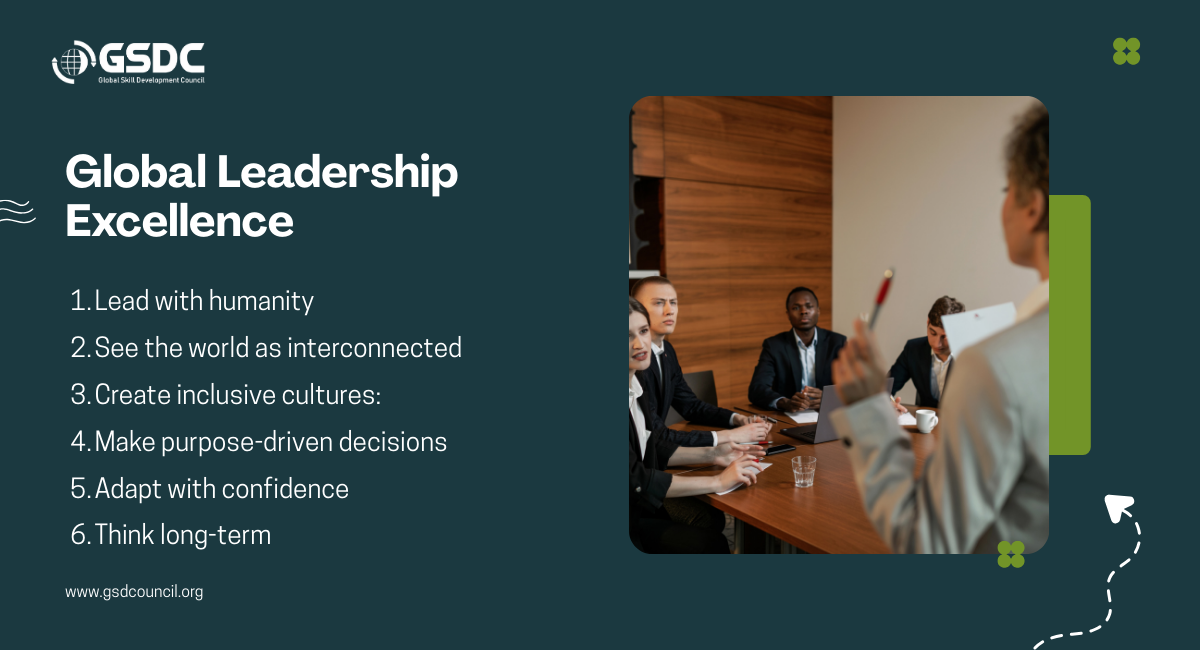
Across these global leadership case studies, some clear patterns stand out. The leaders who rise from good to world-class consistently demonstrate the following:
- Lead with humanity: Empathy is one of the few universal languages that enables the leader to gain trust in different cultures and to deepen the relationship.
- See the world as interconnected: A truly great leader always sees opportunities behind the barriers.
- Create inclusive cultures: They make sure that different voices are heard, which are then reinforced.
- Make purpose-driven decisions: Choosing what is right rather than what is easy is their way.
- Adapt with confidence: In tough or uncertain times they facilitate change and take the move forward quickly.
- Think long-term: For them, it is more important that their impact will last far beyond the next quarter.
These qualities form the foundation of leadership excellence and help leaders navigate complex global leadership challenges with clarity and confidence.
Building these traits becomes easier through structured learning—including recognised development programs or a Certificate of Global Leadership Excellence that strengthens and validates global leadership capabilities.How Anyone Can Start Building Global Leadership Skills
You don’t need to lead a multinational company to start developing strong global leadership competencies. Small, intentional steps can help you think more globally and work more effectively with diverse teams. Here are practical ways to begin:
- Study different cultures and markets to have a better grasp of how people work, communicate, and make decisions in various parts of the world.
- Keep on practising active listening skills when dealing with global or virtual teams, and you will soon be able to respond not only with clarity but also with empathy.
- Get a taste of the world through travelling, joining a virtual global network, taking global courses or working together on a project with someone from another country.
- Engage in cross-border or cross-functional projects to experience first-hand the impact of varied viewpoints in creating superior solutions.
- Be a communicator with cultural understanding, and refrain from using the same style for all regions and audiences as you always did.
- Spend money on well-organised leadership skills training, such as programs and certifications by institutions like GSDC, to gain both confidence and global abilities.
- Don't forget to continuously learn, employ leadership frameworks, coaching, and your life's experiences to keep on growing.
- These actions lay the ground for the effective leadership of a team and the achievement of success over time in the global setting setting.
Building Credible and Future-Ready Global Leaders
As organisations expand across global markets, they need leaders who can think strategically, act with integrity, and navigate cultural differences with confidence. Strong leadership development and recognised credentials help professionals build these capabilities and grow into well-rounded global leaders.
The Certificate of Global Leadership Excellence from GSDC enhances a leader’s strategic thinking, global mindset, and credibility. This type of structured program equips professionals for international roles and supports long-term leadership excellence.
Conclusion: Global Leaders Shape Global Futures
As companies grow across borders, the expectations from leaders grow too. Today’s leaders must understand cultures, make ethical decisions, and think globally. Structured leadership development programs help professionals build these capabilities with clarity and confidence.
Earning a global leadership certification, a certificate of leadership excellence, or a leadership excellence certificate strengthens a leader’s global mindset and strategic capability. These recognised credentials enhance credibility, support international career opportunities, and prepare leaders to take on broader global responsibilities with greater readiness.

Related Certifications
Stay up-to-date with the latest news, trends, and resources in GSDC
If you like this read then make sure to check out our previous blogs: Cracking Onboarding Challenges: Fresher Success Unveiled
Not sure which certification to pursue? Our advisors will help you decide!