How ISO 42001 Prepares Organizations for the Future?

Written by Diego Gonzalez
- The Growing Need for AI Governance
- What Is ISO/IEC 42001?
- Aligning AI With Business and Stakeholder Expectations
- AI Impact Assessment: Beyond Traditional Risk
- Defining Scope: The Foundation of Certification
- Policies, Controls, and Documentation
- People, Training, and Culture
- Integration With Global Regulations and Frameworks
- Certification Timeline and Organizational Readiness
- Why ISO 42001 Is Future-Proof
- ISO/IEC 42001 Lead Implementer Certification by GSDC
- Conclusion: From Innovation to Accountability
Artificial Intelligence is no longer experimental. It is actively shaping decision-making across banking, healthcare, government, manufacturing, and critical infrastructure. As organizations move from pilot projects to production-grade AI systems, a new challenge emerges: implementing effective AI governance while ensuring AI is deployed responsibly, ethically, and at scale.
This is where ISO 42001 becomes essential. Published in December 2023, ISO/IEC 42001 is the world's first international standard for an AI Management System (AIMS). It provides a comprehensive AI governance framework that helps organizations identify, manage, monitor, and continuously improve AI systems while addressing risks, transparency, accountability, and compliance. Organizations pursuing ISO 42001 certification demonstrate their commitment to Responsible AI and internationally recognized governance practices.
This blog explores how ISO 42001 prepares organizations for the future by strengthening AI governance, improving risk management, supporting regulatory compliance, and building operational maturity in AI-driven environments. Whether you're an AI leader, compliance professional, or aspiring ISO 42001 Lead Auditor, understanding this standard is becoming increasingly important as global AI regulations continue to evolve.
The Growing Need for AI Governance
AI systems now influence credit approvals, medical diagnoses, fraud detection, autonomous transportation, recruitment, and public services. A failure in these systems, whether due to bias, data leakage, hallucinations, or incorrect outputs, can result in reputational damage, legal penalties, financial loss, and even harm to human life.
Unlike traditional IT systems, AI introduces probabilistic behavior. An AI model may misclassify valid data, generate inaccurate recommendations, or amplify hidden biases in training datasets. These risks are no longer hypothetical; they are operational realities that demand a structured AI governance framework.
ISO 42001 addresses this challenge by transforming AI from an unregulated innovation tool into a governed, auditable, and accountable system. Through ISO 42001 certification, organizations can establish standardized governance processes, promote Responsible AI, and build stakeholder confidence while preparing for evolving regulatory expectations.
What Is ISO/IEC 42001?
ISO/IEC 42001 is an AI Management System standard, similar in structure to ISO 27001 (Information Security) or ISO 9001 (Quality Management). However, its focus is specific to organizations that:
- Develop AI systems
- Deploy AI-driven products or SaaS platforms
- Operate AI models internally or publicly
It does not regulate casual use of AI tools like ChatGPT or Gemini by employees. Instead, it governs AI systems that organizations build, manage, and offer as services.
At its core, ISO 42001 defines how AI should be designed, deployed, monitored, and improved ethically and safely.
Aligning AI With Business and Stakeholder Expectations
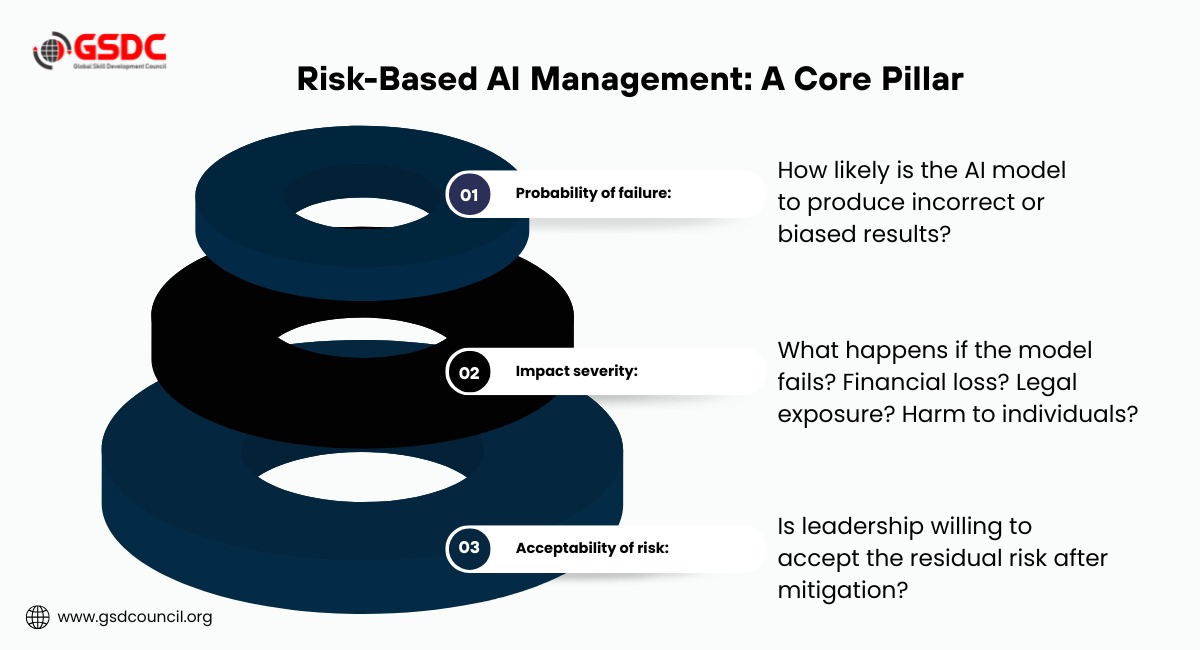
One of the foundational principles of ISO 42001 is stakeholder alignment. A successful AI governance framework begins long before an AI system is deployed. Organizations pursuing ISO 42001 certification must ensure that:
- Leadership is committed to Responsible AI
- Business risks are identified, assessed, and accepted
- Stakeholders approve the AI system's scope and objectives
- Legal, regulatory, and compliance obligations are fulfilled
AI governance is not just a technical exercise it is a strategic business decision. Without executive sponsorship, defined roles, and clear accountability, AI initiatives often struggle to meet governance requirements and may fail during audits or real-world deployment.
ISO 42001 emphasizes the active involvement of leadership to ensure that AI systems align with an organization's values, risk tolerance, business objectives, and societal expectations. This governance-first approach also equips professionals, including aspiring ISO 42001 Lead Auditors, to evaluate whether AI initiatives are implemented responsibly, transparently, and in accordance with internationally recognized standards.
AI Impact Assessment: Beyond Traditional Risk
ISO 42001 introduces a relatively new concept for many organizations: AI Impact Assessment. This goes beyond cybersecurity or infrastructure risk and focuses on:
- Bias and fairness in AI outputs
- Privacy and data protection compliance (GDPR, national laws)
- Transparency and traceability of AI decisions
- Social and ethical consequences of AI use
Organizations must assess whether AI outputs could lead to discrimination, misinformation, or privacy violations. This assessment must be repeatable, documented, and auditable.
Defining Scope: The Foundation of Certification
In any ISO certification, scope is everything, and ISO 42001 is no exception.
Organizations must clearly define:
- Where data originates
- How data is processed by AI models
- What algorithms are involved
- Where outputs are stored
- Who has access to AI systems and data
The scope must describe a repeatable and auditable process from data ingestion to AI output. Only what falls within this defined scope can be certified.
A vague or overly broad scope is one of the most common reasons organizations struggle during certification audits.
Policies, Controls, and Documentation
Once the scope is defined, ISO 42001 requires organizations to establish a structured AI governance framework that supports consistent, secure, and accountable AI operations. As part of ISO 42001 certification, organizations must implement:
- AI governance policies
- Standard Operating Procedures (SOPs)
- AI inventory covering models, algorithms, and datasets
- Access controls, roles, and accountability structures
These controls help ensure AI systems operate consistently, securely, transparently, and in line with Responsible AI principles. Comprehensive documentation is not optional it is a core requirement of ISO 42001 certification and the foundation of effective AI governance.
If an AI process cannot be documented, reproduced, monitored, and audited, it cannot meet the requirements of ISO 42001. This documentation-driven approach also enables ISO 42001 Lead Auditors to verify compliance, assess governance maturity, and ensure organizations maintain continuous oversight of their AI systems.
People, Training, and Culture
Technology alone does not make AI responsible—people do. That is why ISO 42001 places strong emphasis on building organizational competence as a key part of an effective AI governance framework. Organizations working toward ISO 42001 certification must establish:
- Awareness training on AI governance and ethics
- Role-based AI competence and skills development
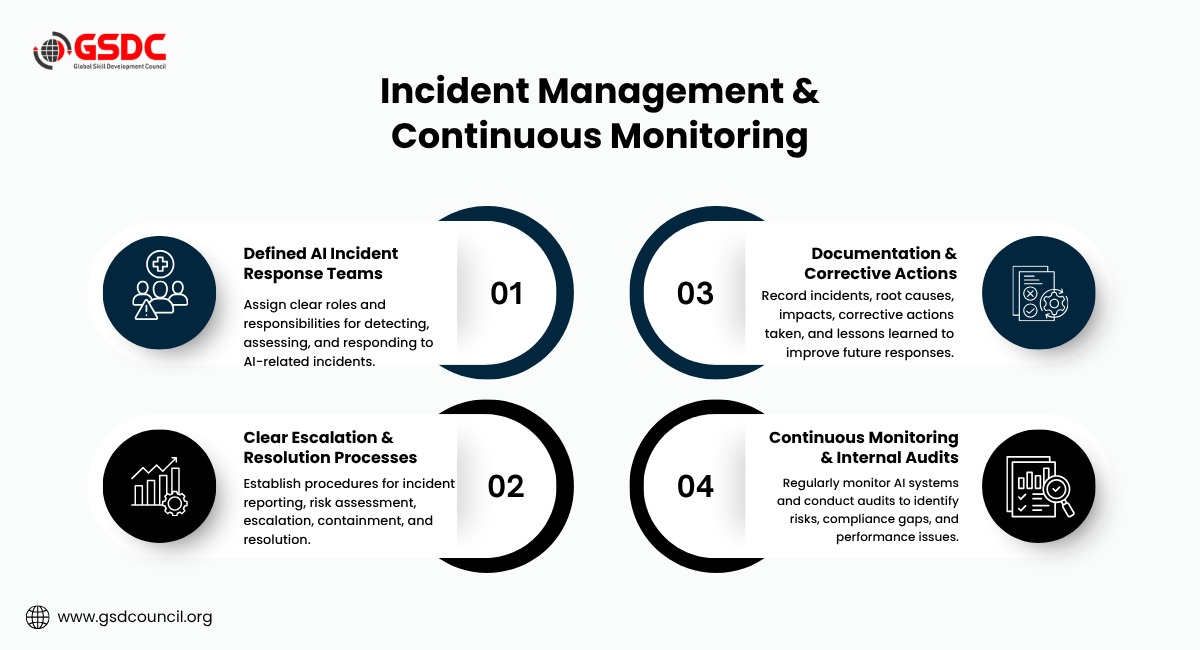
- Clearly defined incident response responsibilities
- Structured change management processes
Organizations must demonstrate that employees involved in AI development, deployment, monitoring, and governance understand AI risks and Responsible AI principles. Training records, certifications, attendance logs, and awareness sessions serve as essential audit evidence during ISO 42001 certification assessments.
This people-centric approach ensures that AI governance becomes embedded in the organization's culture rather than being treated as a one-time compliance exercise. It also helps professionals preparing to become an ISO 42001 Lead Auditor understand how workforce competence contributes to trustworthy, ethical, and sustainable AI management.
Integration With Global Regulations and Frameworks
ISO 42001 does not exist in isolation. It complements and aligns with global regulations and frameworks, including:
- EU AI Act (risk-based AI regulation)
- NIST AI Risk Management Framework (USA)
- State-level AI laws (e.g., Colorado, New York)
- GDPR and international privacy laws
For multinational organizations, ISO 42001 provides a common governance foundation across jurisdictions, reducing regulatory fragmentation and compliance complexity.
Certification Timeline and Organizational Readiness
A typical ISO 42001 certification journey takes 6 to 9 months, depending on maturity. Organizations with ISO 27001 already in place can accelerate implementation due to shared controls.
The journey typically includes:
- Gap analysis and leadership alignment
- Risk and impact assessments
- Policy and framework development
- Training and awareness
- Monitoring and internal audits
- External certification audit
The gap analysis is the true starting point it determines whether the organization is genuinely ready to accept and manage AI risk.
Why ISO 42001 Is Future-Proof
As AI becomes embedded in critical sectors such as healthcare, finance, autonomous transport, law enforcement, and government services, trust becomes non-negotiable.
ISO 42001 enables organizations to:
- Demonstrate ethical AI governance
- Build trust with regulators and customers
- Reduce legal and reputational risk
- Scale AI responsibly
- Future-proof AI investments
Certification sends a clear message:
“We are accountable for how our AI systems operate and impact society.”
ISO/IEC 42001 Lead Implementer Certification by GSDC
As organizations adopt AI at scale, implementing effective AI governance has become a strategic priority. The GSDC ISO 42001 Lead Implementer Certification equips professionals with the knowledge and practical skills to plan, implement, manage, and continually improve an AI Management System (AIMS) aligned with the ISO/IEC 42001 standard.

The ISO 42001 Lead Implementer Certification covers AI governance frameworks, risk management, compliance, ethical AI practices, policy development, and implementation strategies. It prepares AI leaders, consultants, compliance professionals, and technology managers to lead enterprise AI governance initiatives, ensuring AI systems are secure, transparent, responsible, and compliant with global standards while building organizational trust and long-term business value.
Conclusion: From Innovation to Accountability
The future of AI belongs to organizations that can balance innovation with responsibility. ISO 42001 provides the roadmap to do exactly that.
By embedding governance, risk assessment, stakeholder alignment, and continuous improvement into AI operations, organizations move from experimental AI usage to trusted, enterprise-grade AI systems.
In an era where AI regulation is inevitable and public scrutiny is rising, ISO 42001 is not just a compliance standard it is a strategic advantage.
Organizations that adopt it today will be the ones trusted to lead tomorrow’s AI-driven world.

Related Certifications
Stay up-to-date with the latest news, trends, and resources in GSDC
If you like this read then make sure to check out our previous blogs: Cracking Onboarding Challenges: Fresher Success Unveiled
Not sure which certification to pursue? Our advisors will help you decide!