Top 5 ISO 42001 Audit Lessons and How to Avoid Mistakes
Written by Matthew Hale
An Artificial Intelligence Management System (AIMS) is a system of governance, monitoring, and controlling AI systems responsibly.
This is where the significance of ISO 42001 certification comes into the picture. To understand its importance, it is essential to first know what is ISO 42001.
ISO 42001 is an international standard that can help organizations effectively and responsibly govern AI systems.
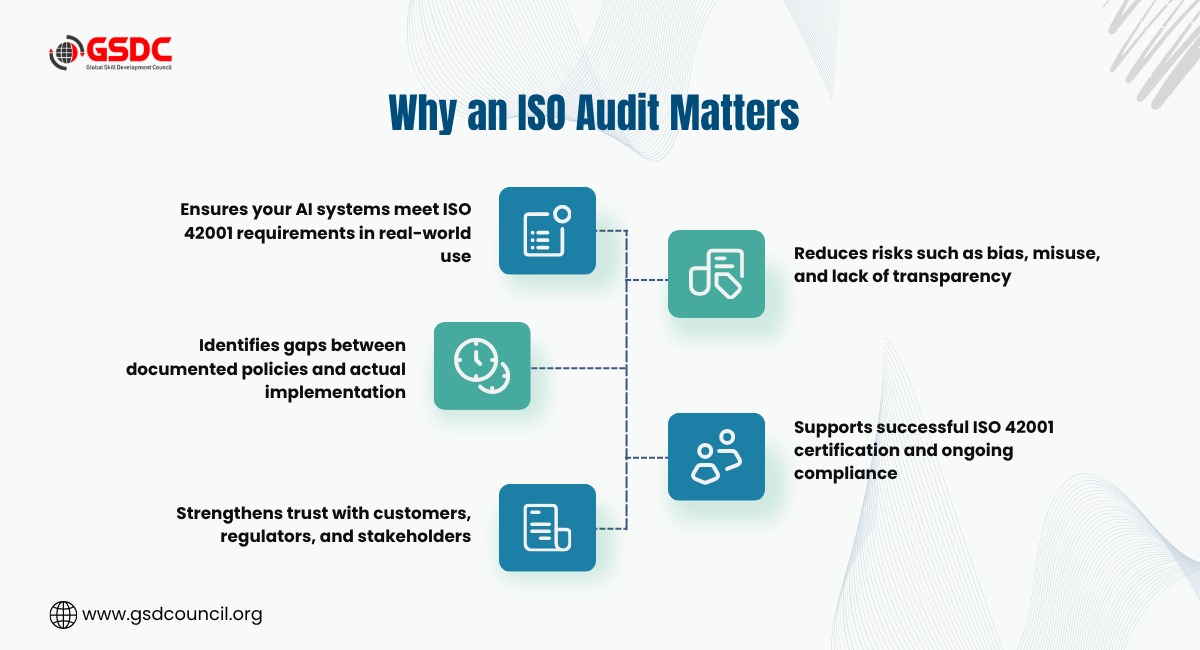
By adopting ISO 42001 certification, organizations can reduce risks such as bias and misuse while building trust with stakeholders. Many professionals also ask what is an ISO audit - it is a process that evaluates whether your systems meet ISO 42001 requirements in practice.
However, achieving ISO 42001 certification is not just about documentation. Organizations must focus on real implementation, governance, and continuous improvement to ensure long-term success.
What Is an ISO Audit and Why It Matters
Before moving further, it’s important to understand what is an ISO audit.
An ISO audit is a process of evaluation in which auditors check whether the company is adhering to certain standards, such as ISO 42001.
In simple terms, it’s a check to see whether the AI governance system you implemented is functioning or just on paper.
Top 5 ISO 42001 Common Mistakes and How to Avoid Them
It is important to note that getting ISO 42001 certification is a process that goes beyond just complying with the ISO 42001 requirements on paper.
1. Documentation Alone Doesn’t Prove Compliance
One of the common mistakes in ISO 42001 certification is assuming that providing documentation is enough. It is true that policies have to be developed, but auditors will be interested in how they have been implemented in actual AI systems.
It is common for an organization to develop detailed policies but forget to integrate them with actual operations.
Common Mistake
Creating documentation that is not utilized, monitored, or updated.
How to Avoid It
- Aligning policies with actual AI systems and processes
- Providing evidence, logs, and audit trails
- Conducting regular control testing through internal reviews
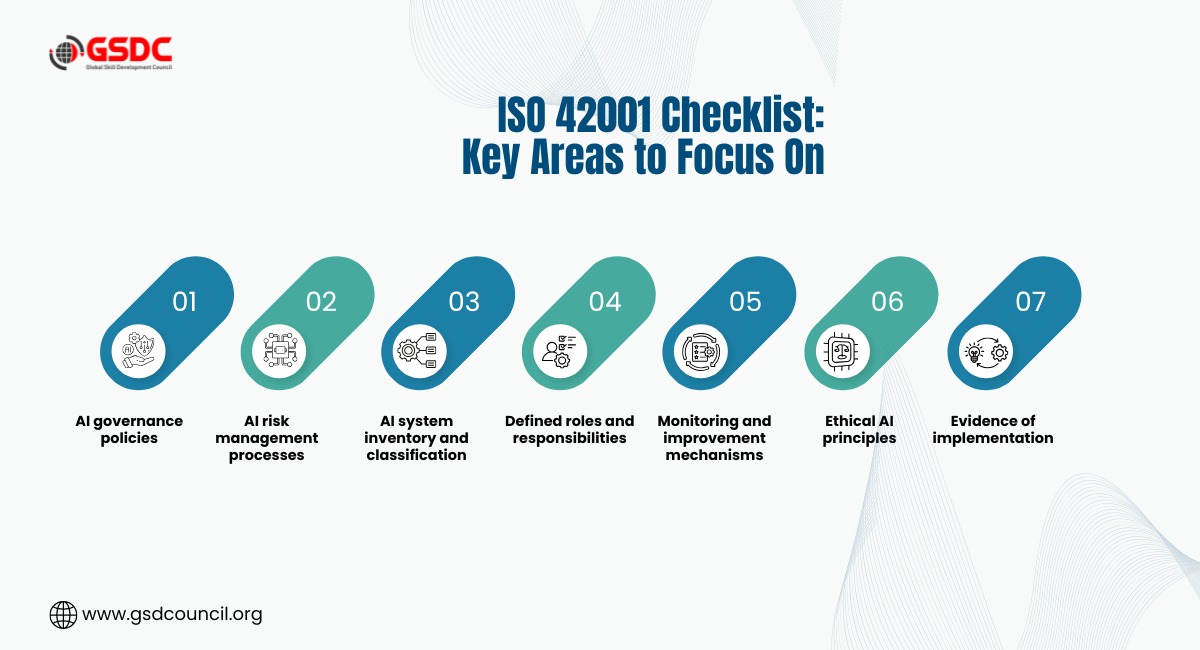
- Using an ISO 42001 checklist for actual validation
This remains one of the most critical ISO 42001 common mistakes organizations should avoid.
2. Treating AI Risk Like Traditional IT Risk
Organizations are also using traditional IT risk management models to manage AI risks. However, AI is posing some unique risks to organizations.
Applying traditional risk management models leads to inadequate risk management and high risk.
Common Mistake
Applying traditional IT risk management models without considering AI risk.
How to Avoid It
- Development of AI risk management practices
- Inclusion of fairness, accountability, and transparency
- Development of AI risk management models
- Keeping AI risk management models updated
Organizations and professionals looking to develop their knowledge on AI risk management and what is ISO 42001 can benefit from structured learning programs offered by organizations like the Global Skill Development Council (GSDC).
It is important to understand the difference to implement AI risk management in real-world scenarios.
3. Lack of Clear AI Scope and Inventory
A fundamental requirement for ISO 42001 certification is to have complete visibility and awareness of the areas where AI is being utilized within the organization. The absence of this clarity will lead to inconsistent and unmanageable governance.
Common Mistake
Lack of a centralized inventory and/or the absence of clarity on the definition of AI systems.
How to Avoid It
- Define what is considered an AI system within the organization
- Maintain an updated and/or centralized inventory list
- Determine the risk levels and business impact
- Use an ISO 42001 checklist for tracking and validation
Professionals entrusted with the task of implementing and managing AI governance can take advantage of training programs, such as the Certified ISO 42001:2023 Lead Implementer, that offer guidance and insights on the practical application and implementation of the ISO 42001 standard.
This step improves governance, consistency, and audit readiness.
4. Weak Governance and Ownership
Governance of AI is not just a technical issue; it involves many other teams, including leadership, legal, and business teams.
If there is no ownership, there will be no accountability, and decision-making will be inconsistent.
Common Mistake
Giving ownership of AI governance only to IT teams.
How to Avoid It
- Defining clear roles, responsibilities, and accountability
- Forming cross-functional teams for governance
- Having leadership involvement in decision-making
- Having governance integrated into the overall business strategy
- Having strong governance is part of the core requirements of ISO 42001.
Strong governance is a core part of ISO 42001 requirements and critical for successful ISO 42001 certification.
5. No Continuous Monitoring or Improvement
AI systems are constantly changing with the influx of new data, models, and applications. Governance should change and improve at the same pace.
If a static approach is taken, risk and ineffectiveness are likely to occur.
Common Mistake
Considering the ISO 42001 process as a one-time task rather than a continuous process.
How to Avoid It
- Carry out continuous monitoring and performance tracking
- Carry out internal audits and reviews
- Update controls according to new risks and regulatory changes
- Adopt a dynamic ISO 42001 checklist
Having the ability to comprehend the auditing of classes (structured internal auditing practices) enables organizations to improve continuously.
By avoiding these common mistakes with the ISO 42001 process, organizations are able to improve and strengthen governance while at the same time adhering to the ISO 42001 standard and attaining ISO 42001 certification successfully.
How to Get ISO 42001 Certified
If you are planning to get ISO 42001 certified, it is important to understand how to get ISO 42001 certified. To get ISO 42001 certification, one must have a clear understanding of the process.
- Understand what is ISO 42001, what is the scope of ISO 42001, and what are the ISO 42001 requirements
- Conduct gap analysis using an ISO 42001 checklist
- Develop an AI management system (AIMS) based on the ISO 42001 requirements
- Train employees on roles and responsibilities using governance
- Conduct internal audits and understand what is an ISO audit
- Pass the external audit to get ISO 42001 certification
- Monitor and improve using techniques like how to audit classes
Building AI Governance Capability with GSDC
As the world shifts towards achieving Certified ISO 42001:2023 Lead Auditor, the need to develop the appropriate skills becomes a necessity in order to achieve the requirements set in the ISO 42001 standard.
The Global Skill Development Council (GSDC) is helping professionals achieve the right skills through globally recognized programs, which enable them to learn what is ISO 42001, how to apply an ISO 42001 checklist, and how to ensure the effective implementation of the standard.
The right capabilities can be developed in an organization to ensure effective audits and the adoption of AI technologies.
Conclusion
Understanding what is ISO 42001 is the first step, but applying it effectively is what truly matters.
ISO 42001 certification is more than a compliance requirement—it is a framework for building responsible and trustworthy AI systems.
Organizations that avoid common ISO 42001 common mistakes and focus on real implementation will be better positioned to succeed in audits and lead confidently in the AI-driven future.

Related Certifications
Frequently Asked Questions
Stay up-to-date with the latest news, trends, and resources in GSDC
If you like this read then make sure to check out our previous blogs: Cracking Onboarding Challenges: Fresher Success Unveiled
Not sure which certification to pursue? Our advisors will help you decide!