The CHRO’s Role in Driving Talent Strategy and Organizational Culture
Written by Krishni Arumugam
- The Turning Point in the CHRO Role
- Today’s CHRO is expected to:
- From HR Operations to Strategic Business Partnership
- Aligning Talent Strategy with Business Outcomes
- Organizational Culture as a Strategic Asset
- Building Leadership Capability and Trust
- Navigating Change and Uncertainty
- The Growing Importance of Data and Insights
- What Is CHRO Certificate
- Key Highlights:
- Conclusion
The role of the Chief Human Resources Officer (CHRO) is undergoing a fundamental transformation. For those wondering what is a Chief Human Resources Officer, it is no longer limited to administrative or compliance-focused functions today, it is a strategic leadership role at the core of business success.
As organizations face rapid technological disruption, evolving workforce expectations, and constant market uncertainty, the scope of Chief Human Resources Officer responsibilities has expanded significantly, marking a pivotal turning point for HR leadership.
A valuable session from a leading Chief Human Resources Officer program on “CHRO’s Role in Driving Talent Strategy and Organizational Culture” highlighted a clear message: organizations that succeed in the future will be those where the CHRO acts as a strategic partner, a culture architect, and a trusted advisor to leadership.
This blog explores how the CHRO role is evolving, what it takes to align talent strategy with business outcomes, and how CHROs can strengthen leadership trust in an environment of continuous change.
The Turning Point in the CHRO Role
The modern CHRO role operates in a vastly different landscape than even a decade ago. Workforce demographics are shifting, hybrid work models are becoming permanent, and employees expect purpose, inclusion, and growth, not just compensation. In this context, HR leadership can no longer function on the sidelines.
Today’s CHRO is expected to:
- Understand business strategy as deeply as the CEO or CFO
- Anticipate future skill requirements rather than react to talent gaps
- Shape organizational culture intentionally, not passively
The webinar highlighted that CHROs now play a critical role in influencing how organizations respond to disruption. Whether it is digital transformation, mergers, or workforce restructuring, people-related decisions directly impact business outcomes. As a result, CHROs must think beyond policies and processes and focus on long-term organizational capability.
From HR Operations to Strategic Business Partnership
One of the strongest themes from the discussion was the shift from operational HR to strategic HR leadership and broader organizational culture leadership. While operational excellence remains important, it is no longer sufficient.
Modern CHROs are expected to:
- Translate business goals into actionable people strategies through effective strategic workforce planning
- Use workforce data and analytics to support decision-making
- Advise leadership on the human impact of strategic choices
This evolution requires a deep understanding of the organization’s financial objectives, competitive positioning, and growth ambitions. When CHROs demonstrate strategic HR leadership and speak the language of business, they gain credibility at the leadership table and can influence decisions early rather than responding after the fact, while also shaping strong organizational culture leadership across the enterprise.
Aligning Talent Strategy with Business Outcomes
Talent strategy is no longer about filling roles; it is about building capabilities that drive measurable business results. The webinar emphasized that aligning talent strategy with business outcomes is one of the most critical responsibilities of the CHRO.
Effective alignment begins with clarity. CHROs must ask:
- What capabilities will the organization need to succeed in the next 3–5 years?
- Which roles are critical to delivering strategic priorities?
- Where are the current and future skill gaps?
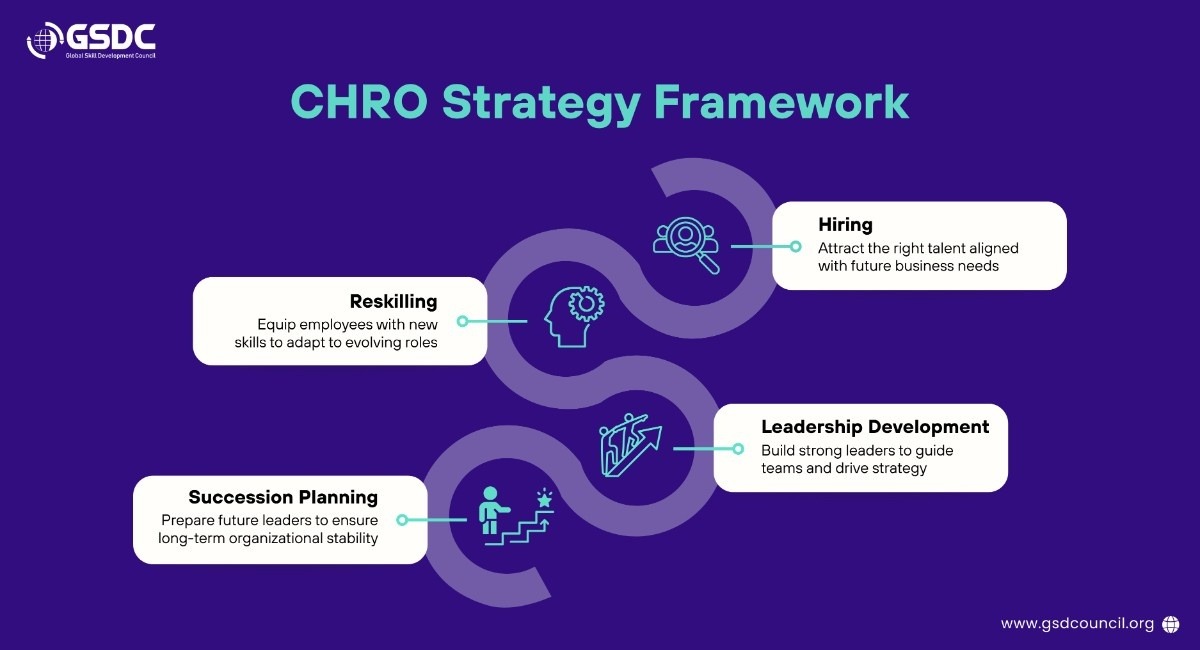
Once these questions are answered, talent initiatives such as hiring, reskilling, leadership development, and succession planning can be designed with clear intent. This approach ensures that investments in people directly support productivity, innovation, and growth.
Rather than treating talent programs as isolated initiatives, high-impact CHROs integrate them into the broader business strategy, making talent a competitive advantage rather than a constraint.
Organizational Culture as a Strategic Asset
Culture is often described as “how things get done,” but in reality, it is much more powerful. The webinar reinforced that organizational culture leadership has a direct influence on performance, engagement, and resilience making it a core priority within strategic HR leadership today.
A strategic CHRO plays a central role in shaping culture as part of evolving Chief Human Resources Officer responsibilities, by:
- Defining and reinforcing core values
- Embedding desired behaviors into leadership practices
- Aligning performance management with cultural expectations
In times of change, culture becomes even more important. Strong organizational culture leadership helps employees navigate uncertainty and maintain alignment with organizational goals. Conversely, a weak or inconsistent culture can amplify resistance and erode trust.
Importantly, culture cannot be delegated or communicated solely through policies. As part of Chief Human Resources Officer responsibilities, CHROs must work closely with senior leaders to ensure that culture is modeled consistently at the top and reinforced throughout the organization, demonstrating true strategic HR leadership in action.
Building Leadership Capability and Trust
Another key focus of the webinar was the role of the CHRO in strengthening leadership trust, an essential aspect of strategic HR leadership and effective organizational culture leadership. In an environment of constant change, employees look to leaders for clarity, empathy, and direction.
A strategic CHRO, as part of evolving Chief Human Resources Officer responsibilities, supports this by:
- Developing leaders who can manage complexity and ambiguity
- Coaching executives on people-centric decision-making
- Creating feedback mechanisms that encourage transparency
Trust is built when leaders communicate authentically and act consistently. Through strong organizational culture leadership, CHROs serve as critical advisors in this process, helping leaders balance business pressures with human considerations. By doing so, they demonstrate strategic HR leadership, reinforcing the organization’s credibility and stability—even during challenging periods.
Navigating Change and Uncertainty
Change is no longer an occasional event; it is a constant. Whether driven by technology, regulation, or market forces, organizations must continuously adapt. The webinar emphasized that CHROs are uniquely positioned to lead change from a people perspective.
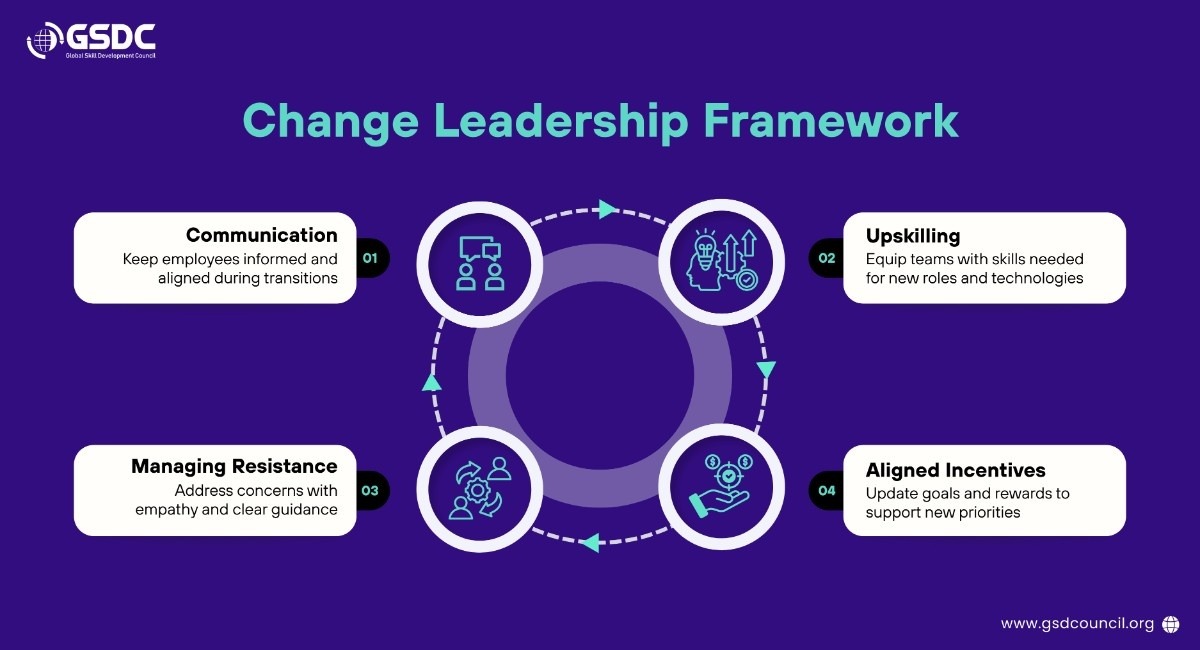
Successful change leadership involves:
- Preparing employees for transitions through communication and upskilling
- Addressing resistance with empathy and clarity
- Aligning incentives and performance metrics with new priorities
CHROs who proactively manage change help minimize disruption and sustain momentum. Their ability to anticipate workforce reactions and address concerns early is critical to successful transformation.
The Growing Importance of Data and Insights
While the human element remains central, the modern CHRO also relies heavily on data. Workforce analytics provide valuable insights into engagement, performance, retention, and skill development.
By leveraging data, CHROs can:
- Identify trends before they become risks
- Measure the impact of talent initiatives
- Support leadership decisions with evidence
The webinar highlighted that data-driven HR does not replace human judgment; it enhances it. When combined with experience and empathy, analytics enable more informed and effective decision-making.
What Is CHRO Certificate
The Global Skill Development Council (GSDC) offers a globally recognized Certified Chief Human Resources Officer (CHRO) program that focuses exclusively on developing strategic HR leaders. This certification evaluates expertise in areas such as talent management, organizational culture, change leadership, workforce planning, and executive decision-making.
GSDC’s CHRO certification is considered a “gold standard” executive HR credential, designed to prepare professionals for strategic leadership roles.

Key Highlights:
- Focus on strategic HR leadership and C-suite collaboration
- Covers culture building, talent strategy, and change management
- Emphasizes data-driven decision-making and workforce analytics
- Includes real-world assessments, research work, and presentations
- Requires 10+ years of HR leadership experience
The program ensures that certified professionals are equipped to lead enterprise-wide HR functions and drive measurable business impact. In 2026, HR leadership is no longer just about managing people; it’s about shaping business outcomes through talent, culture, and strategy. A CHRO certification, especially from GSDC, positions you as a strategic CHRO, capable of leading organizations through complexity, transformation, and growth.
Conclusion
The CHRO’s role has evolved from a support function to a strategic leadership position that directly influences organizational success. As highlighted in the webinar “CHRO’s Role in Driving Talent Strategy and Organizational Culture,” today’s CHRO must balance business acumen with human insight, operational excellence with strategic vision, and cultural stewardship with performance outcomes.
Organizations that empower CHROs as true strategic partners are better positioned to navigate uncertainty, build resilient cultures, and align talent with long-term business goals. In an era defined by constant change, the CHRO is no longer just managing people; they are shaping the future of the organization itself.

Related Certifications
Stay up-to-date with the latest news, trends, and resources in GSDC
If you like this read then make sure to check out our previous blogs: Cracking Onboarding Challenges: Fresher Success Unveiled
Not sure which certification to pursue? Our advisors will help you decide!