Lean Six Sigma Black Belt: Statistical Insights into Productivity, Pay, and Performance
Written by Emily Hilton
As global markets grow more complex, the ability to enhance efficiency and eliminate waste has become a defining factor of organizational competitiveness. This is where the Lean Six Sigma Black Belt certification stands out as a mark of true expertise.
It’s not just another professional qualification; it represents a leader who can blend analytical thinking with strategic vision to drive measurable change. From streamlining operations and enhancing quality to improving financial outcomes, Black Belt professionals play a pivotal role in shaping an organization’s success.
This report dives into the statistical side of the story exploring how Lean Six Sigma Black Belts contribute to higher productivity, stronger performance metrics, and significant compensation advantages. Backed by real-world data and numerical insights, it highlights why this certification continues to be one of the most valuable assets in modern business.
What a Black Belt Certification Entails
A Lean Six Sigma Black Belt stands at the intersection of two powerful methodologies:
- The “Lean” side focuses on eliminating waste (non-value added activities, delays, over-production)
- The “Six Sigma” side emphasises reducing variability and defects through statistical methods.
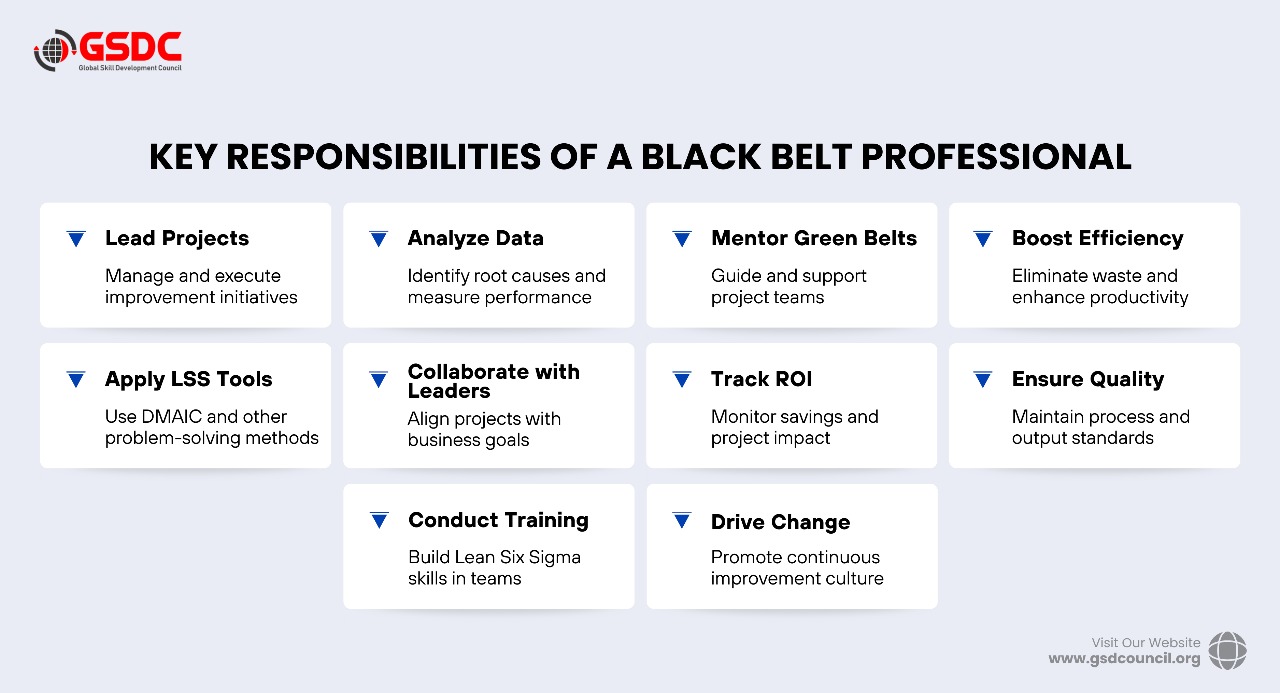
A Black Belt practitioner typically:
- Leads significant process improvement projects (often cross-functional)
Applies the DMAIC framework (Define → Measure → Analyse → Improve → Control) to deliver change. - Mentors Green Belts / team members, aligns projects with strategic goals
- Monitors performance using statistical charts, process capability metrics, defect-rates, etc
Thus it’s not just about the certificate it’s about being able to drive measurable business impact.
Pay & Compensation Insights
One of the most tangible benefits of achieving a Black Belt certification is an uptake in compensation. Here are key statistics:
- According to study, professionals with a Black Belt reported an average annual salary of US$ 125,000, compared to Green Belts averaging about US$ 78,000.
- The 2023 survey by American Society for Quality (ASQ) reported that full-time employees with Black Belt training had an average annual salary of US$ 137,645.
- Another report lists the average Black Belt salary in the U.S. at about US$ 128,300, with a range of US$ 109,000-US$ 147,000.
- Relative to Green Belt holders, one estimate suggests that Black Belts earn ~60% more. For example: if a Green Belt earns ₹8 lakhs, a Black Belt could earn ~₹12.8 lakhs.
These numbers illustrate a clear salary premium for Black Belt certified professionals, which is reinforced by the demand for such credentials in job postings.
For organisations and individuals alike, the return on investment of certification often pays off quickly. One survey reported an average raise of US$ 17,000 soon after Black Belt certification, meaning payback periods of roughly 9-12 weeks.
Key Takeaway:
Holding a Black Belt translates into higher compensation, faster career progression and greater job opportunities all backed by data.
Productivity, Quality & Performance Gains
Beyond compensation, the real value of a Black Belt lies in measurable improvements delivered to organisations. Here are some tangible stats and examples:
- A detailed productivity study found that companies optimising processes (via Lean/Six Sigma) achieved productivity increases of up to 35% within the first year.
- The same study reports typical cost reductions of 25-30% through operational improvements by eliminating waste, reducing labour and material costs, and lowering error rates.
- On the quality front, error/defect reductions of up to 50% were recorded after process optimisation initiatives.
- A manufacturing supplier example referenced a 25 % increase in output and a 60 % defect reduction following a Lean Six Sigma project.
- At a conceptual level, Six Sigma’s target of fewer than 3.4 defects per million opportunities (DPMO) remains a benchmark of high-capability processes
For a Black Belt professional, these improvements equate to direct business value: fewer wastage hours, faster cycle-times, lower cost per unit, better customer satisfaction, and improved throughput. Organisations seek Black Belts because they link statistical capability to operational results.
Illustrative example:
Imagine a manufacturing line producing 1,000 units per day with a defect rate of 5% (50 units defective). A Black Belt-led improvement reduces defects by 50% → now only 25 defective units. With each good unit valued at US$300, the cost saving is roughly US$7,500 per day (25 × US$300). Over a year (~250 working days) that’s ~US$1.9 million regained. Multiply across multiple lines and the impact is material.
Performance & Career Implications for Professionals
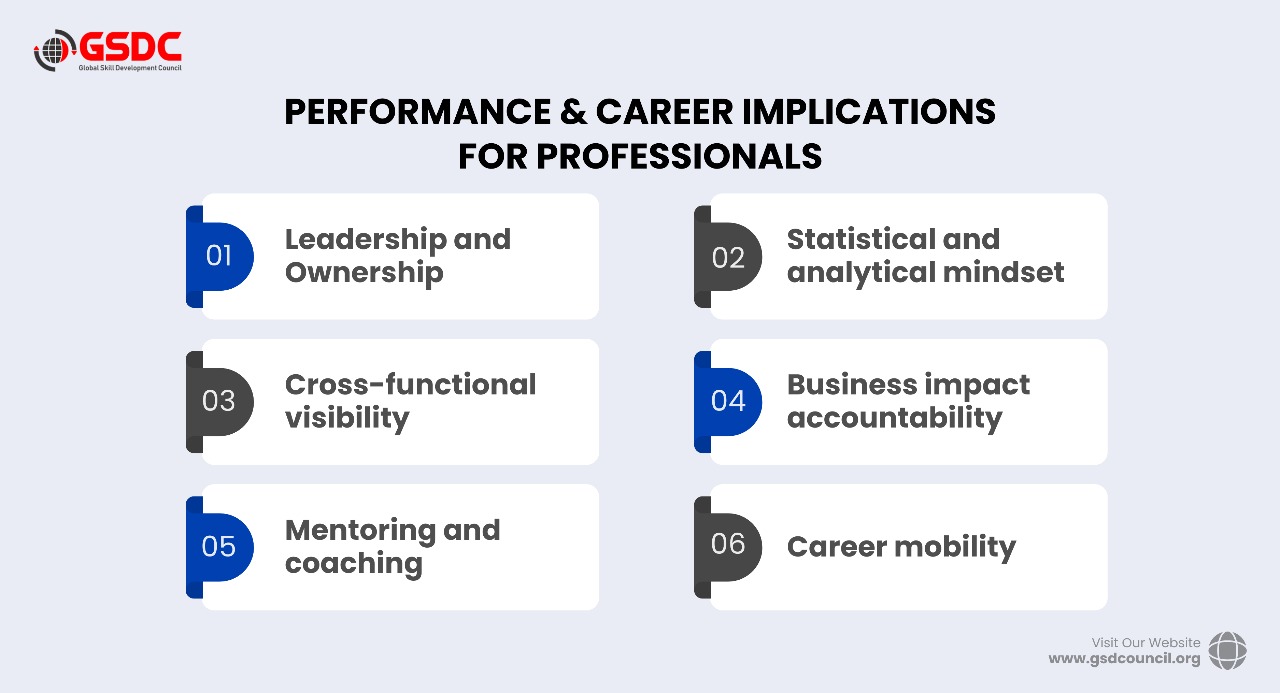
For someone holding a Black Belt certification, there are several important implications:
- Leadership and Ownership: You’re no longer supporting improvement efforts; you’re leading them managing teams, influencing stakeholders, aligning with strategy.
- Cross-functional visibility: Black Belts frequently work across departments (manufacturing, supply chain, finance, HR) exposing them to broader business domains.
- Mentoring and coaching: A Black Belt often mentors Green Belts and shapes the continuous improvement culture of the organisation.
- Statistical and analytical mindset: Beyond tool-kits like DMAIC or VSM, you’re expected to interpret control charts, process capability indices, hypothesis tests that level of statistical rigour is part of the role.
- Business impact accountability: Your deliverables are not just reports they are measurable KPIs (defects down X%, cycle time reduced Y%, cost savings Z). Organisations track ROI on these projects.
- Career mobility: A Black Belt certification opens pathways to roles such as Process Improvement Manager, Director of Operational Excellence, Continuous Improvement Lead roles that carry higher responsibility and compensation.
Challenges & Realities to Consider
To ensure the certification and role deliver as promised, certain realities must be acknowledged:
- Certification alone isn’t enough: You need to lead or participate in real projects with measurable outcomes. As per reports, many bodies require project completion as part of certification criteria.
- Data quality matters: Without reliable measurement systems, statistical tools are ineffective. Organisations must support measurement, data-collection and control mechanisms.
- Cultural change is required: Lean Six Sigma isn’t a one-off event; its value comes from embedding continuous improvement culture. That often involves resistance, change management and stakeholder alignment.
- Context and industry matter: Pay and productivity improvement potential will vary across sectors (manufacturing vs services), geographies, company size and maturity of process improvement programmes.
- Keep skills current: Tools evolve (e.g., data analytics, machine learning integrated with Lean/Six Sigma) so continuous learning is important.
Final Thoughts
The Lean Six Sigma Black Belt certification delivers a strong value proposition for professionals and organizations alike: quantifiable productivity, quality, and cost gains together with a demonstrable pay premium.
Linking certification to actual projects, quantifiable results, and ongoing progress is crucial for practitioners and organizations investing in Black Belts. Stress not just the certification but also the analytics, the business case, and the change-management element.
Professionals who can combine process leadership with statistical competence will be the ones driving success and receiving corresponding rewards in a cutthroat, international corporate climate.

Related Certifications
Stay up-to-date with the latest news, trends, and resources in GSDC
If you like this read then make sure to check out our previous blogs: Cracking Onboarding Challenges: Fresher Success Unveiled
Not sure which certification to pursue? Our advisors will help you decide!