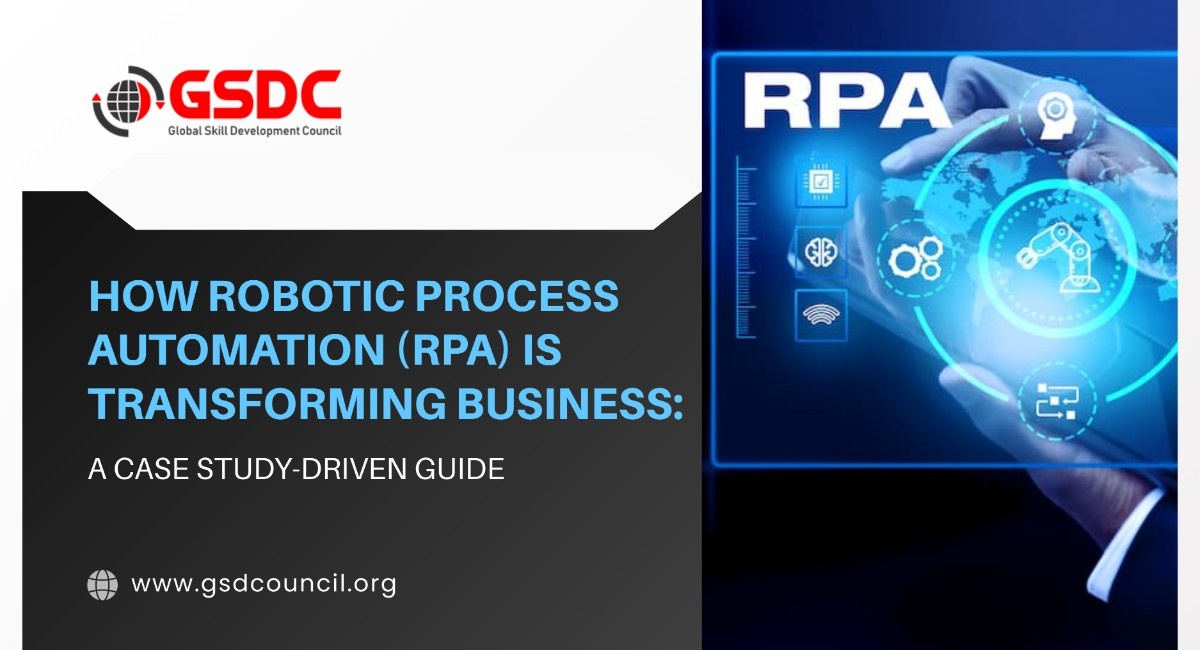
How Robotic Process Automation (RPA) is Transforming Business: A Case Study-Driven Guide
Written by Matthew Hale
- What is Robotic Process Automation?
- Case Study 1: Robotic Process Automation in Finance
- Case Study 2: Customer Service Automation with RPA
- Case Study 3: HR Automation - RPA Across the Employee Lifecycle
- Case Study 4: IT Operations - Reducing Service Desk Workload with RPA
- Case Study 5: Supply Chain & Logistics - RPA for End-to-End Efficiency
- RPA Certification and Skills: Building Long-Term Automation Capability
- Conclusion: Why Robotic Process Automation is Transforming Business
Robotic Process Automation, or RPA, is rapidly moving toward the centre stage of digital transformation. There is mounting pressure on businesses to improve efficiency, lower costs and scale their operations, so the idea of robotic process automation transforming business is not just something for the future but is something that businesses are actually doing today.
Using intelligent software robots to perform repeatable, rule-based tasks enables businesses to speed up their workflows, increase the accuracy of processes, and allow employees to spend more time on higher-value work. From finance and HR to IT and customer service, robotic process automation use cases now span nearly every business function.
In this blog, we look at how robotic process automation services, tools, and real-world implementations are providing businesses with measurable benefits by means of practical RPA & automation case studies.
What is Robotic Process Automation?
A common question from business leaders is: What is robotic process automation?
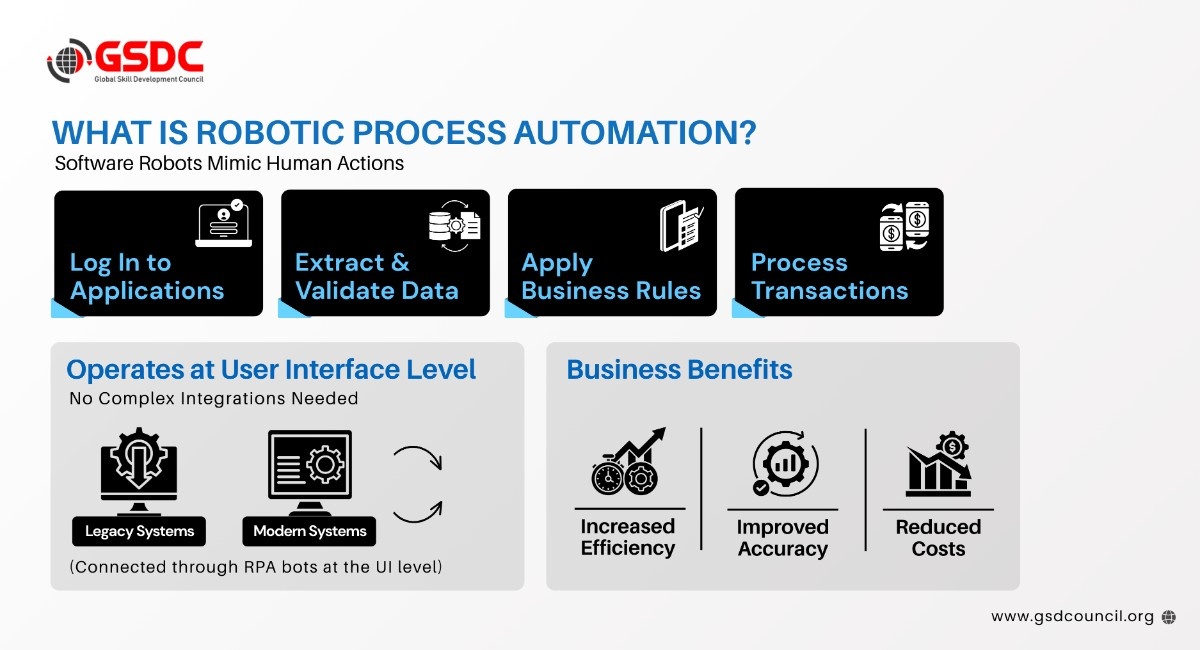
Robotic Process Automation (RPA) uses software robots instead of humans to complete tasks. These programs replicate how a person would work within a computer program. They can log onto different applications, validate extracted data, apply business rules, process transactions, and move files between several applications.
Unlike traditional automation, robotic process automation tools operate at the user interface level. This allows organisations to automate processes across legacy and modern systems without complex system integrations - making RPA one of the fastest and most cost-effective ways to scale automation.
With a clear understanding of what robotic process automation is, the real question becomes how it translates into measurable business outcomes. The following robotic process automation case study in finance illustrates how organisations are turning RPA into operational impact.
Case Study 1: Robotic Process Automation in Finance
Finance is one of the most mature areas for robotic process automation use cases, driven by high transaction volumes, tight close cycles, and strict compliance requirements.
Business Objective
Automate as much of the transaction process as possible (speeding up processing speeds, reducing errors), making reports available in real-time across systems, and improving audit readiness.
Implementation Using Robotic Process Automation Tools
RPA Bots were Developed to do the Following:
- Aggregate financial transaction data from multiple financial and ERP sources
- Automate accounts reconciliation and routing of exceptions
- Extract invoice data from PDFs and emails using rule-based logic
- Populate the general ledger with validated transaction data
- Automate the calculation of payroll, deduction of benefits, and administration of Standard Pay Cycles
- Provide consistent checks and controls to the approval and compliance processes
Results (RPA Case Study Outcome)
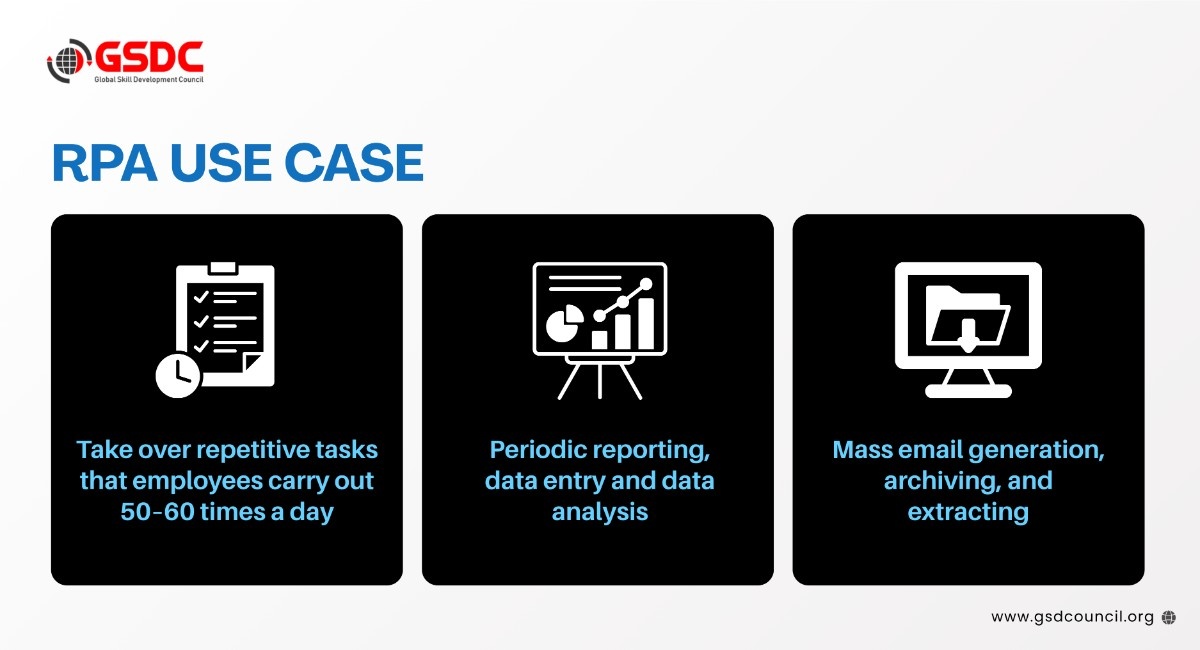
The RPA Case Study reflects that as much as 80% of transaction accounting-related activities can be automated and, as a result, organizations commonly achieve 30–50% reductions in processing time. Also, companies engaged in similar RPA projects are reporting shorter month-end closing cycles, improved audit trails, and a decrease in Reconciliation Errors, leaving Finance Team Resources to focus on Forecasting and Tactical Analysis rather than Transaction Processing.
Case Study 2: Customer Service Automation with RPA
Customer service teams increasingly use robotic process automation services to eliminate backend bottlenecks that slow down resolution times and affect customer satisfaction.
Business Objective
To increase the speed of response and decrease the amount of manual work, while providing an even more consistent customer experience on all channels.
RPA Implementation
RPA bots were used to:
- Pre-fill forms associated with onboarding and service requests using customer applications
- Collect and combine all relevant information about a customer and their account across multiple systems (backend) into one single view.
- Check for the accuracy and eligibility of a customer's data in real-time
- Allocate support tickets based on urgency and priority, as well as service level rules
- Assist with the customer bot process by retrieving and updating their data (backend)
- Automatically trigger status updates and follow-up emails to customers
- Results
Results
According to various studies, RPA-based services can lead to processing time reductions of as much as 80-85%, and the reduction of compliance-related mistakes of approximately 30%. RPA & Automated Customer Service Case Studies show a significant reduction in average handling times and an increased first-contact resolution rate, allowing service teams to focus on greater complexity in interactions with customers.
Case Study 3: HR Automation - RPA Across the Employee Lifecycle
Due to the large volume of standardised, highly repetitive administrative processes, HR departments are among the most common areas for the implementation of robotic process automation (rpa) solutions.
Business Objective
HR operations were to be streamlined, the administrative workload reduced, and the accuracy of data across employee systems improved.
RPA Implementation
Robotic Process Automation was implemented to:
- New hire data entry across HRIS, payroll, and benefits systems
- User access provisioning and system setup in coordination with IT
- Validation of employee data across multiple platforms
- Benefits enrollment and payroll update processing
- Compliance documentation and record management
- Employee exit processing, access removal, and final payroll updates
Results
Research indicates that automated onboarding can halve the onboarding cycle time; HR automation adoption has grown by over 500% in recent years among organisations. This particular RPA case study is typical of the technology's effects, that shows faster onboarding, fewer data inconsistencies, and an overall improved employee experience, all of which free up HR staff to devise workforce strategies and engage with employees.
Case Study 4: IT Operations - Reducing Service Desk Workload with RPA
The high volume of repetitive, rule-based user requests makes IT service desks a perfect match for robotic process automation tools.
Business Objective
Reduce ticket volumes, improve resolution speed, and increase the overall efficiency of IT operations.
RPA Implementation
RPA bots were deployed to:
- Automate password resets in a secure way with identity validation
- Provision and deprovision user access across a variety of enterprise systems
- Carry out standard software and system configuration tasks
- Keep an eye on the system health and send alerts when conditions are met
- Perform routine system checks and prepare status and compliance reports
- Take care of the most common service requests without human intervention
Results
According to enterprise benchmarks, IT automation has the potential to reduce the service desk workload by 30-50%, and at the same time, greatly improve the average resolution time. The RPA case studies mentioned in the article typically reveal quicker ticket closure, lower operational costs, and better end-user satisfaction, which consequently frees up the IT teams to concentrate on security, infrastructure optimisation, and innovation.
Case Study 5: Supply Chain & Logistics - RPA for End-to-End Efficiency
Supply chains have complex, time-sensitive workflows that rely on multiple systems, partners, and people, which can be more soundly automated than most business functions with Robotic Process Automation.
Business Objective
Increase transparency of operations, minimise manual coordination, and improve supply chain responsiveness.
RPA Implementation
RPA bots were employed to:
- Keep track of inventory levels in the ERP, warehouse, and inventory systems
- Automatically start a replenishment workflow when the stock falls below the threshold
- Refresh shipment status across logistics and partner platforms
- Confirm and process shipping documentation.
- Coordinate order and delivery data between systems
- Identify issues, such as delays, to be addressed by the intervention
Results
Within manufacturing and logistics industries, companies that have adopted RPA are achieving 30- 60% cuts in manual processing effort and improved order accuracy most of the time. Thus, RPA case studies that witnessed better inventory visibility, fewer stockouts, quicker response to disruptions, and stronger end-to-end coordination have resulted in direct cost reduction and an increase in customer satisfaction and fulfilment.
Key Takeaways from RPA & Automation Case Studies
- Start with high-volume, rule-based processes: These deliver the fastest ROI for robotic process automation.
- Use process intelligence to guide automation: Pairing RPA with analytics improves automation targeting and long-term performance.
- Reskill teams for higher-value roles: RPA enables employees to shift from execution to analysis and innovation.
RPA Certification and Skills: Building Long-Term Automation Capability
With the rising adoption of robotic process automation, the need for skilled professionals is also increasing. Hence, it is becoming a trend for many companies to turn to RPA certification programs not only to create automation experts within their staff but also to enable the successful continuation of their automation initiatives over time.
Industry-recognised bodies like the Global Skill Development Council (GSDC) provide training and certifications, such as the Certified RPA Professional, aimed at ensuring candidates fully understand the automation domain and are capable of translating concepts into working solutions in real industrial settings.

For both individual professionals and companies, getting familiar with the RPA certification cost, different types of curricula, and various vendor-specific certificates plays a crucial role in automatically aligning the automation career strategies with the needs of the rapidly growing enterprise automation programs.
Conclusion: Why Robotic Process Automation is Transforming Business
Across industries, adopting robotic process automation is changing businesses fundamentally, and it's beyond a matter of choice; it's a competitive necessity. Real-world RPA & automation case studies demonstrate that automation triggers faster operations, higher accuracy, and business agility from finance, HR, IT, customer service, and supply chain.
With the integration of robotic process automation tools, analytics, and AI, RPA will evolve from mere task automation to an intelligent, enterprise-wide orchestra, one that will lead to a sustainable competitive advantage.

Related Certifications
Stay up-to-date with the latest news, trends, and resources in GSDC
If you like this read then make sure to check out our previous blogs: Cracking Onboarding Challenges: Fresher Success Unveiled
Not sure which certification to pursue? Our advisors will help you decide!