What Is Learning Analytics? A Simple Guide for L&D Teams
Written by Matthew Hale
- What is Learning Analytics?
- Why Learning Analytics Matters in L&D
- Key Benefits of Learning Analytics
- Types of Learning Analytics
- Learning Analytics Examples
- Learning Analytics Tools
- How Learning Analytics Supports L&D Teams
- Role of Learning Analytics in L&D Job Description
- Best Practices for Using Learning Analytics
- Developing Learning Analytics Capabilities
- Conclusion
We are living in the age of data, where organizations have access to more information than ever before. This is changing how companies approach learning and development, shifting from guesswork to data-driven decisions.
This is where learning analytics comes in.
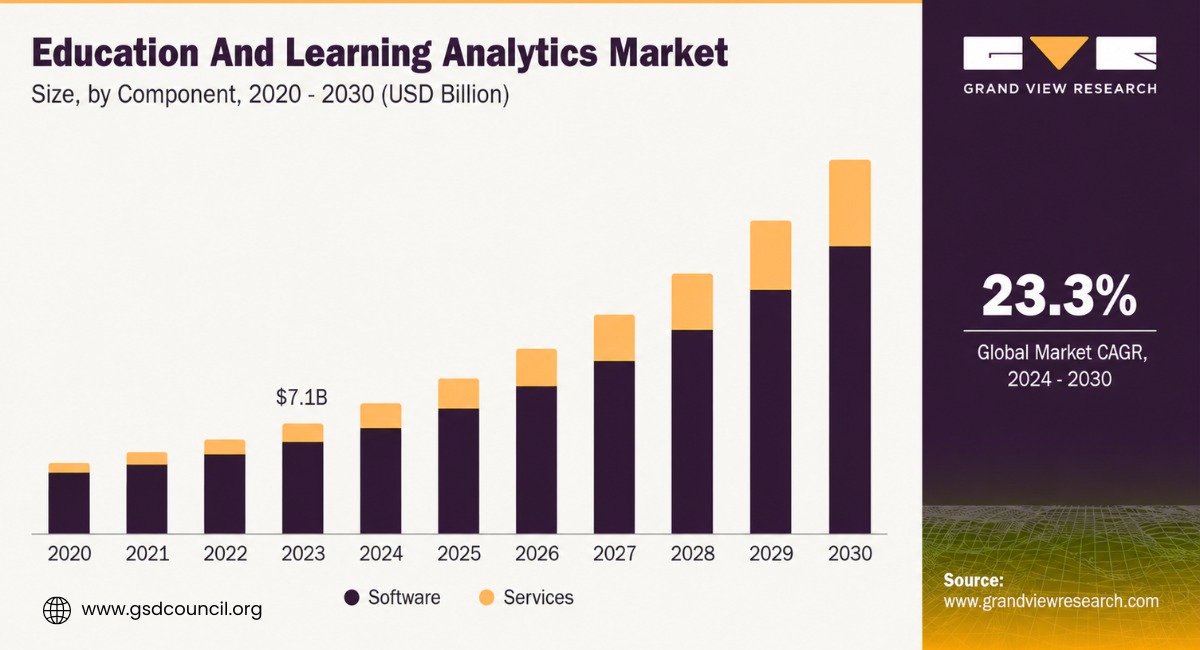
The importance of learning analytics is growing quickly. The global market was valued at around $7.09 billion in 2023 and is expected to reach nearly $30.96 billion by 2030, showing a strong move toward data-driven learning.
In simple terms, learning analytics helps organizations measure learning, improve training, and make better decisions.
In this learning analytics blog for L&D teams, we will explain what learning analytics is, how it works, and why it matters in learning analytics in L&D.
What is Learning Analytics?
Learning analytics is the process of collecting and analyzing data about learners and their learning activities to improve training results.
In simple terms, it helps organizations understand who is learning, what they are learning, how well they are performing, and what needs improvement.
In learning analytics in L&D, this data enables teams to move from guesswork to informed, data-driven decisions.
As a result, L&D analytics is becoming an essential part of modern training strategies.
Why Learning Analytics Matters in L&D
Traditional L&D programs often were ineffective in achieving measurable outcomes. However, learning analytics in L&D allows companies to be more systematic and use data when dealing with learning processes.
Learning analytics is becoming increasingly popular in today’s world; the global market is predicted to show over 21% growth on a yearly basis.
With learning analytics, companies can measure learners' progress, detect skills gaps, and boost the efficiency of courses, all while being aligned with corporate objectives.
Key Benefits of Learning Analytics
Understanding the benefits of learning analytics helps organizations improve training and make better decisions.
- Better decision-making – enables L&D teams to use real data instead of guesswork
- Personalized learning – helps create learning paths based on individual needs in learning analytics in L&D
- Improved ROI – allows organizations to measure training impact using L&D analytics
- Higher engagement – supports the creation of relevant content using learning analytics tools
- Continuous improvement – helps refine learning programs over time using learning analytics
These are some of the key benefits of learning analytics for modern organizations.
Types of Learning Analytics
In order to completely comprehend what is learning analytics are all about, it is imperative to learn about the different types of learning analytics. Every type of learning analytics assists organizations in using data and making better decisions.
1. Descriptive Analytics
Descriptive analytics deal with data from the past by focusing on learner performance and behavior. It assists in monitoring the activities of the learners by keeping track of course completion, engagement time, and participation.
2. Diagnostic Analytics
Diagnostic analytics identifies why an incident occurred. This form of analysis will allow identification of patterns or causes related to learner behaviors, including learners who have dropped out or are having problems with a certain subject.
3. Predictive Analytics
Predictive analytics uses past data to estimate what may happen in the future. It helps identify learners who may need support, making learning analytics in L&D more proactive.
4. Prescriptive Analytics
Prescriptive analytics suggests ways that will lead to improved results. This can include recommendations regarding personal learning paths, classes, or any training method that can be adopted based on analysis of data.
For efficient use of these types of learning analytics, it is common practice that many people opt for certifications like Certified L&D Analytics & Metrics Professional to learn about making improvements in learning outcomes with the help of data.
These types serve as the building blocks for learning analytics in L&D.
Learning Analytics Examples
The following are some practical learning analytics examples that show how organizations use data to improve learning outcomes:
and their applications in the real world:
- Course completion rates - to find out how many people complete a course and at which point dropouts occur
- Learner engagement analysis - based on the duration, activity, and level of interaction with the course material
- Employees who need training - through a performance gap analysis and skills gap analysis
- Analysis of test scores - to see how effectively the learners have learned the information
- Future predictions about employee performance - through predictive analysis of past learning experiences
These learning analytics examples highlight the importance of learning analytics in organizational success.
Learning Analytics Tools
For the proper implementation of learning analytics, appropriate learning analytics tools should be available to the organization. These are some learning analytics tools that make learning analysis easier through data collection, interpretation, and visualization.
Examples of learning analytics tools are:
- Learning Management Systems (LMS) - record progress and assessments
- Learning Experience Platforms (LXP) - provide personalized insight
- Business intelligence tools – interpret data and generate reports
- Artificial intelligence-driven learning platforms - predict performance and provide personalized recommendations
Good learning analytics tools not only provide information but also assist organizations in recognizing trends and enhancing results.
With increasing popularity in data-based learning, professional organizations such as the Global Skill Development Council (GSDC) emphasize the importance of learning analytics tools for creating a learning strategy that can be measured.
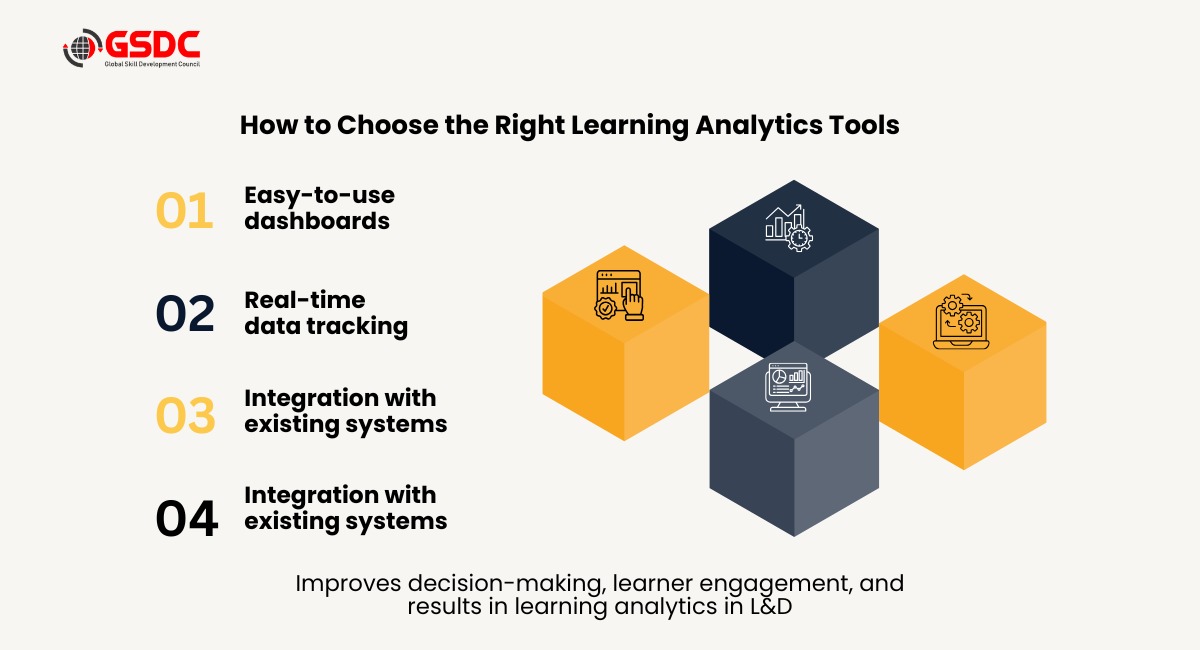
While selecting learning analytics tools, organizations need to consider factors such as user-friendliness, live monitoring, integration, and reporting.
How Learning Analytics Supports L&D Teams
Below is a guide on learning analytics that focuses on how it can help L&D professionals in practice.
Through learning analytics for L&D professionals, teams can:
- Align the training programs with organizational goals by creating programs that have outcomes
- Improve the performance of employees by finding areas in which they lack skills
- Understand future skill needs based on the collected data to plan the growth of their organization
- Monitor compliance training
- Make reports easier through the use of data
On the whole, learning analytics is useful for helping L&D professionals transition from just doing training to something strategic and outcome-focused.
Role of Learning Analytics in L&D Job Description
Today, the L&D job description is evolving as organizations adopt more data-driven approaches to learning.
A modern L&D job description often includes:
- Using learning analytics tools – to track learner progress, engagement, and training performance
- Analyzing learning data – to identify trends, skill gaps, and improvement areas
- Creating dashboards and reports – to present clear and actionable insights
- Measuring training effectiveness – to understand the impact on business outcomes
- Making data-driven decisions – to improve learning strategies and results
As a result, learning analytics is becoming an essential skill in every L&D job description, helping professionals take on more strategic roles.
Challenges in Learning Analytics
Even though there are multiple advantages in using learning analytics, there are still some challenges that should be considered by an organization.
Among those challenges, one can mention such aspects as privacy of information, an insufficient number of professional employees, the inability to integrate different systems, and problems with big data, with no useful information gained from it.
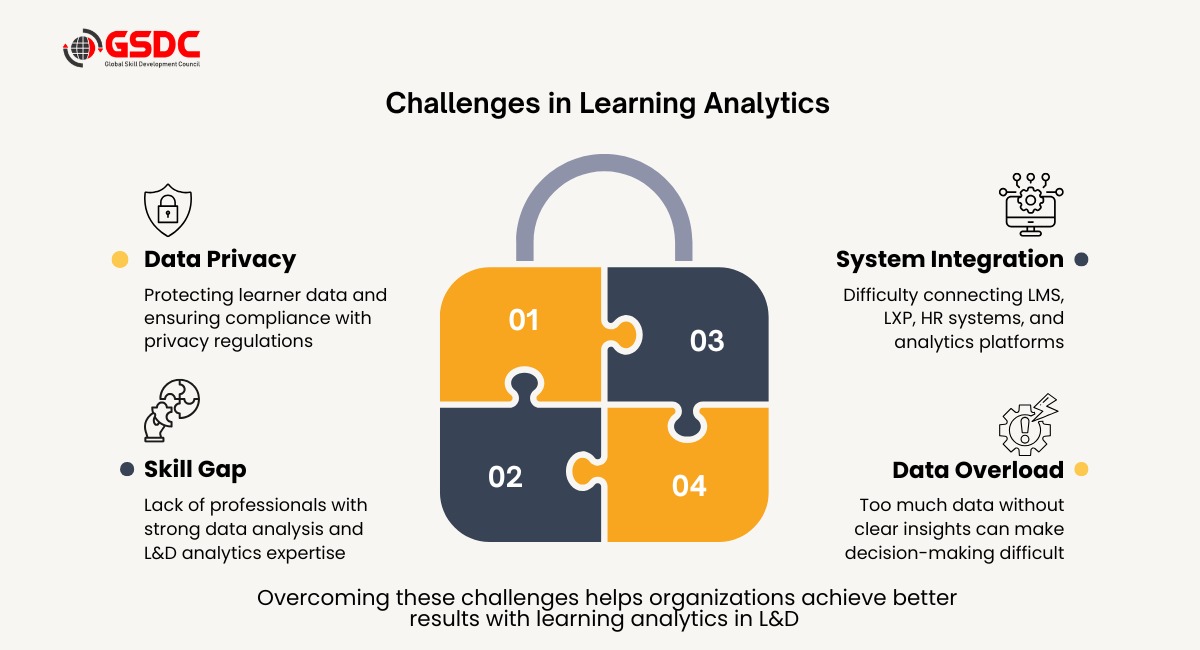
It is important to deal with such challenges in order to achieve maximum benefit from L&D analytics.
Best Practices for Using Learning Analytics
To follow this learning analytics guide, organizations should focus on these best practices:
- Establish objectives – determine what you hope to achieve through learning analytics
- Select appropriate learning analytics tools – make sure that the selected tools will meet the organization’s requirements
- Identify important information – emphasize actionable information rather than irrelevant details
- Maintain data privacy – safeguard the learners’ data
- Develop and enhance learning analytics strategy – integrate learning analytics findings into L&D
By adhering to the above-listed best practices, organizations can benefit greatly from implementing learning analytics into L&D.
The Future of Learning Analytics
Learning analytics is being transformed by artificial intelligence and automation for a smarter and more efficient way of learning. Organizations are adopting real-time learning insights, predictive analysis, and personalization through learning analytics.
As learning continues to get associated closely with organizational success, learning analytics in L&D is going to become more essential than ever before.
Developing Learning Analytics Capabilities
With the growing significance of learning analytics, organizations are realizing that developing proper skills among professionals is essential.
In order to be competent in today’s world, professionals should possess analytical skills, learn to use various tools of learning analytics, and utilize insights from them to enhance learning processes. This leads to an increased demand for formal learning in this field within L&D sector.
Industry bodies like the Global Skill Development Council (GSDC) highlight the need for practical knowledge in this area. Certifications such as the Certified L&D Analytics & Metrics Professional help professionals build the skills needed to analyze data, measure training effectiveness, and support better decision-making.

Conclusion
Understanding what is learning analytics is now essential for modern organizations.
The benefits of learning analytics for organizations include improved learning results, enhanced decision making, and greater influence of training activities. As businesses become more data-centric, the importance of learning analytics will only grow in L&D departments.
This learning analytics guide for L&D teams highlights a simple idea: learning should not be based on guesswork, but on data and insights.

Related Certifications
Frequently Asked Questions
Stay up-to-date with the latest news, trends, and resources in GSDC
If you like this read then make sure to check out our previous blogs: Cracking Onboarding Challenges: Fresher Success Unveiled
Not sure which certification to pursue? Our advisors will help you decide!