Mastering Digital Learning: Engaging Remote Learners Effectively
Written by Sheena Vengiyil
- The Engagement Gap in Virtual Learning
- Shrinking Attention Spans: A Reality Facilitators Must Address
- The “Virtual Trap”: Staying at the Lowest Levels of Learning
- Designing for Active Learning in Virtual Environments
- The ENGAGE Framework: A Roadmap for Impactful Digital Learning
- Communication Matters: Delivering with Presence and Clarity
- The Three Layers of True Engagement
- Overcoming Common Virtual Learning Challenges
- Turning Learning into Lasting Behavioral Change
- The Future of Digital Learning Delivery
- GSDC Certified Learning & Development Professional (CLDP): Elevate Your Digital Facilitation Skills
- Conclusion
The rapid shift toward digital workplaces has transformed how organizations deliver training and learning programs. Virtual classrooms, once considered a temporary solution, are now a permanent and strategic component of workforce development. However, many organizations face a common challenge: employees attend online sessions, but genuine engagement and learning outcomes remain limited, especially when engaging remote employees becomes difficult without the right approach.
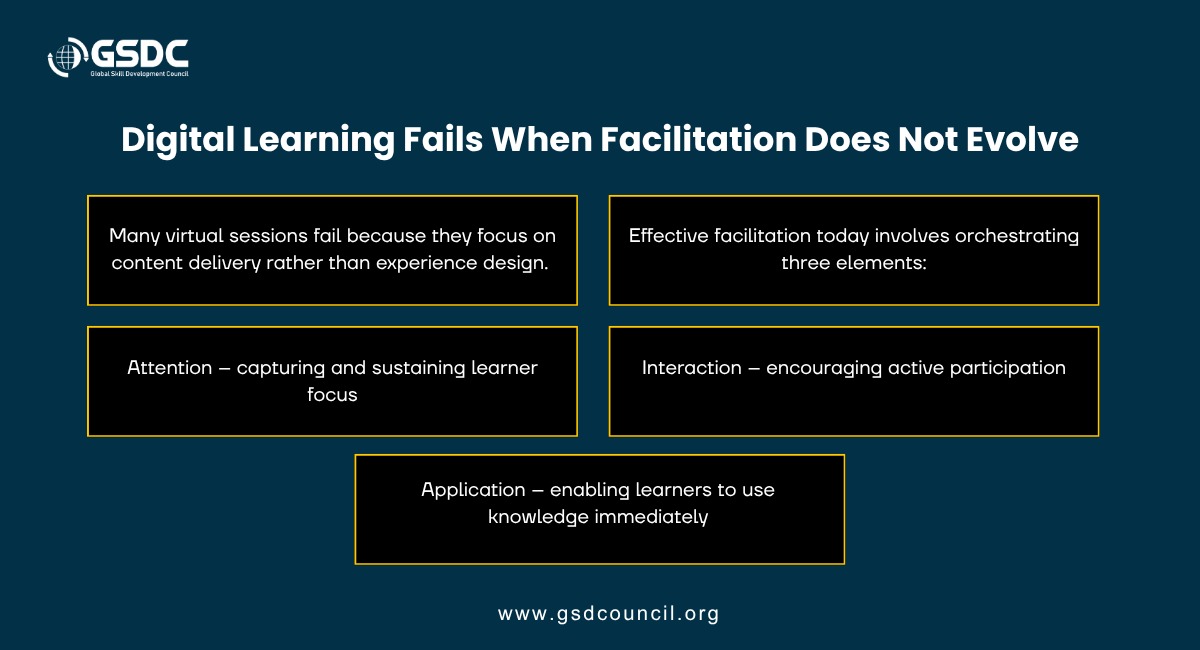
Mastering digital learning delivery is no longer about presenting content through slides; it is about applying effective digital learning strategies that enhance learning delivery by designing experiences that capture attention, encourage participation, and drive real-world application. To succeed in virtual learning environments, facilitators must rethink how learning is structured, delivered, and sustained while keeping remote learners actively involved.
The Engagement Gap in Virtual Learning
A recurring issue in digital delivery is the gap between attendance and true engagement. Participants may log into sessions, yet many multitask, remain passive, or disengage entirely. This challenge becomes even more pronounced when organizations struggle to engage remote employees effectively. The gap exists because traditional training methods designed for physical classrooms are often replicated online without adapting to the realities of digital behavior.
Virtual learning magnifies poor instructional design, which is why applying practical virtual learning tips is essential. In a physical classroom, facilitators can rely on presence, eye contact, or spontaneous interaction. In contrast, online environments expose weaknesses immediately. Slides alone cannot create meaningful learning; only thoughtfully designed, interactive experiences can.
Shrinking Attention Spans: A Reality Facilitators Must Address
Modern learners face constant digital distractions, making digital delivery more challenging than ever. Notifications, multitasking, and screen fatigue significantly reduce the ability to maintain sustained attention, especially when trying to engage remote employees in virtual environments. Research shows that average attention spans have declined dramatically over the past two decades, making it harder to hold learners’ focus during online sessions.
This shift requires facilitators to rethink their approach by applying practical virtual learning tips and leveraging the right engagement tools for virtual learning. Instead of long lectures or dense content, learning must be structured into shorter, interactive segments that continuously re-engage participants. The use of virtual engagement tools and interactive learning technology plays a crucial role in transforming passive sessions into dynamic experiences. The responsibility is not to fight technology but to design learning that works within today’s digital behaviors.
The “Virtual Trap”: Staying at the Lowest Levels of Learning
A major challenge in digital training is what can be called the virtual trap, designing sessions that operate only at the basic levels of learning, such as remembering and understanding information.
These levels are easy to deliver but rarely lead to behavioral change. When sessions remain passive:
- Learners listen but do not apply concepts
- Participation drops
- Multitasking increases
- Knowledge retention remains low
True learning occurs when sessions move into higher-order thinking skills such as applying, analyzing, evaluating, and creating. These stages demand active involvement, discussion, and problem-solving elements that must be intentionally built into digital delivery.
Designing for Active Learning in Virtual Environments
To move beyond passive learning and truly understand why virtual learning has become essential in today’s workplace, facilitators must integrate activities that encourage participation and reflection. As part of evolving L&D trends and the shift toward modern learning, these approaches rely heavily on the right digital learning tools to create meaningful experiences. Some effective techniques include:
- Polls and quizzes to assess knowledge and spark curiosity
- Breakout discussions to enable collaboration and problem-solving
- Scenario-based exercises that simulate real-world challenges
- Reflection questions that connect learning to personal experience
- Gamified interactions to sustain energy and motivation
These strategies transform learners from observers into contributors, increasing both engagement and retention while aligning with the expectations of today’s modern workforce.
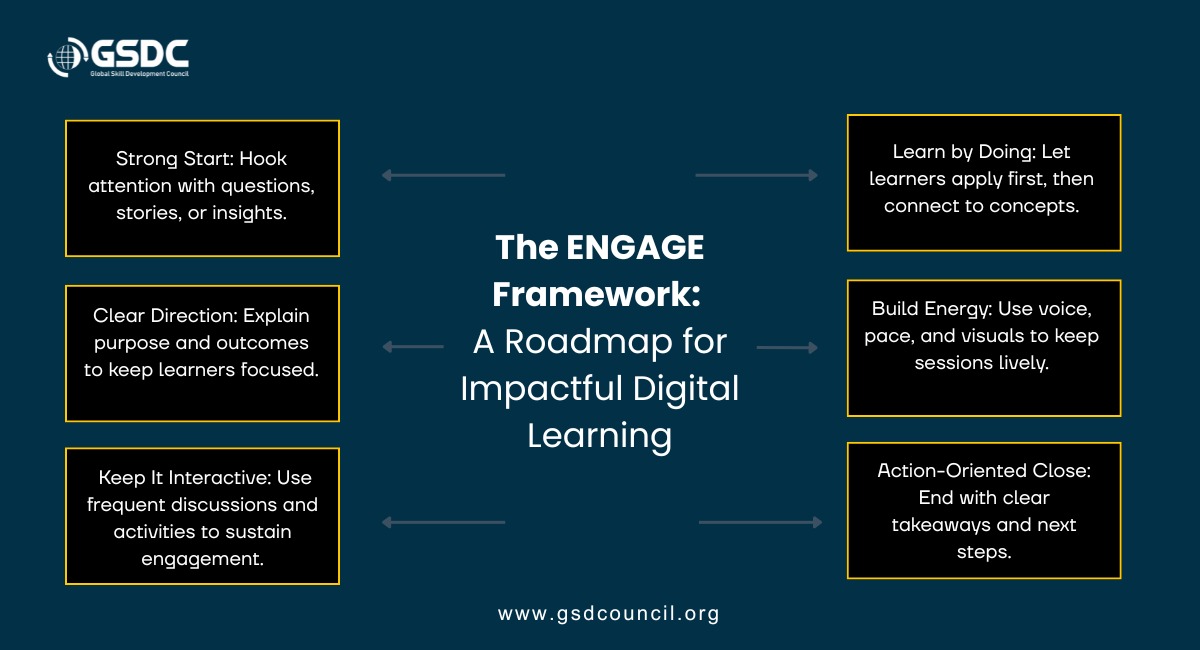
The ENGAGE Framework: A Roadmap for Impactful Digital Learning
One practical approach to designing high-impact virtual sessions is the ENGAGE framework, which focuses on structuring the learner journey from start to finish.
1. Entry Experience
The opening moments determine whether learners stay engaged or mentally disconnect. Instead of beginning with slides, facilitators should use questions, stories, or surprising insights to capture attention immediately.
2. Navigation Clarity
Learners must understand why the session matters and what they will gain. Clear expectations reduce confusion and help participants stay invested.
3. Guided Interaction
Facilitators should regularly involve learners through discussions, reactions, or collaborative tasks. Interaction every few minutes prevents disengagement.
4. Application First
Rather than explaining concepts at length, allow learners to try, reflect, and then connect theory to practice. Learning deepens when participants actively use new knowledge.
5. Group Energy
Energy in virtual sessions must be intentionally created. Voice modulation, pacing, storytelling, and visual variety help maintain momentum and prevent monotony.
6. Exit with Ownership
Sessions should close with reflection and action. Learners must leave with clear takeaways and practical steps to apply what they have learned.
Communication Matters: Delivering with Presence and Clarity
Facilitators also need to adapt their communication style for virtual environments. Effective delivery includes:
- Balanced volume and clarity to ensure accessibility
- Intentional energy that conveys confidence and enthusiasm
- Appropriate pace to allow comprehension without losing momentum
- Voice variation to avoid monotony
- Neutral, clear language for diverse audiences
These elements significantly influence learner perception and engagement.
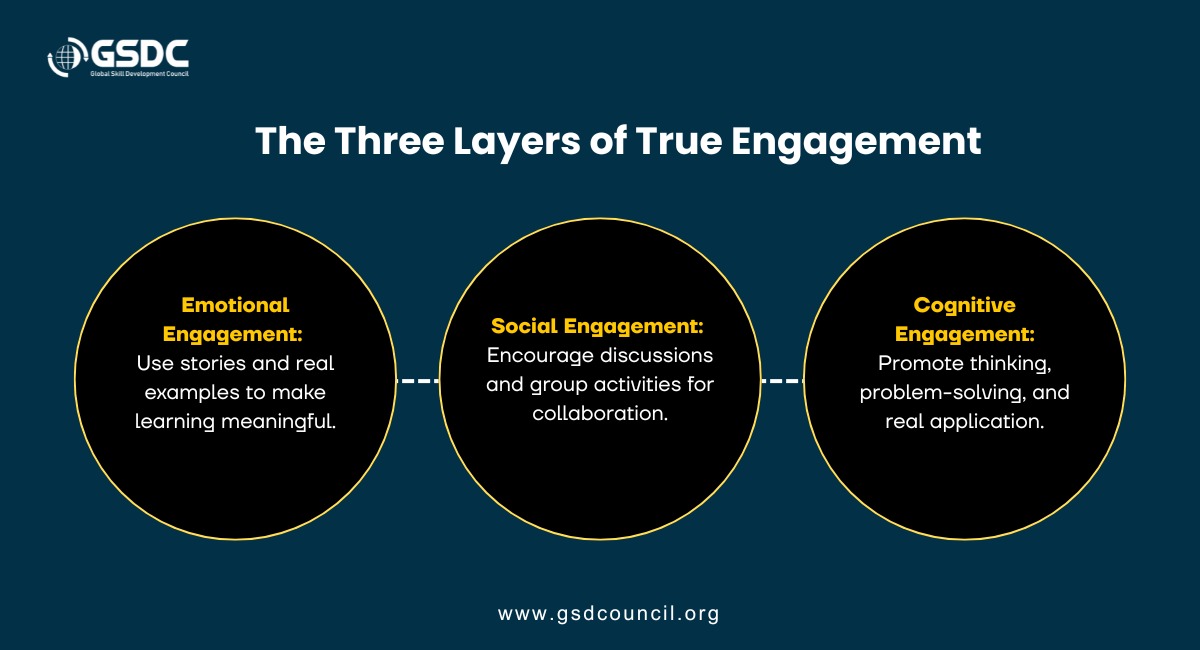
The Three Layers of True Engagement
Engagement is not simply about clicking buttons or responding to polls. It operates across three deeper levels:
Emotional Engagement
Learners connect when content feels relevant or meaningful. Stories, relatable examples, and real-world challenges activate emotional investment.
Social Engagement
Interaction with peers fosters collaboration and shared understanding. Discussions, debates, and group tasks strengthen learning through connection.
Cognitive Engagement
This is where real thinking occurs analyzing situations, solving problems, and applying knowledge. Cognitive engagement transforms information into usable skills.
Designing for all three layers ensures learning experiences are memorable and impactful.
Overcoming Common Virtual Learning Challenges
Facilitators frequently encounter obstacles such as low participation, multitasking, technical distractions, or overloaded content. These issues are rarely caused by technology itself. Instead, they stem from insufficiently designed learning journeys.
Solutions include:
- Structuring sessions into shorter, varied activities
- Encouraging participation every 5–7 minutes
- Using simulations and real-world scenarios
- Blending instructor-led learning with digital practice platforms
- Providing follow-up activities to reinforce learning
When learning continues beyond the session, knowledge retention and behavior change improve significantly.
Turning Learning into Lasting Behavioral Change
The ultimate goal of digital learning is not to entertain but to enable measurable improvement. Without reinforcement, learners quickly forget what they heard. Facilitators can counter this by:
- Assigning small post-session actions
- Creating peer discussion groups
- Offering quick practice sessions
- Providing job aids or reference materials
These micro-learning reinforcements help translate knowledge into daily practice.
The Future of Digital Learning Delivery
As organizations continue to embrace remote and hybrid work models, digital learning will remain central to employee development. The growing use of adaptive learning technologies and AI in learning and development is further reshaping how personalized and scalable training experiences are delivered.
Success will depend on moving away from lecture-style delivery toward experience-driven design that prioritizes interaction, relevance, and application, helping address the ongoing challenges of virtual learning.
Mastering digital learning delivery means understanding that technology is only the platform; the real impact comes from how learning is designed and facilitated.
GSDC Certified Learning & Development Professional (CLDP): Elevate Your Digital Facilitation Skills
The GSDC Certified Learning & Development Professional certification is designed for trainers, facilitators, and L&D professionals who want to master modern learning practices in digital environments. It equips professionals with the skills to design engaging, learner-centric experiences, apply effective digital learning strategies, and improve learning delivery across virtual platforms.
This program of GSDC focuses on instructional design, adult learning principles, and the use of interactive learning technologies to engage remote employees. By aligning with current L&D trends and addressing the challenges of virtual learning, CLDP enables professionals to create impactful training programs that drive real behavioral change and measurable business outcomes.

Conclusion
Digital learning is most effective when it shifts from content transmission to experience creation, an approach increasingly shaped by AI in learning and development. By designing sessions that capture attention, encourage interaction, and promote application, organizations can overcome the challenges of virtual learning and drive meaningful outcomes.
Facilitators who adopt structured frameworks, active methodologies, and learner-centered strategies will transform remote training into engaging, impactful, and lasting learning experiences.

Related Certifications
Frequently Asked Questions
Stay up-to-date with the latest news, trends, and resources in GSDC
If you like this read then make sure to check out our previous blogs: Cracking Onboarding Challenges: Fresher Success Unveiled
Not sure which certification to pursue? Our advisors will help you decide!