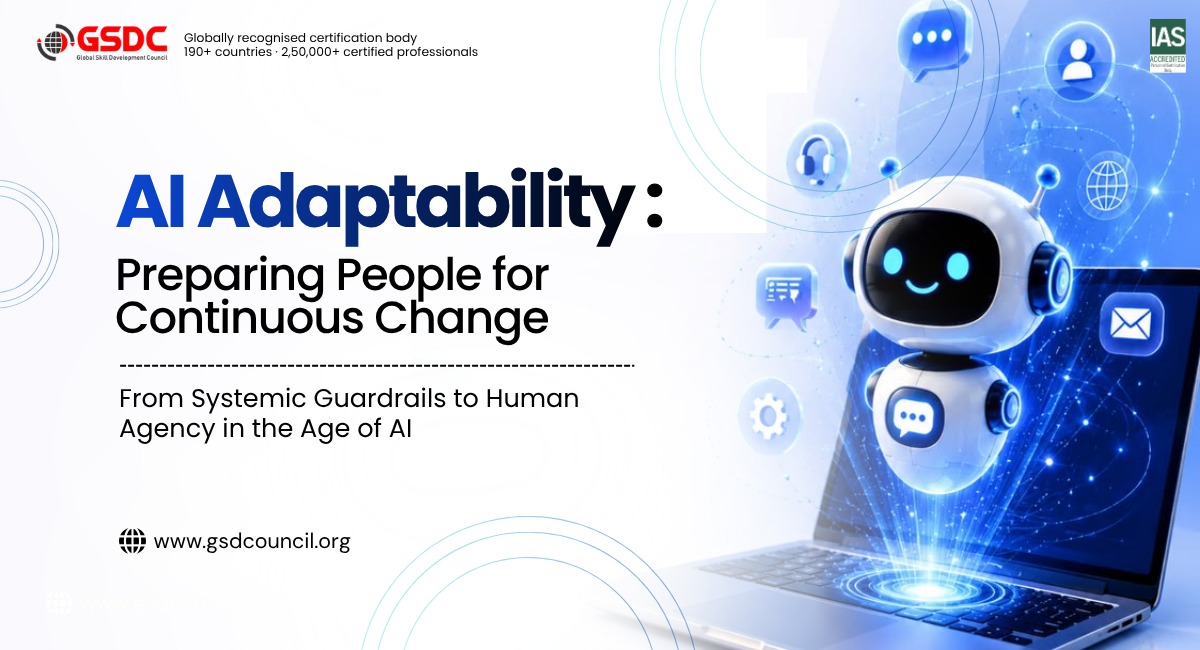
AI Adaptability: Preparing People for Continuous Change
Written by Ecaterina - Irina Manole
Artificial intelligence is changing how organizations work, but successful AI adoption is not only about choosing the right technology. It is also about preparing people to work with constant change.
In the webinar “AI Adaptability: Preparing People for Continuous Change – From Systemic Guardrails to Human Agency in the Age of AI,” the discussion focused on an important question: How can organizations prepare their people to continuously adapt as AI tools, workflows, and expectations keep changing?
The session explained that organizations need more than AI tools and technical training. They need psychological safety, continuous learning, clear governance, AI literacy, and strong human judgment.
The central idea was simple: AI may accelerate change, but human adaptability determines how well an organization responds to it.
Why AI Adoption Is Not Just a Technology Challenge
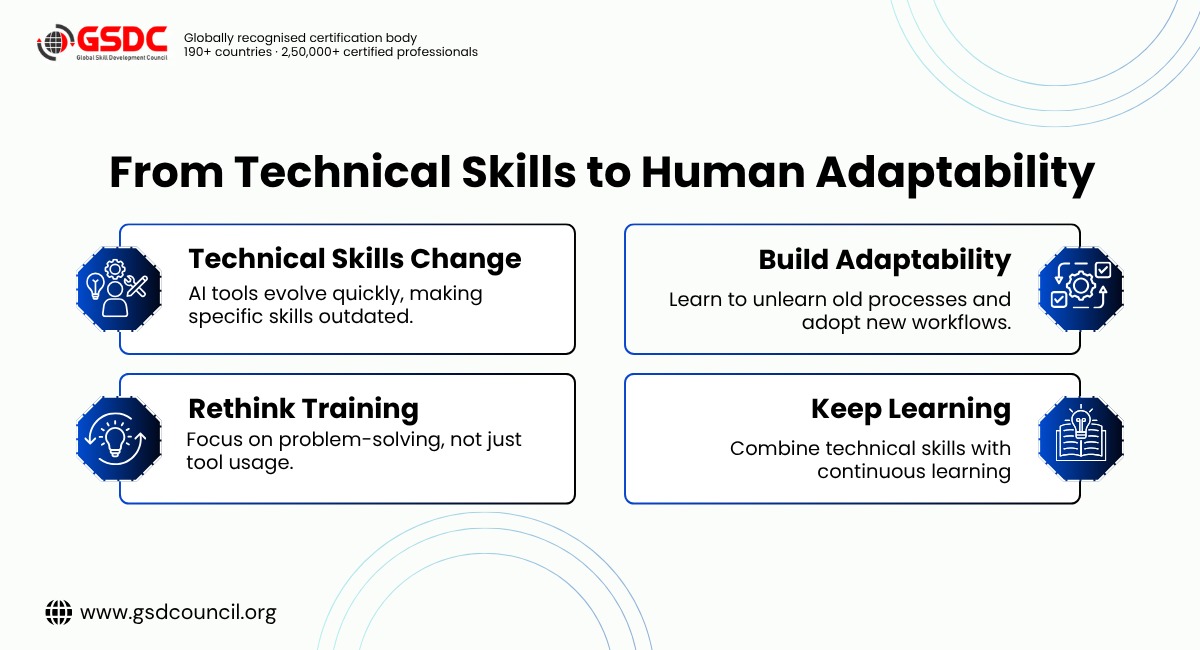
Many organizations approach AI adoption by focusing on software, platforms, licenses, and training. However, the webinar highlighted that this approach can miss the most important part of transformation: people. Understanding what is adaptability and why is adaptability important becomes critical as organizations introduce AI into everyday work.
Organizations can purchase advanced AI systems, but employees may still avoid using them, use them incorrectly, or depend on them too heavily. This is where AI adaptability and workforce adaptability become important. Employees need to understand how AI works, where it can help, and when human judgment should remain central.
The webinar connected successful AI adoption to three foundations: psychological safety, human adaptability, and continuous learning. These foundations support AI literacy and help employees adjust to changing tools, workflows, and responsibilities.
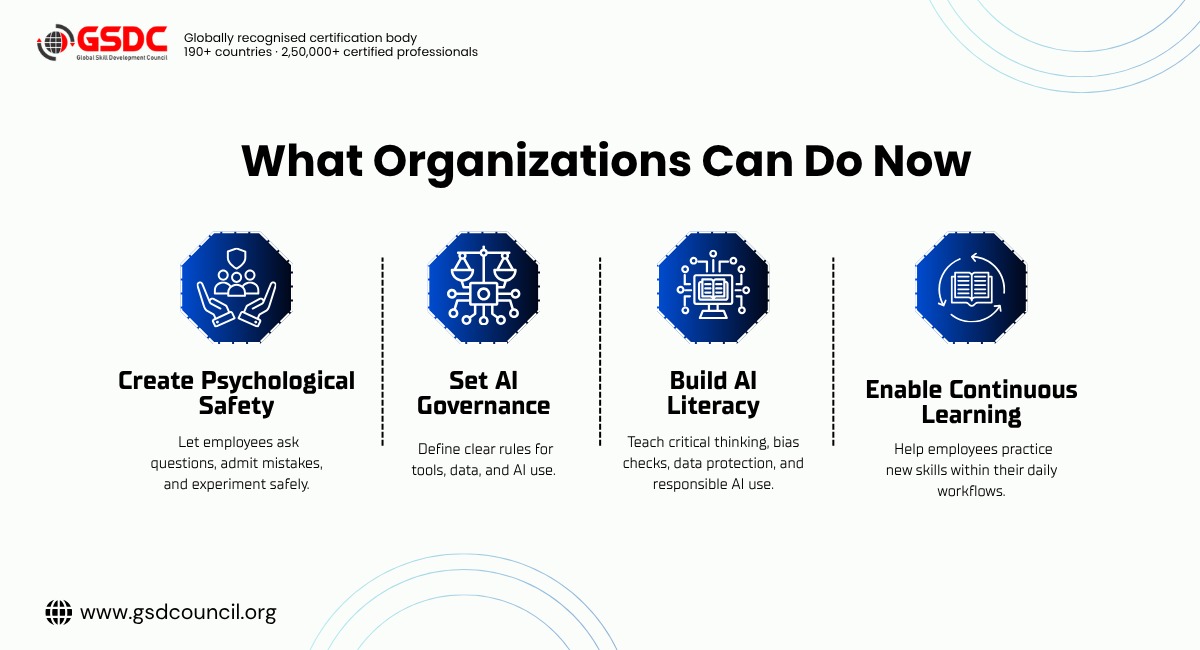
Psychological safety gives employees the freedom to admit that they do not understand a technology, ask questions, experiment, and learn from mistakes. Without this environment, employees may hide problems rather than discuss them.
Organizations also need AI governance and AI change management to guide adoption. Clear policies, practical training, and AI guardrails can help employees understand what they can and cannot do with AI. Understanding what are AI guardrails? is especially important as organizations move toward more autonomous systems and agentic guardrails become necessary.
Finally, responsible adoption should protect human agency in AI. AI should support people rather than remove their ability to question, review, and make important decisions. Without clear guidance, employees may turn to unsanctioned tools, creating issues such as Shadow AI, where employees use unauthorized AI tools because approved processes are too slow or difficult.
Building a Continuous Learning Environment
One-time training programs may not be enough for an AI-driven workplace.
The webinar discussed moving away from traditional learning models where employees attend a short training session and then return to their regular work. Instead, learning should become part of everyday work.
A continuous learning ecosystem can include feedback loops, peer-to-peer knowledge sharing, and decentralized knowledge bases. These approaches allow employees to learn from real situations rather than depending only on formal training.
The goal is to make adaptation part of the daily routine.
When employees regularly share knowledge, experiment with new tools, and learn from feedback, organizational change becomes less disruptive. Instead of treating every new technology as a major transformation project, teams can gradually evaluate and integrate new approaches.
From Passive Operators to Strategic Orchestrators
The webinar introduced the idea of the strategic orchestrator.
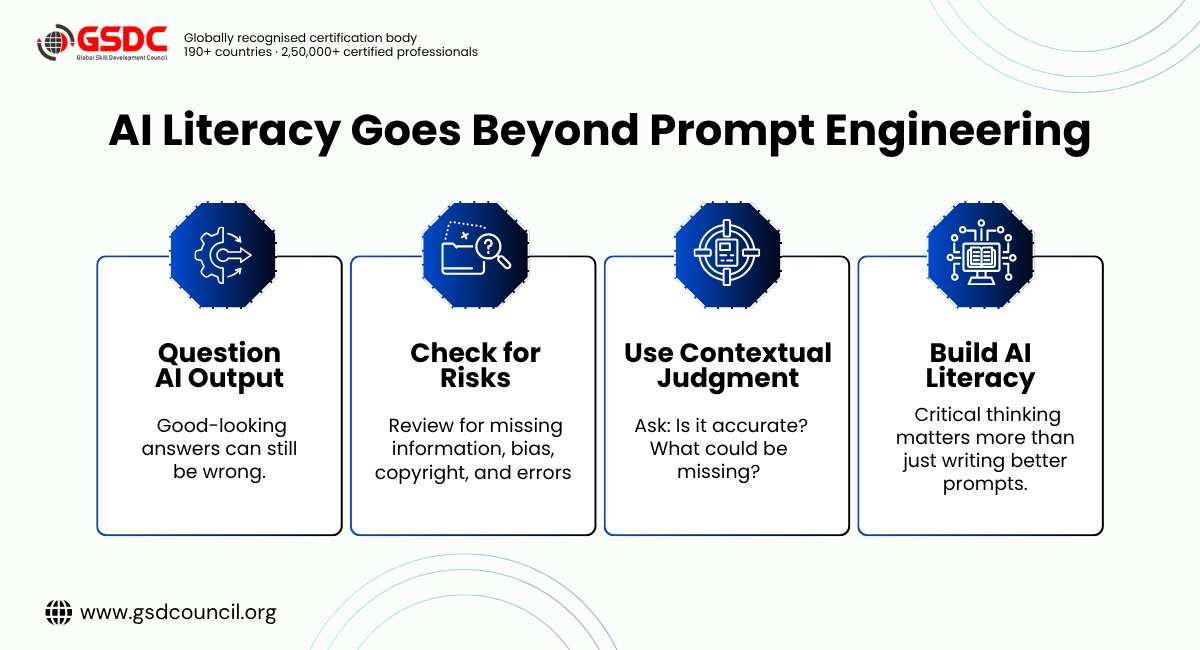
A strategic orchestrator does not treat AI as an oracle that always knows the answer. Instead, they treat AI as a highly capable but inexperienced assistant.
AI can handle tasks such as drafting, summarizing large documents, formatting information, and helping with analysis. However, the human reviews, challenges, edits, and approves the final result.
This creates a clear division of strengths.
AI provides computational speed and processing capability. Humans provide context, professional judgment, ethical reasoning, and understanding of relationships and consequences.
The goal is therefore not to remove humans from the workflow. It is to help humans use AI without giving up their professional responsibility.
The Forced Cognitive Pause
One practical technique discussed during the webinar was the forced cognitive pause.
Before sending, publishing, or approving AI-generated material, employees can take a short pause and ask themselves:
“Would I put my name on this and stand behind its accuracy if it were audited?”
The webinar suggested a 30-second pause.
This small amount of friction is designed to interrupt automatic acceptance of AI output. Instead of immediately clicking “send” or “approve,” the employee takes a moment to review the information and reconsider the decision.
The idea is not to make work slower. It is to reduce the possibility of costly mistakes caused by over-reliance on AI.
Preparing for Continuous Change
AI is changing too quickly for organizations to treat transformation as a project with a clear beginning and end.
A new tool may be introduced today, updated tomorrow, and replaced by another system later. AI is also moving beyond simple content generation toward systems that can execute more complex, multi-step workflows.
This makes continuous adaptability increasingly important.
Organizations that build strong learning ecosystems can respond to these changes more naturally. Employees can test new technologies, evaluate what works, discard what does not, and integrate useful approaches into their workflows.
In this model, adaptability becomes part of everyday operations rather than a reaction to every new technology trend.
Build Practical AI Skills with GSDC Forward Deployed Engineer Certification
GSDC’s Forward Deployed Engineer Certification helps professionals understand how to connect AI and emerging technologies with real-world enterprise needs. The certification aligns with the growing role of FDEs in bridging technical solutions, business workflows, client requirements, and organizational challenges.
Forward Deployed Engineer Certification can help learners develop knowledge of AI implementation, solution architecture, enterprise integration, problem-solving, stakeholder communication, and responsible technology adoption.
For professionals working in AI-driven environments, the certification provides a structured way to strengthen both technical and business-oriented capabilities. These skills can support organizations in moving AI solutions from experimentation toward practical adoption, measurable outcomes, and sustainable business value.
Conclusion
AI adaptability is not about keeping up with every new tool. It is about building the ability to keep learning as technology changes and developing workforce adaptability across changing roles and workflows.
The webinar emphasized that organizations need to prepare both their systems and their people. AI guardrails can create a secure environment for AI adoption, while AI governance provides clear rules for responsible use. However, these systems need to be supported by human competence, critical thinking, ethical awareness, and professional judgment.
The future workplace may involve increasingly capable AI systems, but humans will continue to play an important role in providing context, questioning outputs, making decisions, and taking responsibility. This makes human agency in AI an important part of responsible adoption. As AI systems become more autonomous, agentic guardrails can also help define boundaries around what AI agents can access and do.
The real advantage is therefore not simply having access to AI. It is building a workforce that can adapt, question, learn, and use AI responsibly as technology evolves. AI literacy and AI change management can help employees understand new tools, adjust workflows, and develop confidence in working with AI.

Related Certifications
Frequently Asked Questions
AI adaptability is the ability of individuals and organizations to continuously learn, unlearn old ways of working, and adjust workflows as AI technologies and business requirements change.
Psychological safety allows employees to admit mistakes, ask questions, and experiment with new technologies. This supports AI literacy, continuous learning, and responsible AI adoption.
Automation bias is the tendency to trust or accept an automated system's output without sufficient human review. With AI, this can happen when employees assume that a confident and well-written response must be accurate.
A strategic orchestrator uses AI for tasks such as drafting, summarizing, and processing information while retaining responsibility for reviewing, questioning, editing, and approving the final output.
Employees can build workforce adaptability through continuous learning, questioning AI-generated answers, experimenting safely, and using AI change management practices to adjust to new tools and workflows.
Stay up-to-date with the latest news, trends, and resources in GSDC
If you like this read then make sure to check out our previous blogs: Cracking Onboarding Challenges: Fresher Success Unveiled
Not sure which certification to pursue? Our advisors will help you decide!