10 Essential Project Management Skills Every Professional Needs
Written by Matthew Hale
Every successful project needs structure, planning, and clear direction. This is exactly where a project management officer (PMO) plays an important role. Whether an organization is managing ten projects or hundreds, the PMO helps teams follow the right processes, monitor progress, manage risks, and achieve business goals.
As companies continue to invest in better project management practices, the demand for skilled PMO professionals is increasing. Organizations are hiring for different PMO jobs, including PMO analyst, PMO manager, and PMO director, to improve project delivery and business performance.
Technical knowledge alone is not enough to succeed in a PMO career. Employers also expect professionals to have strong communication, analytical thinking, leadership, and governance skills.
In this guide, you will learn the 10 essential PMO skills every professional should develop. Whether you are preparing for your first PMO interview or planning your long-term PMO career path, these skills will help you stand out.
Understanding PMO Roles and Responsibilities
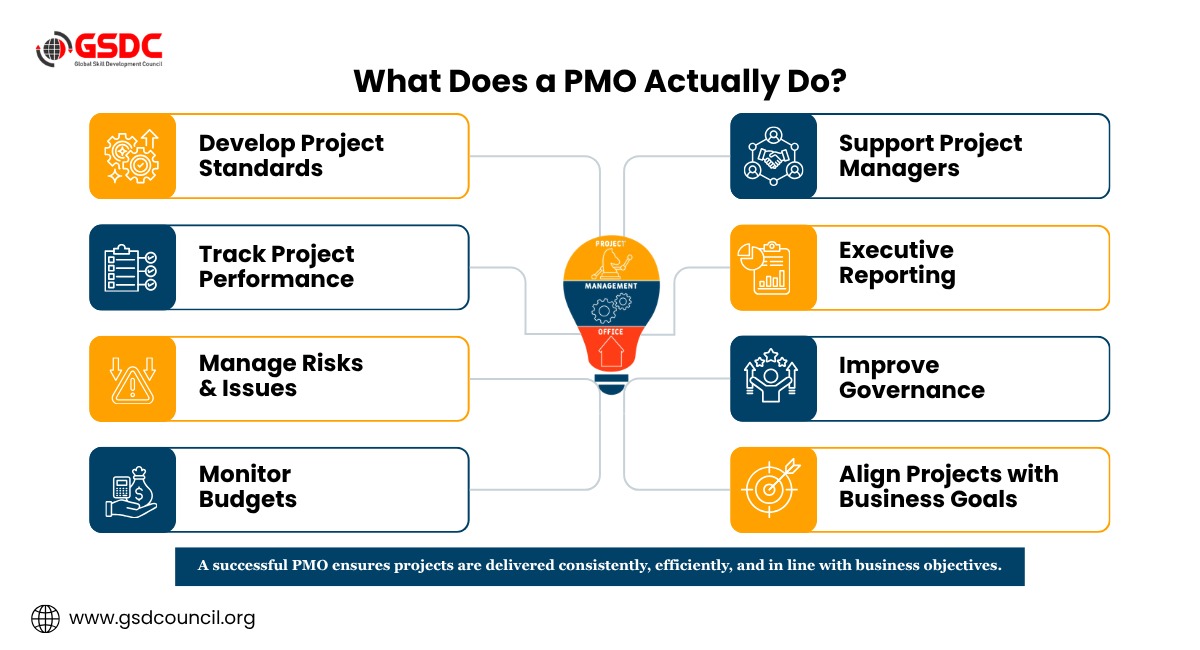
Before learning the required skills, it is important to understand what PMO professionals actually do. The exact responsibilities depend on the organization and the position, but most PMO teams focus on:
- Developing project management standards
- Tracking project performance
- Managing risks and issues
- Monitoring budgets and resources
- Supporting project managers
- Creating executive reports
- Improving project governance
- Aligning projects with business objectives
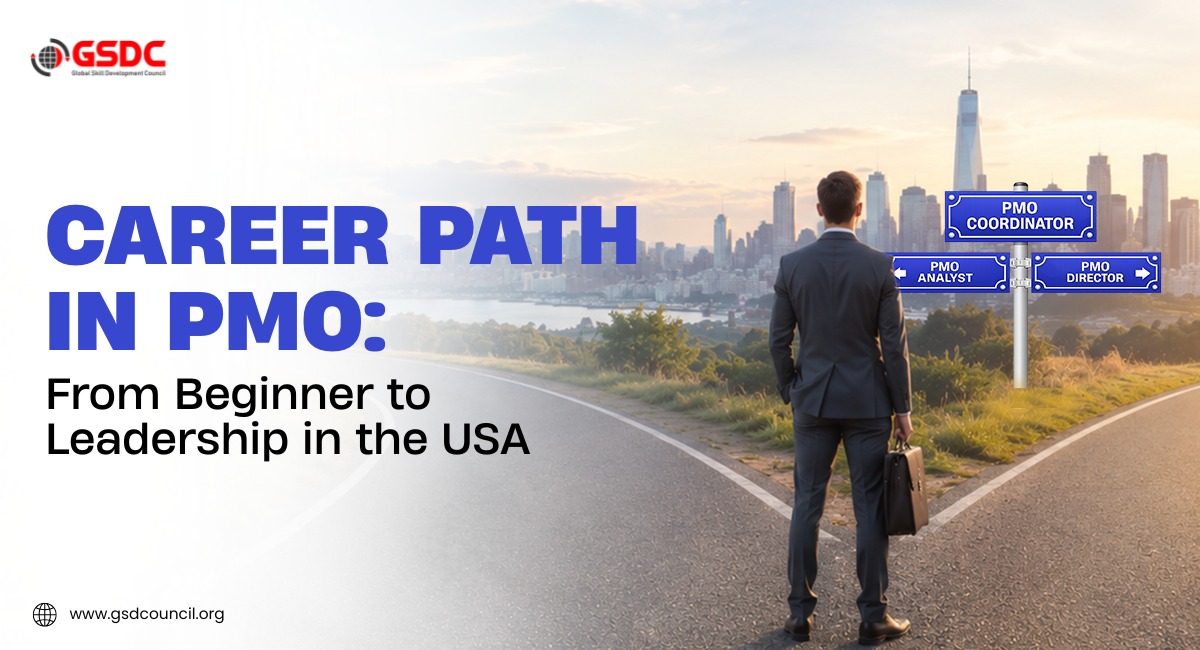
As professionals move from PMO analyst to PMO manager and eventually to PMO director, their responsibilities become more strategic and leadership-focused.
1. Project Governance
One of the most important PMO skills is understanding project governance. Project governance provides a structured approach to managing projects. It ensures every project follows approved processes, reporting standards, and decision-making practices so that teams work consistently and projects stay aligned with business goals.
A PMO professional should know how to:
Create governance frameworks
A governance framework defines how projects will be managed from beginning to end. It includes approval processes, reporting structures, roles, responsibilities, and decision-making guidelines so that every project follows a consistent approach.
Define project standards
Project standards establish the methods and best practices that every project team should follow. These standards improve consistency in planning, documentation, communication, and project delivery across the organization.
Monitor compliance
Monitoring compliance means checking whether projects are following the organization's policies, governance framework, and established processes. Regular reviews help identify gaps early and ensure teams stay on track throughout the project lifecycle.
Conduct project reviews
Project reviews evaluate the overall health and progress of a project at different stages. These reviews help identify risks, resolve issues, measure performance, and recommend improvements before small problems become major challenges.
Without proper governance, projects often face delays, exceed their budgets, and produce inconsistent results. Strong project governance creates accountability, improves decision-making, and increases the likelihood of successful project delivery.
2. Planning and Organization
PMO professionals often work on multiple projects at the same time, making planning and organization essential skills. A well-organized approach helps teams meet deadlines, use resources effectively, and keep projects moving in the right direction.
This includes:
Setting priorities
Not every task has the same level of importance or urgency. A PMO professional should be able to identify high-priority activities, allocate attention where it is needed most, and ensure critical project objectives are completed on time.
Managing schedules
Managing schedules involves creating realistic project timelines and ensuring activities are completed according to plan. Regularly reviewing schedules helps identify delays early and allows teams to make adjustments before they affect the overall project.
Tracking milestones
Milestones represent key achievements or important stages in a project's lifecycle. Monitoring these milestones helps measure progress, keeps stakeholders informed, and ensures the project stays aligned with its planned timeline.
Monitoring dependencies
Many project tasks depend on the completion of other activities before they can begin. Identifying and monitoring these dependencies helps prevent bottlenecks, reduces delays, and improves coordination between different teams.
Coordinating project activities
A PMO professional works closely with project managers, team members, and stakeholders to ensure everyone is working toward the same objectives. Effective coordination improves communication, avoids duplicate efforts, and helps projects progress smoothly.
Strong planning and organizational skills help PMO professionals manage multiple responsibilities with confidence. They improve efficiency, reduce confusion, and create a structured environment where projects are more likely to be delivered successfully.
3. Communication Skills
Communication is one of the most valuable skills in every PMO role. PMO professionals work with people across different departments and levels of the organization, so they must be able to share information clearly, listen actively, and ensure everyone stays informed throughout the project.
A PMO professional regularly interacts with:
Project Managers
Project managers rely on the PMO for guidance, reporting standards, and governance support. Clear communication helps resolve issues quickly, track project progress accurately, and ensure projects remain aligned with organizational goals.
Business Leaders
Business leaders need regular updates on project performance, risks, and overall progress. A PMO professional should be able to present information in a simple and meaningful way so leaders can make informed decisions.
Team Members
Project teams need clear instructions, timely updates, and well-defined expectations to perform their work effectively. Good communication helps avoid confusion, improves collaboration, and ensures everyone understands their responsibilities.
Executives
Senior executives often require high-level summaries rather than detailed project reports. PMO professionals should be able to communicate key insights, major risks, budget status, and strategic outcomes in a concise and professional manner.
External Stakeholders
Some projects involve clients, vendors, consultants, or other external partners. Maintaining clear and consistent communication with these stakeholders helps build trust, manage expectations, and keep project activities running smoothly.
A PMO professional must be able to explain project updates clearly, present reports confidently, and ensure everyone understands project priorities. Strong communication reduces misunderstandings, improves collaboration, and helps projects move forward more efficiently.
4. Knowledge of PMO Tools
Technology plays an important role in the daily work of modern PMOs. Project management tools help professionals plan projects, monitor progress, manage resources, generate reports, and improve collaboration across teams. Being familiar with these tools allows PMO professionals to work more efficiently and support better project outcomes.
Some commonly used PMO tools include:
Microsoft Project
Microsoft Project is widely used for creating project schedules, assigning resources, and tracking project progress. It helps project managers and PMO teams monitor timelines, identify delays, and keep projects on schedule.
Jira
Jira is a popular project and issue-tracking tool, especially in Agile and software development environments. It helps teams manage tasks, track workflows, monitor sprint progress, and collaborate more effectively.
Asana
Asana is a work management platform that helps teams organize projects, assign tasks, set deadlines, and monitor progress. Its simple interface makes it easier for teams to stay aligned and manage day-to-day activities.
Trello
Trello uses visual boards, lists, and cards to organize project tasks. It is useful for tracking work, managing priorities, and improving collaboration, particularly for smaller projects or teams.
Smartsheet
Smartsheet combines spreadsheet functionality with project management features. It helps PMO professionals manage project schedules, automate workflows, track resources, and create reports in a collaborative environment.
Microsoft Power BI
Power BI is a business intelligence tool used to create interactive dashboards and visualize project data. PMO professionals use it to analyze project performance, monitor key metrics, and present insights to stakeholders through easy-to-understand reports.
Microsoft Excel
Excel remains one of the most widely used tools in project management. It is commonly used for budgeting, resource planning, data analysis, reporting, and maintaining project documentation.
Understanding how to use these tools improves reporting accuracy, project scheduling, collaboration, and overall project tracking. As organizations continue to adopt digital project management practices, proficiency with PMO tools has become an important skill for professionals at every stage of their PMO career.
5. Data Analysis and Reporting
Modern PMOs rely heavily on data to measure project performance and support decision-making. A PMO analyst spends a significant amount of time collecting project information, preparing dashboards, and turning data into reports that help stakeholders understand the status of ongoing projects.
Professionals should know how to analyze:
Budget Performance
Tracking budget performance helps determine whether a project is spending within its approved budget. Regular financial monitoring allows teams to identify cost overruns early and take corrective actions before they affect project outcomes.
Schedule Variance
Schedule variance compares the planned timeline with the actual progress of a project. Monitoring this metric helps identify delays, understand their causes, and adjust project plans to keep work on schedule.
Resource Utilization
Resource utilization measures how effectively team members, equipment, and other resources are being used. Analyzing this data helps prevent both overloading and underutilizing resources, leading to better productivity and balanced workloads.
Project Health
Project health provides an overall view of how well a project is performing by considering factors such as schedule, budget, risks, issues, and quality. Regular health assessments help PMO professionals identify areas that need attention before they become major concerns.
Delivery Metrics
Delivery metrics measure how successfully projects are meeting their objectives. Metrics such as on-time completion, budget adherence, quality standards, and customer satisfaction help organizations evaluate project performance and identify opportunities for improvement.
Clear and accurate reporting enables project managers, business leaders, and executives to make informed decisions based on reliable information. Strong data analysis and reporting skills also help PMO professionals identify trends, improve project performance, and support better planning for future initiatives.
6. Stakeholder Management
Every project involves people who have different goals, expectations, and responsibilities. One of the key PMO skills is managing these relationships effectively to ensure everyone stays informed, engaged, and aligned throughout the project lifecycle.
This includes:
Identifying Key Stakeholders
The first step is to identify everyone who is involved in or affected by the project. This may include project sponsors, business leaders, project managers, team members, clients, vendors, and other external partners.
Understanding Stakeholder Expectations
Different stakeholders have different priorities and concerns. A PMO professional should understand what each stakeholder expects from the project so that communication and project decisions can be managed accordingly.
Providing Regular Project Updates
Keeping stakeholders informed about project progress, risks, milestones, and challenges helps maintain transparency. Regular updates also ensure that important decisions can be made quickly when needed.
Managing Conflicts and Concerns
Disagreements and changing priorities are common in projects. PMO professionals should listen to stakeholder concerns, address issues fairly, and work with everyone involved to find practical solutions that support project objectives.
Strong stakeholder management builds trust, improves collaboration, and creates a positive working environment. When stakeholders feel informed and involved, projects are more likely to progress smoothly with fewer misunderstandings and delays.
7. Financial and Budget Management
Many PMO roles involve monitoring project budgets and ensuring resources are used efficiently. While PMO professionals may not always make financial decisions, they should understand how project costs are planned, tracked, and reported to support successful project delivery.
This includes:
Budget Planning
Budget planning involves estimating the financial resources required to complete a project successfully. A well-planned budget helps teams allocate funds appropriately and reduces the chances of unexpected expenses during the project.
Cost Tracking
Cost tracking means monitoring project expenses throughout the project lifecycle. Regularly comparing actual spending with the planned budget helps identify overspending early and allows corrective actions to be taken before costs increase further.
Forecasting
Forecasting helps predict future project costs based on current spending patterns and project progress. Accurate forecasts allow organizations to prepare for upcoming expenses and make informed financial decisions.
Financial Reporting
Financial reporting provides stakeholders with a clear overview of the project's financial performance. Well-prepared reports help project managers and business leaders understand budget status, spending trends, and any financial risks that may require attention.
Cost Optimization
Cost optimization focuses on using available resources efficiently without compromising project quality or objectives. PMO professionals can support this by identifying opportunities to reduce unnecessary expenses, improve resource allocation, and increase overall project value.
A strong understanding of financial and budget management helps PMO professionals make better decisions, support project managers with accurate financial information, and contribute to delivering projects within budget. It also enables organizations to maintain better financial control across multiple projects.
8. Leadership Skills
Leadership is an essential skill for every PMO professional, regardless of their job title or level of experience. While PMO managers and PMO directors are expected to lead teams and make strategic decisions, even entry-level professionals often coordinate activities, support project managers, and help keep projects moving in the right direction.
Leadership includes:
Decision-Making
PMO professionals are often required to make timely decisions that support project progress. Good decision-making involves evaluating available information, considering potential risks, and choosing solutions that align with project and business objectives.
Conflict Resolution
Conflicts can arise due to changing priorities, resource limitations, or differences in opinions. A PMO professional should be able to handle disagreements professionally, encourage open communication, and work towards solutions that benefit the project.
Team Coordination
Successful projects require effective collaboration between different teams and departments. PMO professionals help coordinate activities, ensure tasks are completed on time, and keep everyone focused on shared project goals.
Accountability
Leadership also means taking responsibility for assigned tasks and encouraging others to do the same. When accountability is clearly established, teams become more reliable, deadlines are met, and project performance improves.
Motivation
Keeping teams motivated is important, especially during challenging phases of a project. Recognizing achievements, encouraging collaboration, and maintaining a positive work environment help improve team morale and productivity.
As professionals progress from PMO analyst to PMO manager and eventually PMO director, leadership becomes an even more critical skill. Strong leadership helps build high-performing teams, improve decision-making, and ensure projects are delivered successfully.
9. Problem-Solving Ability
Projects rarely go exactly as planned. Unexpected delays, changing business priorities, budget constraints, and resource shortages are common challenges that can affect project progress. A successful PMO professional must be able to identify problems quickly, evaluate possible solutions, and take appropriate action to keep projects on track.
This includes:
Identifying the Root Cause
Before solving a problem, it is important to understand why it occurred. PMO professionals should analyze the situation carefully to identify the root cause rather than addressing only the visible symptoms.
Evaluating Possible Solutions
Most project challenges have more than one possible solution. A PMO professional should compare different options, assess their impact on timelines, budgets, and resources, and recommend the most practical approach.
Making Timely Decisions
Delaying decisions can often make project issues more difficult to manage. Strong problem-solving involves making informed decisions quickly while considering both short-term needs and long-term project objectives.
Implementing Corrective Actions
Once a solution has been selected, it should be implemented effectively and monitored to ensure the issue has been resolved. PMO professionals should also document lessons learned to help prevent similar problems in future projects.
Problem-solving is an essential PMO skill because every project presents unexpected challenges. Professionals who remain calm under pressure, think logically, and focus on practical solutions help teams overcome obstacles and keep projects moving toward successful completion.
10. Risk Management
Every project faces uncertainty, whether it is related to budgets, timelines, resources, or changing business requirements. One of the key responsibilities of a PMO professional is to identify potential risks early and take steps to reduce their impact before they affect project success.
This includes:
Identifying Potential Risks
The first step in risk management is recognizing issues that could affect a project's progress. These risks may include resource shortages, budget constraints, technical challenges, changing client requirements, or unexpected delays.
Assessing Risk Impact
Once a risk is identified, it is important to evaluate how likely it is to occur and how much it could affect the project. This helps teams focus their attention on the most critical risks and allocate resources effectively.
Developing Mitigation Plans
A mitigation plan outlines the actions that can reduce the likelihood or impact of a risk. Having clear response strategies in place allows project teams to act quickly if a risk becomes a reality.
Monitoring Risks Throughout the Project
Risk management is an ongoing process, not a one-time activity. PMO professionals should regularly review existing risks, identify new ones, and update mitigation plans as the project progresses.
Organizations value professionals who can anticipate challenges instead of simply reacting to them. Strong risk management improves decision-making, minimizes disruptions, and increases the chances of delivering projects on time and within budget.
How These Skills Support Your PMO Career Path
Every PMO role requires a different level of responsibility, but these skills remain valuable throughout your career.
Role | Primary Focus |
PMO Analyst | Reporting, dashboards, data analysis, documentation |
PMO Coordinator | Project support, scheduling, communication |
PMO Manager | Governance, leadership, resource planning |
PMO Director | Strategy, portfolio management, executive decision-making |
As you gain experience, your responsibilities shift from supporting projects to managing portfolios and helping organizations achieve strategic goals.
Master the Skills That Modern PMOs Need
Developing the right PMO skills is only the first step. To grow from a PMO analyst to a PMO manager or PMO director, professionals need structured learning that combines industry best practices with practical knowledge.
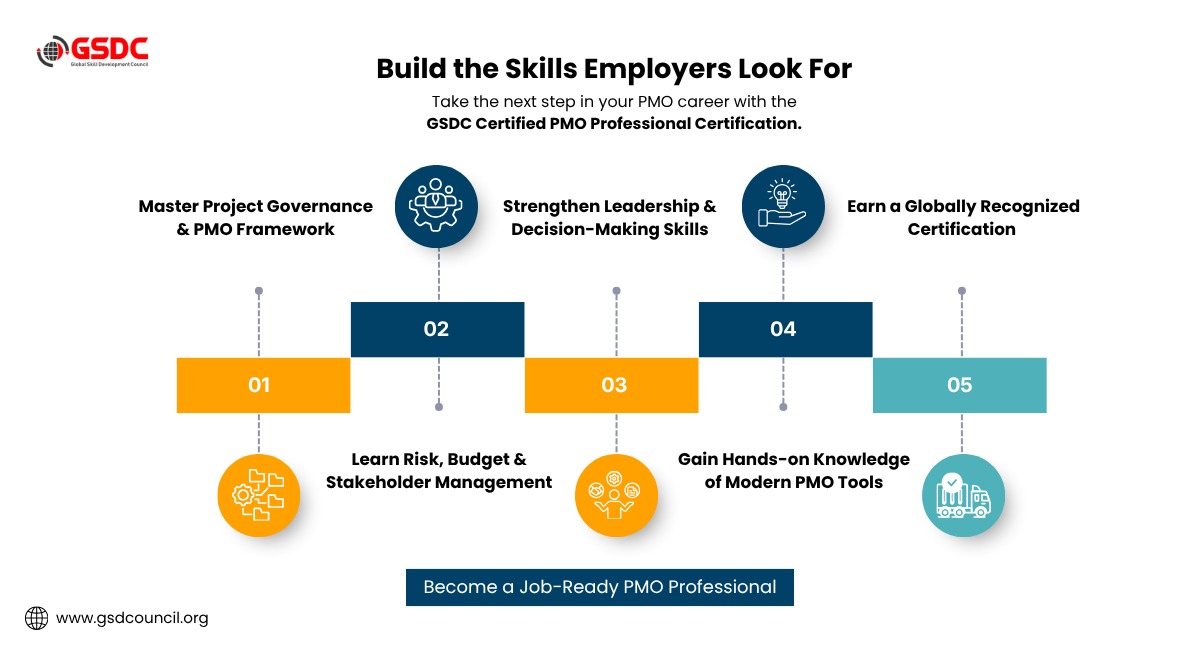
The GSDC Certified PMO Professional Certification is designed to help professionals build the competencies required to manage modern project management offices. The certification covers the core concepts of project governance, portfolio management, stakeholder communication, risk management, budgeting, performance reporting, and leadership, preparing candidates for real-world PMO responsibilities.
Having the right PMO skills is important, but in today's competitive job market, employers also look for professionals who can demonstrate their expertise through recognized certifications. A GSDC Certified PMO Professional Certification validates your knowledge and shows employers that you have the skills required to support successful project delivery and PMO operations.
Benefits of GSDC Certified PMO Professional Certification
- Gain Global Recognition: Earn a certification that is recognized by employers across industries and helps strengthen your professional credibility.
- Stand Out in a Competitive Job Market: Differentiate yourself from other candidates when applying for PMO jobs and leadership roles.
- Increase Your Career Opportunities: Open doors to roles such as PMO Analyst, PMO Manager, PMO Director, Project Coordinator, and Project Portfolio Manager.
- Improve Your Earning Potential: Certified PMO professionals often have better opportunities to negotiate higher salaries and qualify for promotions as they demonstrate validated expertise.
- Build Employer Confidence: Certification assures employers that you understand industry best practices, governance frameworks, and modern PMO methodologies.
- Accelerate Your PMO Career Path: Whether you're transitioning into a PMO role or preparing for leadership positions, certification helps showcase your readiness for greater responsibilities.
- Stay Relevant in an Evolving Industry: As organizations adopt modern project management practices and digital PMOs, certification helps you remain competitive and aligned with current industry expectations.
Investing in the GSDC Certified PMO Professional Certification is more than earning a credential, it's an investment in your long-term career. It enhances your professional reputation, increases your visibility in the job market, and positions you for better career opportunities, leadership roles, and long-term growth in the field of project management.
Conclusion
A successful PMO professional does much more than track project progress. They help organizations establish structure, improve governance, manage risks, support leadership, and ensure projects deliver real business value.
Developing these 10 essential PMO skills will strengthen your ability to perform your PMO roles and responsibilities while preparing you for future career opportunities. As organizations continue to invest in stronger project management practices, professionals with these skills will remain in high demand across industries.
If you are serious about building your PMO career path, combine practical experience with continuous learning and a recognized PMO certification. The right mix of knowledge, skills, and experience can help you move from entry-level PMO jobs to leadership positions with greater confidence.

Related Certifications
Stay up-to-date with the latest news, trends, and resources in GSDC
If you like this read then make sure to check out our previous blogs: Cracking Onboarding Challenges: Fresher Success Unveiled
Not sure which certification to pursue? Our advisors will help you decide!