Future of Enterprise AI: When Models Run Out of Text
Written by Laura Onu
- Why Is the Future of Enterprise AI Moving Beyond Text?
- Understanding the Risks of Over-Automating AI Systems
- The Importance of Multimodal Learning and AI Sensing
- Enterprise Data Governance: Four Types of Data Organizations Should Understand
- Why Human Expertise Must Remain in the AI Loop
- Three Steps Enterprises Should Take to Prepare for the Future of AI
- How GSDC's Forward Deployed Engineer Certification Supports Enterprise AI Implementation
- Conclusion
Artificial intelligence is transforming how organizations operate, make decisions, and develop new products. From customer support automation to enterprise AI agents, businesses are increasingly using AI to improve productivity and create new opportunities. However, as AI adoption grows, an important question is emerging: What happens when AI models begin to run out of high-quality training data?
Traditional AI models depend heavily on text-based information, including documents, conversations, articles, and other publicly available content. But as models continue learning from existing information and even generating content that may be used to train future models, the opportunity for genuinely new knowledge becomes limited.
This challenge was explored in the GSDC webinar "Future of Enterprise AI – When Models Run Out of Text,". The session, explored the limitations of traditional AI training approaches, the importance of real-world data, multimodal learning, enterprise data governance, and the role of human expertise in building reliable AI systems.
Why Is the Future of Enterprise AI Moving Beyond Text?
Most current AI systems rely on information gathered from text-based sources. Large language models (LLMs), for example, learn patterns from extensive datasets and use that knowledge to generate responses, summarize information, and support different business activities.
However, there is a limitation to this approach. AI models can only work with the information available to them. When they repeatedly learn from existing or AI-generated content, their outputs may become increasingly similar, reducing the possibility of discovering genuinely new ideas.
For enterprises, this means looking beyond traditional documents and databases. Businesses need to understand their actual operations, customer behavior, physical environments, and other signals that can provide context to AI systems.
This shift can help organizations build AI solutions that are more relevant to their specific requirements rather than relying entirely on generic models.
Understanding the Risks of Over-Automating AI Systems
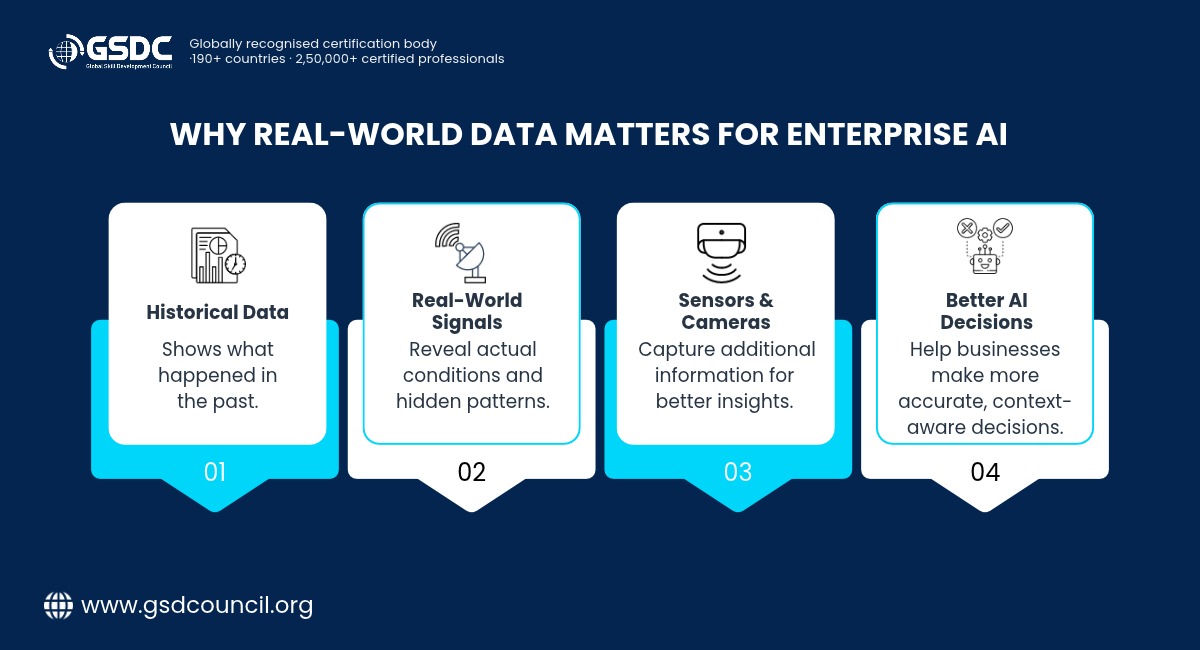
AI automation can significantly reduce repetitive work and help organizations complete tasks faster. However, increasing automation without proper oversight can create new challenges.
1. Overfitting
Overfitting occurs when an AI model becomes too closely aligned with its training data. As a result, it may perform well in familiar situations but struggle when it encounters new or unexpected conditions.
For example, an AI-powered security system trained to recognize specific threats may fail to identify new types of suspicious activity because it relies too heavily on previously learned patterns.
2. Underfitting
Underfitting happens when a model fails to capture important patterns in the available data. This can result in inaccurate predictions, irrelevant recommendations, or excessive false alerts.
For instance, a security monitoring system may identify too many activities as potential threats because it does not have enough relevant information to distinguish normal behavior from actual risks.
3. Unobservable Drift
Unobservable drift occurs when real-world conditions change over time, but the AI system does not receive the new information needed to adapt.
For example, customer preferences, technologies, business processes, or security threats may evolve. A model trained on older information might continue producing plausible answers even when its understanding no longer reflects current conditions.
These risks demonstrate why checking AI outputs alone is not always sufficient. Organizations also need to understand the information and conditions influencing the system's decisions.
The Importance of Multimodal Learning and AI Sensing
One of the major opportunities for enterprise AI is multimodal learning.
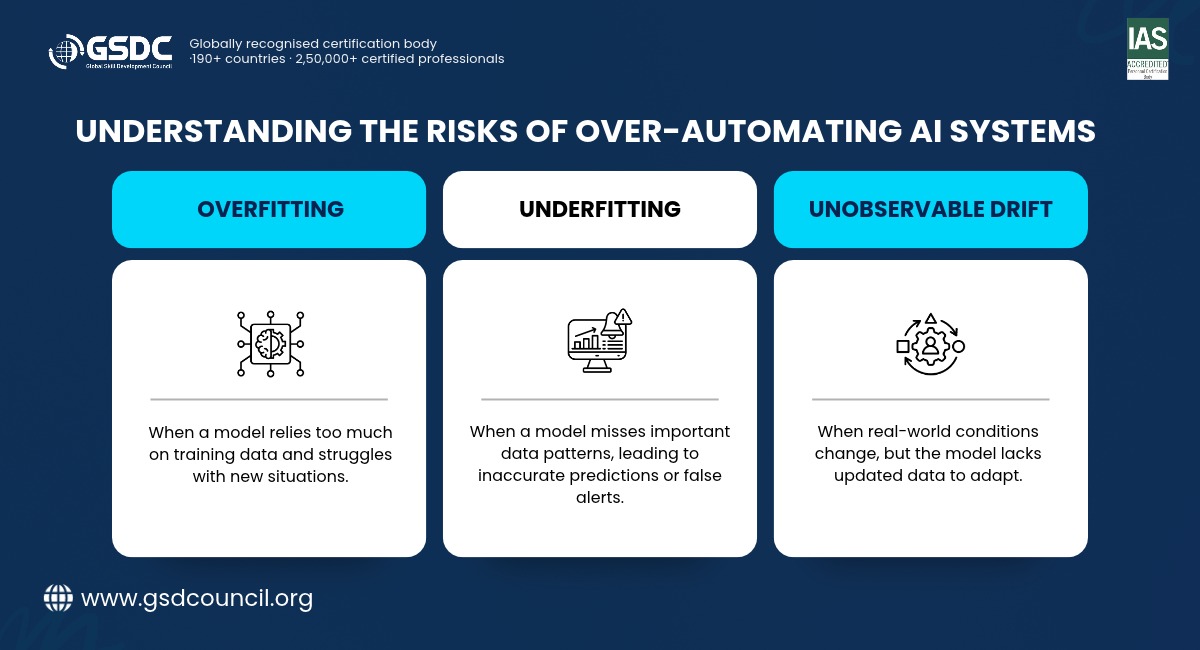
Instead of depending only on text, multimodal AI systems can process different types of information, including images, videos, sensor readings, and other real-world signals.
This allows AI applications to understand situations that cannot be explained through written information alone.
For example, a manufacturing company could use cameras and sensors to monitor equipment conditions, identify unusual patterns, and provide additional context for maintenance decisions.
Similarly, field service professionals could upload images of equipment installations or repairs to help AI systems analyze the situation and provide relevant recommendations.
The important consideration is to identify what information is missing and introduce the right instruments or sensors to capture it.
Organizations do not necessarily need continuous data collection. In some situations, even short periods of targeted observation can provide useful information while reducing unnecessary data collection.
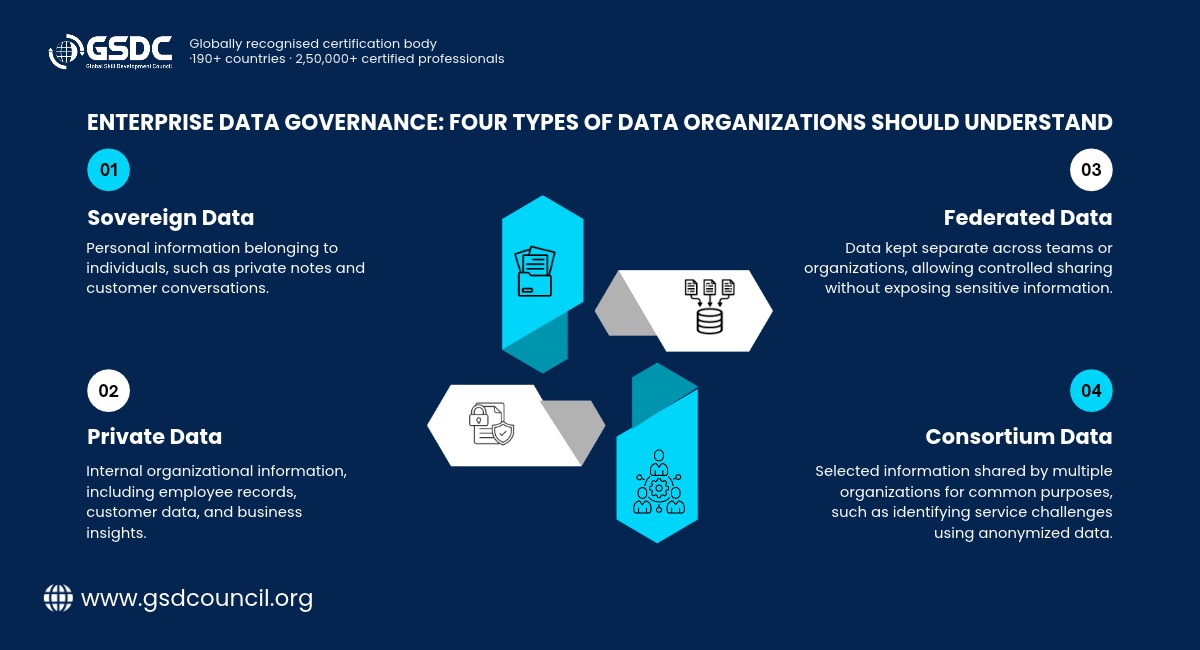
Enterprise Data Governance: Four Types of Data Organizations Should Understand
Collecting new information is important, but enterprises must also manage how that information is stored, accessed, and shared.
1. Sovereign Data
Sovereign data refers to personal information that belongs to an individual. Examples may include private notes, personal customer conversations, or information that should not automatically become organizational data.
2. Private Data
Private data belongs to an organization and may include internal business insights, employee information, customer records, and operational knowledge.
Enterprises should establish clear access controls to protect this information.
3. Federated Data
Federated data allows information to remain separated across different business units, product lines, locations, or organizations.
This approach helps businesses control what information can be shared while preventing sensitive data from crossing organizational boundaries unnecessarily.
For example, a financial institution should not expose one customer's or business partner's confidential information to another organization.
4. Consortium Data
Consortium data involves multiple organizations sharing selected information for a common purpose.
For example, financial institutions may exchange anonymized customer support information to identify common service challenges without exposing personal customer details.
These categories highlight why organizations should avoid placing all enterprise information into a single, unrestricted data lake. Proper data classification, privacy controls, and access management are essential for building trustworthy AI systems.
Why Human Expertise Must Remain in the AI Loop
Another important takeaway from the webinar was that automation does not eliminate the need for human judgment.
In fact, as organizations delegate more activities to AI systems, human oversight becomes increasingly important.
When employees only review the final output, they may gradually lose visibility into how the system reaches its decisions. Over time, this can weaken their understanding of the actual business processes and make it harder to identify unexpected problems.
Instead of manually reviewing every AI-generated result, professionals can examine selected cases in greater depth. This allows them to understand the system's behavior, identify unusual patterns, and discover opportunities for improvement.
Human involvement should not be limited to approving or rejecting AI outputs. It should help organizations continuously improve their systems, maintain accountability, and guide AI according to business requirements and ethical standards.
Three Steps Enterprises Should Take to Prepare for the Future of AI
The webinar also explored the three practical recommendations for organizations preparing to scale enterprise AI.
1. Identify Your Differentiating Signals
Businesses should identify which unique observations and data points can improve their AI applications. Instead of collecting information without a clear purpose, organizations should focus on signals that provide meaningful context about their operations and customers.
2. Establish a Clear Data Governance Structure
Organizations should classify their data into appropriate categories, define access permissions, and establish clear rules for how information can be collected, processed, and shared. This can help protect sensitive information and maintain trust.
3. Keep Human Expertise Connected to AI Systems
Enterprises should use structured sampling and regular reviews to ensure that professionals understand how AI systems perform. Human experts should continue identifying problems, evaluating decisions, and introducing new insights that improve system performance.
These steps can help organizations move towards more reliable and context-aware AI implementations.
How GSDC's Forward Deployed Engineer Certification Supports Enterprise AI Implementation
Understanding the future of enterprise AI is only one part of successful AI adoption. Organizations also need professionals who can translate AI capabilities into practical solutions and implement them within real business environments.
GSDC's Forward Deployed Engineer (FDE) Certification helps professionals build knowledge across important areas of AI and enterprise solution engineering, including AI and machine learning, LLMs, RAG, agentic AI, APIs, cloud deployment, and MLOps.

The program also covers production systems and enterprise client engagement, helping professionals understand how to connect technical capabilities with business requirements.
For individuals looking to work on enterprise AI projects, develop practical implementation skills, and contribute to scalable AI solutions, this certification can support their professional development.
Conclusion
The future of enterprise AI will depend on more than building larger models or collecting additional text-based information. Organizations will need to introduce new types of data, understand real-world conditions, establish effective governance practices, and maintain meaningful human involvement.
As discussed during the webinar, the real opportunity lies in identifying the signals that existing AI systems cannot observe and using them to improve decision-making.
Enterprises that focus on relevant data, responsible AI implementation, and continuous human expertise will be better positioned to build reliable AI systems and achieve sustainable business value.

Related Certifications
Frequently Asked Questions
When high-quality training data becomes limited, AI development may face challenges in generating genuinely new insights. Organizations will need to explore additional data sources, real-world observations, and new forms of information to improve AI capabilities.
Real-world data provides context that historical records and text-based information may not capture. It helps AI systems understand actual operating conditions, identify relevant patterns, and support more informed decisions.
Multimodal learning enables AI systems to process and understand different types of data, such as text, images, videos, and sensor readings. It helps applications interpret information from multiple sources rather than relying only on text.
The four categories are sovereign data, private data, federated data, and consortium data. They help organizations classify information and establish appropriate rules for data ownership, access, privacy, and sharing.
Human oversight helps organizations identify unexpected system behavior, evaluate decisions, maintain accountability, and prevent the gradual loss of domain expertise. Sampling and regular reviews allow professionals to remain actively involved without manually checking every AI-generated result.
Stay up-to-date with the latest news, trends, and resources in GSDC
If you like this read then make sure to check out our previous blogs: Cracking Onboarding Challenges: Fresher Success Unveiled
Not sure which certification to pursue? Our advisors will help you decide!