How Generative AI Is Transforming Time Series Forecasting in Finance
Written by Matthew Hale
From sales figures to share prices, every company relies on data that changes continuously. However, for a long time, the process of using this data to make forecasting accurate was slow, manual, and, in most cases, unreliable.
Generative AI for time series forecasting is completely rearranging the playing field. With raw historical data turned into intelligent forecasts, organisations are able to make faster, more informed, and more confident decisions. Rather than being limited by static spreadsheets or antiquated financial models of forecasting, organisations today are relying on AI-powered forecasting solutions which are robust, self-learning, adaptive, and self-improving.
These models are more than pure calculation tools, as they help in trend analysis, uncovering hidden patterns, and separating significant signals from the noise generated. This shift in the financial forecasting world, led by AI, enables the highest authority in the company to plan, optimise inventory, forecast market demands, and have a competitive advantage in the most competitive markets.
What is Time Series Forecasting?
Time series forecasting is essentially the method of predicting future values by studying the historical data recorded over a period of time. In contrast to regular data analysis, time series considers the dependency of observations on each other.
The technique can be considered as an aid to strategic planning, risk assessment, and operational efficiency in any industry.
Common Applications
- Retail Sales Forecasting: This is an application related to the prediction of demand for any product based on past sales. It helps an organisation make informed decisions on its stocks based on the sales.
- Revenue Forecasting: Analyses monthly or quarterly revenue streams to assist in financial planning, performance monitoring, and long-term investment decisions.
- Energy Consumption Forecasting: Uses historical usage data to predict future electricity demand, helping energy providers maintain grid stability and allocate resources efficiently.
- Market Price Forecasting: Examines historical stock or index prices to support portfolio management, market trend analysis, and risk evaluation.
Core Components of Time Series Data
- Trend: The long-term movement of the data reflects fundamental shifts in business growth, market demand, or economic conditions.
- Seasonality: Regular and predictable patterns that repeat over fixed time periods, such as higher retail sales during festive seasons or increased electricity usage in summer months.
- Noise (Irregular Variation): Random, short-term fluctuations caused by unpredictable events such as economic shocks, supply disruptions, or sudden changes in consumer behaviour.
Understanding these three factors is imperative to creating effective forecasting models because each of these factors affects time series in its own unique way.
Structural Limitations
- Manual Data Preparation: Data must be cleaned, transformed, and validated by analysts before any modelling begins. This process is labour-intensive and delays insight generation.
- Dependence on Static Models: Most traditional financial forecasting models assume a linear and stable system and, therefore, are incapable of handling non-linearities and/or changes in human behaviour.
- Frequent Parameter Adjustments: It is common for the model to deteriorate its performance as market conditions evolve, requiring frequent parameter adjustments.
Real-World Challenges
- Incomplete and Noisy Data: In the operational environment, it is common to have incomplete data in the form of missing values in the database. In addition to this noisy and incomplete nature of the operational environment’s data,
- Rapid Pattern Shifts: Patterns shaped by shifts in either consumption patterns, regulatory patterns, or competitive patterns can make past patterns obsolete over shorter periods of time.
- High Market Volatility: Events in the economy, such as worldwide shocks, may trigger market volatility, leading to market spikes and market crashes, which cannot be captured in finance.
This is why organisations are resorting to AI models of forecasting that are capable of dynamically learning from data, ensuring more accurate predictions in dynamic environments.
How Generative AI Changes Forecasting
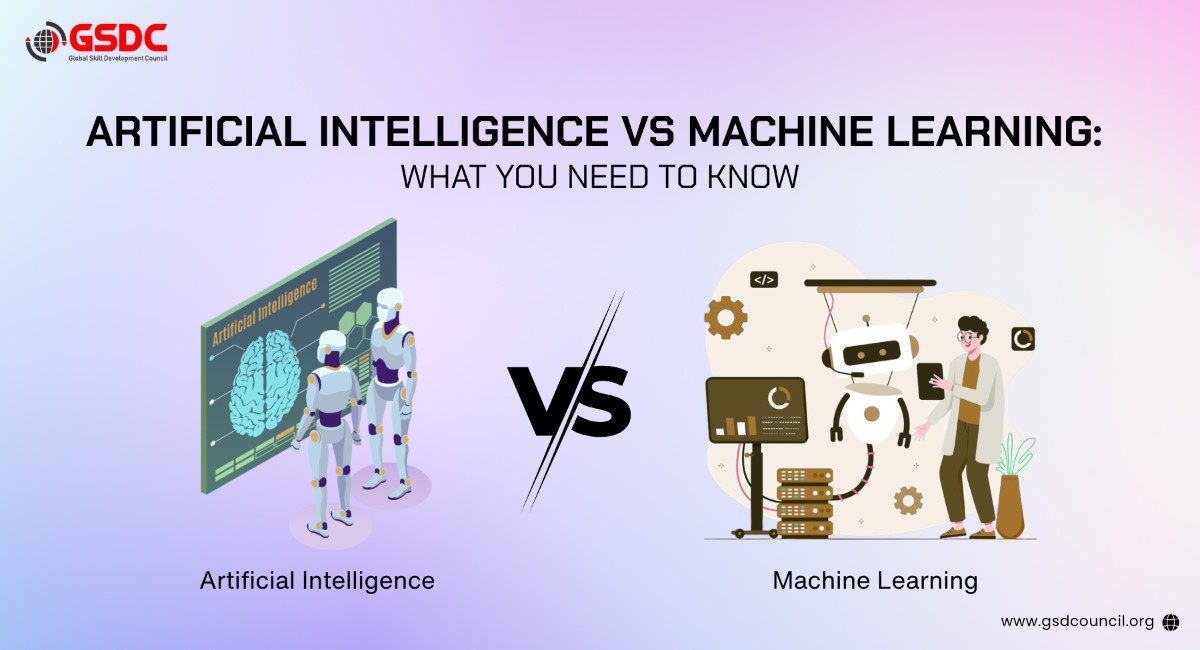
To understand the full impact of this transformation, it is important to examine how generative AI works. Unlike traditional forecasting models, which are based on predefined equations, generative AI models are able to learn the characteristics of Time series data.
Core Capabilities of Generative AI
- Continuous Learning: For generative models, their internal representations are always kept updated as new data is fed, allowing them to adapt to the dynamic environment.
- Hidden Pattern Recognition: By applying the non-linear relations analysis, such systems recognise other patterns that generally are not recognised by conventional approaches.
- Scenario Generation: Instead of giving a prediction, scenario generation in AI creates different likely outcomes, thus helping in effective strategic planning.
- Self-Optimisation: The model improves through time due to feedback loops that allow the system to refine its predictions.
Generative AI vs Predictive AI
The distinction between generative AI vs predictive AI is fundamental to modern forecasting practices.
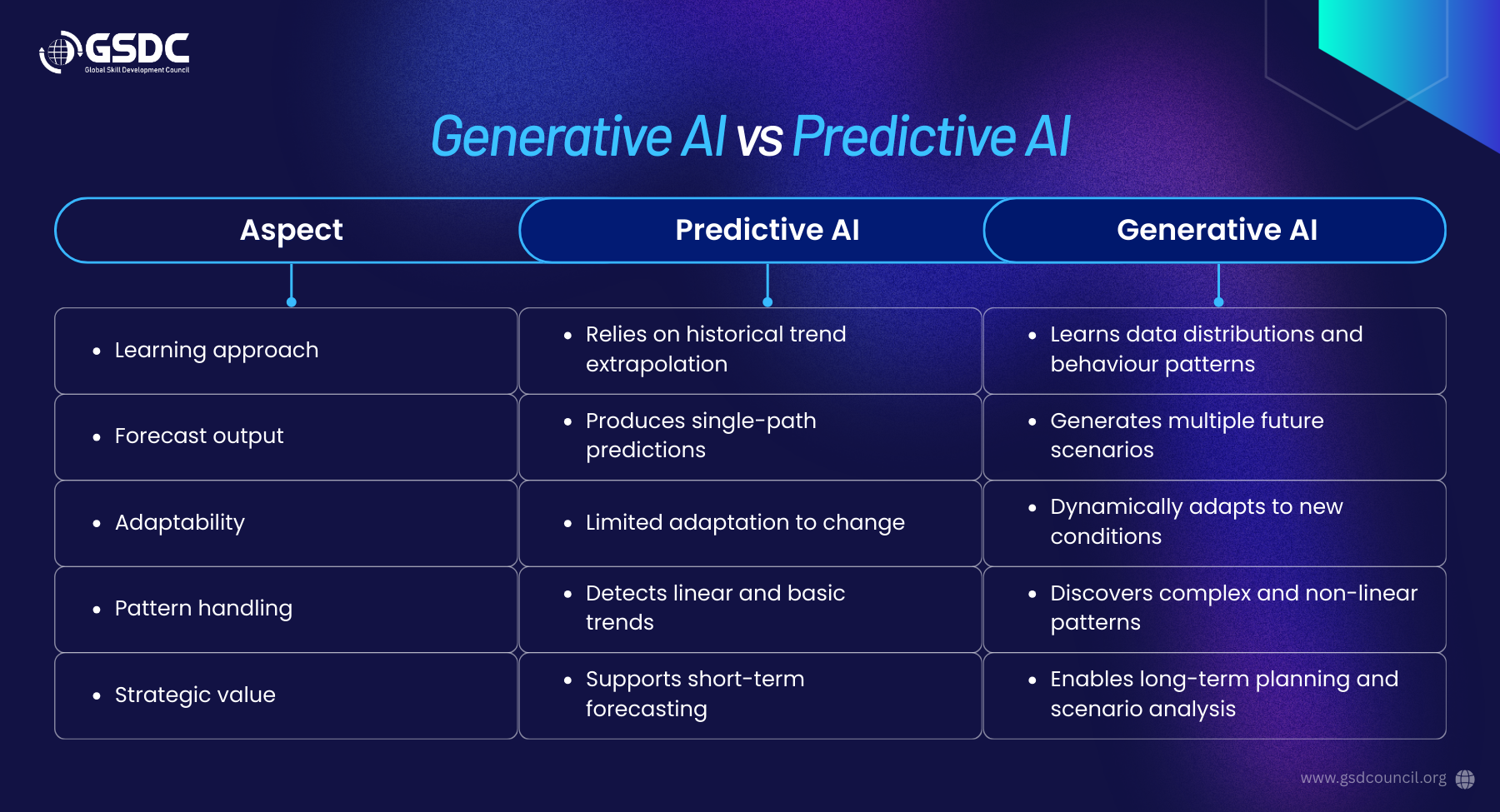
Predictive AI essentially informs you of what will happen, while generative AI assists you in exploring what might happen when different business scenarios arise.
This paradigm shift from the usual predictive methods to generative models is what is bringing the next-generation AI forecasting tools into the mainstream of finance and business.
Predicting Market Movements with AI
When AI is applied to finance data, AI financial forecasting enables organisations to forecast changes before they occur, rather than simply responding to those changes. Just like any other business process, AI-based forecasting in finance learns from past experiences, improving with time.
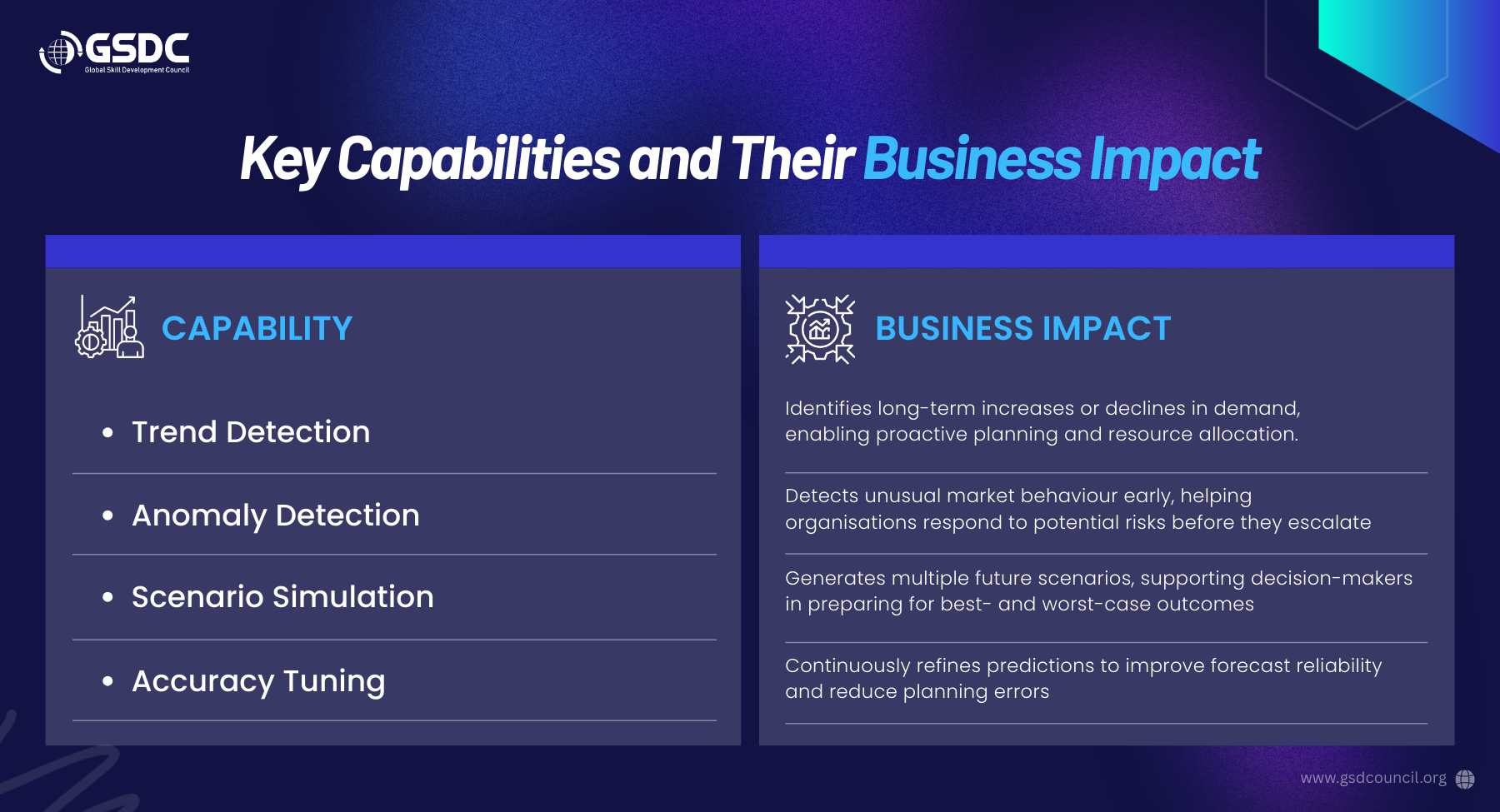
These capabilities serve as the cornerstone of current best practices in AI-driven demand forecasting and are at the heart of increasing industry-wide adoption of AI-driven demand forecasting.
Top AI Models Powering Forecasting
Most Modern models evaluating time series forecasts are based on high-end machine learning algorithms rather than basic mathematical equations.
- The Transformer-based models are effective in analysing a sequence of data based on time-complex dependencies, and show the best suitability for financial and demand forecasting tasks.
- RNNs (LSTM, GRU, etc.) are designed to handle sequential data, like trends, seasonality, etc., in a time series.
- Probabilistic deep learning models have the capacity to generate a multitude of possible results in the future, which helps the organisation prepare for the possible uncertainties in AI-based demand forecasting models.
- Ensemble Learning Frameworks are based on combining a number of models in an attempt to improve forecasting accuracy.
How Businesses Apply Generative AI Forecasting
Generative AI is now being applied across multiple business functions to improve forecasting accuracy and strategic planning.
-
Finance
For organisations seeking to understand what financial forecasting is, it involves estimating future revenue, market performance, and financial risk based on historical data patterns.
It helps finance departments in the following ways
- AI for financial forecasting, which allows for more accurate revenue and market predictions.
- Better financial forecasting models capable of adapting to economic changes.
- Some of the applications of generative AI in the financial sector include risk identification and cash flow forecasting as well as growth simulation.
As a result, generative AI for finance is becoming a core component of modern financial decision-making.
-
Operations
Among others, modern systems of the following nature are increasingly relied upon by organisations in operational environments:
- Intelligent demand-forecasting models, considering seasonality and market volatility.
- Use of machine learning in demand forecasting to identify the changes in consumption patterns.
- The self-learning nature of the demand forecasting system requires machine learning algorithms that can refine predictions with time.
This shift towards the use of AI for demand forecasting will enable the organisation to act more quickly whenever the supply chain is disrupted or when the demand for their products alters.
-
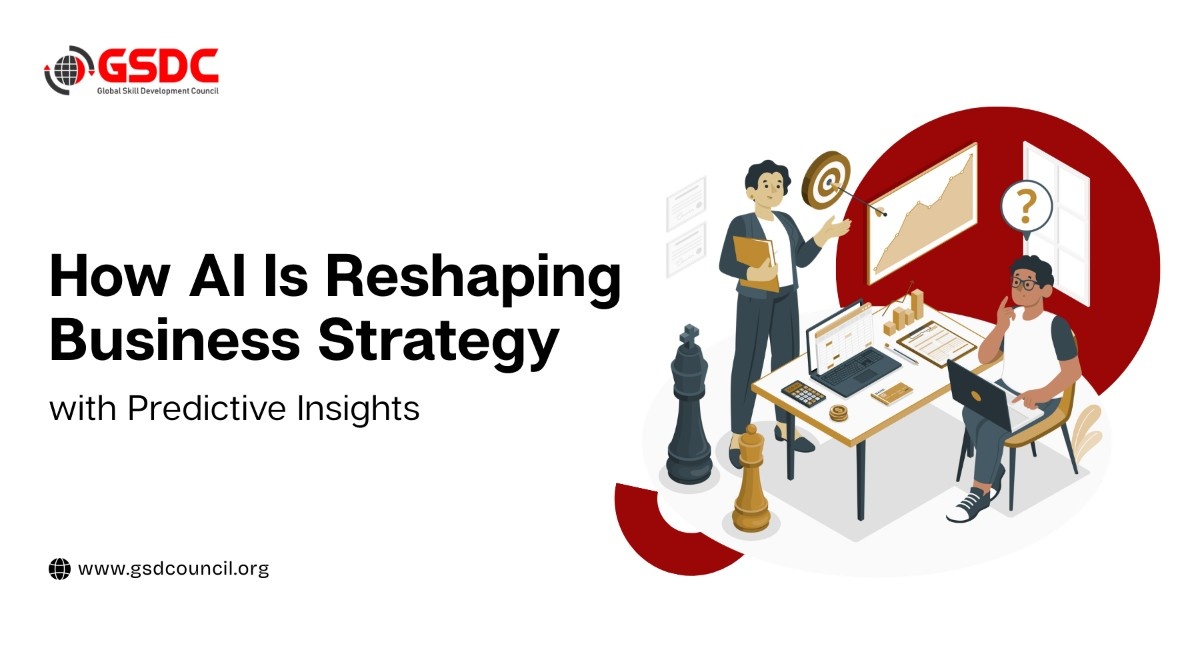
Business Strategy
At the strategic level, leaders leverage:
- Advanced AI-powered demand forecasting tools for long-term planning.
- Findings from leading models of artificial intelligence to ensure informed decision-making.
- Scalable generative AI for business platforms that integrate forecasting into enterprise systems.
Such capabilities enable the organisations to decide on their workforce planning, budgeting, and market expansion based on accurate data.
Build Industry-Ready AI Forecasting Capabilities
Experts wanting a specialisation in AI for finance are increasingly taking up the Certification in Generative AI in Finance and Banking offered by the Global Skill Development Council (GSDC).
The certification is all about the application of generative AI in the finance industry and includes topics such as AI for Financial Forecasting, Current Models of Financial Forecasting, and demonstration of models by practical applications using examples of revenue forecasting, market trends, and risk analysis. The course provides the learner with a skill set that helps apply advanced models of forecasting in dynamic finance environments.
Final Thought
Application of generative AI within time series forecasts represents a clear advancement towards improving current human knowledge rather than being a substitute for it. It analyses historical tendencies, points out discrepancies, and also proposes a number of different possibilities for what might happen next, so as to ensure that decisions become faster and more confident.
With increasingly complex markets, AI-driven forecast tools help you make the best of your time series data. The forecasting model of the future will involve collaboration between human intelligence and intelligent AI systems that forecast sustainable growth and a competitive advantage.

Related Certifications
Stay up-to-date with the latest news, trends, and resources in GSDC
If you like this read then make sure to check out our previous blogs: Cracking Onboarding Challenges: Fresher Success Unveiled
Not sure which certification to pursue? Our advisors will help you decide!