Prompt Engineering: The Skill That Makes AI Truly Useful in 2026
Written by Matthew Hale
- What Is Prompt Engineering?
- Why Prompt Engineering Matters in 2026
- What Prompt Engineers Actually Do
- Core Skills for Effective Prompt Engineering
- How Prompt Engineering Is Changing the Way We Work
- What’s Next for Prompt Engineering
- Developing Prompt Engineering Capability: Learning and Career Pathways
- Final Thoughts
As generative AI tools become part of everyday work across industries, one skill is standing out as essential in 2026: prompt engineering. This capability helps professionals get better, more accurate, and more useful results from AI systems. It’s no longer just a technical trick - it’s becoming a core workplace skill across business, technology, and operations.
As organisations adopt AI at scale, interest in prompt engineering jobs and structured learning options, such as a prompt engineering course is growing steadily. Experts recognize that knowledge on how to work effectively with AI is becoming as essential a skill as knowledge of spreadsheets or dashboards.
What Is Prompt Engineering?
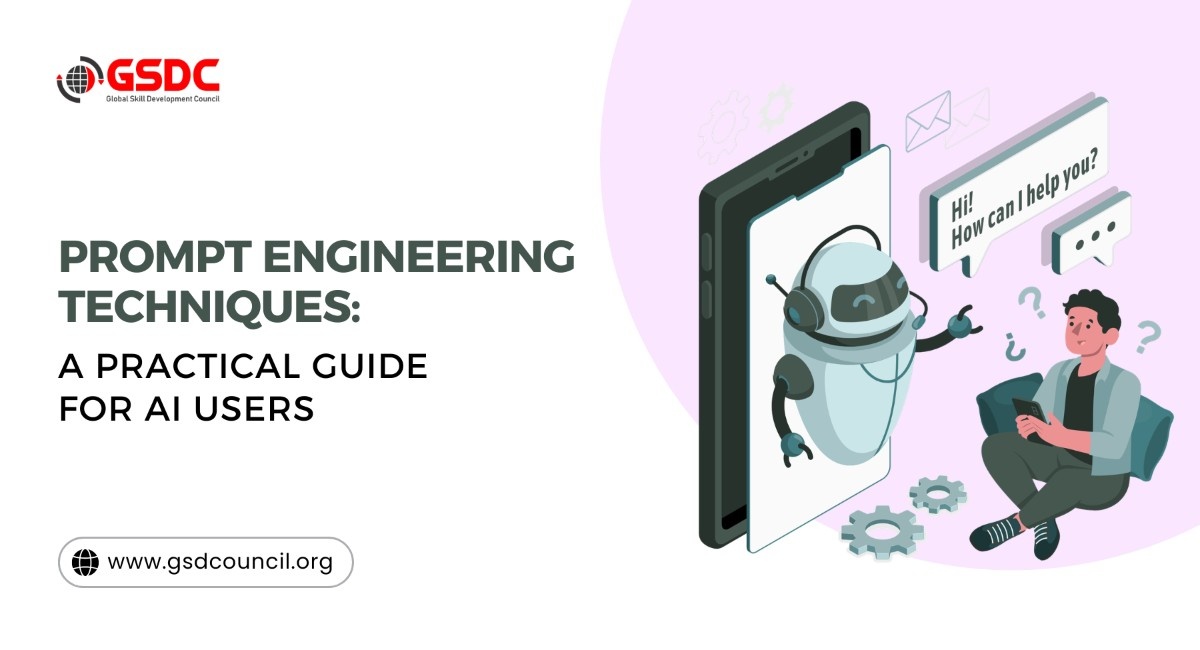
Prompt engineering means the process of developing, modifying, and delivering directions to AI systems in order for them to produce high-quality results. In other words, it is basically the skill of most effectively communicating with an AI system.
Clear and well, structured prompts make it possible for AI to be of greater assistance in delivering insights, summaries, analyses, and content.
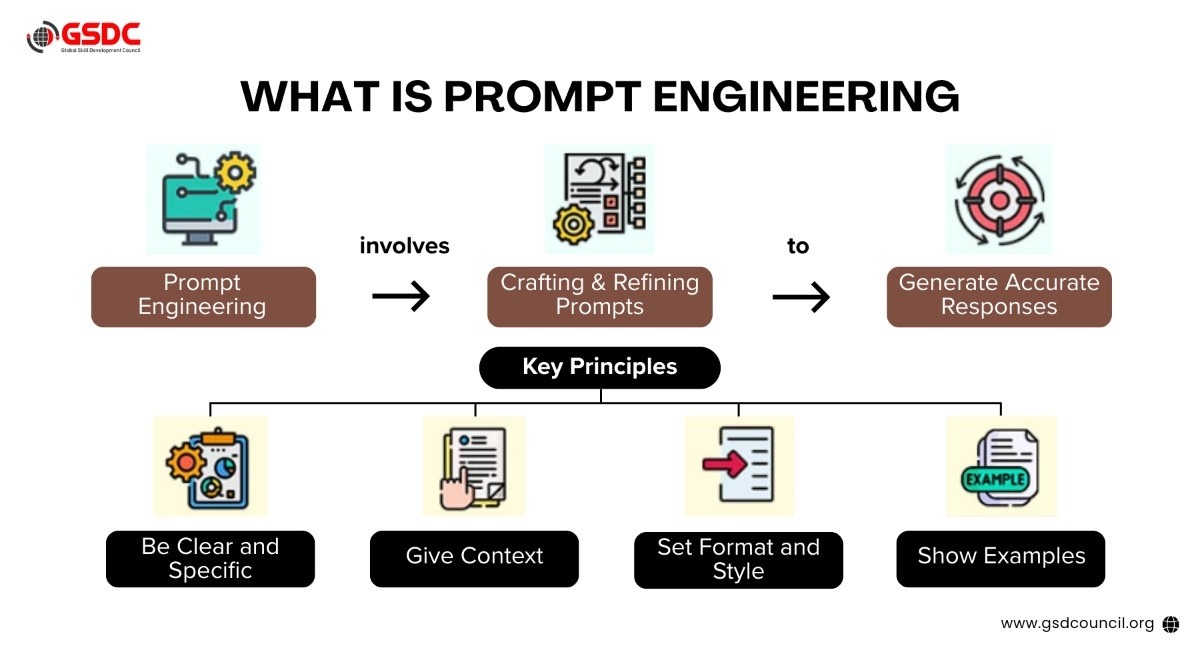
What is a prompt engineer?
A prompt engineer is a person who understands how to prepare prompts for different scenarios, carry out various tests, and raise the quality of the output over time. Although specific roles for prompt engineering are only being defined, these skills are already becoming a part of the normal work repertoire in many professional roles.
Why Prompt Engineering Matters in 2026
As the use of AI tools increases, the manner by which humans interact with the tools plays a significant role. Prompt engineering is essentially the key to unlocking AI systems to yield outputs that are relevant, precise, and truly beneficial in addressing the genuine business needs.
1. AI Is Becoming Core to Business Workflows
AI is now being utilized in marketing, finance, operations, customer service, HR, and analytics. The degree to which the quality of AI outputs can vary depends in a large part on the way tasks are presented. Properly designed prompts allow better decision-making, less rework, and quicker results in the daily business activities.
2. Natural Language Is Replacing Traditional Interfaces
Nowadays, more and more systems allow users to communicate with AI in natural language rather than using complicated menus or programming language. As a result, prompt engineering becomes a key skill that professionals from different areas need to acquire. Precise directions help to eliminate misunderstanding, lower the number of mistakes, and raise the productivity of both types of users, technical and non-technical.
3. Productivity Gains Depend on Prompt Quality
High-quality prompts have the potential to greatly reduce the time spent on tasks such as report generation, research, data analysis, and content creation. Those teams which employ systematic prompting methods are able to not only secure reliable outcomes but also enjoy faster responses.
While companies spend their resources on creating efficient AI-related skills, coursework wisely chosen for the industry, together with certifications from trusted ones like the Global Skill Development Council (GSDC), are enabling specialists to acquire structured, prompt engineering skills that they can use straight away in their work environment.What Prompt Engineers Actually Do
Prompt engineering is not just about thinking up a great question and writing it down. It is about implementing well thought out methods to effectively guide AI systems so that they yield trustworthy, valuable outputs that are suitable for real work scenarios.
Main tasks are:
-
Creating prompts for particular business results
Composing prompts oriented towards a single task for different use cases such as research, reporting, analysing, content creation, and decision support. Prompts are adjusted to the context, aims, and limitations of each task.
-
Testing and refining prompts for accuracy and consistency
Practice different prompt styles, varying levels of instructions and information, and different orders of commands to see what combination gives the best output. This will not only help in identifying and fixing errors but also will ensure achieving a high level of reliability when the prompt is used multiple times.
-
Creating reusable prompt templates for teams
Figuring out general prompt structures for those recurring tasks that teams can rely on to give consistent results no matter what project or department they are in.
-
Monitoring AI outputs and improving quality over time
Going through the results to check if they are properly suggesting, factually correct, and helpful, and using the feedback from the actual work to keep the prompt design getting better all the time.
-
Ensuring prompts align with ethical and responsible AI use
Applying safeguards to mitigate bias, misuse, and off-target outcomes, and where necessary, incorporating clear boundaries within prompts.
Such activities are indicative of the changing, prompt engineering skills that organisations expect from professionals working almost daily with AI systems. Formal training programs like Prompt Engineering Certification assist professionals in acquiring these hands-on skills and demonstrating them in the real, world settings.
Core Skills for Effective Prompt Engineering
Prompt engineering is a fusion of communication, logic, and domain understanding. The most important skills are:
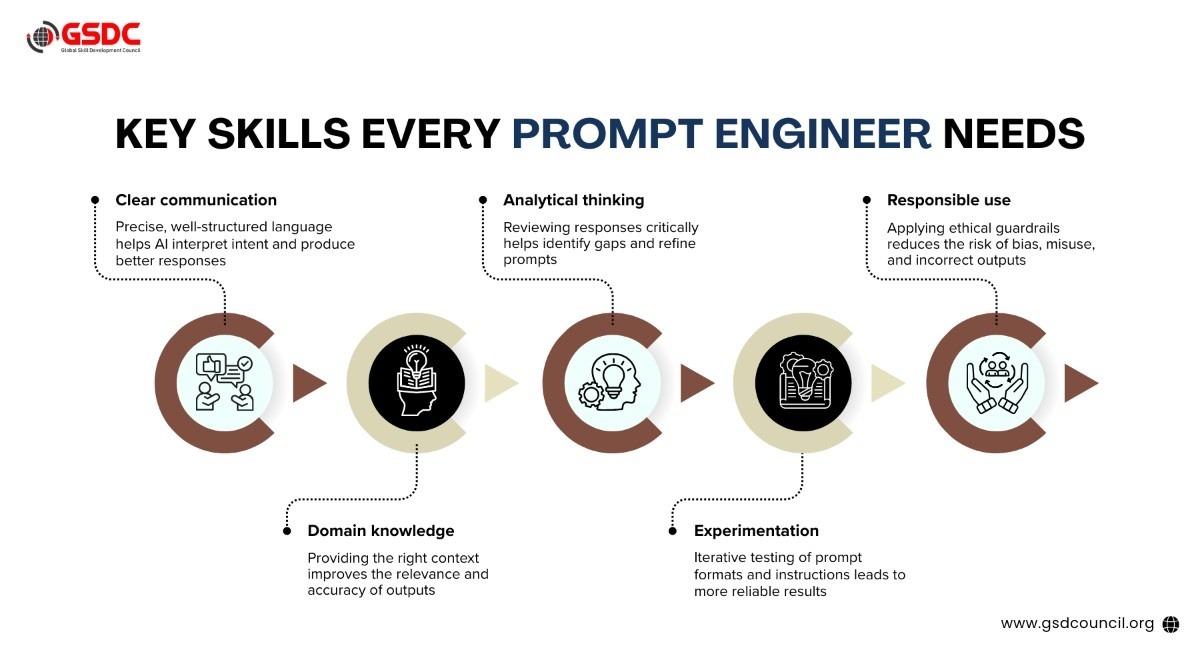
A common question is what skills are needed for prompt engineering? In practice, these skills apply across roles, making prompt engineering a valuable capability for analysts, marketers, consultants, managers, and technical teams alike.
How Prompt Engineering Is Changing the Way We Work
In 2026, prompt engineering is shaping modern work in several practical ways:
-
Teams use a set of standardized prompt templates for recurring tasks
Tasks such as reporting, summarisation, analysis, and content drafting are into sharing prompt templates, helping to continuously improve and reduce waste resulting from rework.
-
AI helps with research, reporting, and decision, making preparations
AI is being used more and more to collect data, organize knowledge, and prepare decisions, making inputs, thus, allowing professionals to devote more time to judgment and strategy.
-
Knowledge work is getting faster and more scalable
Prompt-driven AI allows single individuals and teams to manage larger workloads without the corresponding increase in effort, thus, making knowledge work more efficient and scalable.
-
Workflows rely on humanAI collaboration
Instead of utilizing AI on its own, workflows are planned so that humans direct, check, and improve AI results as a natural part of the processes.
-
Prompt design becomes part of operational best practices
Organisations begin to treat prompt design as a repeatable practice, embedding it into standard operating procedures, training, and quality guidelines.
This shift turns AI from a one-off experimentation tool into a consistent productivity partner embedded in everyday workflows.
What’s Next for Prompt Engineering
Prompt engineering will be subject to continuous changes as AI systems grow in capabilities and become more deeply embedded into business operations. The emphasis will not be on one, off AI requests but on more organized, scalable methods of interacting with AI. Major innovations include:
-
Prompts becoming parts of larger AI workflows
Instead of prompts being created manually for each AI request, they will be increasingly integrated within automated processes, applications, and enterprise tools. Such standardization of AI usage across teams and different use cases is facilitating that.
-
AI systems will accomplish multi-step tasks with less human guidance
By granting AIs stronger planning and tool usage skills, this will enable them to carry out complex multi-step activities with minimal human input.Prompt engineering will focus more on setting goals, constraints, and guardrails.
-
Greater emphasis on designing reliable AI behaviour
Professionals will spend more time defining how AI should behave across different scenarios, including tone, quality standards, and decision boundaries, rather than crafting individual prompts for every task.
-
More automated prompt optimisation
AI tools will increasingly include features that test, refine, and optimise prompts automatically based on performance, feedback, and real-world usage patterns. This reduces trial-and-error and improves consistency at scale.
-
Better prompt management and reuse tools
Companies will implement prompt management solutions that enable teams to save, version, test, and recycle prompts over different projects thus helping in quality and governance maintenance
-
More focus on ethical and responsible prompting
As AI use expands, organisations will place greater emphasis on safety, transparency, and responsible use. Prompt design will include built-in safeguards to reduce bias, prevent misuse, and support compliance requirements.
-
Prompt literacy is becoming a basic digital skill across roles
Even as AI systems become more autonomous, professionals will still need a working understanding of how prompts influence outcomes. Prompt literacy will soon be a core part of everyday digital literacy, just like data literacy is today.
These changes mark the evolution of prompt engineering from a pure tactical craft to a core capability in service of modern, AI-enabled workflows.
Developing Prompt Engineering Capability: Learning and Career Pathways
As interest continues to develop, many individuals also develop practical skills by taking a prompt engineering course or by acquiring a Certified Prompt Engineering; they develop real-life working skills in the application of prompt design concepts. For growth in a more sustained manner, prompt engineering is looked at as part of a more AI-enabled career path.
The best certificate is one that maps the concepts to the real application of the concepts in business needs; Industry-sponsored bodies like the Global Skill Development Council (GSDC) help influence learning systems that align practically with workplace needs.

Final Thoughts
By 2026, prompt engineering will no longer be a niche skill. It’s a “hands-on” capability that “allows professionals to use AI to do their jobs more efficiently, produce better output, and unlock more value from AI.”
The future of work will not only be about getting access to AI but also about being able to work with AI efficiently. Prompt engineering is increasingly turning out to be one of the most valuable skills for professionals in an AI-first work environment.

Related Certifications
Stay up-to-date with the latest news, trends, and resources in GSDC
If you like this read then make sure to check out our previous blogs: Cracking Onboarding Challenges: Fresher Success Unveiled
Not sure which certification to pursue? Our advisors will help you decide!