Where Vision Meets Influence: The Journey to Global Leadership Excellence

Written by Matthew Hale
Today, leadership is no longer in the boardrooms or local teams. As organizations become domestic and global, leaders must be able to not only think outside of their immediate surroundings, but also lead teams that become cross-continental, cross-cultural, and cross-time zone.
The article provides us with an interest in how the marriage of influence and vision can determine global leadership, the leadership journey, and what it takes to become global leadership excellence.
The professionals will be capable of undertaking their global leadership journey with a readied global leadership certification or program behind them, and can shift local leadership excellence to global leadership excellence.
Now is the time to immerse yourself in the experience of becoming a good global leader, and you can establish a path to success.
What is Global Leadership?
Before delving into the journey, it’s crucial to understand what global leadership is. Simply put,
Global leadership is the ability to lead, influence, and manage people from various cultures, backgrounds, and geographic locations.
It requires leaders to not only have strong communication and decision-making abilities but also cultural adaptability, emotional intelligence, and a visionary outlook.
Global leadership isn’t about managing across borders; it's about leading through vision, aligning teams with a shared global purpose, and influencing diverse groups towards common goals.
A global leadership program prepares professionals for the complexities of leading cross-cultural teams in an increasingly globalized world.
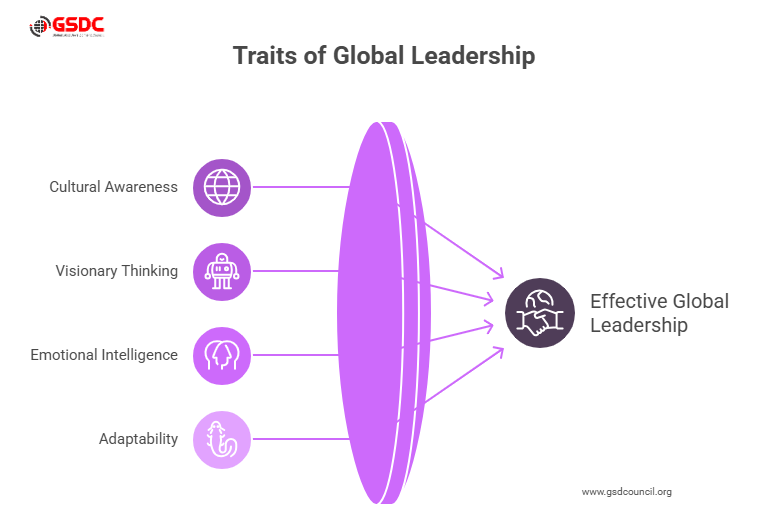
Key traits of global leadership include:
- Cultural awareness: Understanding and respecting the values, beliefs, and practices of diverse cultures.
- Visionary thinking: The ability to define and communicate a vision that resonates globally.
- Emotional intelligence: Managing one's emotions and understanding others to build trust and effective collaboration.
The Value of Visionary Leadership in Global Contexts
What is leadership excellence? Vision is at the heart of leadership excellence.
For global leaders, vision doesn’t just mean setting a long-term goal; it means aligning a diverse, often dispersed team towards that vision, no matter their location, culture, or language.
Research consistently shows that visionary leadership is linked to enhanced communication, creativity, and emotional intelligence, all competencies necessary to lead diverse teams effectively.
Studies reveal that visionary leaders have a higher competency in communication, creativity, and emotional intelligence, directly contributing to better organizational outcomes.
Leaders with a compelling vision inspire action, motivate their teams, and foster an organizational climate that supports innovation and trust.
When a global leader possesses a clear vision, they not only set the direction but also become an anchor for their teams, offering a unifying purpose that drives performance across borders.
This vision allows leaders to effectively engage global stakeholders, from internal teams to external partners, making them feel like contributors to something larger than their local or regional roles.
Influence Across Borders
In a global leadership journey, influence goes beyond simply giving instructions. Effective global leadership requires the ability to influence stakeholders from different countries and cultures, who may have very different communication styles, values, and expectations.
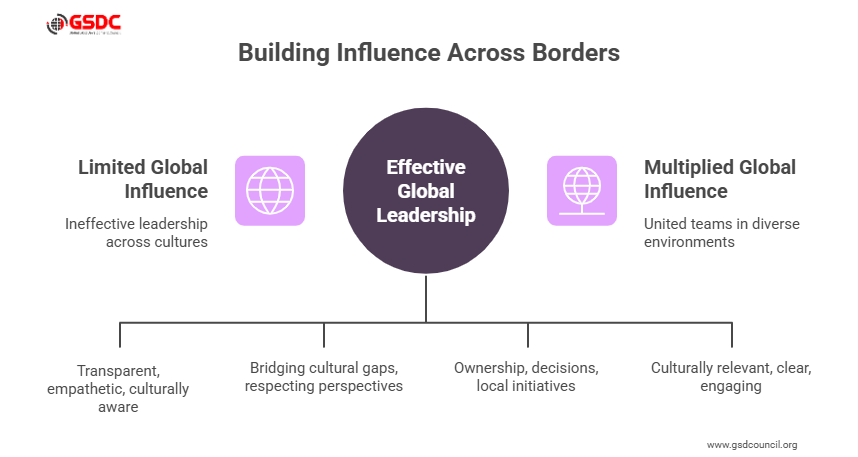
Effective global leaders build influence by:
- Building trust: Trust is a key factor for global teams to work effectively together. A leader who is transparent, empathetic, and culturally aware will earn the respect of international teams.
- Fostering collaboration: Global leadership examples frequently show how leaders bridge gaps between cultures to enable collaboration. Collaboration is not only about sharing resources but also respecting diverse perspectives.
- Empowering others: Global leaders empower individuals to take ownership, make decisions, and lead initiatives within their local context while aligning with the broader vision.
- Adapting communication: Effective global leaders adapt their communication styles to be culturally relevant, clear, and engaging. They make sure their messages resonate across different cultural contexts.
In this journey, the leader’s influence becomes multiplied when they incorporate emotional intelligence and adaptability, critical skills that allow them to lead in diverse environments while keeping teams united.
The ability to influence across borders is, therefore, a critical element of global leadership excellence.
Key Skills and Behaviors for Global Leadership Excellence
To embark on your global leadership journey, it’s essential to develop specific skills and behaviors that will support your transition into a global leadership program and ultimately help you achieve leadership excellence.
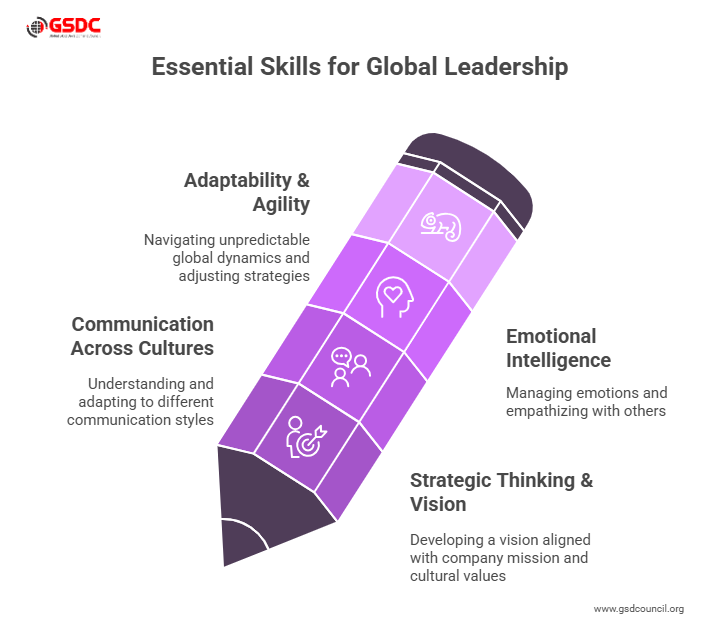
1. Strategic Thinking & Vision
One of the core components of global leadership is strategic thinking. The ability to develop a vision that aligns with your company’s mission while respecting the cultural values of global teams is key to driving international success.
Strategic leaders understand market dynamics, foresee industry trends, and adapt quickly to external changes. Their global vision drives decision-making, ensuring that each team feels part of the bigger picture.
2. Communication Across Cultures
Effective communication is essential for global leadership, especially in multinational teams. Cultural barriers can impede clarity, collaboration, and decision-making.
Leaders must invest time in understanding the communication preferences of different teams and adapt accordingly.
Adapting to different communication styles is one of the primary reasons global leadership programs emphasize cross-cultural competence as a key learning outcome.
3. Emotional Intelligence (EI)
Leaders with high emotional intelligence (EI) can manage their own emotions and empathize with others, which is crucial for fostering strong, trusting relationships in diverse teams.
Emotional intelligence is essential for maintaining healthy, productive relationships across different cultures.
By managing emotions well, global leaders are able to lead with integrity and demonstrate social awareness, which directly impacts organizational culture and the ability to motivate teams.
4. Adaptability & Agility
The ability to adapt to ever-changing global dynamics is fundamental to a successful leadership journey.
Leaders must navigate unpredictable geopolitical and market landscapes, adjusting their strategies to drive performance while ensuring agility in operations.
Research shows that global leaders with high adaptability can successfully steer teams through challenges and drive long-term business growth.Take the next step in your global leadership journey with this actionable template:
Supporting Research and Statistics
Research highlights the following statistics to further validate the critical traits of global leadership:
- Leaders with visionary leadership demonstrate higher competency in communication, creativity, and emotional intelligence, significantly improving organizational effectiveness.
- Global leadership capabilities are directly tied to innovation and organizational success. Companies with strong global leaders are more adaptable to international markets, improving alignment and strategic outcomes.
- Key traits such as cognitive flexibility, ethnocultural empathy, and tolerance of uncertainty correlate highly with leadership success in global environments.
Leadership Journey Map: Your Road to Global Leadership Excellence
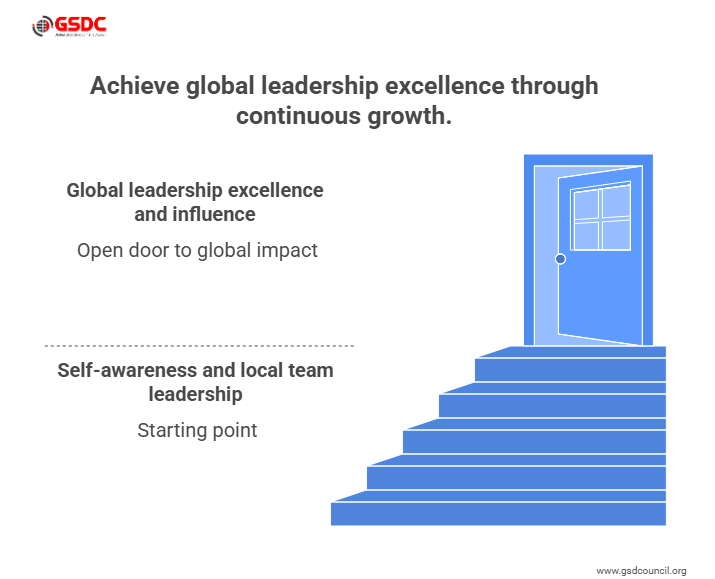
1. Start with Self-Awareness
The first step on the leadership journey map is self-awareness. Understand your leadership style, strengths, and areas of improvement. Engage in continuous self-assessment to recognize how your personal traits influence your leadership approach, especially in a global context.
2. Invest in Education and Certification
A global leadership certification can enhance your credibility and demonstrate your commitment to leadership excellence. Programs like the Global Leadership Program offer specialized training in global strategy, cross-cultural management, and digital leadership.
3. Gain Experience and Build Influence
Practical experience is critical. Start by leading local teams and gradually take on global responsibilities. Embrace leadership journey examples where leaders progressively take on more complex projects with diverse, cross-border teams.
4. Mentor and Be Mentored
As you grow, find mentors who can provide insights into global leadership challenges. Also, mentor others, helping to build the next generation of global leaders.
5. Stay Committed to Lifelong Learning
Leadership excellence is a continual process. Keep improving your strategic thinking, adaptability, and cultural competence. Never stop learning about the evolving needs of global leadership.
Elevate your leadership journey with the GSDC Certificate of Global Leadership Excellence, your key to mastering strategic, global leadership skills.

Where Vision Meets Influence
The path to leadership excellence in the world is very difficult, yet also very promising.
Vision Inspirers are those leaders who understand how to see and can project their vision and influence to motivate teams, drive innovation, and achieve results across borders that are sustainable.
It is a process of lifelong development, knowledge acquisition, and flexibility, whether by a global leadership certification or self-reflection, or acquiring practical experience.
Make the journey to global leadership excellence through learning to master the competencies, sharpen your vision, and establish influence in other cultures.
Ready to lead the world? The journey starts now.
FAQs:
1. What is global leadership, and how is it different from local leadership?
Global leadership involves leading teams from diverse cultures and locations, requiring strong communication, adaptability, and emotional intelligence. Unlike local leadership, which focuses on regional operations, global leadership spans borders and often includes managing multi-national teams.
2. What are some well-known global leadership examples?
Global leadership examples include leaders like Satya Nadella of Microsoft, who led the company’s transformation into a cloud-first powerhouse, and Jacinda Ardern, the former Prime Minister of New Zealand, who displayed empathetic leadership on the global stage. These leaders navigated complex international challenges while maintaining a strong, inclusive vision.
3. How do I start my leadership journey?
To begin your leadership journey map, focus on gaining foundational leadership skills, understanding organizational dynamics, and building cultural competence. Seek opportunities for cross-functional leadership roles, develop emotional intelligence, and take part in leadership programs that enhance strategic thinking.
4. What key skills are essential for global leadership excellence?
Key skills for global leadership excellence include strategic vision, emotional intelligence, cross-cultural communication, adaptability, and the ability to build trust across borders. These skills allow leaders to influence diverse teams and foster collaboration towards shared global objectives.
5. What is a leadership journey map, and how can it help my career?
A leadership journey map is a strategic plan that outlines your path from your current leadership position to your long-term career goals. It helps you track the development of key skills, experiences, and leadership competencies necessary for reaching global leadership roles.
6. How can global leadership certification enhance my career?
A global leadership certification demonstrates your readiness to lead across cultural and geographical boundaries. It builds credibility, enhances your leadership skills, and prepares you for executive roles in multinational organizations by providing knowledge on global strategy, cultural competence, and leadership ethics.

Related Certifications
Stay up-to-date with the latest news, trends, and resources in GSDC
If you like this read then make sure to check out our previous blogs: Cracking Onboarding Challenges: Fresher Success Unveiled
Not sure which certification to pursue? Our advisors will help you decide!