AI Emotional Intelligence: Real-World Use Cases and EI Certification
Written by Matthew Hale
Artificial intelligence discussions have recently gone far from mere conversation on automation and algorithms only. In fact, those who are at the helm of technological development have a totally different question that they have started to explore: Could a machine actually be able to understand human emotions?
And this is what has fueled the interest in AI emotional intelligence, which stands for the capability of AI systems to not only detect people's emotional states but also be better able to respond to them appropriately.
Now that businesses are relying on AI to be part of their customer journey, healthcare, and workplace technologies, it is not surprising that the reasons why emotional intelligence matters are becoming more and more visible. Also, this is giving rise to the certification in emotional intelligence, since workers are feeling the need to augment the human skills that naturally come with intelligent systems.
Why Emotional Intelligence Matters in the Age of AI
Before exploring AI applications, it is important to understand why emotional intelligence matters in modern workplaces.
Emotional intelligence refers to the capability of identifying, comprehending, and regulating our own and others ' emotions. It is a determining factor of one's communication skills, willingness to cooperate, and quality of leadership.
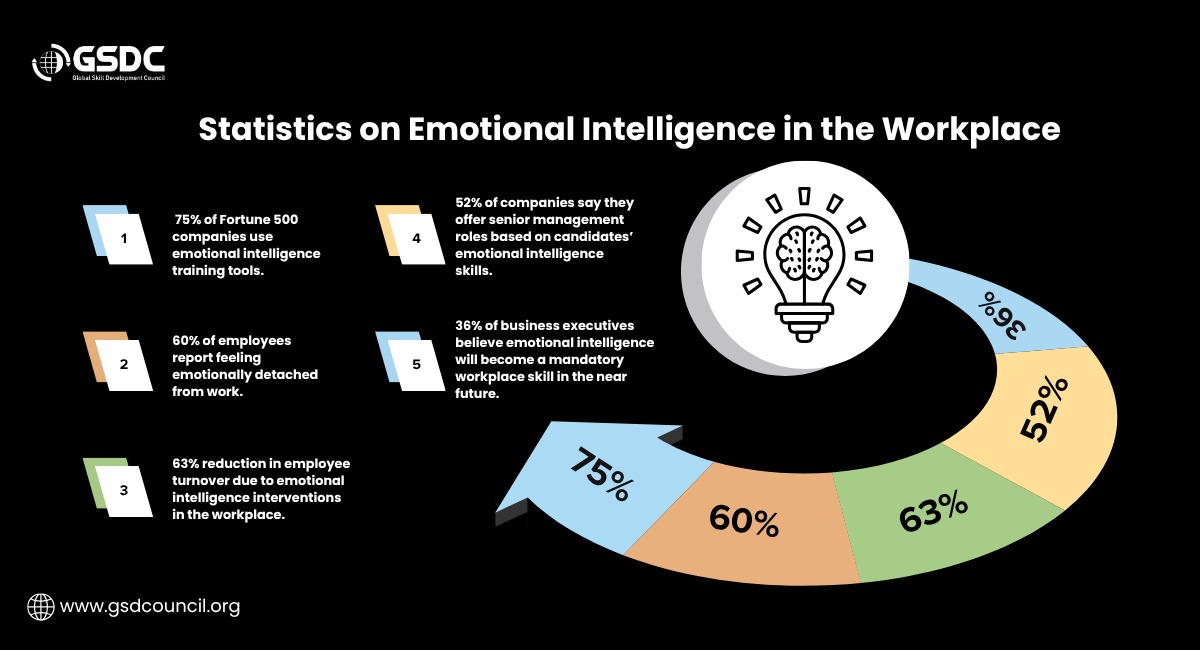
Research highlights why emotional intelligence important in professional success. Some researchers indicate that emotional intelligence is responsible for 58% of job, related success and 90% of the highest achievers are endowed with excellent emotional intelligence skills.
Despite their ability to analyze huge datasets, AI systems are still not able to understand emotional contexts in human communications. This lack has led to the emergence of AI emotional intelligence, where machines are given the ability to decode emotional cues through speech, facial expressions, and actions.
Growth of the AI Emotional Intelligence Market
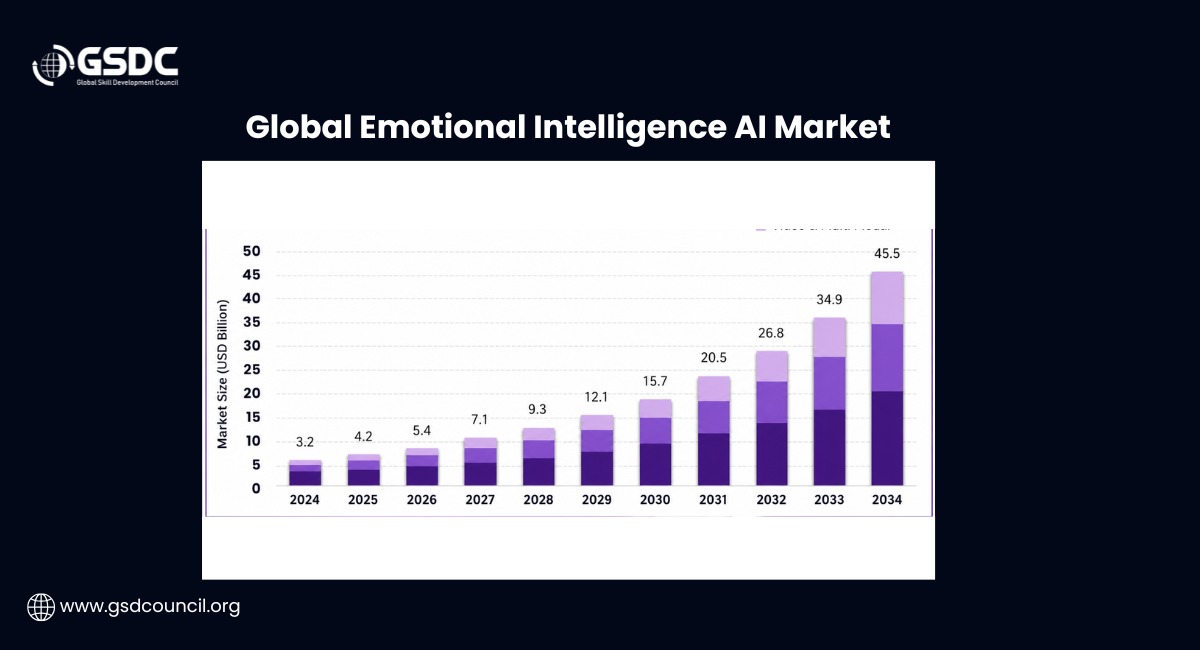
(Source: Market.us – Emotionally Intelligent AI Market Forecast)
The growing focus on emotional intelligence capabilities for AI has been recognized in market growth estimates. Research results reveal that the global emotionally intelligent AI market is expected to reach USD 45. 5 billion by 2034 from USD 2. 3 billion in 2022 at a CAGR of 30. 4% during the forecast period.
This fast-paced development intensely underscores the necessity of emotional intelligence in the changing AI platforms, as well as the decisive role played by emotional intelligence certification for the human-centered skills of professionals.
The continuous development of emotionally intelligent technologies means that the knowledge of how AI and related systems perceive and react to a human's emotions is of paramount importance.
What Is AI Emotional Intelligence?
AI Emotional Intelligence, in other words, refers to the capacity of machines that can sense, read, and respond to human emotions. Conventional AI systems process information and recognize patterns, whereas emotionally intelligent AI systems seek to understand the emotional cues and respond to them appropriately.
Such an intelligence can improve the flow of human-machine conversation, especially if emotions play an important role. For example, an AI system can recognize frustration in customer service, stress in a medical context, and respond appropriately according to the user’s emotional state.
The goal of AI emotional intelligence is not to replace human empathy but to enhance technology so it can provide frontier emotional support and enable more meaningful interactions.
Where Is Emotional Intelligence Used in AI Systems?
To understand the impact of emotionally intelligent systems, it is essential to identify how emotional intelligence manifests in these systems. There are already several industries exploring the use of emotionally intelligent AI systems.
Customer Experience
There are AI systems that listen to how a person talks and interpret the message being conveyed by the tone of voice. This way, businesses can easily identify when a customer is frustrated, thus responding promptly to improve the quality of service. For example, Microsoft Azure AI services provide tools that can detect the tone of voice, including facial expressions, to identify emotional cues.
Healthcare and Mental Health
AI-driven systems are being designed to track the emotional states of individuals and can be a lifeline with digital assistants that offer emotional support to people who suffer from stress or anxiety. For instance, Affectiva has developed technology that can recognize emotions by analyzing a person's facial expressions and voice patterns, which can be useful in identifying the emotional state of a patient during a healthcare interaction.
Education Technology
Emotionally aware educational platforms are not just passive receptacles of information. They can be emotionally aware and even detect when learners are confused, frustrated, or disengaged. They can then adjust learning content to the student's emotional state.
Human Resources
Using AI-based analysis of employee sentiment and engagement, companies are able to create better collaborative environments and make their leadership more effective.
These examples demonstrate where is emotional intelligence used and how emotional awareness can improve AI systems. As the adoption of emotionally intelligent technologies grows, organizations are also investing in skill development. Institutions such as the Global Skill Development Council (GSDC) are promoting emotional intelligence certification programs to help professionals build the emotional and leadership skills needed to work effectively alongside AI systems.
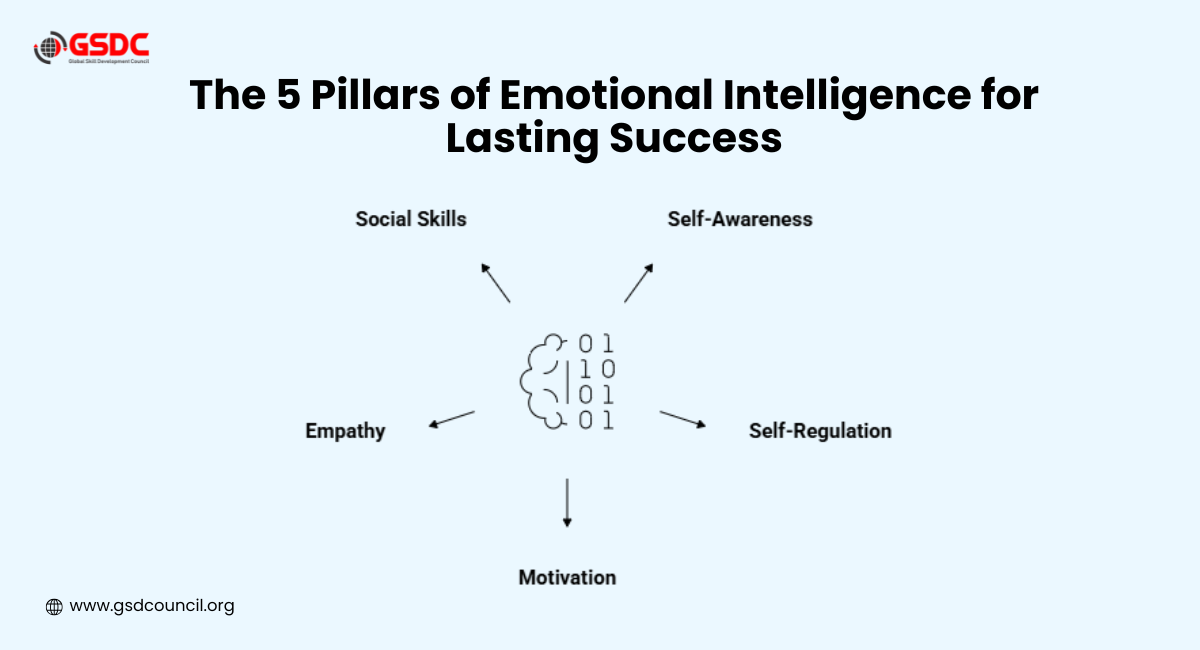
The 4 Emotional Intelligence Skills That Power Human-AI Collaboration
A good way to understand how emotional intelligence functions is to examine the 4 emotions intelligence skills that make up its basis:
1. Self-Awareness
Self-awareness is the capacity to identify one's own emotions and also to comprehend how they affect one's thoughts and actions.
2. Self-Regulation
Managing one's emotional reactions and behavior, considering the scenarios, is what self-regulation is about.
3. Social Awareness
Social awareness basically means the skill to recognize the emotions and viewpoints of others.
4. Relationship Management
One uses one's emotional knowledge with this skill to effectively communicate, resolve conflicts, and create strong bonds.
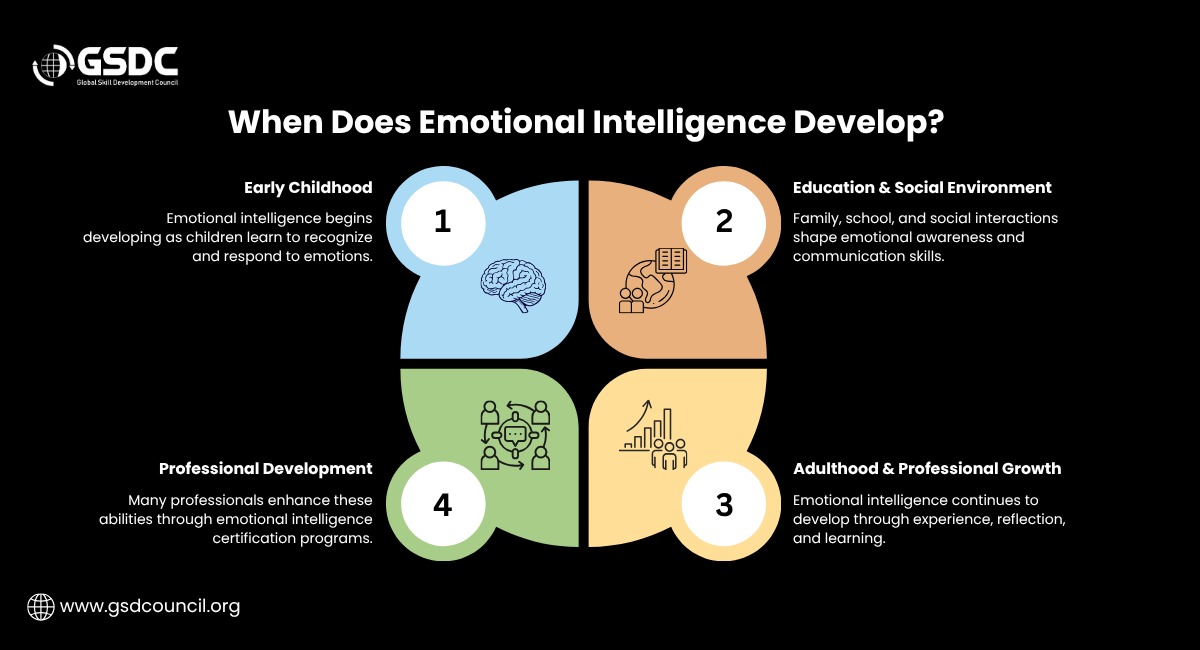
Getting a grip on these 4 emotional intelligence skills can really help professionals working with AI technologies. To a large extent, professionals enhance these skills through Certified Emotional Intelligence programs, which equip them with emotional and leadership skills that are very useful in today's workplaces.
The Growing Importance of Emotional Intelligence Certification
With the incorporation of AI technologies, it is no longer sufficient for professionals to be technically skilled. Organisations now want their leaders to be emotionally intelligent, along with being technically skilled.
This has resulted in an increase in the significance of emotional intelligence certification.
Professionals opt for emotional intelligence certification to:
- Improve leadership and communication abilities
- Increased levels of teamwork and collaboration
- Improved decision-making in high-pressure situations
- Increases in empathy and interpersonal understanding.
In an AI-driven world, emotional intelligence certification is important for professionals to learn how to work with intelligent technologies, along with being emotionally intelligent leaders.
Choosing the Best Emotional Intelligence Certification
There are so many options that nowadays people want to know where is it that they can get an emotional intelligence certification that offers theory and practical learning.
The best emotional intelligence certification programs generally cover:
- Emotional consciousness and behavioral psychology
- Leadership communication skills
- Decision-making in tough scenarios
- Teamwork and dispute solving in the workplace
- Emotion intelligence enhancement models
Getting the best emotional intelligence certification may even provide you with a career boost, especially if you are a manager or a human resources person, a techie, and/or someone in AI, enabled industry!
AI Emotional Intelligence and the Future of Human-Machine Interaction
Artificial intelligence has advanced at a rapid pace over the last few years. Nevertheless, the next wave of innovation will be centered on how machines can interact with human beings on better terms. AI emotional intelligence is one of the tools that can lead to such a transformation by not only focusing on data analysis but also on emotional perception.
Once these technologies get to a higher level, AI will make human experiences such as having interactive learning, receiving personal healthcare, and using collaboration in the online workplace even better. Practitioners who comprehend the role of emotional intelligence in work environments will certainly be among the winners of the future labor market.
Developing Emotional Intelligence Skills in the AI Era
As the use of AI becomes more widespread, having just technical knowledge will not be sufficient. Besides, professionals will require effective emotional awareness, strong communication, and leadership abilities to coexist with intelligent systems.
This change is encouraging a higher demand for emotional intelligence training programs that assist individuals in acquiring such skills. One such organization is the Global Skill Development Council (GSDC), which provides the Certified Emotional Intelligence credential, among other certifications, aimed at enabling practitioners to enhance their emotional intelligence skills for work environments of the future.
Conclusion
The inclusion of emotional awareness in AI is an important shift in the way that technology relates to us. Emotional intelligence in AI is an emerging new frontier in innovation, even while the human capacity for emotion is always an important aspect.
Emotional awareness is an opportunity for professionals to enhance their leadership abilities while getting ready for the AI workplace. Organizations that use the latest technology with high emotional intelligence will have the greatest opportunity to develop systems that are more effective, more empathetic, and more human-centered.
Subscribe to Our Newsletter
Stay up-to-date with the latest news, trends, and resources in GSDC

Related Certifications
Frequently Asked Questions
Stay up-to-date with the latest news, trends, and resources in GSDC
If you like this read then make sure to check out our previous blogs: Cracking Onboarding Challenges: Fresher Success Unveiled
Not sure which certification to pursue? Our advisors will help you decide!