From HR Professional to Strategic Partner: Building the Skills That Drive Business Growth

Written by Matthew Hale
- Why the HR Business Partner Role Matters
- Navigating Digital and Workforce Transformation
- Future-ready HR Business Partner Role and Responsibilities
- Essential Skills for the Modern HR Business Partner
- The Career Edge: How to Build a Successful HRBP Career Path
- The Value of HR Business Partner Certification
- Conclusion: Stepping Into the Future of HR
- Frequently Asked Questions
With rapid shifts in workforce dynamics, digitalization, and evolving employee expectations, HR professionals are redefining their impact on business growth. The modern role of HR has evolved from a traditional administrative function into a strategic powerhouse that fuels measurable success. Today’s professionals are no longer limited to compliance and recruitment-they influence leadership, shape culture, and align people strategies with long-term business outcomes.
In 2025, only about 50% of CEOs view HR as a true strategic partner, yet organizations that position HR as a core business driver achieve up to 34% stronger performance outcomes. This contrast highlights an urgent opportunity for professionals to expand their influence and redefine the purpose of HR Business Partners (HRBPs) in driving enterprise success.
As the future of HR unfolds through AI integration, data-driven decision-making, and hybrid workplaces, the demand for skilled HR Business Partners continues to grow. These professionals connect leadership vision with workforce execution-ensuring every people initiative directly contributes to measurable results.
Why the HR Business Partner Role Matters
Understanding what an HR Business Partner does is crucial in a rapidly evolving business environment. HRBPs bridge leadership strategy with employee experience, turning HR from an enabling function into a strategic driver of business success.
Organizations with effective HR Business Partners report up to 22% higher employee performance, 7% revenue growth, and a 9% boost in profits - proving their direct impact on business outcomes.
The purpose of an HR Business Partner is to connect talent strategy with organizational goals, ensuring every initiative aligns with measurable business growth.
Modern HRBPs:
- Translate business objectives into actionable talent strategies.
- Integrate performance management and competency mapping to strengthen leadership.
- Design growth-focused learning programs.
- Use analytics for transparent, data-driven decisions.
The HRBP is not a facilitator anymore - they are the strategic link between people, performance, and growth.
Future-ready HR Business Partner Role and Responsibilities
The HR Business Partner responsibilities have evolved from administrative support to a strategic function. Modern HRBPs analyze workforce data, anticipate challenges, and contribute insights that directly influence business outcomes.
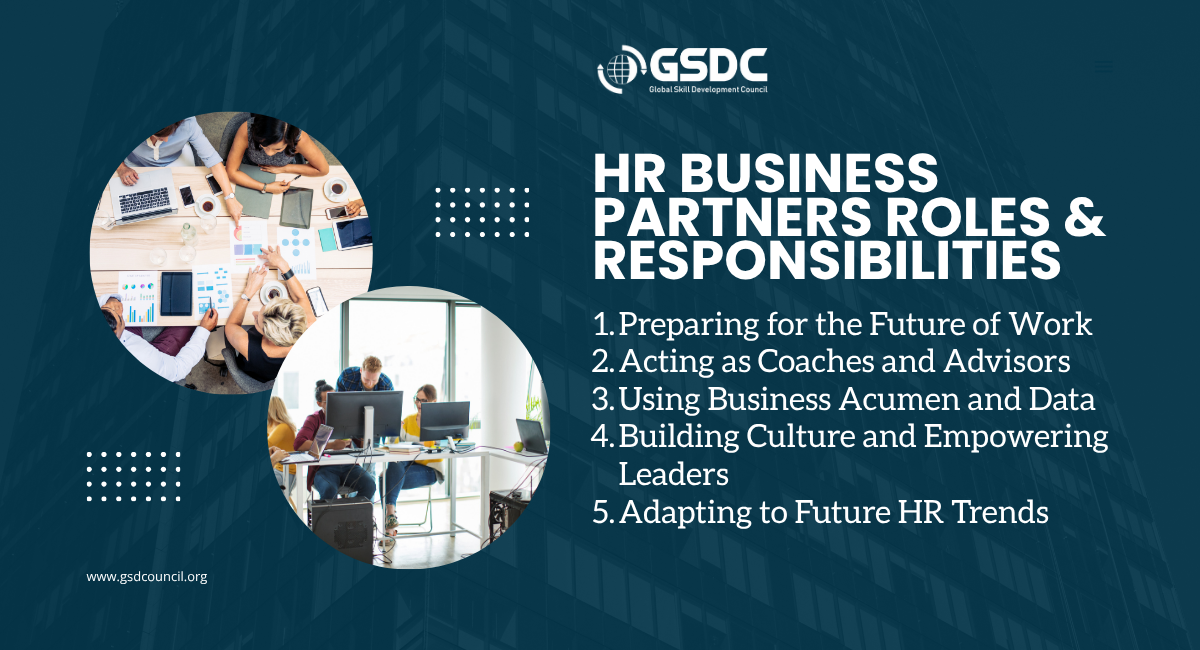
Across levels, HRBPs move from executing policies to shaping strategy. Junior partners focus on implementation, mid-level partners contribute to discussions, and senior HRBPs lead business alignment - ensuring people strategy drives measurable growth.
-
Preparing for the Future of Work
As the world of work adapts to hybrid models, AI, and digital transformation, HRBPs are pivotal in workforce planning, reskilling, and aligning employee development with business priorities. Programs from organizations like GSDC support this transformation by helping HR professionals upskill with globally recognized, practical learning frameworks.
-
Acting as Coaches and Advisors
Modern HRBPs act as trusted advisors to leadership. They help managers improve performance, manage change, and build resilient teams. By promoting fairness, engagement, and compliance, they empower leaders to make informed, people-centered decisions that enhance organizational culture.
-
Using Business Acumen and Data
Future-ready HRBPs merge strategic business understanding with analytics. By leveraging data on performance, retention, and productivity, they identify workforce trends and align talent strategies with profitability. This analytical mindset transforms HR from an operational unit into a results-oriented business partner.
-
Building Culture and Empowering Leaders
HRBPs strengthen organizational culture through inclusion, recognition, and learning initiatives. They equip leaders with tools to manage teams effectively while ensuring HR focuses on long-term strategic growth. By creating a culture of trust, adaptability, and purpose, they enable high-performing teams that thrive in change.
-
Adapting to Future HR Trends
As technology, automation, and employee expectations evolve, HRBPs must embrace continuous learning, digital fluency, and emotional intelligence. Future HR leaders will integrate AI-driven insights, foster innovation, and balance empathy with data to drive sustainable success.
In short, the HR Business Partner of the future blends strategy, empathy, and data to create agile, high-performing organizations ready to thrive in a changing world. add othe points as well.
Essential Skills for the Modern HR Business Partner
Success in the HRBP role depends on mastering six key competencies that connect business strategy with people outcomes-vital skills for the modern workplace:
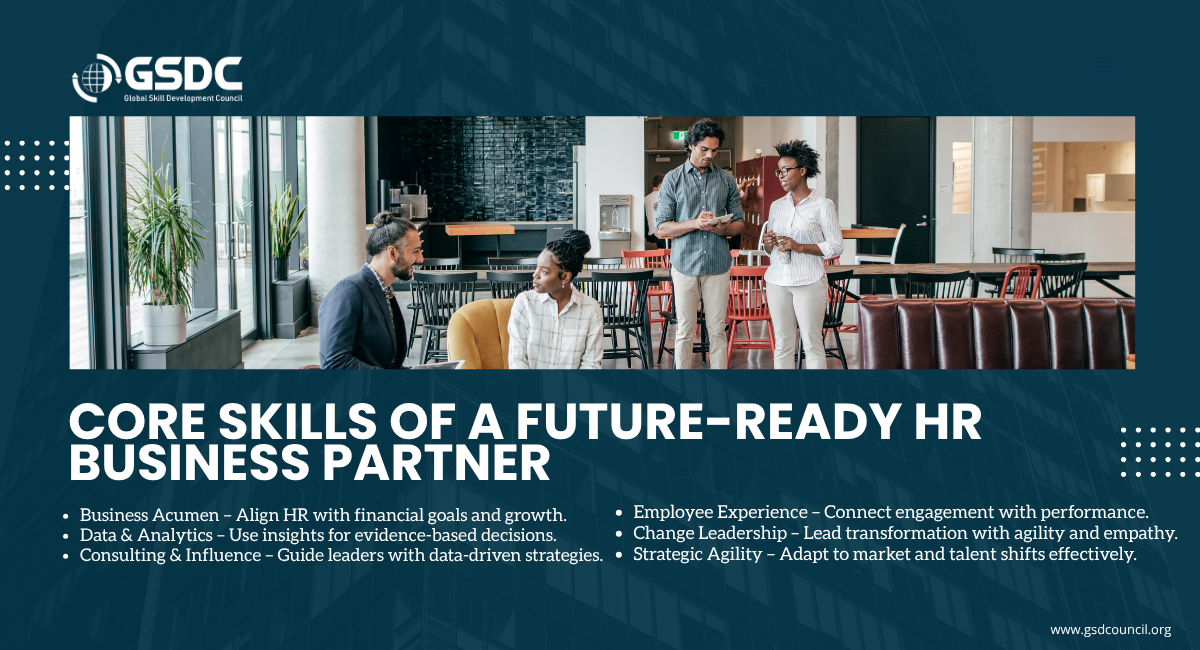
1. Business Acumen: Understanding financials, market dynamics, and business goals to align HR initiatives with profitability and growth.
2. Data & Analytics: Using workforce data to enhance performance management and competency mapping, guiding evidence-based decision-making.
3. Consulting & Influence: Advising leaders through data-backed insights rather than intuition, ensuring strategic alignment across departments.
4. Employee Experience: Designing frameworks that build engagement and connect employee purpose with business performance.
5. Change Leadership: Drive transformation with agility and empathy to shape the future of HR.
6. Strategic Agility: Anticipating shifts in market and talent landscapes to adapt HR strategies that sustain competitiveness.
A future-ready HR Business Partner does more than support operations - they enable transformation and measurable business growth. An HR Business Partner Certification validates these skills and strengthens strategic credibility.
The Career Edge: How to Build a Successful HRBP Career Path
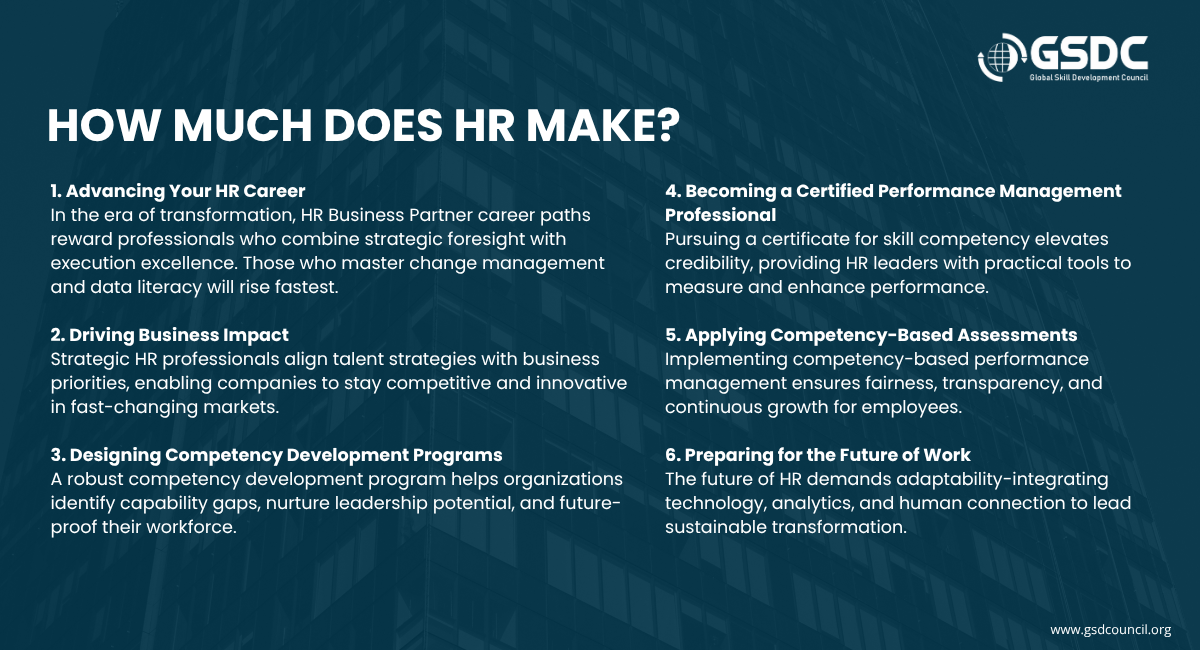
The HR Business Partner career path offers diverse opportunities-from HR Generalist to Chief People Officer-each requiring evolving expertise in strategy, analytics, and leadership.
1. Advancing Your HR Career
In the era of transformation, HR Business Partner career paths reward professionals who combine strategic foresight with execution excellence. Those who master change management and data literacy will rise fastest.
2. Driving Business Impact
Strategic HR professionals align talent strategies with business priorities, enabling companies to stay competitive and innovative in fast-changing markets.
3. Designing Competency Development Programs
A robust competency development program helps organizations identify capability gaps, nurture leadership potential, and future-proof their workforce.
4. Becoming a Certified Performance Management Professional
Pursuing a certificate for skill competency elevates credibility, providing HR leaders with practical tools to measure and enhance performance.
5. Applying Competency-Based Assessments
Implementing competency-based performance management ensures fairness, transparency, and continuous growth for employees.
6. Preparing for the Future of Work
The future of HR demands adaptability-integrating technology, analytics, and human connection to lead sustainable transformation.
From function to leadership-HR professionals are now the architects of business continuity and culture.
The Value of HR Business Partner Certification
Building these strategic capabilities allows professionals to pursue the best HR Business Partner certification, validating expertise globally.
Leading institutions-such as the Global Skill Development Council (GSDC)-offer advanced programs designed to help professionals master performance management, competency mapping, and business consulting while gaining a strong foundation in how to become an HR Business Partner in the modern workplace.
These certifications equip professionals with tools to strengthen decision-making, analytical thinking, and strategic influence-essential for the evolving HR Business Partner career path.

Conclusion: Stepping Into the Future of HR
The future of HR belongs to professionals who merge empathy, data, and strategy into actionable business impact. Those who embrace future HR technology trends and competency-based performance management today will define tomorrow’s workforce-aligning people potential with organizational purpose.
As the world of work evolves, HR Business Partners will remain central to transformation-bridging leadership vision with human capability and driving sustainable growth.
Frequently Asked Questions
1. What is an HR Business Partner and how do they drive business growth?
An HR Business Partner aligns people strategy with business goals, helping improve performance, culture, and overall profitability.
2. What does an HR Business Partner do in the modern workplace?
They use data, analytics, and strategic insight to enhance engagement, guide leaders, and connect HR initiatives to business outcomes.
3. What skills are essential for HR Business Partners?
Core skills include business acumen, data analytics, consulting, strategic agility, change leadership, and employee experience design.
4. How can I become an HR Business Partner?
Gain experience in HR functions, learn strategic alignment, and pursue a certified HR Business Partner program to build credibility.
5. What are the main HR Business Partner responsibilities?
They handle workforce planning, leadership coaching, culture building, and aligning talent strategies with company growth.
6. How is the role of HR changing in the future of work?
The future of HR focuses on AI, digital tools, and hybrid models, requiring HRBPs to combine tech fluency with human insight.
7. Why is HR Business Partner certification important?
A certification validates strategic and analytical skills, helping professionals gain global recognition and expand career opportunities.
8. How does technology impact HR Business Partners?
Emerging HR technology trends like AI and automation enable HRBPs to make data-driven, predictive workforce decisions.
9. What is the HR Business Partner career path?
It typically moves from HR Generalist to senior roles like HR Director or CPO, emphasizing leadership, strategy, and analytics.
10. Why is the HR Business Partner role crucial for the future of HR?
It bridges leadership vision with workforce capability, making HR a strategic driver of innovation and sustainable growth.

Related Certifications
Stay up-to-date with the latest news, trends, and resources in GSDC
If you like this read then make sure to check out our previous blogs: Cracking Onboarding Challenges: Fresher Success Unveiled
Not sure which certification to pursue? Our advisors will help you decide!