Future of HR Analytics: How Data and AI Are Redefining the Workforce Strategy
Written by Srijith Nair
- What Is HR Analytics and Why It Matters
- Benefits and Importance of HR Analytics in Today’s Workplace
- Top HR Analytics Tools to Improve Workforce Management in 2025
- AI in HR Analytics: How to Use AI to Transform Workforce Insights
- Future of Work: HR Analytics Trends in 2026
- Career Opportunities in HR Analytics
- Professional Growth and HR Analytics Certification
- Conclusion
- Frequently Asked Questions (FAQs)
Picture this: an HR leader juggling attrition rates, hiring goals, remote teams, and skill shortages -decisions that could shape the company’s future. But how can they ensure they’re right?
That’s where HR analytics steps in, turning instinct into insight. By using data to uncover performance drivers, predict talent gaps, and align people strategy with business goals, HR becomes a true strategic partner.
The global HR analytics market is projected to reach USD 9.9 billion by 2032, growing at a 13.4% CAGR. With workforce planning leading at 25% CAGR, both large enterprises and SMEs are rapidly adopting cloud-based tools -marking HR’s evolution from a support function to a driver of business transformation.
What Is HR Analytics and Why It Matters
HR analytics, also known as people analytics or workforce analytics, is the process of collecting, analyzing, and interpreting employee-related data to improve organizational performance. It enables HR leaders to move from reactive decisions to proactive strategy - turning raw data into actionable insights that enhance productivity, engagement, and retention.
The importance of HR analytics lies in its ability to connect human behavior with business outcomes. By using analytical models, HR teams can identify trends, predict talent needs, and align workforce capabilities with long-term business goals.Benefits and Importance of HR Analytics in Today’s Workplace
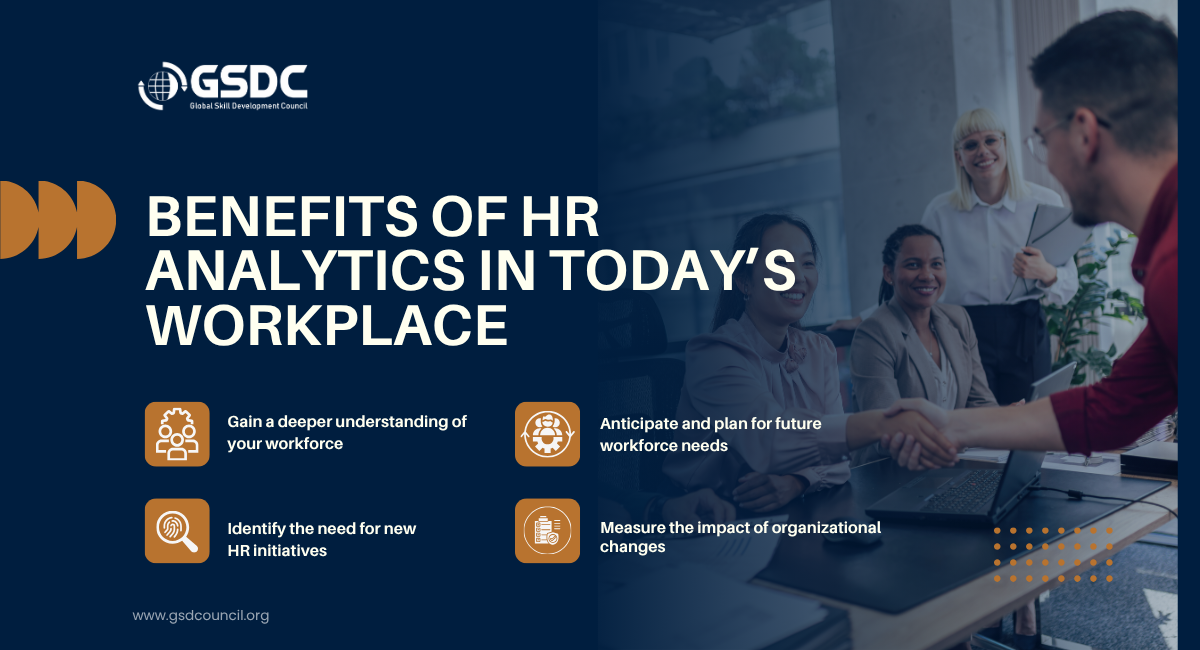
HR analytics replaces guesswork with precision. Here are four ways it’s transforming organizations:
- Gain a deeper understanding of your workforce: Go beyond traditional surveys -track behavioral and performance data to uncover productivity drivers, burnout risks, and top-performing teams.
- Anticipate and plan for future workforce needs: By analyzing hiring, skills, and performance metrics, HR leaders can forecast talent gaps, design learning programs, and ensure workforce readiness.
- Identify the need for new HR initiatives: With 33% of U.S. hiring managers expecting higher turnover and 95% of employees feeling overworked, HR analytics pinpoints which policies -from flexible work to wellness -truly work.
Top HR Analytics Tools to Improve Workforce Management in 2025
The way HR teams make decisions has evolved. Manual reports are being replaced by advanced HR analytics tools that turn workforce data into actionable insights.
Choosing the right platform is essential for tracking engagement, predicting attrition, and planning future hiring needs. Leading tools shaping HR in 2025 include:
Workday, SAP SuccessFactors, Visier, Crunchr, OrangeHRM, Tableau, and Zoho People Analytics - each offering unique strengths from predictive analytics to cloud scalability.
Selecting the right tool isn’t about features alone - it’s about choosing the best fit for your organization’s size, needs, and goals.
🚀 Ready to take your HR strategy to the next level?
AI in HR Analytics: How to Use AI to Transform Workforce Insights
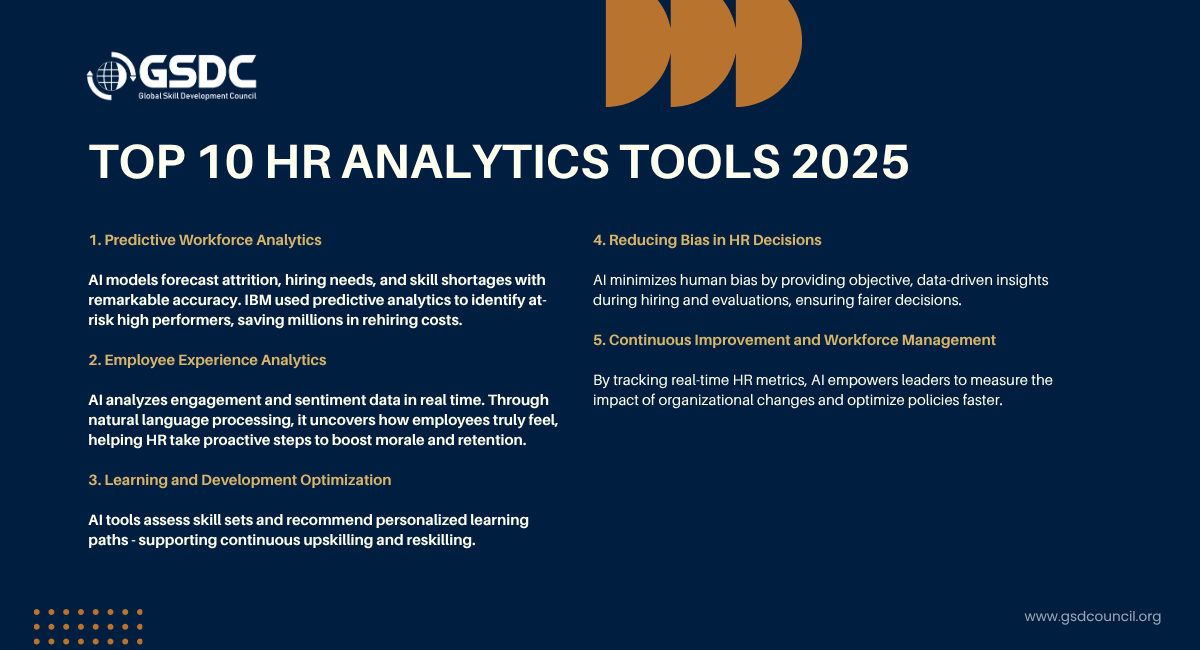
Artificial Intelligence (AI) is redefining HR analytics by making workforce data more intelligent, predictive, and actionable. More than 60% of HR decision-makers plan to integrate AI and automation within the next five years - enhancing competitiveness and decision-making precision.
1. Predictive Workforce Analytics
AI models forecast attrition, hiring needs, and skill shortages with remarkable accuracy. IBM used predictive analytics to identify at-risk high performers, saving millions in rehiring costs.
2. Employee Experience Analytics
AI analyzes engagement and sentiment data in real time. Through natural language processing, it uncovers how employees truly feel, helping HR take proactive steps to boost morale and retention.
3. Learning and Development Optimization
AI tools assess skill sets and recommend personalized learning paths - supporting continuous upskilling and reskilling.
4. Reducing Bias in HR Decisions
AI minimizes human bias by providing objective, data-driven insights during hiring and evaluations, ensuring fairer decisions.
5. Continuous Improvement and Workforce Management
By tracking real-time HR metrics, AI empowers leaders to measure the impact of organizational changes and optimize policies faster.
Global initiatives like GSDC are helping professionals integrate AI responsibly within HR analytics ensuring innovation, transparency, and ethical workforce transformation.Future of Work: HR Analytics Trends in 2026
The next evolution of HR analytics trends will go beyond dashboards - entering the era of predictive intelligence and integrated strategy. By 2026, HR teams will use analytics not only to track performance but to forecast and influence the future of work.
Emerging trends shaping this transformation include:
- AI-Powered HR Assistants: Smart chatbots handling queries, onboarding, and feedback.
- Predictive Workforce Planning: Algorithms anticipating skill shortages months in advance.
- Real-Time Sentiment Tracking: Monitoring morale and burnout risk through NLP tools.
- Integrated HR-Finance Data: Aligning workforce decisions with revenue and budgeting.
- Ethical and Inclusive Analytics: Using explainable AI to promote fairness and transparency.
As organizations evolve, HR analytics will be the cornerstone of agile, inclusive, and high-performing workplaces.
Career Opportunities in HR Analytics
With organizations adopting data-driven HR strategies, the demand for professionals skilled in HR analytics has skyrocketed. These roles blend analytical acumen with human insight - vital for modern workforce management.
Top Roles in HR Analytics
- HR Data Analyst – Interprets HR metrics to enhance engagement and retention.
- People Analytics Specialist – Forecasts talent needs and supports organizational strategy.
- Human Resources Analyst – Analyzes workforce trends to refine HR policies.
- Finance Analytics Professional – Integrates HR and finance data for better budget planning.
Average Earnings
Average: ₹19.2 lakhs/year
Senior Roles: ₹16 lakhs+
Top Earners: ₹32.3 lakhs/year
Specialized Roles:
- HR Analytics Consultant – ₹20.3 lakhs
- HR Analytics Manager – ₹17.4 lakhs
(Sources: AmbitionBox, Glassdoor)
To gain a competitive edge for these roles, professionals can pursue the Certified HR Analytics 3.0 credential - a globally recognized program that strengthens analytical, ethical, and strategic HR skills.
Professional Growth and HR Analytics Certification
For HR professionals, mastering HR analytics is a key career differentiator -shifting from administrative tasks to strategic leadership through data-driven insights.
Global certification programs like Certified HR Analytics 3.0 empower professionals to make ethical, transparent, and impactful decisions. Similarly, the Global Skill Development Council (GSDC) develops agile, data-smart HR leaders who use analytics to drive profitability, fairness, and long-term employee trust.
Conclusion
In the modern HR landscape, analytics is no longer just a reporting tool - it’s the language of strategy. When HR decisions are guided by data and strengthened by AI, organizations gain the clarity to design agile, equitable, and high-performing workplaces.
For professionals, mastering HR analytics isn’t about learning dashboards; it’s about influencing decisions that define culture, performance, and profitability. Those who can translate workforce data into business intelligence will shape the future of HR - one insight at a time.
Frequently Asked Questions (FAQs)
1. What is HR analytics?
HR analytics uses data to improve HR decisions -from hiring and performance to retention. It turns workforce data into insights that drive better business outcomes.
2. What is HR analytics and what is its importance?
HR analytics is vital because it helps HR leaders forecast talent needs, measure performance, and link employee behavior to business success.
3. What are the best HR analytics tools in 2025?
Top HR analytics tools include Workday, SAP SuccessFactors, Visier, and Tableau. They provide predictive insights, dashboards, and seamless data integration.
4. Why should professionals get HR analytics certification?
An HR analytics certification boosts career growth and credibility. Programs like Certified HR Analytics 3.0 help professionals turn workforce data into strategic action.
5. What are the benefits of HR analytics?
Key benefits of HR analytics include improved forecasting, higher engagement, reduced turnover, and stronger data-based decision-making.
6. What is the importance of HR analytics for organizations?
The importance of HR analytics lies in its ability to align HR with business goals, improve productivity, and enhance overall workforce efficiency.
7. What are the latest HR analytics trends?
Emerging HR analytics trends include AI-driven forecasting, real-time sentiment tracking, and ethical, inclusive analytics for fair decision-making.
8. How does workforce analytics differ from HR metrics?
Workforce analytics links employee behavior to performance outcomes, offering deeper insights than traditional HR reporting.
9. What is workforce management?
Workforce management is planning and optimizing staffing, productivity, and scheduling. With workforce analytics, HR can better forecast and allocate resources.
10. How to use AI in HR?
To use AI in HR, organizations apply predictive analytics and automation to hiring, engagement tracking, and performance management.
11. What is AI in HR analytics?
AI in HR analytics enhances workforce insights by predicting trends, reducing bias, and improving data-based decisions.
12. How will AI affect human resources?
AI will automate repetitive HR tasks and allow professionals to focus on strategy, employee experience, and workforce planning.

Related Certifications
Stay up-to-date with the latest news, trends, and resources in GSDC
If you like this read then make sure to check out our previous blogs: Cracking Onboarding Challenges: Fresher Success Unveiled
Not sure which certification to pursue? Our advisors will help you decide!