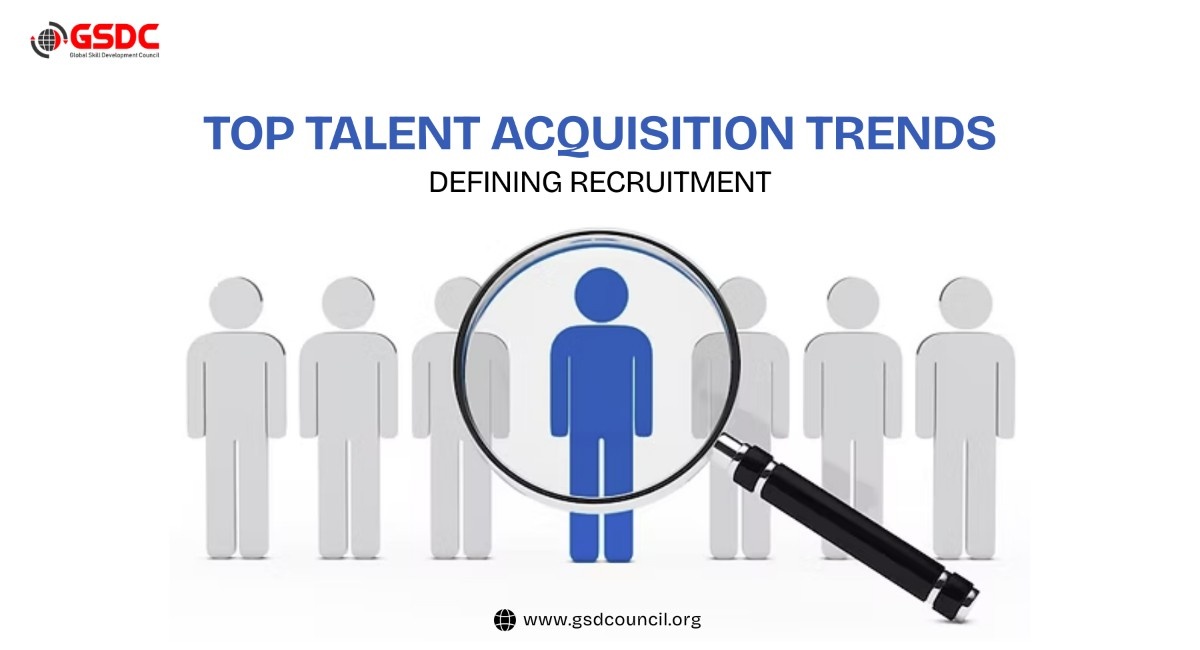
Top Talent Acquisition Trends Defining Recruitment in 2026
Written by Matthew Hale
In the past, recruitment mostly consisted of posting jobs, screening resumes, and scheduling interviews. However, as of 2026, the environment for recruiting has massively changed from that time. Rapidly changing technology, increasing candidate expectations, and rapidly changing workforces around the globe have altered the way recruiters do their jobs daily. These changes are at the heart of many current talent acquisition trends.
The global talent acquisition and recruitment market continues to expand, driven by growing investment in digital hiring platforms and AI-enabled recruitment tools. As hiring becomes more complex and more strategic, understanding why talent acquisition is important is no longer optional for organisational leaders. Talent acquisition now plays a direct role in building workforce capability, supporting innovation, and sustaining competitive advantage.
This guide is designed for talent acquisition leaders, HR heads, recruitment professionals, and business decision-makers preparing hiring strategies for 2026.
What These Trends Mean for Organisations in 2026
These talent acquisition industry trends reflect a broader shift in how organisations compete for skills. Recruitment success in 2026 depends less on speed alone and more on building sustainable talent pipelines, recruiter capability, and workforce readiness. Organisations that align technology, skills strategy, and employer brand are better positioned to navigate skills shortages and changing workforce expectations.
This shift is reinforced by the widespread adoption of AI in HR and recruitment. According to the latest findings in the industry, more than 70% of organizations across the world are utilizing AI at some stage in the recruitment process, which is a reflection of the extent to which technology is integrated into the recruitment processes of today.
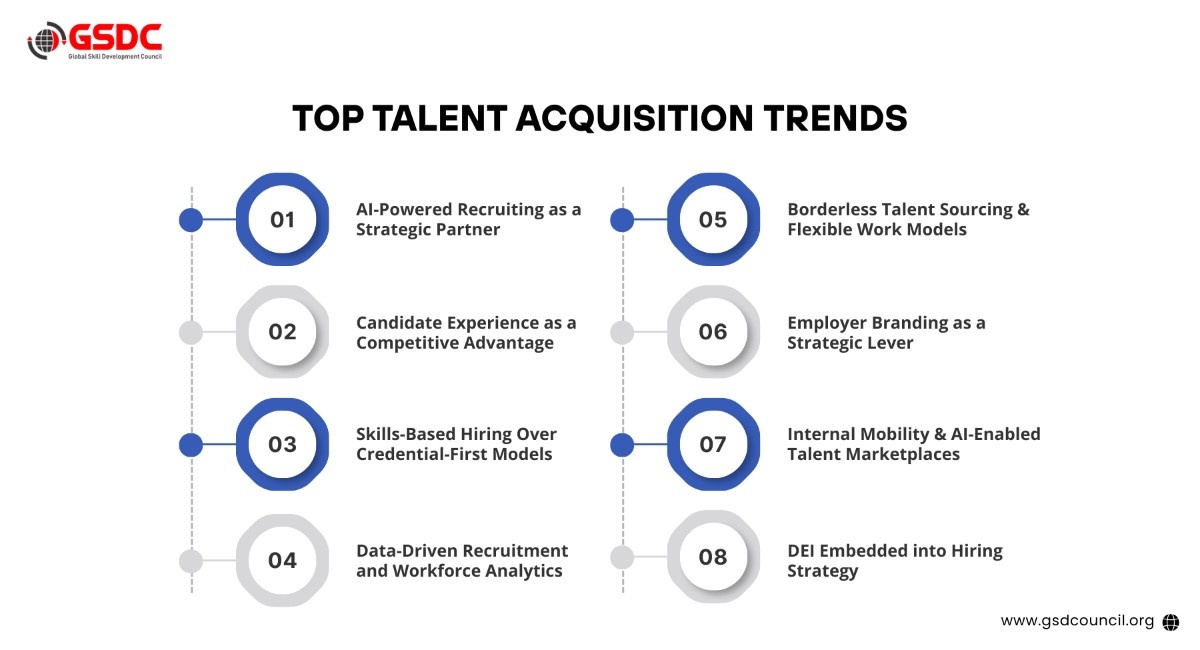
1. AI-Powered Recruiting Becomes a Strategic Partner
AI has moved beyond basic automation. The latest talent acquisition technology trends show AI becoming a strategic partner across the hiring lifecycle.
Some of the key areas where AI is best applied in the recruiting process:
- Proactive candidate sourcing, even for passive candidates
- Skills-based matching
- Personalization of candidate engagement
- Interview management and hiring analytics
By allowing AI to handle these tasks, recruiting can now focus on workforce planning, advising, and building relationships with candidates. However, it is also important to ensure that there is proper and ethical use of AI in the recruiting process.
2. Candidate Experience as a Competitive Advantage
In a candidate-driven market, the recruitment experience itself has become a differentiator. Organisations that design transparent, respectful, and efficient hiring journeys strengthen their employer brand and improve offer acceptance.
Key talent acquisition industry trends in candidate experience include:
- Clear, timely communication
- Simplified, mobile-friendly applications
- Personalised human interactions
- AI-enabled engagement that supports recruiters rather than replacing human connection
A strong candidate experience reinforces why talent acquisition is so important, shaping trust and credibility even before onboarding begins. From the viewpoint of standards, organizations such as the Global Skill Development Council (GSDC) continue to champion candidate-focused recruitment as an essential skill for recruitment practitioners of today.
3. Skills-Based Hiring Replaces Credential-First Models
Recruiters are changing their focus from degrees to skills, as job roles are changing more rapidly than traditional qualifications. In fact, these talent assessment trends indicate a shift to hiring based on the more practical, performance-related aspects of the role.
Some of the common practices involve:
- Competency-based job descriptions
- AI-supported skills matching
- Structured, job-relevant assessments
- Hire-to-train models in partnership with L&D teams
This way of doing things opens up the talent pool, makes the hiring process more diverse, and ensures that the result of the hiring process is better aligned with the real needs of the business.
4. Data-Driven Recruitment and Workforce Analytics
Nowadays, recruitment decisions rely heavily on data. It is through analytics more and more that companies decide how they source, engage candidates, and plan their workforce for the long term.
By leveraging workforce intelligence, teams can:
- Identify where candidates drop out of the funnel
- Measure the success of the various sourcing channels
- Predict the skills that will be required in the future
- Calculate the number of recruiters based on the demand for hiring
Companies that use recruitment analytics report a continuous increase in the quality of hiring and a shorter time to, hire, which is one of the reasons that more and more firms rely less on their feelings and more on data.
With data literacy becoming a required skill for the recruiters of the future, organized learning, for example, the competency areas included in the Certified Recruitment Professional (CRP) framework, can be of great help to recruitment professionals in understanding workforce data and transforming the insights into hiring actions.
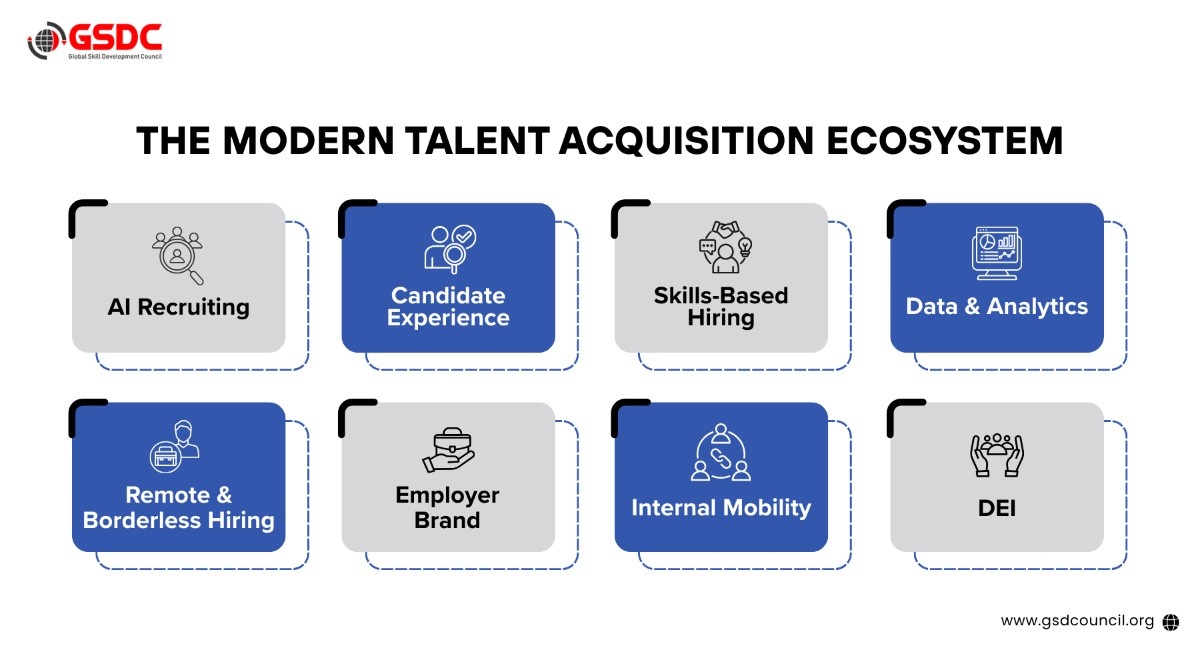
5. Borderless Talent and Flexible Work Models
The ability to work remotely or on a part-time basis has increased access to the talent pool globally (through both the remote and hybrid work models). Borderless hiring models allow organisations to source niche skills across geographies, improving resilience and diversity. Recent workforce studies indicate that nearly 8 in 10 companies now recruit for remote roles across borders, reflecting how globalised recruitment has become.
Key implications include:
- Access to wider talent pools
- Stronger diversity of perspectives
- Increased operational complexity around compliance, onboarding, and engagement
Recruitment professionals who master global hiring dynamics gain a competitive edge in skills-constrained markets.
6. Employer Branding as a Strategic Lever
The company's reputation as an employer is becoming a key factor in attracting talent. People who are looking for jobs check out things like the company culture, how trustworthy the leaders are, and what opportunities for growth exist, even before they decide to apply. One study suggests that more than 80% of job seekers look at the brand of the employer before submitting their application, thus turning employer branding into a vital touchpoint in today's recruitment.
High-performing organisations:
- Share authentic employee stories
- Highlight learning pathways and career mobility
- Showcase inclusive, candidate-centric hiring practices
Having a strong employer brand makes it easier to attract better applicants, shortens the time it takes to fill an open position, and overall, makes recruiting a more powerful weapon.
7. Internal Mobility and Talent Marketplaces
Internal mobility is at the heart of people's strategy nowadays. AI-powered talent marketplaces help employees find the right fit in new roles or projects and thereby also support retention and agility.
Benefits include:
- More engagement and retention
- Robust succession pipelines
- Internal talent comes in handy faster
For recruitment teams, this trend supports clearer recruitment career paths internally and positions talent acquisition as a long-term capability builder rather than only a sourcing function.
8. DEI Embedded into Hiring Strategy
DEI has moved from policy to practice. Inclusive hiring frameworks are now built into recruitment design, shaping sourcing, screening, and assessment practices.
Key elements include:
- Bias-aware screening and assessments
- Structured interviews
- Inclusive job language and outreach
- Partnerships with diverse talent communities
DEI-led hiring strengthens culture, supports innovation, and contributes to sustainable organisational performance.
How Organisations Can Prepare for Talent Acquisition in 2026
To achieve these trends practically, organizations should focus on the following areas:
- Using AI responsibly across the hiring process
- Embracing skills-based hiring and internal mobility
- Upskilling recruitment teams to thrive in a data-driven world with AI
Advancing Professional Standards in Recruitment
As talent acquisition becomes more strategic in nature, organisations need more skilled recruitment professionals to deliver best practice in modern recruitment models. This need is being backed by the Global Skill Development Council (GSDC) with a series of frameworks and certifications like the Certified Recruitment Professional (CRP), which is helping drive forward recruitment expertise in a way that is relevant for the future and raising the status of a recruitment career as a professional path.

Conclusion
Talent acquisition in 2026 reflects a fundamental shift in how organisations build their workforce. Technology, data, and human-centred design are reshaping recruitment effectiveness. While AI and automation are powerful enablers, they do not replace human judgement - they elevate it.
Ultimately, understanding why talent acquisition is important goes beyond filling roles. Strategic talent acquisition shapes organisational resilience, leadership pipelines, and long-term competitiveness. In a rapidly changing talent landscape, recruitment is no longer just operational - it is a strategic lever for sustainable growth.
Frequently Asked Questions (FAQs)
How do organisations measure the success of talent acquisition strategies?
To check the rightfulness of their talent acquisition trends and recruitment at large, organisations measure the quality of hires, time-to-productivity, retention rates, as well as hiring manager satisfaction levels.
Why is talent acquisition important beyond filling open roles?
If you dig deeper into the reasons why talent acquisition is important, you will find that it has a major impact on the leadership pipeline, workforce stability, and the overall organisational capability.
How do talent acquisition technology trends affect recruiter roles?
Modern talent acquisition technology trends are resulting in changes in recruiter roles where recruiters are seen more as strategic workforce advisory, interpreters of data, and relationship managers rather than being engaged in the manual tasks of sourcing and screening.
How many recruiters do I need as my organisation scales?
There is no predetermined answer to the question 'how many recruiters do I need'. Besides, it hinges on factors such as hiring volume, role complexity, level of automation, and whether recruitment is centralised or distributed.
How can recruitment professionals stay future, ready in a changing industry?
Recruitment professionals should mainly ramp up their capabilities in analytics, skills, based hiring, and new recruitment technologies. Just as well, they might want to consider getting a formal certification as a recruitment professional, which will serve as proof of their expertise.

Related Certifications
Stay up-to-date with the latest news, trends, and resources in GSDC
If you like this read then make sure to check out our previous blogs: Cracking Onboarding Challenges: Fresher Success Unveiled
Not sure which certification to pursue? Our advisors will help you decide!