GSDC Mentor Connect: Holistic L&D Orientations for High-Performance Organizations
Written by Matthew Hale
The modern concept of Learning and Development (L&D) goes beyond skilling employees and instead focuses on the development of holistic L&D orientations that are balanced in terms of performance, employee welfare, and long-term organizational performance.
During our recent GSDC Mentor Connect meeting, which is a component of the GSDC Certified Learning Journey, we touched on the ways in which organisations can implement sustainable learning models that enhance culture, leadership, and the performance of the organisation in general.
The subject of this session was the interrelations of the employee well-being programs, leadership development, and building a high-performance organization.
It also underscored the advantages of training and development to build organizational resilience through the utilization of modern learning and development platforms and tools to effect ongoing improvement.
Why L&D Orientations Matter
Traditional L&D often focuses only on training employees to meet immediate role requirements.
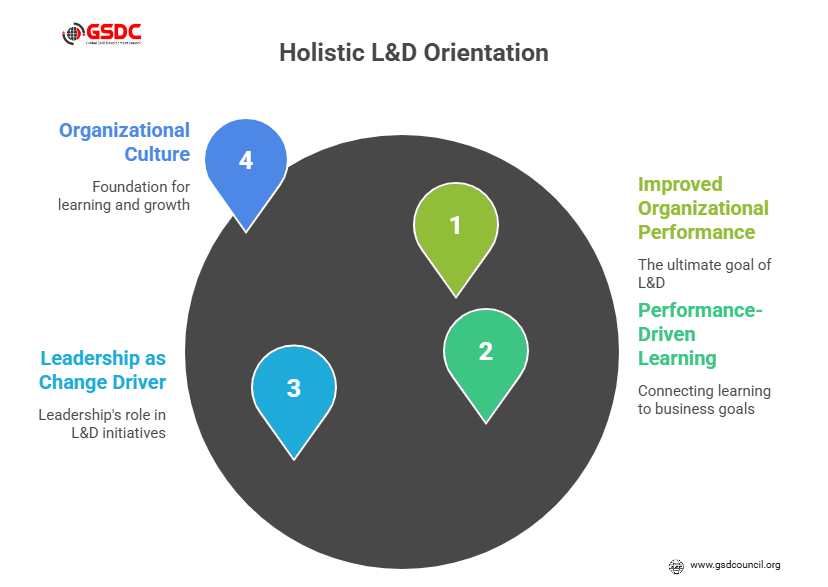
However, holistic L&D orientation emphasizes:
- The organizational culture is the foundation of learning.
- Organization leadership is the driver of change.
- A performance-driven learning model where every learning activity connects to real business goals.
Linking L&D with Employee Well-Being
One of the key discussions revolved around employee well-being. Organizations are increasingly realizing that employee well-being programs are not “perks” but core business strategies.
By embedding well-being into L&D orientation, companies can:
- Reduce burnout and turnover.
- Improve creativity and engagement.
- Promote resilience in high-pressure roles.
A major theme was how to promote employee well-being through L&D. This includes designing learning modules that integrate stress management, emotional intelligence, and work-life balance, making well-being a measurable outcome of learning.
Organization Culture & Leadership in L&D
Culture is often described as the “shadow of leadership.” Strong organizational leadership fosters a learning culture where employees feel empowered to take ownership of their growth.
During the session, examples showed that organizations with robust HRM frameworks and leadership-oriented learning strategies tend to become high-performance organizations faster.
The discussion also emphasized that hr framework examples should not be rigid. Instead, they should be adaptive to support diverse needs, covering leadership development, coaching, and pathways for professional growth.
Performance-Driven Learning: From Theory to Practice
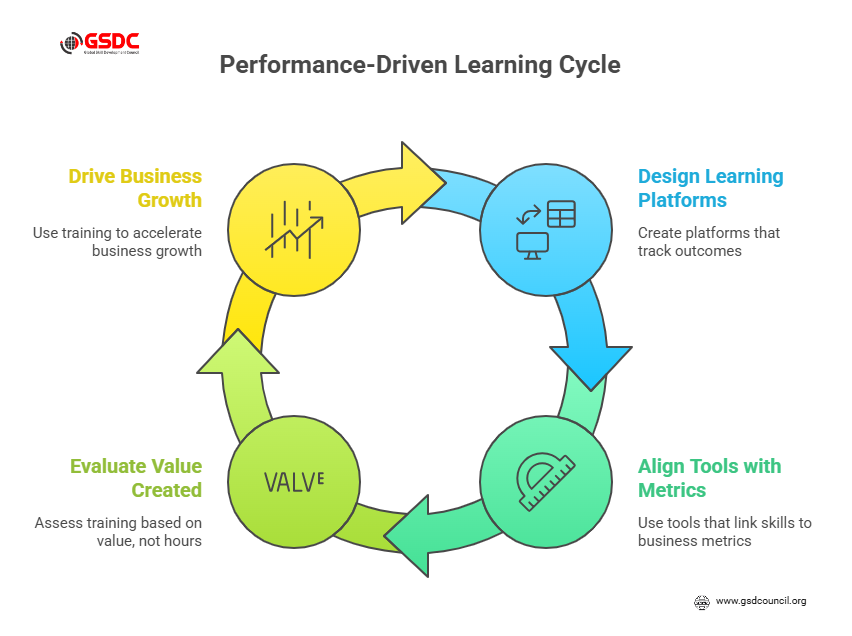
One of the standout concepts was performance-driven learning. Unlike traditional training that often focuses on attendance and completion, performance-driven learning is about measuring the benefits of training and development in terms of business impact.
So, what is performance-based learning in this context?
It’s an approach where L&D interventions are tied to measurable KPIs, such as productivity, innovation, or customer satisfaction. In practice, this means:
- Designing learning and development platforms that track real-world outcomes.
- Using learning and development tools that align skill-building with business metrics.
- Shifting evaluation from “hours trained” to “value created.”
This performance-driven orientation ensures that training is no longer a cost center but a growth accelerator.
Practical Insights: How to Improve an Organization’s Performance
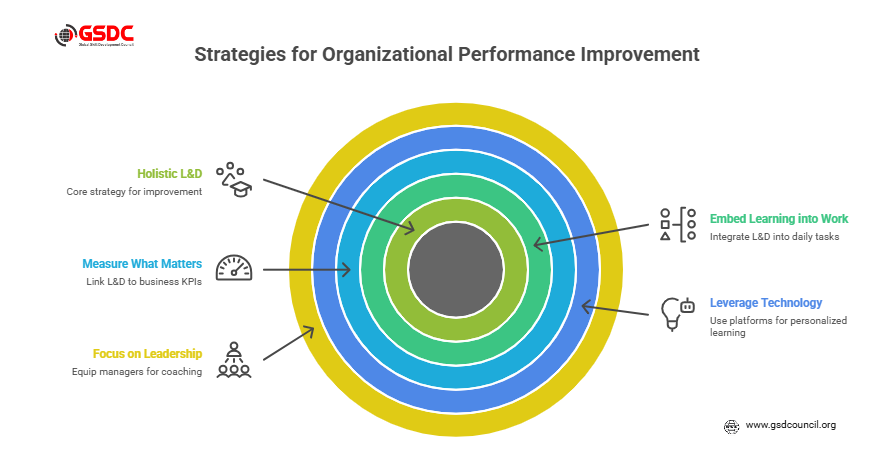
The session highlighted strategies for how to improve an organization’s performance using holistic L&D:
- Embed learning into work: Integrate L&D activities into daily workflows, not just classrooms.
- Measure what matters: Link learning initiatives to business KPIs (e.g., employee retention, sales growth, innovation).
- Leverage technology: Use adaptive learning and development platforms for personalized experiences.
- Focus on leadership: Equip managers with tools to coach and mentor, creating sustainable growth.
- Integrate well-being: Ensure that performance goals and well-being goals complement rather than compete with each other.
Why Human Resource Management is Crucial in L&D
The conversation repeatedly circled back to why human resource management is important in creating holistic L&D systems. HR acts as the architect of the HRM framework, ensuring that learning strategies align with broader organizational priorities.
With the right HR leadership, companies can design flexible programs that blend performance with people-centric approaches.
Through strong HR oversight, organizations can create a cycle where learning, culture, and well-being continuously reinforce one another, leading to sustainable high performance.

Conclusion
The GSDC Mentor Connect session on Holistic L&D Orientations helped us remember that nowadays learning is not only about acquiring skills.
It is also about creating systems that would connect the well-being of employees, organizational culture, and performance-based learning into one strategic orientation.
With organizations still trying to survive in the disruption, companies that have made investments in learning and development certifications, platforms, and tools will be in a better position to strike a balance between performance and people-centric values.
We still believe at GSDC that we can empower professionals with internationally accredited certifications that integrate L&D and HRM structures as well as leadership mastery into engines of organizational change.

Related Certifications
Stay up-to-date with the latest news, trends, and resources in GSDC
If you like this read then make sure to check out our previous blogs: Cracking Onboarding Challenges: Fresher Success Unveiled
Not sure which certification to pursue? Our advisors will help you decide!