Software Asset Management (SAM): A Complete Guide to Strategy, Tools & Certification
Written by Matthew Hale
- Why Software Asset Management Matters Now
- Understanding the Software Asset Lifecycle
- Who Needs Software Asset Management?
- Why SAM Matters in Modern IT Ecosystems
- Core Components of an Effective SAM Program
- Key Benefits of Software Asset Management
- How to Implement SAM: A Practical Roadmap
- Why SAM Certification Matters
- Conclusion
Software now powers almost every business function-from cybersecurity and collaboration to finance, analytics, and customer experience. As organizations adopt more SaaS applications, cloud tools, and enterprise platforms, keeping everything under control becomes harder. Without a structured approach, companies face overspending, compliance challenges, and operational inefficiencies.
This is where software asset management (SAM) becomes essential.
SAM helps organizations manage their software investments, optimize usage, ensure compliance, and maintain full visibility across the software asset lifecycle.
This blog breaks down SAM in a clear, professional, and easy-to-read format-covering what it is, why it matters, its benefits, challenges, and how SAM certification can help professionals build expertise in this field.
Why Software Asset Management Matters Now
With software spread across SaaS, cloud, and remote setups, organizations often lose track of what they own and what they actually use. This leads to unnecessary spending and increased audit exposure.
Research shows that around 30% of software budgets go to waste, and nearly one in three organizations undergo audits each year.
SAM brings clarity, compliance, and cost discipline to this growing complexity.
What Is Software Asset Management?
Software Asset Management (SAM) is the structured practice of tracking, managing, and optimizing software across its entire lifecycle-from planning and procurement to deployment, usage, and retirement.
It helps organizations:
- Understand what software they own
- Track who is using it
- Ensure license and regulatory compliance
- Reduce unnecessary software spend
- Make informed decisions based on accurate data
SAM aligns IT, procurement, finance, and compliance teams so software decisions are consistent, data-driven, and cost-effective.
Understanding the Software Asset Lifecycle
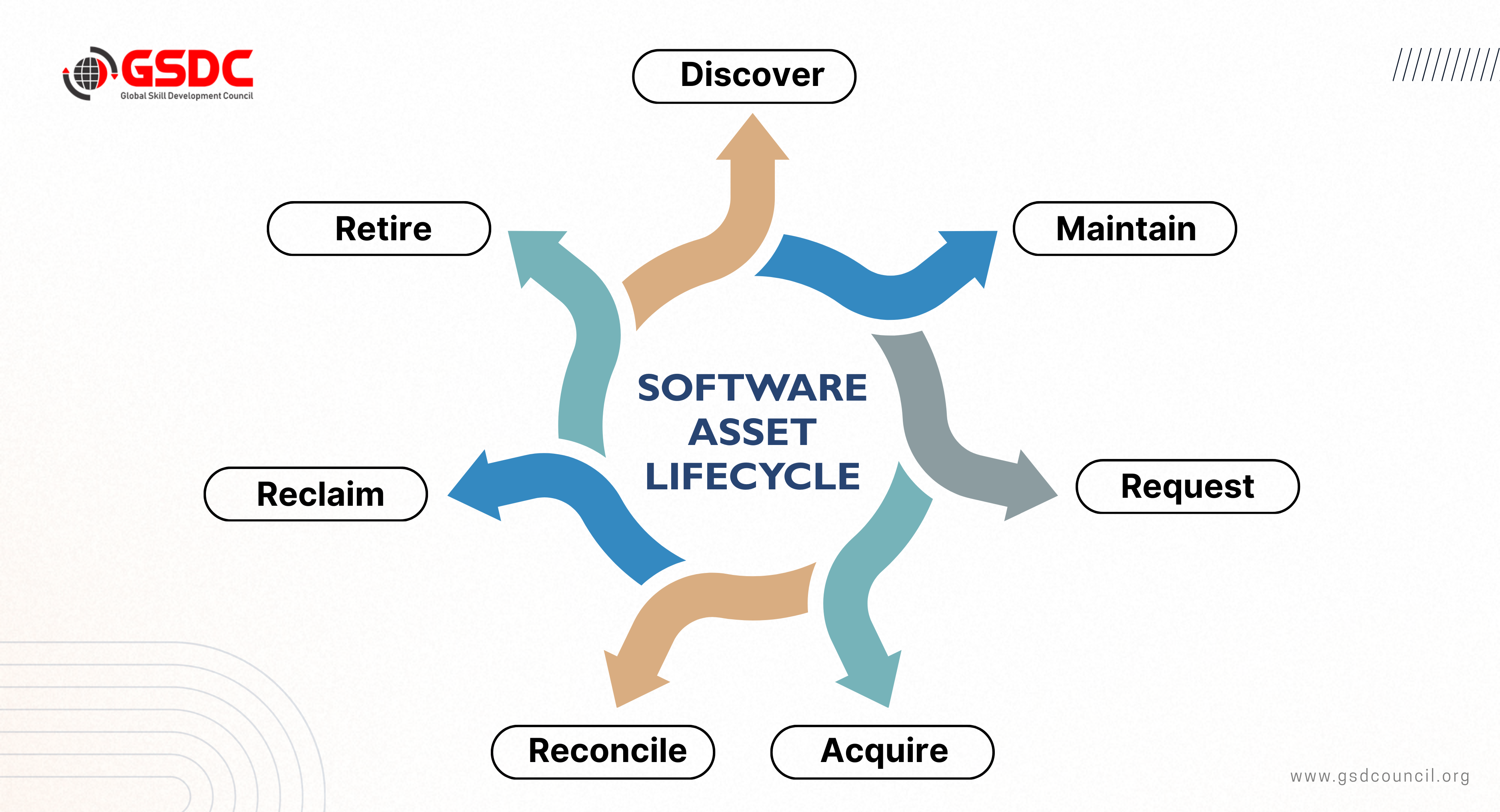 SAM processes usually follow these lifecycle stages:
- Identifying software needs: Determining what tools the company needs based on the roles, work, and business goals.
- Procuring licenses: Buying the right kind and the correct number of licenses through the vendors and procurement channels that are approved.
- Deploying applications: Installing and setting up software in a controlled and standard manner on the devices and environments.
- Monitoring usage: Recording the frequency and users of the software to find the waste or the optimization opportunities.
- Managing software license compliance: Making sure that all the deployments are following the licensing terms so as not to have violations and audit risks.
- Optimizing usage: Changing the usage of licenses through the reallocation, upgrade, or reduction depending on the real usage pattern so that overspending is kept at a minimum.
- Retiring or reallocating licenses: Getting rid of the software that is no longer supported or is going to be unused and moving the licenses to the places where they will be most useful.
Many organizations also follow SAM practices recommended by industry bodies such as the Global Skill Development Council (GSDC) to maintain consistency across the lifecycle.
Who Needs Software Asset Management?
SAM is valuable across multiple functions:
- IT teams that execute and oversee installations, updates, and security
- Finance teams that handle budgeting and the control of software costs
- Procurement teams that manage vendor contracts and negotiate renewals
- Compliance and governance teams that prepare for both internal and external audits
- Any organization that extensively uses SaaS or cloud applications
As the software environment becomes more complicated, SAM is turning out to be a vital organizing principle for companies of all sizes.
Why SAM Matters in Modern IT Ecosystems
As SaaS and cloud adoption accelerate, software sprawl has become a real challenge for organizations. Studies show that companies overspend nearly 25% on SaaS licenses due to poor visibility and inconsistent management.
Without a structured approach, software quickly becomes duplicated, underused, or completely forgotten.
SAM helps bring order to this complexity by enabling organizations to:
- Maintain clear, centralized visibility
- Eliminate redundant or overlapping tools
- Prevent accidental overspending
- Improve license utilization
- Strengthen security through controlled deployments
In hybrid and remote environments, this level of oversight is essential for maintaining cost control and operational stability.
This is also why many professionals pursue structured training or certifications like the Certified Software Asset Manager (CSAM), which help them understand how to implement SAM frameworks effectively in these modern ecosystems.
⭐ Download the SAM Strategy & Lifecycle PDFDownload the checklist for the following benefits:
📄 Get a simple, easy-to-use guide to strengthen your SAM process.
🚀 Perfect for quick reference, planning, and team alignment.
Core Components of an Effective SAM Program
A strong SAM program includes several key components working together:
1. Software Inventory & Discovery
Create an accurate, up-to-date inventory of all software-installed applications, cloud platforms, SaaS subscriptions, versions, usage rights, and license details. Automated discovery tools ensure real-time visibility.
2. Software Licensing Management
Track entitlements, deployments, and usage rights to prevent over-licensing, under-licensing, or non-compliance. This significantly reduces audit risks and overspending.
3. Software Usage Monitoring
Monitor usage across teams and devices to identify inactive licenses, redundant tools, and software license optimization opportunities. Even minor improvements can reduce costs substantially.
4. Procurement & Renewal Management
Use data-driven insights to negotiate contracts, avoid duplicate purchases, plan renewals strategically, and align spending with business priorities.
5. Retirement & Decommissioning
Remove or reallocate software that is outdated, unused, or no longer aligned with business needs. This reduces security risks, costs, and compliance issues.
A structured SAM framework helps organizations apply these components consistently and effectively.
SAM vs ITAM: A Quick Clarification
SAM is a subset of IT Asset Management (ITAM).
- ITAM manages all technology assets-hardware, software, cloud, and services.
- SAM focuses specifically on software licenses, compliance, usage, and optimization.
This clarification helps teams understand SAM’s role within broader IT governance.
Key Benefits of Software Asset Management
SAM delivers strong financial, operational, and compliance benefits across the organization.
- Cost Savings: Companies can reduce software spend by 20–40% by removing unused licenses, avoiding duplicate subscriptions, and optimizing renewals.
- Compliance & Audit Readiness: Accurate inventories, reliable usage data, and proper documentation help organizations stay compliant and reduce audit risks.
- Operational Efficiency: Consistent deployments and faster access to the right tools reduce support issues, minimize version conflicts, and improve productivity.
- Smarter Decisions: Clear visibility into software usage and costs enables better forecasting, budgeting, and prioritization of critical tools.
- Stronger Security: By removing unauthorized or outdated software, SAM lowers security risks and strengthens overall cybersecurity posture.
How to Implement SAM: A Practical Roadmap
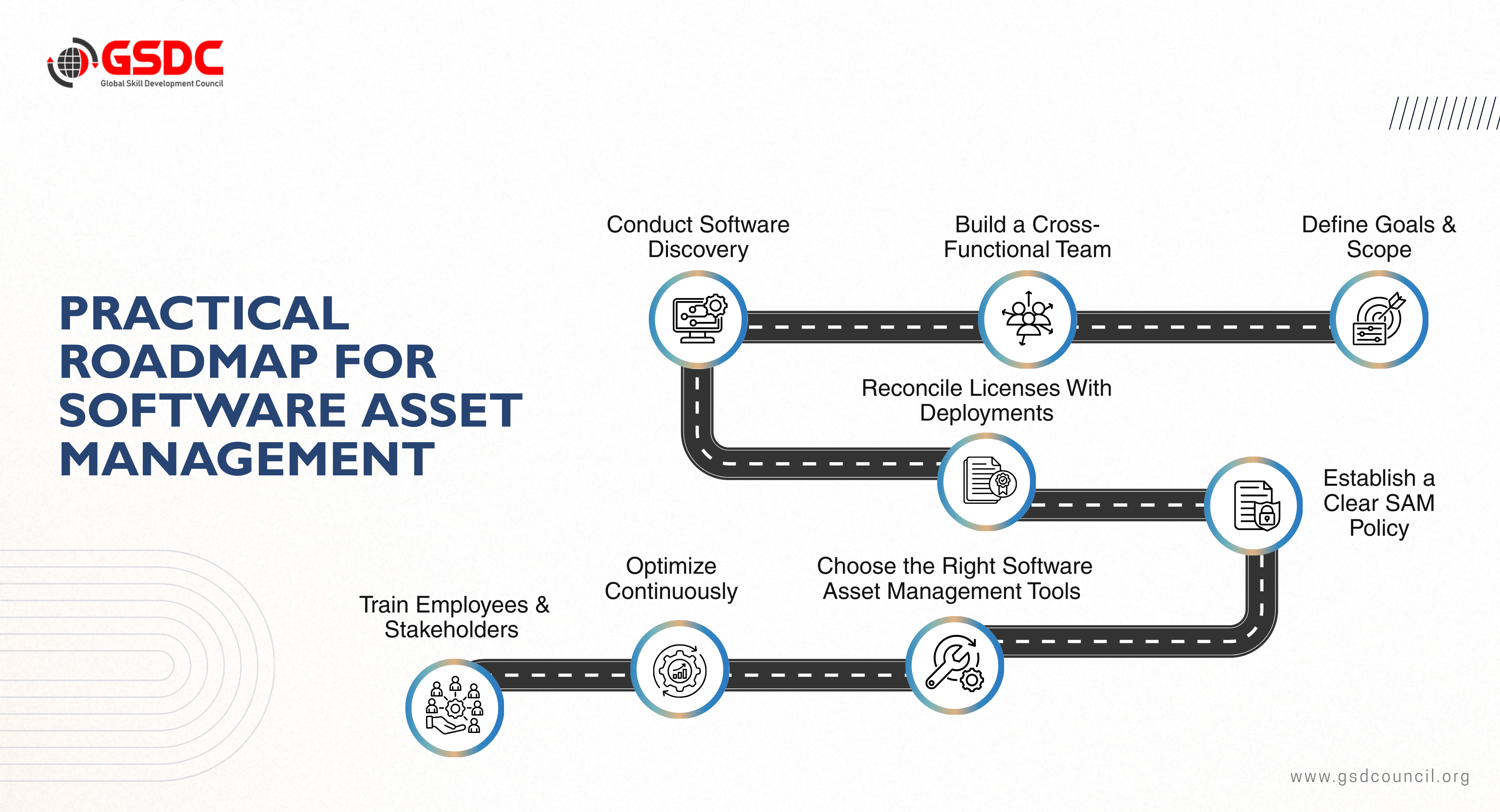 A well-functioning SAM program does not have to be confusing. Companies can quickly develop a powerful strategy with a systematic approach.
1. Define Goals & Scope
Clarify whether SAM is a cover for local software, SaaS, cloud platforms, or all of them. Set goals as cost optimization, compliance, or risk reduction.
2. Build a Cross-Functional Team
IT, procurement, finance, and compliance are the departments that will have the best collaboration in a SAM environment. Thus, through shared ownership governance, the gaps are minimized as the overall control is improved.
3. Conduct Software Discovery
Only a fully automated tool should be employed to detect all locally installed software and the one cloud-based software to which a company has subscribed but is not known. This method supplies a current and accurate inventory instead of the usual estimation method.
4. Reconcile Licenses With Deployments
Align the usage of the licenses with the licenses actually bought. This action exposes both compliance problems and optimization possibilities.
5. Establish a Clear SAM Policy
Software request, approval, installation, renewal, and audit procedures should be clearly defined in a SAM policy. The shadow IT disappears due to a well policy and the consistency is maintained.
6. Choose the Right Software Asset Management Tools
Feature discovery, license tracking, compliance alerts, dashboards, and usage analytics should be considered.
7. Optimize Continuously
SAM is a permanent task. Regular audits help with the removal of tools that are no longer needed, license adjustments, and being always ready for audits.
8. Train Employees & Stakeholders
Awareness is a guarantee that teams follow procurement rules, are aware of the compliance requirements, and do not commit unauthorized software usage.
Why SAM Certification Matters
SAM spans licensing, vendor management, compliance, procurement, and cost control-so companies value professionals with verified expertise in these areas. A SAM-focused qualification helps you:
- Understand the full lifecycle
- Stay prepared for audits
- Apply licensing rules correctly
- Reduce unnecessary software spend
- Implement SAM processes confidently
- Build credibility in ITAM and governance roles
Many professionals also look at salary trends, as SAM roles often offer higher pay due to their strategic impact.
The Certified Software Asset Manager (CSAM) program offers practical, real-world training in lifecycle management, compliance, usage optimization, vendor governance, and audit preparation. Delivered by the Global Skill Development Council (GSDC) and priced competitively in India, it’s a strong option for professionals aiming to grow in SAM, procurement, compliance, or IT governance.
Conclusion
Software is one of the most valuable assets in any modern organization, but without proper management, it can quickly become costly, risky, and difficult to control. Software Asset Management provides the structure needed to maintain visibility, reduce waste, strengthen compliance, and ensure software investments truly support business goals.
For professionals, SAM expertise is becoming increasingly important as organizations seek stronger governance, smarter spending, and better operational stability. Building skills in this domain not only supports organizational efficiency but also creates meaningful career opportunities in ITAM, procurement, compliance, and broader technology leadership roles.

Related Certifications
Stay up-to-date with the latest news, trends, and resources in GSDC
If you like this read then make sure to check out our previous blogs: Cracking Onboarding Challenges: Fresher Success Unveiled
Not sure which certification to pursue? Our advisors will help you decide!