Coaching as a Leadership Tool: Driving Team Growth & Performance
Written by Natalia Ombach
- The Rise of Coaching in Modern Leadership
- A Real Example: Why Coaching Matters in Organizations
- How Coaching Encourages Growth
- Challenges Leaders Face When Practicing Coaching
- The Organizational Benefits of Coaching Leadership
- When Leaders Should Coach and When They Should Direct
- Simple Coaching Habits Leaders Can Practice
- Building a Coaching Culture in Organizations
- The Future of Leadership: Human-Centered Coaching
Leadership today is no longer defined by authority or decision-making power alone. In modern organizations, the most effective leaders are those who develop people, empower teams, and create environments where individuals can grow and perform at their best. One of the most impactful ways to achieve this is through leadership coaching and leadership development coaching.
Coaching is increasingly recognized as a powerful leadership approach that helps employees develop problem-solving skills, build confidence, and take ownership of their work. By strengthening coaching skills for managers and promoting coaching in the workplace, companies like Google and other high-performing organizations have successfully integrated coaching into their leadership development strategies.
This blog explores how leadership coaching strategies can become a powerful leadership tool, the techniques leaders can use to coach effectively, and how organizations can build a culture that encourages team growth through coaching.
The Rise of Coaching in Modern Leadership
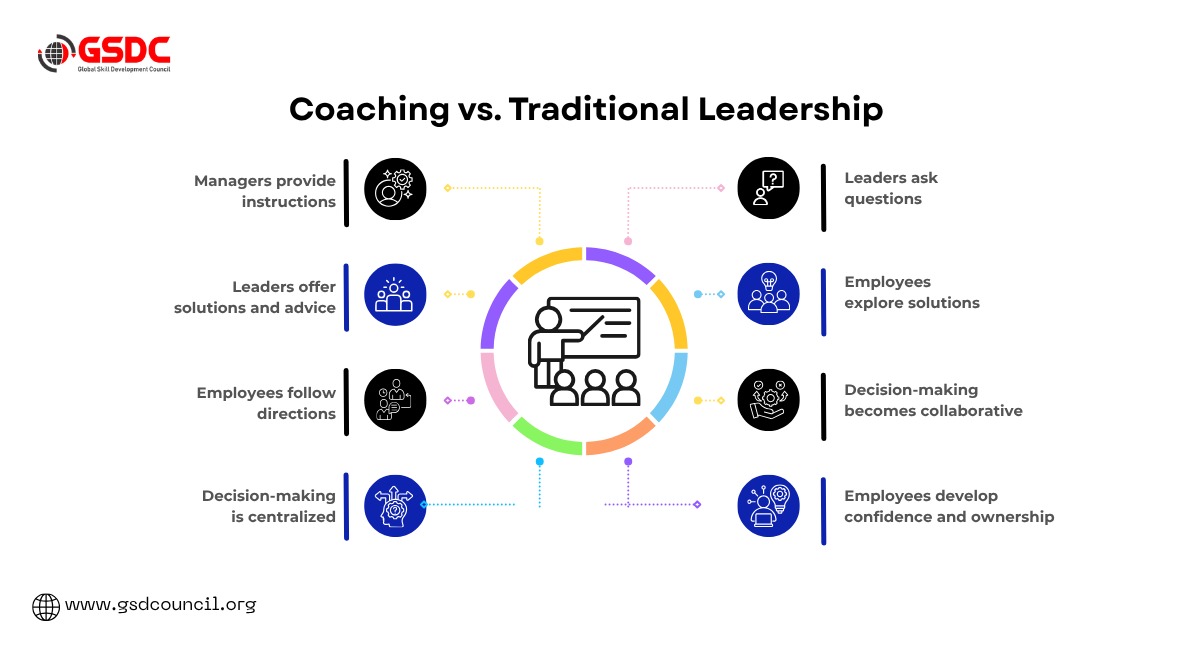
In traditional leadership models, managers were expected to give instructions, solve problems, and provide answers. However, the modern workplace is evolving rapidly, and organizations now require leaders who can guide employees rather than simply direct them.
Coaching is based on a simple but powerful idea:
People grow more effectively when they discover solutions themselves rather than being told what to do.
Instead of giving advice or instructions, coaching leaders focus on:
- Asking thoughtful questions
- Encouraging reflection
- Supporting decision-making
- Helping employees develop their own solutions
This approach not only improves individual performance but also strengthens collaboration, innovation, and accountability within teams.
A Real Example: Why Coaching Matters in Organizations
A well-known example of coaching in the workplace comes from Google. In the early 2000s, the company experimented with a flat organizational structure where managers were temporarily removed, assuming highly skilled engineers could self-manage. However, the experiment revealed that teams still needed structured guidance, support, and leadership coaching to perform effectively.
As a result, Google launched Project Oxygen, an internal research initiative aimed at identifying the behaviors of the most effective managers and strengthening employee development. After analyzing large volumes of employee data and feedback, the findings showed that one of the most critical traits of successful leaders especially those practicing transformational leadership was the ability to provide performance coaching and act as a strong coach.
This insight helped answer the question of what is leadership coaching, highlighting its role in driving team success, improving performance, and building stronger, more capable employees.
Managers who practiced coaching skills were better at:
- Supporting employee development
- Encouraging innovative thinking
- Improving team performance
- Building trust and collaboration
Since then, coaching has become a central part of leadership development in many global organizations.
How Coaching Encourages Growth
Imagine a teenager asking their parent whether they should attend a school networking event.
One parent may respond with direct advice:
“You should go. It will help your future.”
Another parent might respond differently:
“What do you expect to gain from attending? What might you miss if you don’t go?”
The second approach encourages the teenager to analyze the situation and make their own decision.
Similarly, in organizations, coaching leaders encourage employees to think critically, reflect on their choices, and take responsibility for their decisions.
This approach builds long-term skills rather than short-term solutions.
Challenges Leaders Face When Practicing Coaching
Although coaching seems simple in theory, it can be difficult to apply in practice.
Many leaders struggle with coaching because their professional success has traditionally been based on providing answers and solving problems quickly.
1. The Urge to Give Advice
Leaders often feel responsible for solving problems immediately. As a result, they may quickly offer advice rather than allowing employees to explore solutions.
Coaching requires leaders to pause and ask questions instead of jumping to conclusions.
2. Asking the Right Questions
Another challenge is knowing what questions to ask. Effective coaching questions should encourage reflection rather than defensiveness.
Good coaching questions often begin with “What” rather than “Why.”
Examples include:
- What options have you considered?
- What outcome would you like to achieve?
- What challenges do you see in this situation?
- What else could you try?
These questions encourage deeper thinking and allow employees to analyze problems from multiple perspectives.
3. Embracing Silence
Silence can feel uncomfortable in conversations. However, silence often indicates that someone is thinking deeply.
Effective coaches allow pauses during conversations instead of rushing to fill the silence. This gives employees the space they need to reflect and formulate their responses.
4. Practicing Active Listening
Listening is one of the most important coaching skills, yet it is often underestimated.
Active listening involves more than hearing words. It also requires paying attention to:
- Tone of voice
- Body language
- Emotional cues
- Unspoken concerns
When leaders truly listen, employees feel valued and understood.
The Organizational Benefits of Coaching Leadership
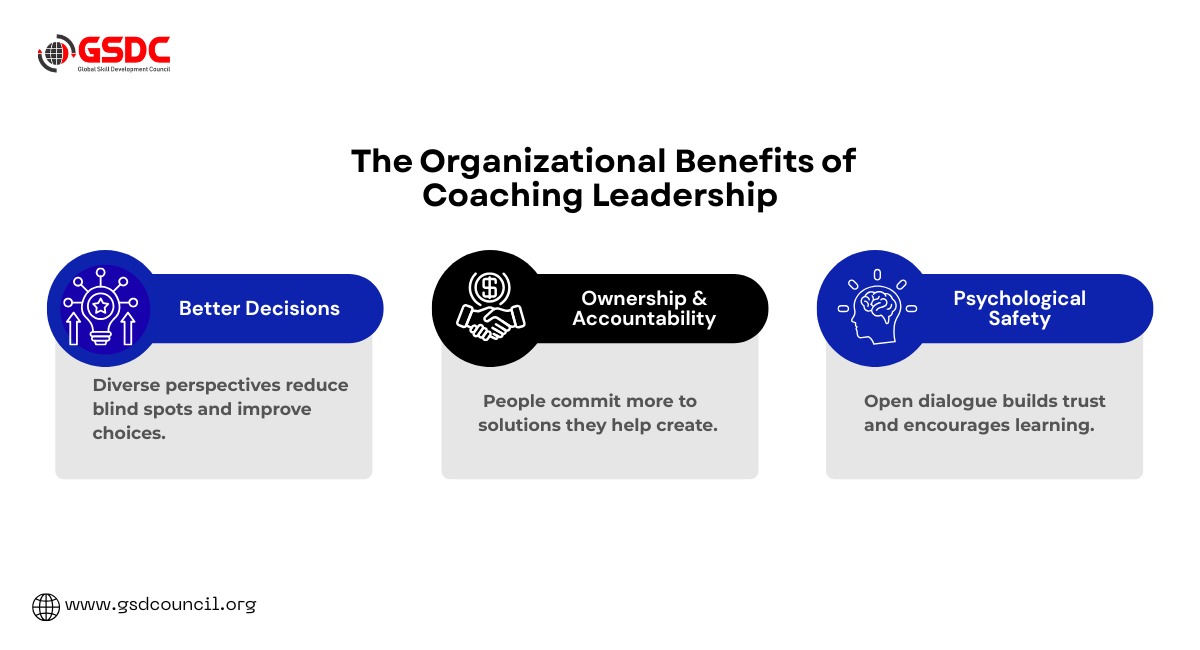
Adopting coaching practices can significantly improve workplace culture and performance.
Better Decision-Making
When leaders encourage team members to share their perspectives, organizations gain access to diverse ideas and insights.
This reduces blind spots and leads to better decision-making.
Stronger Ownership and Accountability
Employees are more committed to decisions they help create. When individuals develop their own solutions, they feel greater responsibility for outcomes.
Increased Psychological Safety
A coaching culture promotes psychological safety, where employees feel comfortable sharing ideas, asking questions, and learning from mistakes.
Psychological safety is essential for innovation and continuous improvement.
When Leaders Should Coach and When They Should Direct
Although coaching is valuable, it is not always the right approach.
Leaders must evaluate situations carefully before deciding whether to coach or provide direct instructions.
Situations Where Coaching Works Best
Coaching is most effective when:
- Employees are capable of solving the problem
- The goal is to develop skills or confidence
- The situation allows time for reflection
- Leaders want to encourage learning and growth
Situations Where Direction Is Necessary
There are also situations where direct leadership is required, such as:
- Safety risks
- Compliance issues
- Ethical violations
- Urgent decision-making situations
In these cases, leaders must act quickly and provide clear instructions.
Effective leadership requires knowing when to coach and when to guide directly.
Simple Coaching Habits Leaders Can Practice
Leaders do not need extensive training to start incorporating coaching into their leadership style. Small changes in everyday conversations can make a significant difference.
Pause Before Giving Advice
When someone asks for advice, pause and consider whether coaching might be more helpful.
Ask One Question at a Time
Instead of asking multiple questions at once, focus on one thoughtful question that encourages reflection.
Encourage Reflection
Follow up with questions like “What else?” to help employees explore additional possibilities.
Offer Support
After a coaching conversation, leaders can ask:
“Is there anything I can do to support you?”
This reinforces collaboration while maintaining employee ownership of the solution.
Building a Coaching Culture in Organizations
For coaching to have a lasting impact, it must become part of the organizational culture. This is where why coaching is important in leadership becomes evident organizations that prioritize coaching create environments where people continuously learn and grow.
Companies can support this transformation by strengthening leadership coaching skills and:
- Training leaders in coaching skills
- Encouraging open communication
- Recognizing leaders who develop others
- Creating safe spaces for learning and feedback
Over time, adopting this approach highlights the benefits of coaching leadership style, including stronger relationships, higher engagement, and more resilient teams.
GSDC Certified Learning & Development Professional (CLDP)
GSDC’s Certified Learning & Development Professional (CLDP) certification is designed for trainers, facilitators, and L&D professionals who want to build future-ready capabilities aligned with modern, people-centric leadership approaches like coaching. As organizations increasingly adopt coaching-driven cultures, this program supports professionals in creating learning environments that encourage growth, engagement, and continuous development.

GSDC’s credential helps learners with the skills to design engaging, learner-centric experiences, apply effective digital learning strategies, and enhance learning delivery across virtual platforms. With a strong focus on instructional design, adult learning principles, and interactive technologies, CLDP helps professionals foster development-focused ecosystems that mirror the impact of coaching in the workplace.
By aligning with current L&D trends and addressing the challenges of virtual learning, CLDP enables professionals to create impactful training programs that not only enhance performance but also support behavioral change key outcomes in organizations that prioritize coaching-based leadership and continuous team growth.
The Future of Leadership: Human-Centered Coaching
As technology and automation continue to reshape the workplace, human-centered leadership will become even more important. While advancements from companies like OpenAI support decision-making and operational processes, human growth, trust, and connection remain uniquely human responsibilities this is where what is coaching in leadership becomes essential.
Executive leadership coaching plays a critical role in helping leaders navigate this shift by strengthening empathy, curiosity, and collaboration. At the same time, team leadership coaching enables managers to build stronger, more connected teams that can adapt to change effectively.
Organizations that embrace coaching as a leadership tool will be better positioned to build agile, innovative, and people-focused workplaces, ensuring that human potential continues to thrive alongside technological advancement.

Related Certifications
Frequently Asked Questions
Stay up-to-date with the latest news, trends, and resources in GSDC
If you like this read then make sure to check out our previous blogs: Cracking Onboarding Challenges: Fresher Success Unveiled
Not sure which certification to pursue? Our advisors will help you decide!