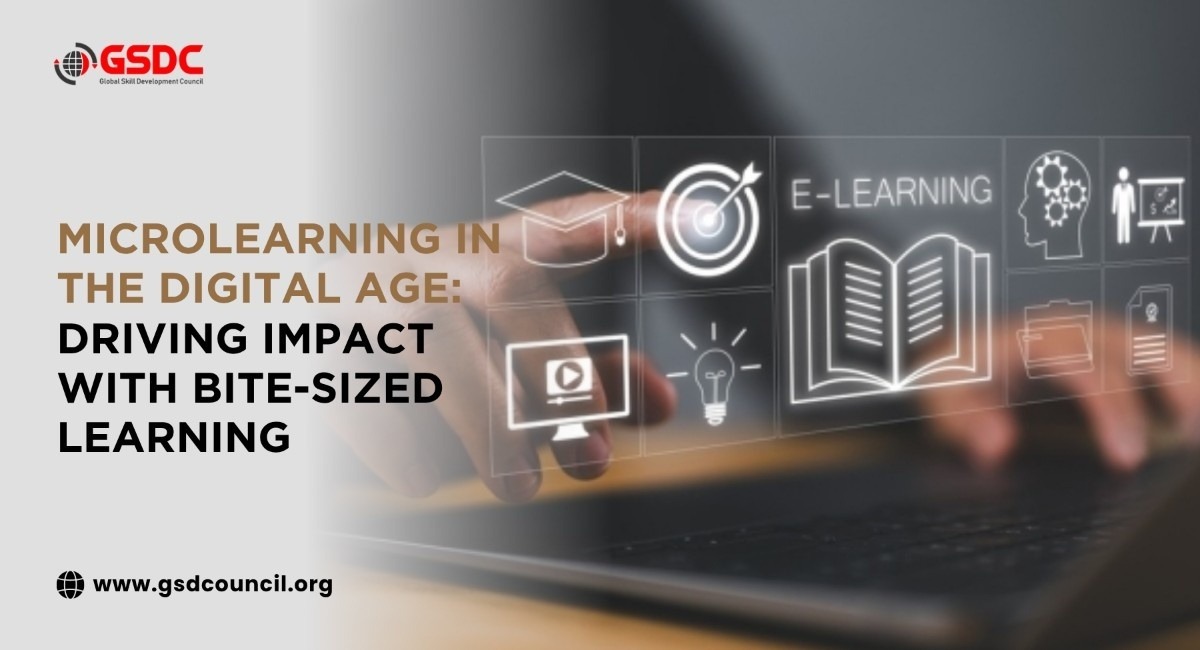
Microlearning in the Digital Age: Driving Impact with Bite-Sized Learning
Written by Dr Anand Wadadekar
- Why Traditional Training Is Losing Its Impact in Modern Workplaces
- What Is Microlearning?
- Core Principles of Effective Microlearning
- Key Benefits of Microlearning for Today’s Workforce
- How to Integrate Microlearning into Your Learning Strategy
- Measuring the Real Impact of Microlearning
- The Role of AI in Personalizing Microlearning
- The Next Evolution: From Microlearning to Nanolearning
- Empowering Modern Learning Professionals
- Conclusion: Building Smarter Learning in the Digital Age
Workplace learning is changing faster than ever. With shrinking attention spans, constant digital distractions, and the pressure to perform and learn simultaneously, traditional long-form training programs are increasingly struggling to deliver real impact. Today’s workforce expects learning to be fast, relevant, and available at the moment of need.
This shift has led to the rise of microlearning - short, focused learning experiences designed to fit seamlessly into daily workflows. As one of the key learning and development trends, microlearning in the digital age is not just a trend; it reflects a deeper transformation in how modern organizations build skills, reinforce performance, and drive business outcomes through bite-sized learning and microlearning training approaches.
Why Traditional Training Is Losing Its Impact in Modern Workplaces
Research in learning psychology highlights a major challenge: learners forget a significant portion of new information within hours or days if it is not reinforced. In the modern workplace, this challenge is amplified by:
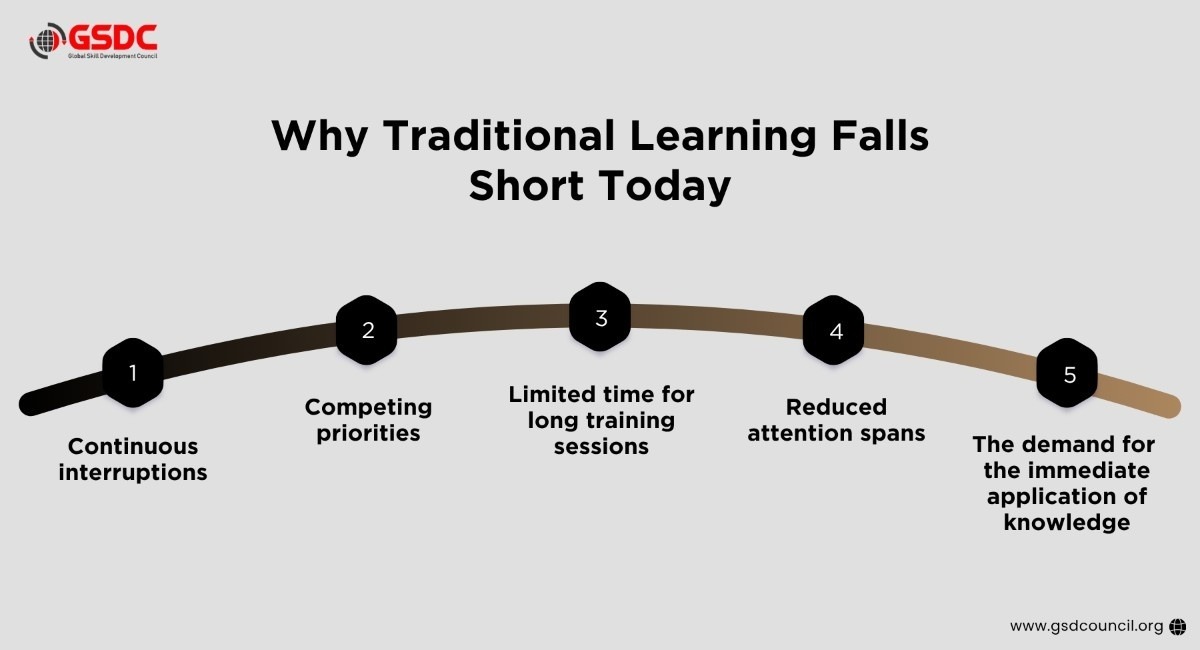
As a result, traditional classroom-style or lengthy online programs often fail to translate learning into performance. The problem is not always the learner’s motivation; it is often the format, timing, and relevance of the learning experience.
What Is Microlearning?
Microlearning refers to short, focused learning units, typically lasting 3 to 10 minutes, designed around one specific learning objective. These modules are action-oriented, job-relevant, and created for quick consumption and immediate application.
Often described as bite-sized learning or bite-sized training, this approach answers the growing need for fast, accessible knowledge delivery in modern workplaces.
However, it is important to clarify what microlearning is not.
Microlearning is not:
- Long courses broken into random small pieces
- Low-effort content such as isolated videos or social media-style clips
- A replacement for all learning and development programs
When designed strategically, microlearning becomes a powerful enabler of performance rather than just another content format.
This approach is widely used in microlearning for employees, microlearning in education, and corporate microlearning training programs to improve engagement and retention.
Core Principles of Effective Microlearning
For microlearning to drive real impact, it must follow clear instructional design principles:
1. One Objective per Module
Each microlearning unit should focus on a single, clear, measurable outcome. Learners should immediately know what they will be able to do after completing it.
2. Contextual and Job-Relevant
Microlearning must be grounded in real workplace tasks, challenges, and decisions. Context is what drives engagement and practical application.
3. Just-in-Time Delivery
Learning is most effective when delivered at the moment of need - when employees are about to perform a task, solve a problem, or make a decision.
4. Minimal Cognitive Load
Simple language, clear visuals, and the removal of unnecessary theory make learning easier to consume and apply in busy work environments.
5. Reinforcement and Reusability
Microlearning should support repeated access, refresher sessions, and reinforcement to combat natural forgetting and enhance retention over time.
Applied together, these principles define the most effective types of microlearning and turn microlearning into a powerful driver of real workplace performance.
Key Benefits of Microlearning for Today’s Workforce
Understanding the benefits of microlearning helps organizations design more effective learning strategies. Microlearning aligns well with how people work and learn today.
Its key microlearning benefits include:
- Flexibility and Convenience
Mobile-friendly, on-demand access enables learning anytime and anywhere through modern microlearning platforms and microlearning software.
- Higher Engagement
Short, bite-sized learning formats reduce resistance and improve completion rates.
- Faster Application on the Job
Learners can apply insights immediately, making bite sized training highly practical.
- Learner Ownership
Employees control their learning journey, a key advantage of microlearning for employees.
- Improved Retention
One of the biggest benefits of bite sized learning is reinforcement, which strengthens memory and long-term performance.
For organizations, this translates into better productivity, faster onboarding, and more consistent performance.
How to Integrate Microlearning into Your Learning Strategy
Microlearning should complement, not replace, other learning approaches such as classroom training, virtual programs, coaching, and on-the-job learning. Strategic integration amplifies the overall learning ecosystem.
Key integration practices include:
Identifying where microlearning fits best
Skill refreshers, product updates, process changes, compliance reinforcement, and behavioral nudges
Designing learning journeys, not isolated modules
Combine micro-videos, scenarios, quizzes, checklists, and job aids into coherent pathways
Aligning with business outcomes
Design microlearning around measurable outcomes such as reduced errors, faster onboarding, improved productivity, or better customer interactions
When designing your strategy, selecting the right microlearning platforms and microlearning software is critical to ensure scalability, personalization, and seamless delivery.
Measuring the Real Impact of Microlearning
Success should not be measured by completion rates alone. Organizations should assess impact through performance-based metrics such as:
- Time to proficiency
- Reduction in errors or rework
- Productivity improvements
- Sales or service performance uplift
- Behavioral change observed through feedback and performance data
Microlearning becomes a true strategy, not just content, when it is tied directly to business performance indicators.
The Role of AI in Personalizing Microlearning
Artificial intelligence is increasingly shaping the future of microlearning by enabling:
- Personalized learning paths based on role and skill gaps
- Adaptive content that responds to learner progress
- Automated summarization of long content into micro lessons
- Scenario-based simulations and practice environments
- Conversational tools for reinforcement and knowledge checks
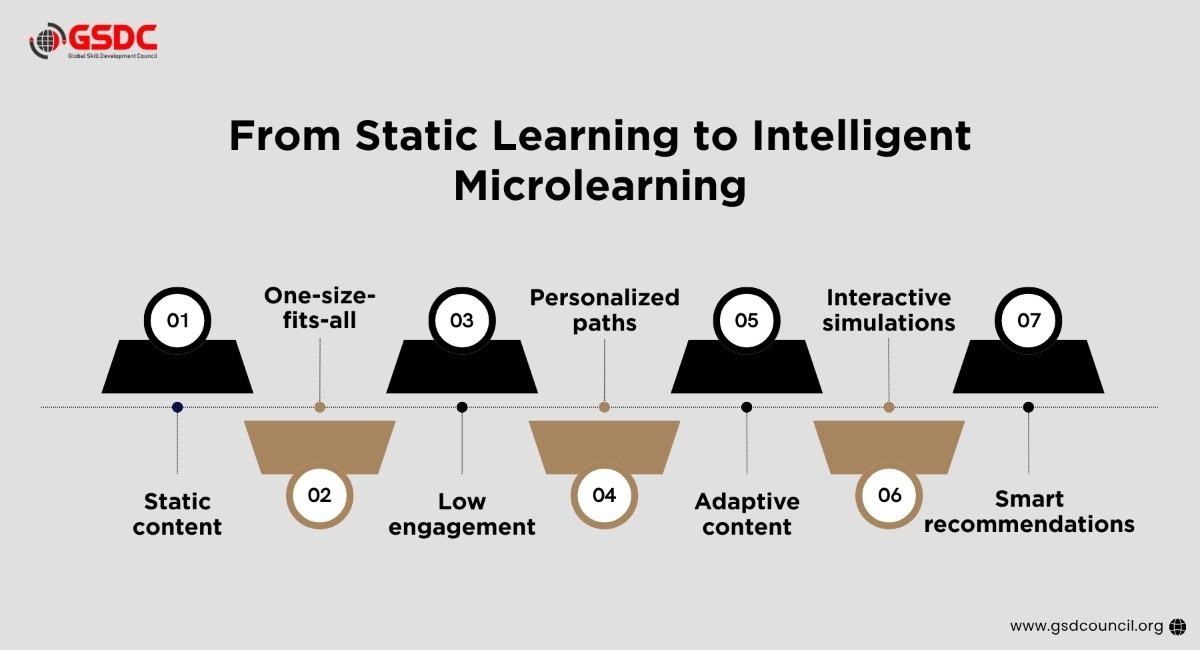
AI helps transform microlearning from static content into a dynamic, personalized learning experience aligned with individual and organizational needs.
The Next Evolution: From Microlearning to Nanolearning
As attention spans continue to shrink, organizations are beginning to explore nanolearning - ultra-short learning units lasting 1 to 5 minutes, each focused on a single actionable outcome.
This approach is particularly relevant for mobile-first and frontline workforces, where learning must fit into tight time windows. While microlearning supports small clusters of concepts, nanolearning delivers highly focused, immediate performance support.
This evolution reflects how microlearning in the digital age continues to adapt to changing learner behaviors and business needs.
Empowering Modern Learning Professionals
As organizations adopt microlearning and AI-driven strategies, the need for skilled L&D professionals is growing. The Global Skill Development Council (GSDC) supports this shift through globally recognized certifications like the Certified Learning & Development Professional (CLDP).
CLDP equips professionals to design learner-centric, performance-driven experiences that align with real business outcomes, helping organizations turn learning into measurable impact.

Conclusion: Building Smarter Learning in the Digital Age
Microlearning represents a fundamental shift in how learning is designed and delivered. By leveraging microlearning training, modern microlearning platforms, and AI-driven personalization, organizations can unlock the full benefits of microlearning and stay aligned with future learning and development trends.
The future of workplace learning will increasingly resemble consumer digital experiences, personalized, on-demand, and designed for engagement. When implemented strategically and supported by data and AI, microlearning becomes a powerful driver of continuous learning, workforce agility, and organizational performance.

Related Certifications
Frequently Asked Questions
Stay up-to-date with the latest news, trends, and resources in GSDC
If you like this read then make sure to check out our previous blogs: Cracking Onboarding Challenges: Fresher Success Unveiled
Not sure which certification to pursue? Our advisors will help you decide!