Driving Organizational Resilience: ISO 31000 Risk Manager Insights
Written by Srijith Nair
- Why Risk Management Matters Now More Than Ever
- Understanding the ISO 31000 Framework
- The Power of ISO 31000 Principles
- Implementing the ISO 31000 Risk Management Process Steps
- Building Organizational Resilience Through Risk Management
- The Evolving Role of the ISO 31000 Risk Manager
- Overlooked ISO 31000:2018 Risk Management Capabilities
- Navigating Industry-Specific Risk Landscapes
- Measuring Risk Management Effectiveness
- The Future of Risk-Informed Decision Making
- FAQs:
What would happen if it were not by chance that some organizations can flourish amidst disruption, and are not able to?
Assuming that you are already engaged in the risk management process, you have probably been able to experience how rapidly the business environment may change.
The uncertain market, problems in the supply chain, cyber threats, and regulatory changes have left no doubt that to survive, organizations should be guided not only by their gut intuition and reactive problem-solving. They require a systematic, recurring pattern that converts uncertainty into opportunity.
This is what ISO 31000:2018 brings. To those in the profession who want to become certified as a certified risk manager ISO 31000, the standard is not just any other piece of paper; it is an effective tool that alters the way organizations identify, evaluate, and manage risk.
In contrast to inflexible checklists that follow the purpose of strict compliance, ISO 31000 has versatile principles that you can tailor to the context of your organization, regardless of whether you are in finance, manufacturing, healthcare, or any other industry.
Why Risk Management Matters Now More Than Ever
You've probably heard colleagues debate why risk management is important, especially when budgets are tight and competing priorities demand attention.
Recent global events have decisively proved the answer:
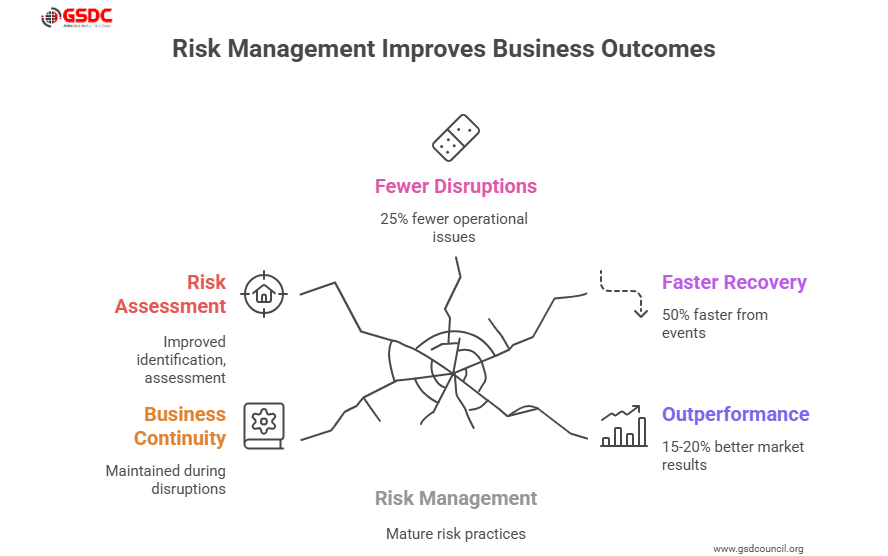
- Organizations with mature risk management practices were 2-3 times more likely to maintain business continuity during the COVID-19 pandemic, supply chain disruptions, and economic turbulence
- Companies implementing ISO 31000 principles report 30-40% improvement in risk identification and assessment capabilities
- Organizations with integrated risk frameworks experience 25% fewer operational disruptions and recover 50% faster from adverse events
- Resilient organizations outperform peers by 15-20% during periods of market volatility
These aren't theoretical benefits; they're measurable outcomes that directly impact your organization's bottom line.
Beyond crisis response, the financial case is compelling: organizations demonstrate lower capital costs, improved credit ratings, and greater investor confidence when they can show strong risk governance.
Understanding the ISO 31000 Framework
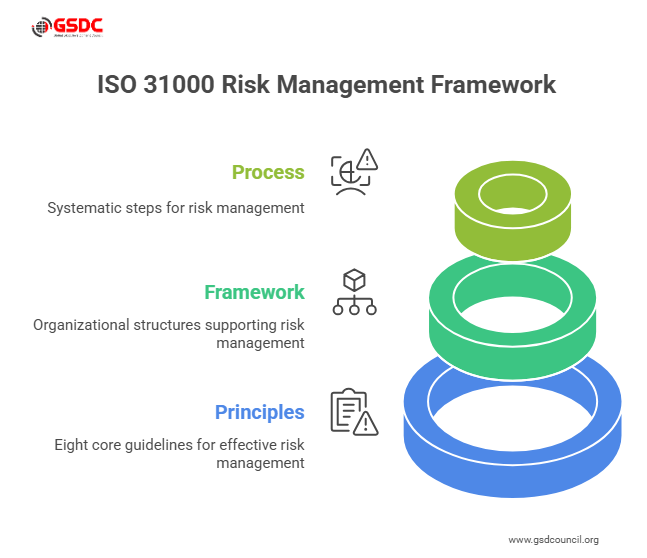
The ISO 31000 framework represents a significant evolution in risk management thinking. If you've worked with earlier versions or prescriptive compliance standards, you'll appreciate the 2018 revision's flexibility.
Rather than dictating specific processes you must follow, it provides principles-based guidance you can customize to your organization's needs.
The ISO 31000 risk management definition centers on creating and protecting value through the systematic application of policies, procedures, and practices.
Think of it as a common language for discussing risk across your organization from the boardroom to operational teams.
What makes the ISO 31000 risk management framework particularly powerful is its three-pillar structure:
- Principles: Eight core guidelines that define what effective risk management looks like
- Framework: The organizational arrangements and leadership structures that support risk management
- Process: The systematic steps through which risks are identified, assessed, treated, monitored, and communicated
Instead of different departments managing risk in isolation with incompatible approaches, ISO 31000 creates coherence while respecting functional differences.
Risk management isn't a separate activity your team performs quarterly; it becomes embedded in how your organization makes strategic decisions, allocates resources, and measures performance.
The Power of ISO 31000 Principles
At its core, ISO 31000 rests on eight ISO 31000 risk management principles that guide effective implementation.
These aren't abstract concepts; they're practical guidelines that shape how you approach risk in your daily work:
- Integrated: Risk management is woven into all organizational activities, not treated as a separate function
- Structured and comprehensive: A consistent, systematic approach enhances efficiency and results
- Customized: The framework adapts to your organization's external and internal context
- Inclusive: Stakeholder engagement ensures risk is considered from all perspectives
- Dynamic: Risk management anticipates, detects, and responds to change in real time
- Best available information: Decisions are based on historical data, current information, and informed assumptions
- Human and cultural factors: Behavior and organizational culture influence how objectives are achieved
- Continual improvement: Risk management evolves through learning and experience
The Power of ISO 31000 Principles becomes clear when you move from theory to practice. Risk managers who align their work to these principles report spending significantly more time on strategic advisory rather than just operational compliance.
Your role shifts from being the person who says "no" to being a strategic partner who helps leaders make informed decisions under uncertainty.
Organizations with dedicated ISO 31000 risk manager roles show 45% better risk culture maturity scores.
This matters because risk culture determines whether your carefully documented processes actually influence behavior. When risk management is principle-based rather than rule-based, people throughout your organization develop better judgment about taking appropriate risks and escalating emerging issues.
Implementing the ISO 31000 Risk Management Process Steps
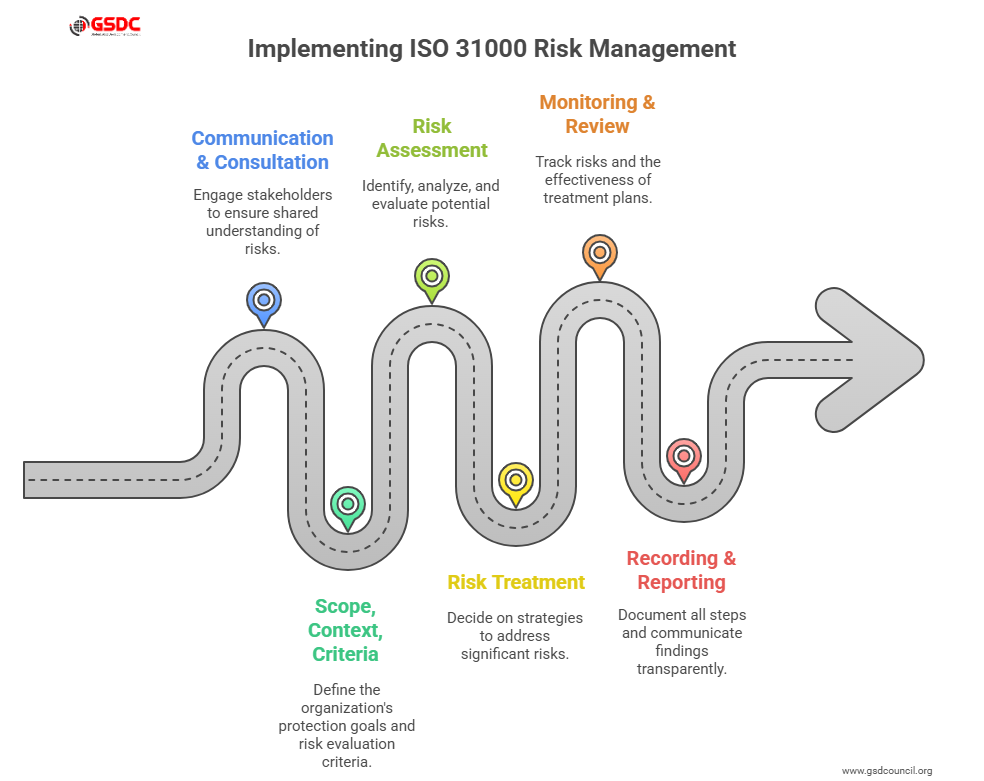
While the 2018 standard removed the rigid process diagram from earlier versions, the essential ISO 31000 risk management process steps remain critical for systematic risk treatment.
The process provides a repeatable methodology you can apply consistently:
Communication and Consultation: Engage stakeholders throughout the entire process. Open dialogue ensures risks are understood and agreed upon from multiple perspectives.
Scope, Context, and Criteria: Define what the organization wants to protect, the internal and external environment, and the criteria for evaluating risk significance.
Risk Assessment: The core analytical step, broken down into three components:
- Risk Identification: Spot potential risks that could affect objectives
- Risk Analysis: Understand the likelihood and potential impact using qualitative or quantitative methods
- Risk Evaluation: Prioritize risks based on their potential effect and compare against risk criteria
Risk Treatment: Decide how to address each significant risk, whether to mitigate, transfer, accept, or avoid it, based on cost-benefit analysis.
Monitoring and Review: Keep track of risks and the effectiveness of treatment plans. Regular updates ensure your approach remains relevant as conditions change.
Recording and Reporting: Document all steps and communicate findings transparently. This creates accountability and supports continuous improvement.
Building a Framework with ISO 31000 Principles requires customization based on your specific context. If you work in financial services, you might emphasize quantitative ISO risk analysis using advanced modeling techniques and regulatory capital calculations.
In manufacturing, you might focus on operational ISO 31000 risk categories, including equipment failure, supply chain disruption, and workplace safety incidents. The standard gives you the flexibility to make these choices while maintaining systematic rigor.
Modern ISO risk analyzer tools have made implementation more efficient. If you're managing risk across multiple business units or geographies, these digital platforms can accelerate your risk assessment cycles by up to 50% and improve monitoring effectiveness by 35%.
Real-time risk dashboards aligned to ISO 31000 risk management standards give leadership the visibility they need to make faster, better-informed decisions.
Download this guide to get practical, career-boosting insights, including:
Building Organizational Resilience Through Risk Management
Here's where organizational risk management transcends avoiding losses and becomes about building genuine resilience.
Resilient organizations don't just bounce back from disruptions; they adapt, learn, and emerge stronger. If you're implementing risk management using ISO 31000 as your foundation, research shows you can expect:
- 30% higher resilience scores in business continuity assessments
- 55% enhanced early warning capabilities for emerging risks
- Improved ability to pivot strategies when circumstances change
- Stronger stakeholder confidence during uncertain periods
The real value multiplier comes from integrating risk management with your other management systems.
When ISO 31000 serves as the risk foundation for your quality management (ISO 9001), environmental management (ISO 14001), and business continuity (ISO 22301) systems, you create powerful synergies.
Organizations taking this integrated approach report 40% more efficient operations and significantly reduced audit burdens. You're no longer maintaining separate risk registers and processes for each standard; everything connects through common principles and coordinated practices.
The Evolving Role of the ISO 31000 Risk Manager
If you're considering where your risk management career is headed, the modern ISO 31000 risk manager role offers expanding opportunities. You're operating at the intersection of strategy, operations, and stakeholder engagement.
Rather than simply documenting risks in spreadsheets, you're facilitating risk-informed decision-making across the enterprise.
This evolution has created new career pathways, including a surge in enterprise risk manager jobs, as organizations recognize that effective risk management doesn't require constant physical presence.
- Strategic thinking and systems analysis
- Stakeholder engagement and influence without authority
- Analytical reasoning and data interpretation
- Clear communication of complex concepts to diverse audiences
- Change management and organizational development
For professionals seeking to advance their expertise, ISO 31000 risk manager certification programs provide structured learning that combines theoretical knowledge with practical application skills.
GSDC's certified risk manager ISO 31000 program, for example, validates your expertise in implementing the framework and positions you as a strategic risk leader in complex business environments.
Organizations increasingly value these credentials when hiring or promoting risk professionals.
Overlooked ISO 31000:2018 Risk Management Capabilities
Even experienced risk professionals sometimes miss critical capabilities embedded in the 2018 revision. The emphasis on integrating risk management with organizational governance enables you to influence strategy development, resource allocation, and performance evaluation systematically.
This isn't about getting a seat at the table; it's about ensuring risk considerations are woven into how decisions get made.
Another underutilized aspect involves stakeholder engagement throughout the risk management process. The standard's inclusiveness principle recognizes that diverse perspectives improve risk identification and assessment quality:
- Operational teams often spot emerging risks before they appear in formal reports
- Customers provide insights into reputational and market risks
- Suppliers highlight supply chain vulnerabilities you might not see internally
- Cross-functional collaboration reveals interdependencies that create compound risks
When you actively involve these stakeholders in risk conversations, you gain 35% more comprehensive risk understanding and dramatically higher buy-in for treatment strategies. People support what they help create.
Measuring Risk Management Effectiveness
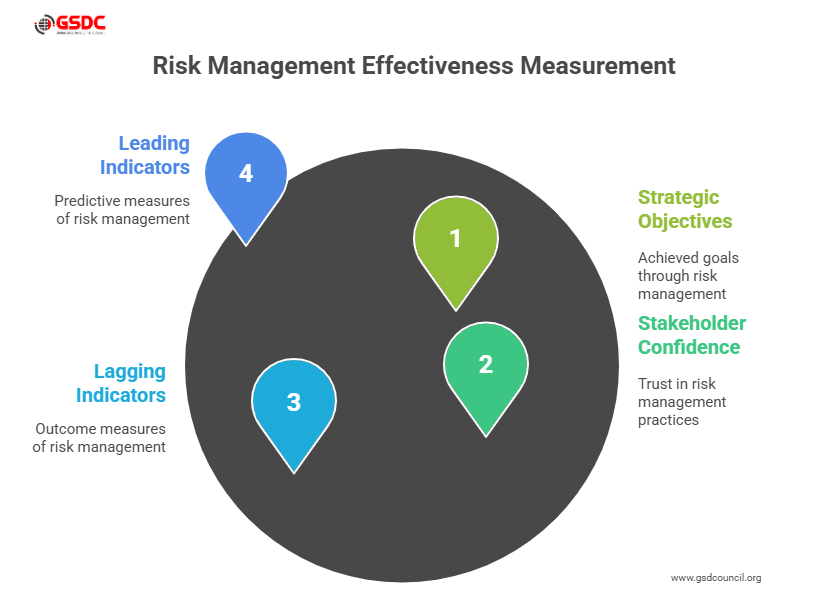
As a risk professional, you need to demonstrate value. Organizations implementing ISO 31000 frameworks should establish metrics that show risk management's contribution:
Leading Indicators (predictive measures):
- Risk assessment completion rates and quality scores
- Control implementation timelines and effectiveness
- Risk culture survey results and improvement trends
- Training completion and competency development
- Near-miss reporting frequency
Lagging Indicators (outcome measures):
- Actual incidents and severity trends over time
- Losses avoided through risk treatment interventions
- Business continuity performance during disruptions
- Insurance premiums and claims experience
- Audit findings and regulatory compliance records
When you can connect your risk management activities to improved objective achievement and enhanced stakeholder confidence, you create a measurable competitive advantage that leadership understands and values.
The Future of Risk-Informed Decision Making
As you look ahead, the importance of systematic risk management will only increase. The integration of artificial intelligence and advanced analytics with ISO 31000 principles promises to enhance your risk identification, assessment, and monitoring capabilities dramatically:
- Predictive analytics identifies emerging risks before they materialize
- Real-time monitoring of risk indicators across global operations
- Scenario modeling that tests strategy resilience under various conditions
- Automated reporting that frees your time for strategic analysis
Companies that invest in the development of risk management maturity in the present day prepare organizations and individuals such as yourself to achieve continuous success despite the difficulties involved in the future.
The adoption in the world is continuing with more than 150 countries recognizing ISO 31000, and nearly 65 percent of Fortune 500 companies are harmonizing risk practices to fit the standard.
This universal practice provides a standard language of risk management through which cooperation, communication between stakeholders, and the exchange of best practices can easily be achieved between industries and borders. The more this network effect increases, the more your ISO 31000 knowledge will be valuable.
The process of organizational resilience in ISO 31000:2018 is a process that needs to be committed, capable, and continuously improved.
To risk professionals who want to make this change, gaining comprehensive knowledge and understanding of the framework principles, processes, and practical application will not only offer a career growth opportunity but also the reward of creating organizations that could survive in an uncertain world.
Regardless of whether you are starting to get familiar with ISO 31000 or you are interested in further developing the practice that you already have, the standard provides a definite way to go.
These steps are: first, grasp the principles; then create a structure that fits your situation; then carry it out in a systematic manner; and finally, devote yourself to constant improvement. The organizations that understand how to do this will not only survive the future disruptions but will be in a good position to exploit opportunities that are created by the uncertainty.
FAQs:
- What is the ISO 31000 risk management definition?
ISO 31000 defines risk management as the coordinated activities to direct and control an organization with regard to risk.
- What are the key ISO 31000 risk management principles?
The eight principles include integration, a structured and comprehensive approach, customization, inclusiveness, dynamism, best information, human factors, and continual improvement.
- What does the ISO 31000 risk management framework involve?
It includes leadership and commitment, integration into organizational processes, framework design, implementation, monitoring, review, and continual improvement.
- What are the ISO 31000 risk management process steps?
Communication and consultation, scope and context, risk assessment (identification, analysis, evaluation), risk treatment, monitoring and review, and recording/reporting.
- What roles and responsibilities does an ISO 31000 risk manager have?
Implementing the framework, conducting risk assessments, advising leadership, promoting risk culture, and meeting regulatory standards.
- How does risk management using ISO 31000 improve organizational resilience?
By enabling early identification and treatment of risks, fostering agility in strategy, and building stakeholder confidence.
- Are there remote risk manager jobs that require ISO 31000 certification?
Yes, the demand for certified risk managers skilled in ISO 31000 is growing, with many remote roles available due to digital transformation.
- What are common ISO 31000 risk categories?
Operational risks, financial risks, strategic risks, external risks (regulatory, environmental, technological), and emerging risks.

Related Certifications
Stay up-to-date with the latest news, trends, and resources in GSDC
If you like this read then make sure to check out our previous blogs: Cracking Onboarding Challenges: Fresher Success Unveiled
Not sure which certification to pursue? Our advisors will help you decide!