Triple P: A Practical Framework for Sustainable Business Success
Written by Matthew Hale
Sustainability is no longer a minor aspect but rather a fundamental factor that is reshaping how competitive advantage is being created. Nowadays, companies are being assessed not only for their ability to make a profit in the long run but also for their impact on people and the planet. This change is speeding up the implementation of a sustainability framework that links responsibility directly to business performance.
The Triple P framework - People, Planet, and Profit - offers a practical answer to what is a sustainability framework is in real operational terms. It brings social impact, environmental stewardship, and financial discipline together into a single framework for sustainable decision-making.
Rather than treating sustainability as a compliance exercise, Triple P positions it as a source of strategic advantage - supported by real-world sustainable examples and the growing role of sustainable technology in driving measurable business outcomes.
Triple P and What Is a Sustainability Framework
Sustainability means creating a long-term value that enables organizations to minimize negative environmental and social impacts. It finds a balance between growth and responsibility so that today's success does not come at the cost of future generations.
For any organizations wondering what is a sustainability framework is, Triple P has a pretty straightforward and grounded reply. It's otherwise called the Triple Bottom Line, a conceptual framework that looks at business success holistically on three different dimensions of equal importance:
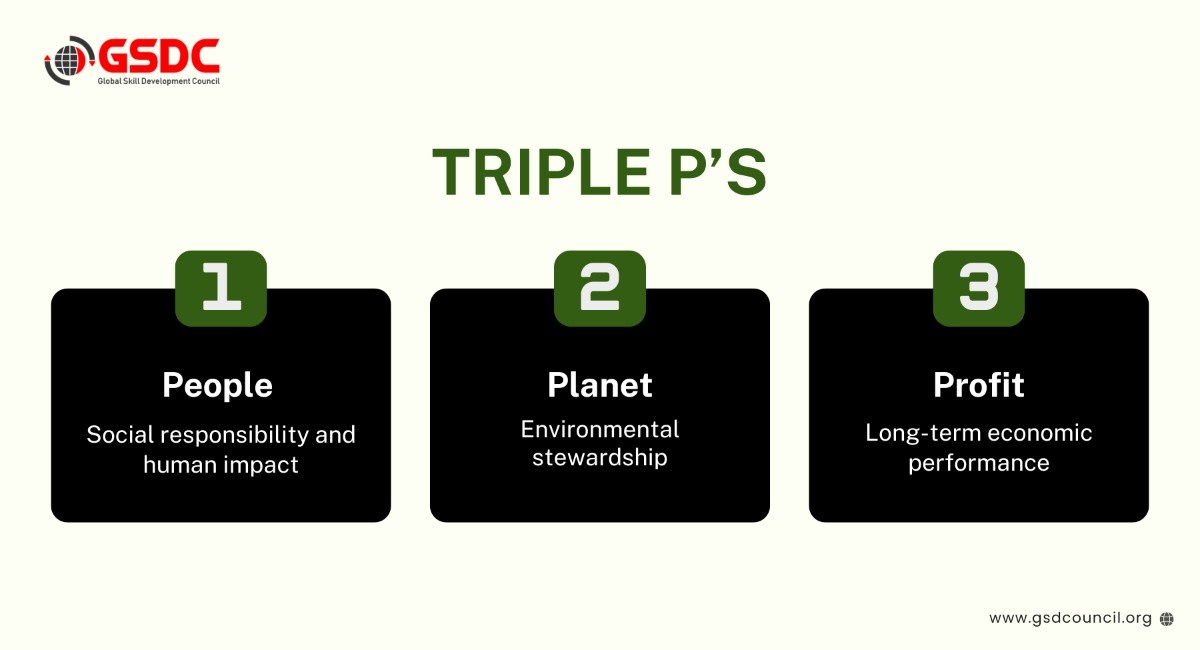
This makes it a very adoptable sustainable framework, considering that Triple P has been used across industries and regions to balance responsibility with long-term business performance.
People: Social Impact Strengthening
This pillar recognizes the ways in which organizations engage with employees, customers, other organizations, or communities. Below are some examples of sustainable models, which demonstrate the potential of social impact in being an integral part of a strong sustainability strategy:
- Fair labor practices and ethical employment build trust, reduce compliance risk, and strengthen employer reputation.
- Diversity, equity, and inclusion (DEI) initiatives improve innovation, decision quality, and employee engagement.
- Employee well-being, safety, and professional development strengthen retention, productivity, and organizational resilience.
- Community engagement and social responsibility enhance stakeholder relationships and corporate credibility.
- Customer trust, data protection, and transparency support responsible growth and long-term trust.
These practices demonstrate how social responsibility becomes an accountable part of a broader sustainability framework.
Planet: MovingTowards Environmental Sustainability
The Planet pillar centers on reducing impact while promoting responsible use. This is where "sustainable technology" refers to ‘translating an environmental goal into a business result’:
Energy-efficient technologies and the use of renewable energy help minimize emissions and lower future costs of energy.
- Energy-efficient systems and renewable energy adoption reduce emissions and lower long-term energy costs.
- Carbon footprint reduction through digital optimization improves efficiency and enables data-driven climate strategies.
- Sustainable sourcing and greener supply chains increase transparency and strengthen supply chain resilience.
- Reducing waste, recycling, and using models of circular economy helps in improving resource efficiency and also reduces the material cost.
- Saving water and other resources helps in the protection of the resources that are most essential and, at the same time, reduces the risk of operation.
Organizations, through the use of sustainable technology, can enhance their environmental performance and at the same time, their efficient operation.
Profit: Building Sustainable Financial Performance
The Profit pillar ensures that sustainability strengthens - rather than replaces - financial performance through disciplined, responsible growth:
- Long-term value creation supports consistent performance and reduces exposure to short-term market volatility.
- Responsible growth strategies protect brand reputation and regulatory compliance.
- Innovation enabled by sustainable technology improves profitability while supporting environmental performance.
- Operational efficiency and cost optimization lower costs while advancing sustainability objectives.
- Risk management and business resilience strengthen resilience to regulatory, climate, and market disruptions.
This approach reinforces Triple P as a practical framework for sustainable profitability and long-term competitiveness.
Industry-recognized training courses and advice from the Global Skill Development Council (GSDC) can become a source of further strengthening this capability, which is aimed at helping organizations and professionals develop practical sustainability leadership skills.
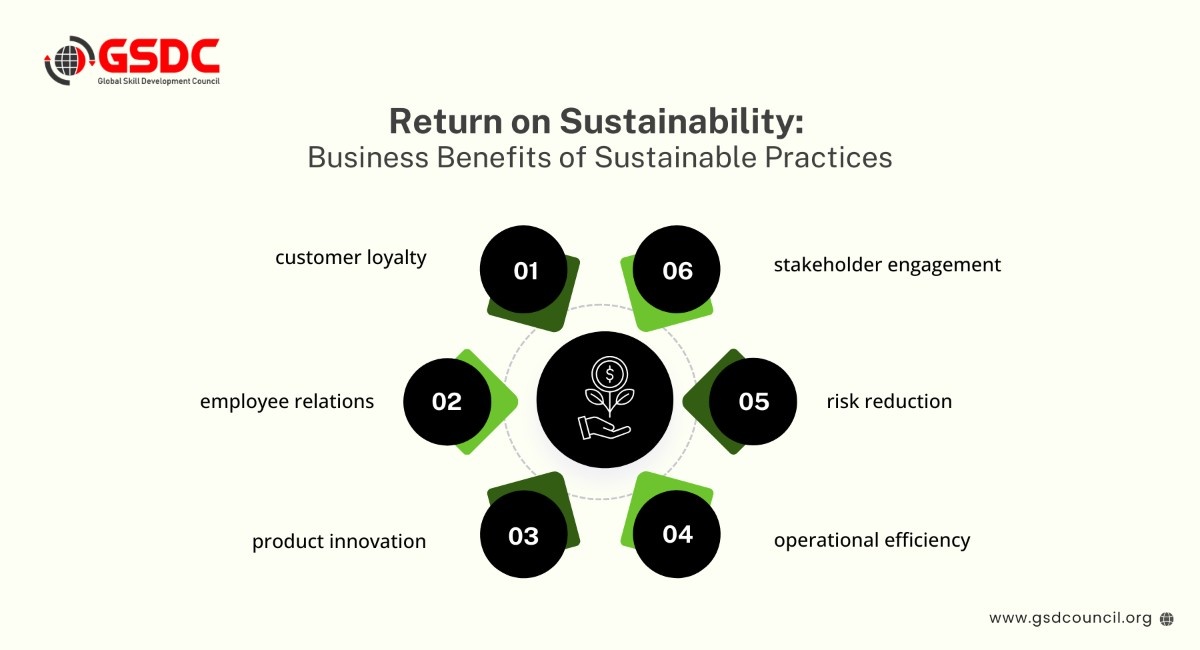
Why Triple P Matters for Modern Organizations
Triple P has become a reality since the standard for business accountability will only keep rising. It implies the following:
- Customers in pursuit of ethical and green brands: Increasingly, customers have been choosing brands that display responsible behavior and have set goals of going green.
- Investors focusing on ESG factors: Investment decisions are increasingly being driven by the performance of companies in terms of environmental, social, and governance factors, so sustainability has become a financial concern for shareholders and businesses.
- Regulators increasing environmental and social compliance: Expanding regulations are raising the cost of non-compliance and increasing the importance of proactive sustainability strategies.
- Employees supporting workplaces with a clear mission: The main factors that influence the ability of a company to attract and keep talent are the organizational values and the degree of commitment towards making a positive social and environmental impact.
- Communities demanding responsible corporate behavior: Local and global communities expect organizations to contribute positively to social and environmental outcomes.
One of the key ways to integrate sustainable development principles into a business strategy is to undertake a sustainability certification journey.
This will help one to build a comprehensive range of knowledge and skills necessary to implement enterprise-wide change across all areas of People, Planet, and Profit, acting as a trusted advisor and providing a total business solution for Triple P initiatives (people, planet, profit), hence advancing as a certified sustainability professional.
Triple P vs ESG: How They Work Together
People usually ask how many ESG frameworks there are. On the ground, there is actually no single standard. Many companies utilize several ESG reporting and sustainability standards, e. g., GRI, SASB, TCFD, etc., based on regulatory, investor, and industry needs.
On the whole, they are quite similar, but the Triple P and ESG still have separate roles which are co-working:
- Triple P as a strategic philosophy and sustainability framework
Triple P defines how organizations integrate People, Planet, and Profit into core strategy and day-to-day decision-making.
- ESG as a measurement and reporting structure
ESG provides the metrics and disclosures used to assess, compare, and communicate sustainability performance to external stakeholders.
Putting Triple P into Practice
In order for organizations to successfully implement Triple P, they must move from intention to action. The journey includes:
- Embed sustainability goals into business strategy: Making sustainability a part of the core planning ensures that People, Planet, and Profit factors are taken into consideration in significant business decisions.
- Setting measurable social and environmental KPIs: By establishing clear performance indicators, companies can monitor their progress and be accountable for their actions.
- Aligning leadership incentives with long-term impact: Make the connection between executive and management compensation with sustainability results as a method of facilitating long-term thinking and making responsible decisions.
- Integrating sustainable technology into operations: Using sustainable technology assists in data-driven sustainability, raises productivity, and enables the development of environmental and social initiatives.
- Communicate progress transparently to stakeholders: The release of open reports helps to build trust and thus, ensure compliance with ESG expectations as well as stakeholder requirements.
Professional Development in Sustainability with GSDC
With an increasingly rapid adoption of global sustainability models such as the WHO sustainability framework and a general rise in global best practices, the call for qualified sustainability professionals continues to escalate.
This gap is addressed by the GSDC (Global Skill Development Council), which offers industry-recognized programs aligned with modern sustainability methods and practices. Such a program is the Sustainability Coach certification, which is among the best certifications in sustainable environments and assists professionals who seek to move forward as certified sustainability professionals.
Final Thoughts
Triple P has moved above the boundaries of theories and is now a viable and realistic strategy for organizations that want to sustain themselves. Essentially, a sustainability framework that combines the aspects of People, Planet, and Profit into decision-making can give a simple answer to the question of what a sustainability framework is.
While changes in regulatory requirements continue to occur and the sustainable technology revolution continues to transform the operations of businesses, Triple P provides an effective model that ensures sustainable value creation. It has been made possible by examples of sustainable practices in real life, apart from aligning well with ESG.
For professionals, pursuing sustainability certification can further strengthen the ability to lead these initiatives and translate sustainability strategy into measurable business impact.

Related Certifications
Stay up-to-date with the latest news, trends, and resources in GSDC
If you like this read then make sure to check out our previous blogs: Cracking Onboarding Challenges: Fresher Success Unveiled
Not sure which certification to pursue? Our advisors will help you decide!