The Future of ESG Jobs: How Sustainability Is Shaping Global Career Paths
Written by Matthew Hale
- What Is ESG and Why It Matters
- The 3 Pillars of Sustainability Examples
- ESG Roles and Responsibilities
- The Growing Demand for ESG Professionals
- How to Start a Career in ESG
- Building Skills for ESG and Sustainability Careers
- Career and Salary Outlook
- Global ESG Salary Comparison (Indicative Annual Averages):
- Sustainability Certification and Professional Growth
- The Future of ESG and Sustainability Careers
The next big wave in careers isn’t just digital - it’s sustainable. As companies like Tata Motors and TCS lead with AI-powered sustainability platforms, a new generation of professionals is emerging - those who combine data-driven thinking with environmental and ethical responsibility. The growing emphasis on ESG and Sustainability marks a global shift where purpose and profit move hand in hand.
Global ESG investments have surpassed USD 40 trillion, with nearly 80% of large corporations integrating sustainability goals into their annual reports. This shift reflects how sustainability is no longer optional - it’s a core business strategy reshaping job markets worldwide. Green and ESG roles are growing by 25–30% annually, making sustainability one of the fastest-growing career domains for the next decade.
As the global workforce transforms, ESG professionals are becoming essential for guiding companies toward responsible, transparent, and future-ready growth.
What Is ESG and Why It Matters
To understand what is ESG, let’s break it down - Environmental, Social, and Governance. Together, these three dimensions measure how responsibly a company operates. ESG is not just about corporate ethics - it’s about long-term business resilience and sustainable growth.
Companies that adopt strong ESG and Sustainability practices often outperform competitors financially and attract higher investment inflows. Investors and regulators now use ESG indicators to evaluate corporate performance, risk management, and brand trust.
For professionals, this means ESG isn’t just a moral or compliance function - it’s a strategic career pathway shaping leadership and decision-making in modern organizations.
Why ESG Matters for Professionals:
- Strengthens career prospects in industries prioritizing responsible growth.
- Opens pathways to leadership roles involving ethical and impact-driven decision-making.
- Builds expertise aligned with future global sustainability mandates.
The 3 Pillars of Sustainability Examples
The foundation of sustainability lies in three essential pillars, each driving a different dimension of responsible business:
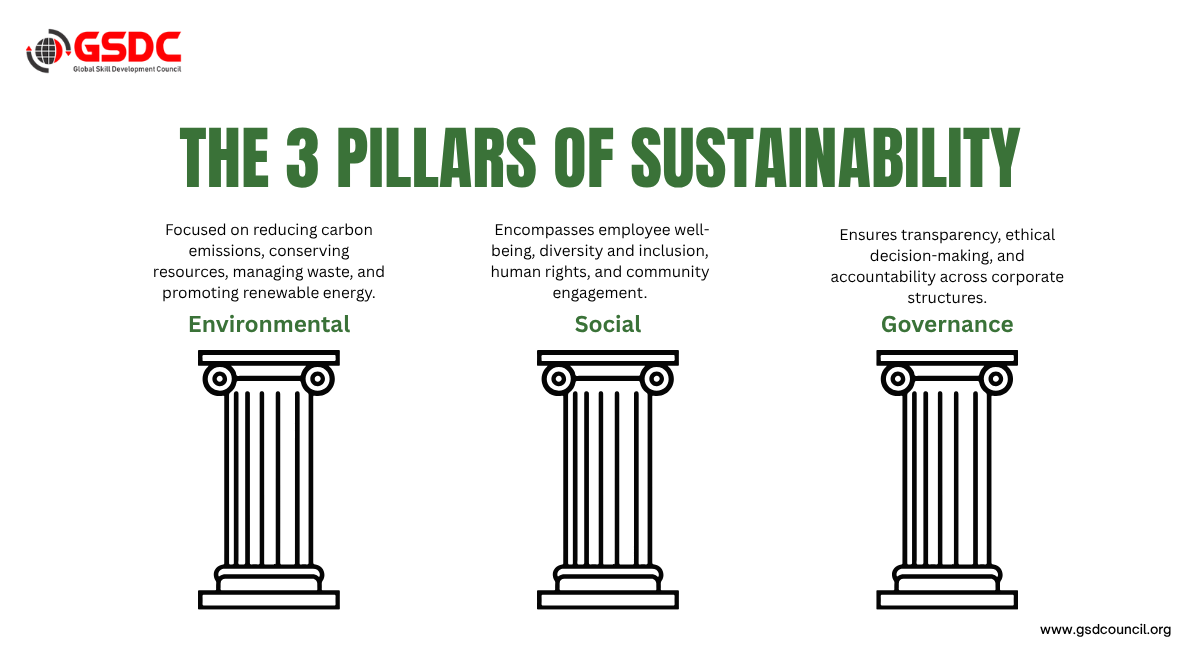
These 3 pillars of sustainability examples form the backbone of every sustainable enterprise. Companies balancing these elements build stronger reputations, attract long-term investors, and create stable growth. For professionals, understanding these pillars is crucial - it allows them to translate sustainability goals into measurable outcomes.
ESG Roles and Responsibilities
With sustainability becoming a business priority, a wide range of ESG roles and responsibilities have emerged across industries. A typical ESG job description blends analytical, operational, and strategic elements designed to align business goals with sustainability frameworks.
Key ESG Roles in Demand
- ESG Analyst: Collects, evaluates, and reports ESG data while supporting disclosure frameworks and performance tracking.
- Sustainability Consultant: Advises organizations on implementing green strategies and improving governance practices.
- Corporate Responsibility Manager: Pursue a globally recognized certification, such as one from GSDC (Global Skill Development Council), to validate your skills and expand career opportunities.
- Sustainability Data Manager: Oversees sustainability databases, compliance systems, and regulatory reporting.
The Growing Demand for ESG Professionals
The demand for ESG professionals is surging across sectors like finance, manufacturing, technology, and energy. Organizations now recognize that sustainability is not just a compliance requirement - it’s a competitive advantage. Recent insights show that sustainability career paths are expanding by nearly 30% each year, driven by investor expectations, regulatory reforms, and consumer awareness.
Top Industries Hiring ESG Talent
- Finance: ESG risk assessment, sustainable investment, and green finance.
- Manufacturing: Reducing emissions, improving resource efficiency, and circular economy initiatives.
- Technology: Building energy-efficient systems, automating ESG reporting, and supporting ethical AI.
- Energy: Driving renewable transitions, decarbonization, and climate innovation.
💼 Build a Purpose-Driven Career in ESG!
How to Start a Career in ESG
For professionals exploring sustainability careers, entering the ESG space requires a blend of knowledge, experience, and continuous learning.
Pathway to Enter ESG Careers:
- Develop an understanding of ESG frameworks and reporting standards.
- Participate in corporate sustainability or CSR projects to gain hands-on exposure.
- Pursue sustainability certification to validate skills and unlock global opportunities.
- Stay updated with evolving ESG tools and data reporting platforms.
Professionals should also familiarize themselves with global frameworks such as GRI (Global Reporting Initiative), SASB (Sustainability Accounting Standards Board), and TCFD (Task Force on Climate-related Financial Disclosures) to enhance ESG reporting accuracy and compliance.
Building Skills for ESG and Sustainability Careers
To succeed in this evolving field, professionals need a strong mix of technical, analytical, and leadership capabilities. What is learning for sustainability? It’s the process of building awareness, skills, and mindsets that help individuals and organizations drive meaningful environmental and social impact.
Essential Skills for ESG Careers
- Data Analytics: Understanding ESG metrics and using data for impact assessment and reporting.
- Environmental Management: Designing policies for emissions control, waste management, and conservation.
- Ethical Leadership: Ensuring fairness, transparency, and responsible governance.
- Stakeholder Engagement: Managing communication across investors, employees, and communities.
- Strategic Communication: Translating complex ESG data into clear business insights.
The concept of learning for sustainability encourages continuous development - keeping professionals agile, informed, and ready to address new environmental and governance challenges.
Career and Salary Outlook
Sustainability is now central to corporate strategy - and the pay reflects that. ESG-certified professionals command premium salaries due to their specialized expertise and growing demand.
Average Salaries for ESG and Sustainability Roles:
- Junior ESG Analyst: Approximately USD 6,700 per year
- ESG Data Analyst: Ranges from USD 4,200 – USD 11,400 per year
- ESG Risk Assessments & Insights Analyst: Around USD 7,800 per year
- Sustainability & ESG Analyst: An average of about USD 6,000 per year
- ESG Consultant: From USD 8,400 – USD 30,000 per year for senior roles
- ESG Research Analyst: Around USD 14,400 per year
Global ESG Salary Comparison (Indicative Annual Averages):
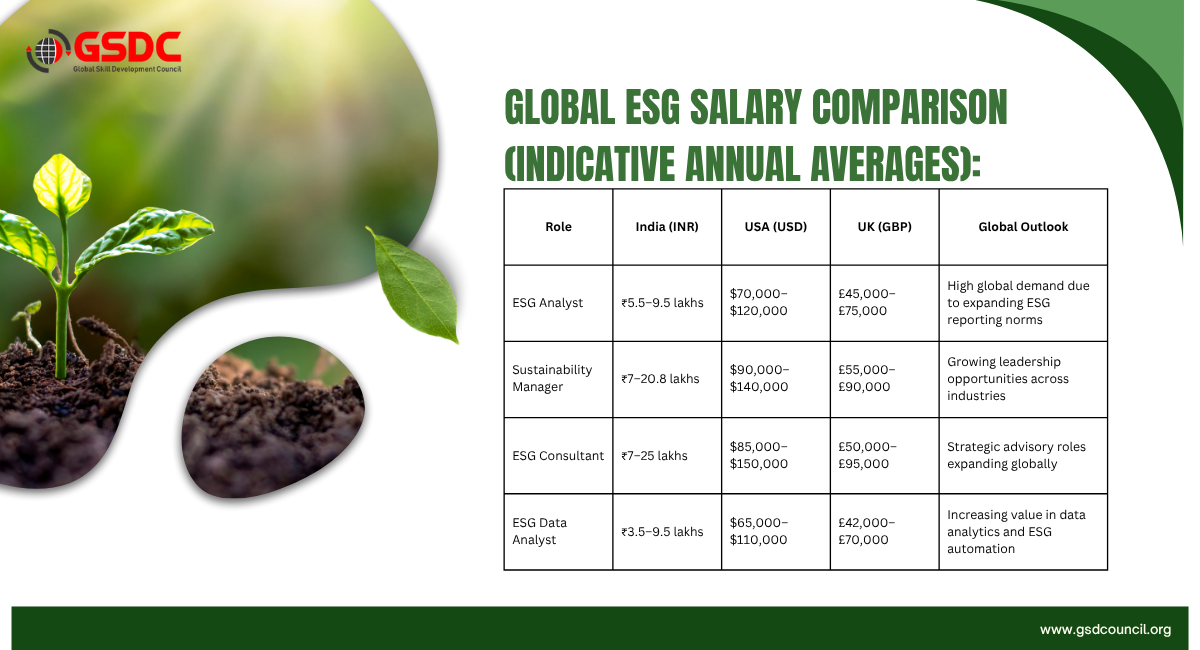
This comparison highlights how ESG and Sustainability careers are not only purpose-driven but also financially rewarding worldwide. As companies integrate ESG into their operational and investment strategies, certified professionals with sustainability expertise are positioned for long-term global growth.
Sustainability Certification and Professional Growth
With ESG and sustainability redefining corporate priorities, professionals are turning to sustainability certification to enhance credibility and career growth. These programs validate skills in ESG frameworks, ethical governance, and impact measurement - key to understanding why ESG matters and building responsible business practices.
Global bodies like GSDC (Global Skill Development Council) offer certifications such as the Certified Sustainability Professional, based on the three pillars of sustainability. This ESG-focused credential empowers professionals to integrate sustainable practices, explore new sustainability career paths, and shape the future of ESG leadership.

The Future of ESG and Sustainability Careers
The future of ESG isn’t about ticking compliance boxes - it’s about creating measurable, lasting impact. As global economies transition to net-zero and transparent governance models, ESG expertise will become a cornerstone of leadership.
Professionals equipped with ESG certifications and sustainability knowledge will define how organizations operate, innovate, and communicate in the coming decade. The future of ESG jobs belongs to those who merge purpose with performance - balancing business growth with positive social and environmental outcomes.
For forward-thinking professionals, ESG represents more than a trend. It’s an opportunity to shape the world’s most meaningful transformation - a future where careers, communities, and corporations thrive together.

Related Certifications
Stay up-to-date with the latest news, trends, and resources in GSDC
If you like this read then make sure to check out our previous blogs: Cracking Onboarding Challenges: Fresher Success Unveiled
Not sure which certification to pursue? Our advisors will help you decide!