Avoid Costly ITAM Mistakes with Better Asset Lifecycle Management
Written by Matthew Hale
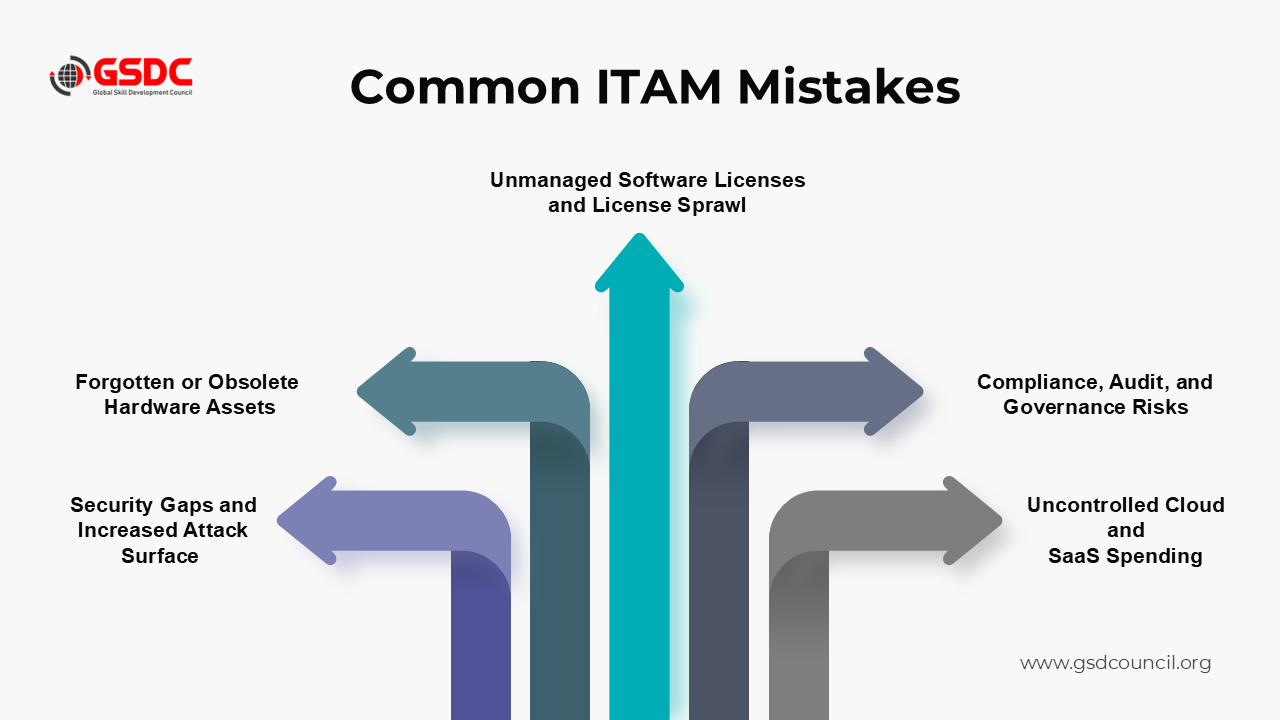
- 1. Unmanaged Software Licenses and License Sprawl
- 2. Forgotten or Obsolete Hardware Assets
- 3. Compliance, Audit, and Governance Risks
- 4. Security Gaps and Increased Attack Surface
- 5. Uncontrolled Cloud and SaaS Spending
- Key Benefits of IT Asset Management
- Typical categories of ITAM tools may comprise:
- Signs Your Organization Needs Better ITAM
- Getting Started: How to Do IT Asset Management Effectively
- Developing ITAM capability within your organization
- Final Thoughts
Modern organizations rely on hardware, software, cloud platforms, SaaS tools, and countless digital services. As these environments grow more complex, leaders are increasingly asking what IT Asset Management is, how to manage expanding IT ecosystems, and how to reduce operational and security risks.
Without structured IT Asset Management or IT asset lifecycle management, gaps in tracking and governance quickly lead to financial waste, compliance issues, and cybersecurity vulnerabilities.
Research shows that organizations without proper ITAM often overspend on tools, under-use licenses, miss audit requirements, and unintentionally increase their attack surface.
This IT Asset Management overview outlines the most common ITAM mistakes and how effective practices help prevent them.
2. Forgotten or Obsolete Hardware Assets
Most of the time, hardware is out of sight once it has been replaced, reassigned, or decommissioned. If there is no proper tracking of the lifecycle, devices will continue to appear as active assets or worse, they will remain unpatched, unprotected, and vulnerable.
Obsolete hardware may also contain sensitive data if it is not wiped properly, thus exposing organizations to the risk of compliance and security.
Risks created by weak hardware tracking
- Devices become “ghost assets” that raise operational inefficiency without being noticed.
- Devices that have not been wiped and are not returned to the company create data exposure risks.
- Support contracts continue to be active for equipment that is not in use.
- Inaccurate inventories create confusion in procurement.
How ITAM Helps
- The implementation of a thoroughly planned IT Asset Management program together with the lifecycle of the workflow would be the main tool of the monitoring system, which in turn guarantees that assets are tracked from the moment they are bought up to their disposal.
- The IT teams are provided with a complete status report of the devices, ownership, health, and end-of-life dates. The probability of risk is reduced through such a level of control, efficiency in forecasting is improved, and it is consistent with long-term governance.
Key Benefits of IT Asset Management
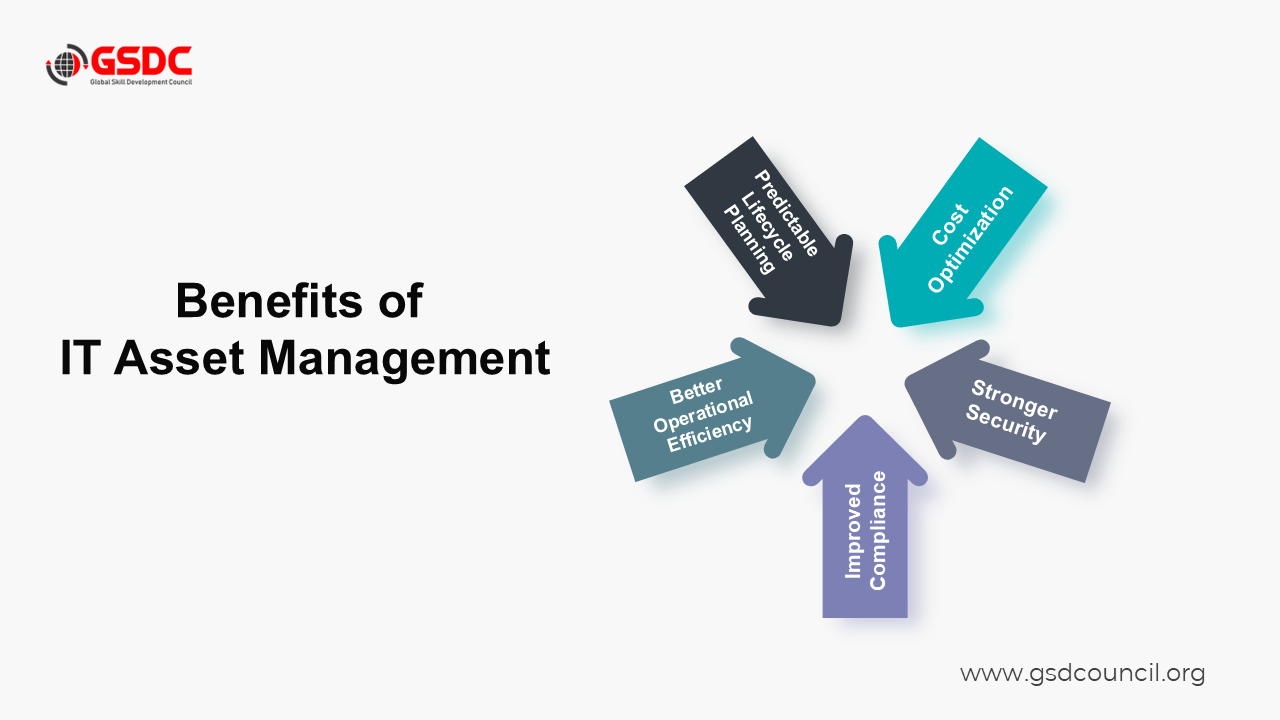
- Cost Optimization: Helps to get rid of the tools that are not in use, reduce duplication, and improve the budget forecast.
- Stronger Security: Complete visibility means secure configurations, patching that is done on time, and fewer blind spots.
- Improved Compliance: Records of the entire lifecycle make it very easy to conduct internal and external audits.
- Better Operational Efficiency: The teams that were looking for assets will now find them quickly and thus have more time to improve IT services.
- Predictable Lifecycle Planning: Companies are able to plan their refresh cycles, warranties, and future IT investments without doubt.
Developing internal ITAM skills often supported through relevant IT Asset Management Foundation (ITAMF) certifications can further enhance how teams manage asset lifecycle processes and governance.
Signs Your Organization Needs Better ITAM
Early recognition of weak ITAM practices can help an organization to be safe from large operational and security issues. Some common signs are:
- No single source of truth for hardware, software, or cloud assets
- Surprises during audits frequently happen, such as missing records or unlicensed software
- Shadow IT purchases are increasing across departments
- Devices, applications, or cloud resources with unclear ownership
- Budget overruns caused by duplicate or unnecessary IT spend
- Unknown or unmanaged devices appearing on the network
- Teams struggling to track renewals, warranties, or license expirations
If these symptoms are familiar to you, it is a strong sign that your organization needs more structured IT asset lifecycle management to regain visibility and control.
Getting Started: How to Do IT Asset Management Effectively
Companies that want to know how to do IT Asset Management should initially engage in a few basic practices that will help them maintain control and have a clear view of the situation for a long time:
- Establish a Centralized Inventory: A Collective inventory must be created for hardware, software, cloud assets, subscriptions, and configurations.
- Implement Lifecycle-Based Tracking: Follow the asset that can be a hardware or software from the point of its purchase through installation, support, maintenance, and finally, retirement. Thus, the organization will have tighter control over it.
- Create a Strong IT Asset Management Policy: Put definitions into words of the involved people, ownership, activities, approval routes, and standards of compliance so that the asset can be handled in a uniform way throughout the entire company.
- Integrate ITAM Across Departments: Procurement, security, finance, HR, and operations should be in coordination to have the full picture of the assets and at the same time, to avoid separate decisions being made.
- Review Usage and Renewals Periodically: It is important to evaluate the use of licenses, SaaS renewals, cloud consumption, and hardware refresh to spare money that would have been wasted, and at the same time, to prevent the occurrence of unmanaged assets.
At this stage, IT Asset Management certification can help teams develop the skills needed to regain visibility, improve governance, and manage assets more consistently.
Final Thoughts
One of the best examples of how the function once thought of as a back-office one has evolved into an essential enabler for contemporary organizations is managing IT assets. It is important to remember that businesses that lack clear visibility and organized ITAM procedures are vulnerable to rising expenses, reduced operational effectiveness, security flaws, and non-compliance risk.
Businesses can strengthen their security, reduce waste, enhance corporate governance, and pave the way for more predictable, effective, and secure IT operations by identifying common ITAM deficiencies early on and putting in place a strong IT asset lifecycle management system.

Related Certifications
Stay up-to-date with the latest news, trends, and resources in GSDC
If you like this read then make sure to check out our previous blogs: Cracking Onboarding Challenges: Fresher Success Unveiled
Not sure which certification to pursue? Our advisors will help you decide!