Key Skills to Excel in IT Asset Management Roles
Written by Emily Hilton
If you’re looking into a career in IT Asset Management, you’re tapping into a field that’s both increasingly important and strategic for organisations. But what exactly is what is it asset management? At its core, it’s the discipline of tracking, managing, and optimising an organisation’s IT assets hardware, software, cloud subscriptions, and more across their lifecycle.
This blog will guide you through why IT asset management is important and highlight the key benefits of IT asset management. You’ll also explore the IT asset management career path and understand what skills are needed for asset management success.
Additionally, you will understand the IT asset management tools, best practices, and how you can position yourself for long-term growth, potentially with the best IT asset management certification to boost your professional credibility.
Why IT Asset Management Matters
To understand the value of an IT Asset Management role, it helps to first unpack why it asset management is important. Organisations today invest heavily in IT hardware, software, cloud, and subscriptions. Without clear visibility and process, costs creep up, compliance risks increase, and strategic decisions become guesswork.
The benefits of IT Asset Management are many, including better visibility of assets, improved control of spending, lifecycle optimisation, reduced risk of compliance failures, and improved alignment of IT to business goals.
In short, when done right, it becomes a strategic enabler, not just a cost-centre. That’s why knowledge of what is it asset management is and how it plays into the wider IT and business ecosystem is becoming a sought-after skill.
The IT Asset Management Career Path
If you’re wondering about the it asset management career path, here’s a typical progression: you might start in an analyst or junior role where your focus is on inventorying assets, tracking usage, and assisting with audits. Then you move into a managerial role where you define policies, lead optimisation initiatives, evaluate IT asset management tools, and drive the strategic agenda.
In many organisations, the role evolves: junior analyst → asset manager → head of asset management or integrated IT operations lead. Here, IT Asset Management Certification will help you to decide your path with great experience and knowledge.
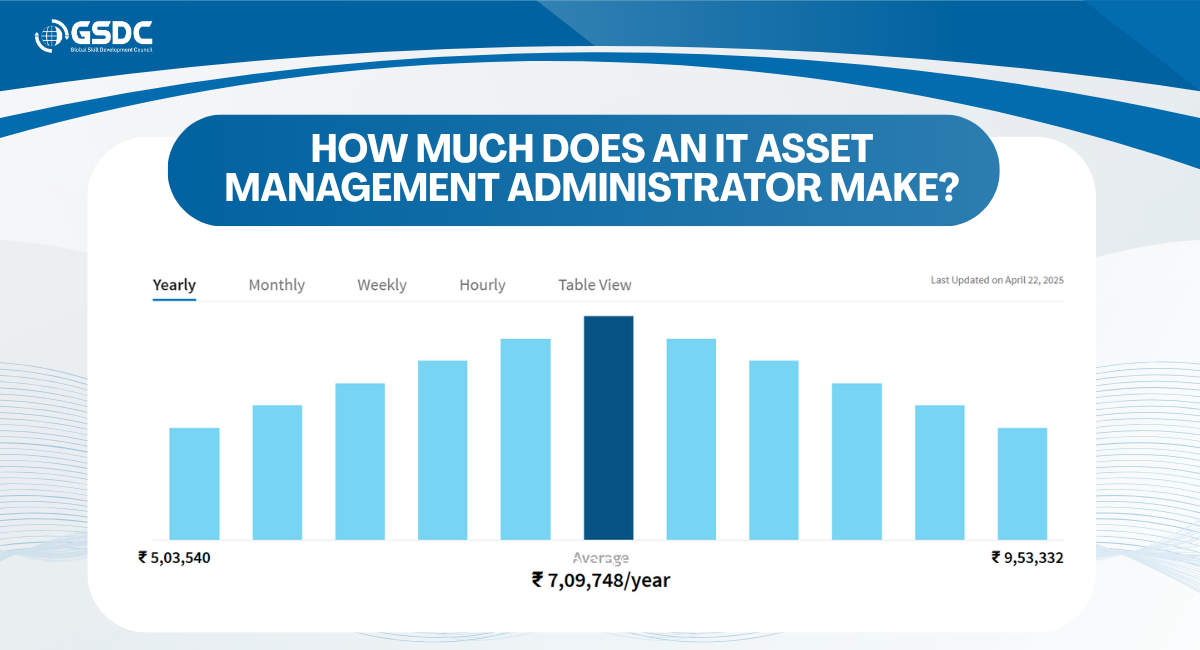
According to report, Global Salary IQ statistics as of April 22, 2025, the average yearly income for an IT Asset Management Administrator I in India is ₹ 7,09,748, with an hourly rate of ₹ 341. Location, education, experience, and other factors all affect the average wage, which ranges from ₹5,03,540 to ₹9,53,332.
As per Glassdoor, more senior roles with broader responsibility can see ₹15-20 lakh or more. Given the rising strategic importance of the discipline, this path offers both technical and business exposure, making it an interesting option for professionals who like the intersection of IT and management.
Key Skills You Need to Succeed
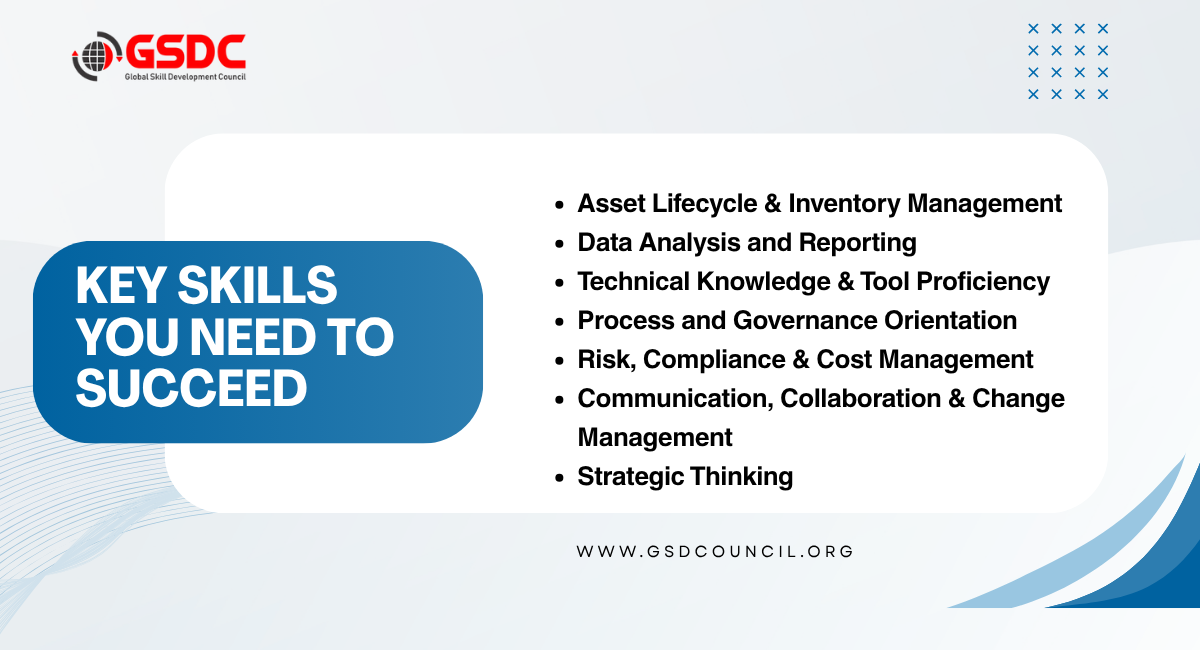 Let’s dive into the heart of the matter: what skills are needed for asset management? In the context of IT Asset Management, building a successful profile means blending technical, process, and soft skills. Here are some key areas:
1. Asset Lifecycle & Inventory Management
A foundational skill is understanding how assets move from procurement to retirement. Being able to maintain accurate inventories, tag assets, track warranty/licensing status, and monitor changes is critical. This relates directly to what is it asset management i.e., handling the lifecycle end-to-end.
It’s not just about listing devices. You need to understand where an asset is in its lifecycle: deployment, maintenance, upgrade, and retirement. Ensuring that you know the status of assets allows cost optimisations and risk mitigation.
2. Data Analysis and Reporting
Good data equals good decisions. Since IT Asset Management tools exist to help capture data, but what separates good practitioners is how they analyse that data, i.e., usage trends, licence consumption, hardware performance, cost allocation, risk exposures.
It is also known that, for analysts in asset management, “experience with reporting tools, being able to build or interpret dashboards” is essential.
This means familiarity with spreadsheets, business intelligence tools, as well as key metrics and KPIs that matter, such as asset age, TCO, compliance rates, idle assets, etc.
3. Technical Knowledge & Tool Proficiency
Knowing IT Asset Management Tools is a differentiator. From specialised ITAM software to integrations with ITSM/CMDB systems, you will need to be comfortable navigating and configuring these platforms.
In addition, having a solid grasp of hardware, software licensing models, cloud subscriptions, and how they interplay is beneficial this ensures you can handle both physical and digital assets effectively.
4. Process and Governance Orientation
The role often involves establishing or enforcing processes: asset acquisition policies, retirement policies, tagging and classification standards, audit protocols, and risk policies. Good awareness of IT Asset Management best practices is key. For example, one source lists: “track the complete lifecycle of assets”, “build your inventory using multiple discovery sources”, “integrate with other ITSM practices”.
Governance also means collaboration with finance, procurement, compliance, and security teams, so understanding stakeholder needs matters.
5. Risk, Compliance & Cost Management
With increasing regulation, licensing models, and security exposures, the role of it asset management has grown in the risk domain.
Knowing how to spot unused software, how to optimise hardware use, and how to ensure assets are disposed of securely and compliantly are all matters. Many of the benefits of IT Asset Management come via cost reduction and risk mitigation.
In essence, you’re not just managing devices and licences, you are safeguarding value and mitigating liability for the organisation.
6. Communication, Collaboration & Change Management
Often overlooked, but extremely crucial: the human side. As you build or optimise an asset management programme, you’ll need to communicate value, drive adoption of processes and tools, and collaborate across teams.
This is part of the reason asset management is moving from purely operational to strategic. Without buy-in, even the best tools fail.
So being able to present insights, e.g., cost savings, compliance improvements, lead stakeholder workshops, and manage change means you’re well ahead of the pack.
7. Strategic Thinking
Last but not least: if you aspire to progress in the it asset management career path, strategic thinking becomes essential. This means aligning asset management with business goals: linking asset decisions to service delivery, productivity, competitive advantage, and sustainability.
Understanding why it asset management is important in the broader context of digital transformation helps you be more than just a technical operator.
Thinking ahead, where should assets be in 2-3 years? How do you optimise current assets and retire legacy? How do you build an adaptable, scalable asset management practice?
Best Practices for IT Asset Management Programmes
Since you’ll often be working with or guiding programmes, aligning with IT Asset Management best practices gives you credibility. Here are some key ones:
- Establish a clear asset management policy and scope.
- Build a centralised and accurate asset inventory, inclusive of hardware, software, cloud, and digital assets.
- Use automation/discovery tools to keep inventory current and reduce manual errors.
- Integrate asset management with broader ITSM, configuration management, and financial processes.
- Prioritise assets by business risk/criticality, and manage lifecycle proactively
- Review and audit regularly, ensure compliance, and drive continuous improvement.
By adopting these, you strengthen the value proposition of an ITAM programme and, as a professional, you position yourself as someone who brings structure and strategic value.
🚀 Plan Your Next Move in IT Asset Management
✅ Mapping your ITAM career path from analyst to leadership
✅ Identifying key skills, certifications, and salary insights
✅ Learning best practices to accelerate your growth
How to Advance Your Career & Certification Options
If you’re wondering about the best it asset management certification, there are several recognised options. The GSDC’s IT Asset Management Certification is proof of having the capability of managing, tracking, and optimizing IT assets throughout their lifecycle.
The certification provides ITAM frameworks, governance, and compliance strategies along with practical knowledge to the professionals, which leads to improved cost control and operational efficiency.
Obtaining this certification is a way of demonstrating your skill to bring IT asset practices in line with business goals, a skill that is highly regarded in IT operations, procurement, and governance jobs.
Choosing the right certification depends on your experience level, career ambition, and whether you’re specialising in hardware, software, or broader asset management.
Example: Preparing for Interviews
When you’re interviewing for roles in IT asset management, expect questions that assess your process knowledge, technical tool familiarity, and strategic thinking. For instance, you might be asked to walk through the lifecycle of an asset, describe how you would implement tracking or an audit programme, or explain how you’d link asset management to cost savings.
One specific resource you might consult is Hardware Asset Management Interview Questions to prepare for hardware-centric questions within the broader asset domain.
Final Thoughts
The discipline of it asset management is evolving into a strategic asset for organisations. Understanding what is it asset management is, recognising why it asset management is important, and positioning yourself with the right mix of skills, tools, and mindset will set you apart.
IT asset management is evolving into a strategic business driver. By mastering the right skills, tools, and best practices, you can unlock cost savings, compliance, and strategic value. Whether starting as an analyst or aiming for leadership, a career in IT asset management offers the perfect blend of IT, business, and leadership, making a real impact in your organization.

Related Certifications
Stay up-to-date with the latest news, trends, and resources in GSDC
If you like this read then make sure to check out our previous blogs: Cracking Onboarding Challenges: Fresher Success Unveiled
Not sure which certification to pursue? Our advisors will help you decide!