How to Become a GDPR Lead Implementer: Roles, Skills & Salary Guide

Written by Matthew Hale
- What Is GDPR and Why Is It Important?
- Why Organisations Need a GDPR Lead Implementer
- What Does a GDPR Lead Implementer Do?
- What You Need to Know to Become a GDPR Lead Implementer
- Industries That Need GDPR Lead Implementers
- What can you expect in the GDPR salary market?
- Why GDPR Roles Are Well Paid
- Building GDPR Implementation Expertise
- Final Thoughts
As organisations collect more personal data than ever before, GDPR compliance has become a basic business requirement. Customer details, employee records, payment data, and online behaviour are all forms of personal data that must be protected.
Recent enforcement trends highlight why this matters: since GDPR came into effect, regulators have issued over €5.8 billion in GDPR fines, showing that data protection failures carry real financial consequences for organisations of all sizes.
This is where GDPR comes in.
What Is GDPR and Why Is It Important?
Beginners wonder what is GDPR and what does GDPR stand for. GDPR stands for the General Data Protection Regulation. It is a European data protection law created to ensure personal data is collected, used, and stored responsibly.
GDPR is important because misuse of personal data can cause serious harm to both individuals and organisations. This is clear from recent trends:
- Strict enforcement: Since GDPR came into force, regulators have issued over €5.8 billion in fines, showing how seriously data protection violations are treated.
- Ongoing compliance challenges: Despite years of awareness, nearly 30% of organisations still struggle to fully meet GDPR requirements, highlighting the need for structured compliance efforts.
- Global influence: Data protection laws inspired by GDPR now cover almost 80% of the world’s population, demonstrating GDPR’s worldwide impact.
Why Organisations Need a GDPR Lead Implementer
Understanding GDPR rules is one thing. Applying them in daily business operations is another.
Many organisations rely on a GDPR Lead Implementer to bridge this gap. This role is instrumental in translating GDPR requirements into tangible steps that teams can easily follow on a daily basis.
A GDPR Lead Implementer helps organisations by:
- Making the regulations of GDPR understandable for the organisation by creating easy-to-understand and feasible procedures
- Ensuring the GDPR compliance is actually carried out in the daily operations of the company and not only documented
- Collaborating closely with the departments of IT, HR, legal, security, and management
- Introducing data protection measures in the organization's systems, processes, and culture
Organisations often prefer Certified GDPR Lead Implementer who hold role-aligned certifications, as these credentials signal hands-on experience in applying GDPR rules and managing GDPR compliance across teams.
What Does a GDPR Lead Implementer Do?
A GDPR Lead Implementer is responsible for building and maintaining GDPR compliance across the organisation. The role is practical and ongoing, focusing on how GDPR rules are applied in day-to-day operations.
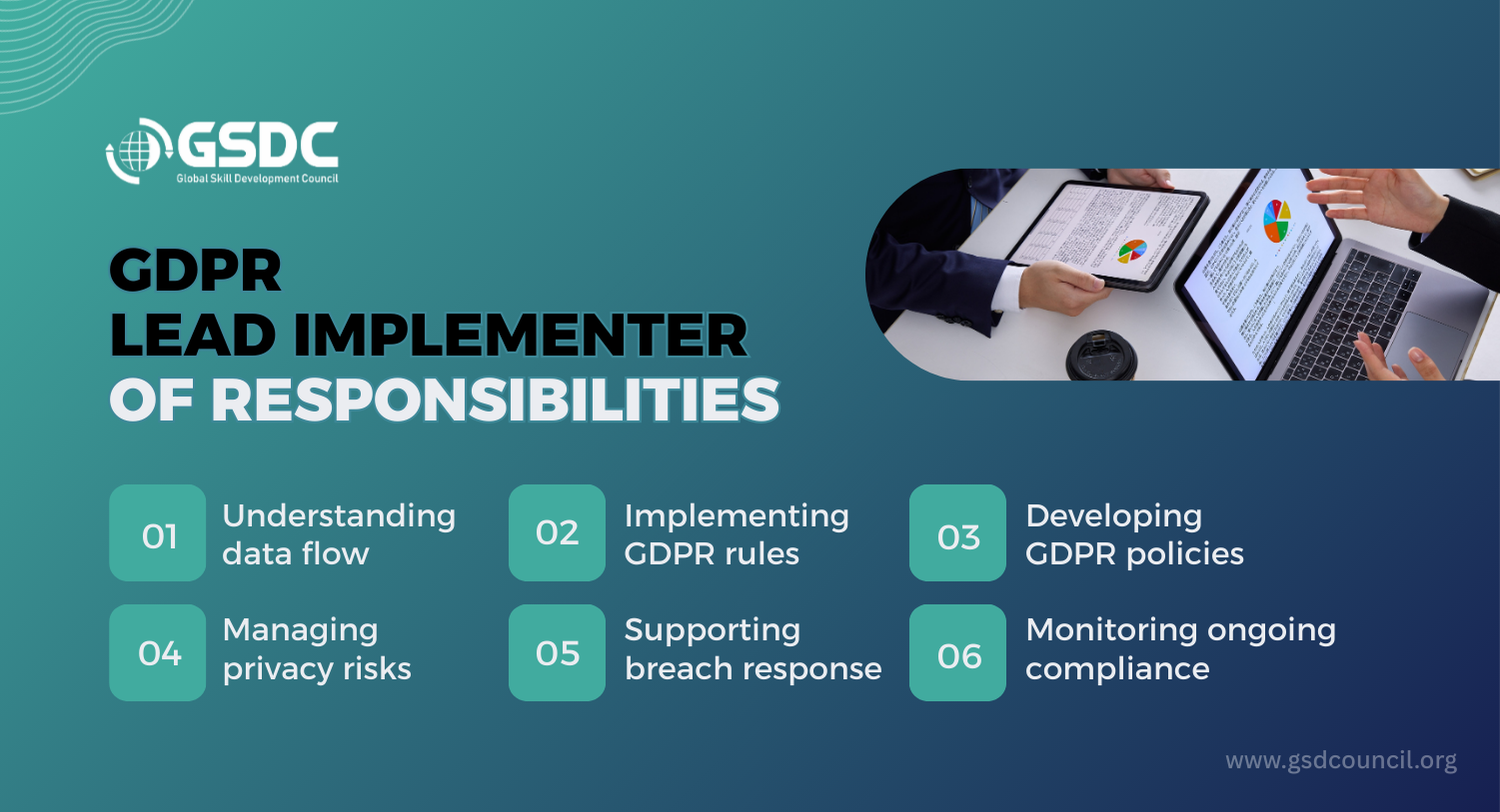
Key Responsibilities Explained Simply
- Understanding data flow: Identifying what personal data the organisation collects, where it comes from, where it is stored, and who can access it.
- Implementing GDPR rules: One of the main tasks would be to implement the requirements of the GDPR in practice. This should include: managing the consents, using the data in a lawful manner, specifying the retention periods, as well as ensuring the rights of the data subjects.
- Developing GDPR policies: Assisting in the production and participation in privacy notices, internal policy documents related to GDPR, and data breach response plans.
- Managing privacy risks: Assisting with risk assessments and conducting Data Protection Impact Assessments (DPIAs) for high-risk data processing activities.
- Supporting breach response: Helping document and manage personal data breaches, including timelines, reporting, and corrective actions.
Monitoring ongoing compliance: Continuously checking the organisation’s systems, vendors, and processes as it develops or changes.
What You Need to Know to Become a GDPR Lead Implementer
Experts need both legal knowledge and real-world experience to be good GDPR Lead Implementers. Some common GDPR skills are:
- How to use GDPR rules: Knowledge of the main rules, rights, and responsibilities that GDPR sets out.
- Knowledge of data governance and the data lifecycle means knowing where personal data is collected, used, stored, kept, and deleted.
- Managing privacy risks means figuring out what they are, how to lower them, and how to avoid them.
- Teams work well together: Be able to work well with other teams in the company, like the IT team, HR, legal, security, or business teams.
- Reporting on compliance and keeping records: Writing and keeping up with records, policies, and compliance documents.
- Knowing how to use GDPR tools: Using tools that make it easier to work with data
These skills allow for a practical, long-term, and consistent way to follow the GDPR instead of a theoretical one.
To build these GDPR skills in a structured way, many professionals opt for globally aligned training and certification programs, such as the GSDC Certified GDPR Lead Implementer, which focus on applying GDPR requirements, GDPR rules, and GDPR tools in real organizational settings.🔍 GDPR in Practice: Download the Implementation Framework
Industries That Need GDPR Lead Implementers
GDPR applies to almost every organisation that collects or processes personal data. As a result, GDPR Lead Implementer roles are relevant across many industries, including:
- Technology and SaaS
- Financial services and fintech
- Healthcare and life sciences
- Retail and e-commerce
- Education and research
- Outsourcing and shared services
Any organisation handling personal data at scale benefits from having structured GDPR implementation expertise to maintain consistent GDPR compliance.
What can you expect in the GDPR salary market?
Even though "GDPR Lead Implementer" is not a commonly recognized job position per se, it's mostly seen in terms of changes to job titles, such as Data Protection Officer (DPO), Privacy Manager, and GDPR Specialist.
On the basis of recent GDPR salary information, the typical trends in worldwide salaries are as follows:
- Starting salaries for GDPR professionals are in the range of $55,000 to $65,000 annually, depending on experience and workload.
- The average salary of mid-level people who practice GDPR is between $70,000 and $90,000 annually
- Senior GDPR Experts are responsible for ensuring that all people around the globe comply with the GDPR Regulations and addressing challenging issues. They earn between $100,000 to $130,000 and higher.
However, the actual salary range differs depending on the level of authority, employee level, industry, and company size.
Why GDPR Roles Are Well Paid
GDPR roles are not just about understanding regulations — they help protect organisations from serious legal and reputational risk. A GDPR Lead Implementer helps organisations:
- Reduce the risk of regulatory penalties
- Manage personal data breaches effectively
- Demonstrate accountability to regulators
- Maintain trust with customers and employees
Because GDPR failures can lead to heavy fines and long-term reputational damage, organisations place high value on professionals who can manage GDPR compliance confidently and consistently.
Building GDPR Implementation Expertise
A large number of professionals upgrade their knowledge of GDPR by going through an organized curriculum and obtaining a GDPR-related certificate which helps them understand GDPR requirements, apply them in real-life situations, and be able to handle GDPR compliance in a confident way.
One of the ways to get ready for the position of a GDPR Lead Implementer and other roles related to data protection is through obtaining a certification like the Certified GDPR Lead Implementer that is aligned with standards from the Global Skill Development Council (GSDC) and other similar organizations.

Final Thoughts
GDPR compliance is not a one-time activity. It requires continuous attention as data usage, technologies, and regulations continue to evolve.
The GDPR Lead Implementer plays a vital role in turning GDPR requirements into practical, everyday actions. For professionals interested in privacy, compliance, or governance, understanding what GDPR is, applying GDPR rules, and building strong GDPR skills can lead to a stable and high-impact career in data protection.

Related Certifications
Stay up-to-date with the latest news, trends, and resources in GSDC
If you like this read then make sure to check out our previous blogs: Cracking Onboarding Challenges: Fresher Success Unveiled
Not sure which certification to pursue? Our advisors will help you decide!