How Sustainability Professionals Can Grow in 2026
Written by Matthew Hale
In 2026, sustainability is defined by action, not intention.
For a long time, companies were mainly talking about the commitments they made, the pledges they took, and the kind of reports they issued. But nowadays, the world has turned upside down in one way or another. Businesses are not judged by their promises anymore; they are judged by their results.
For the sustainability workers, this gradual change is very important. Their working pieces are gradually shifting from creating understanding to doing tangible things, measuring impact, and aligning with business.
At the same time, sustainability trends are creating new opportunities, increasing demand for sustainability job roles, and reshaping what it means to build a sustainable world.0
So, where should professionals focus in 2026?
What Is a Sustainability Professional
It is essential to know what a sustainability professional does before diving into that topic in detail
Sustainability professionals assist organisations in creating a balance between environmental issues and people's rights and interests, while maintaining a profit for the company. The work of the sustainability professional contributes directly to achieving the sustainability goals of the organisation and creating a more sustainable world.
Why the Role of Sustainability Professionals Is Growing
The demand for sustainability professionals is increasing across industries.
Industry data shows that the share of green talent has grown from 5% to 15% in recent years, highlighting a clear shift toward sustainability-focused roles.
Organisations are under pressure to meet ESG targets, reduce risk, and improve transparency. This explains why sustainability is good for both the environment and business performance.
It also highlights why sustainability is important for business, as companies now see it as a driver of growth and resilience.
As a result, more sustainability job opportunities are being created, making this a fast-growing career path.
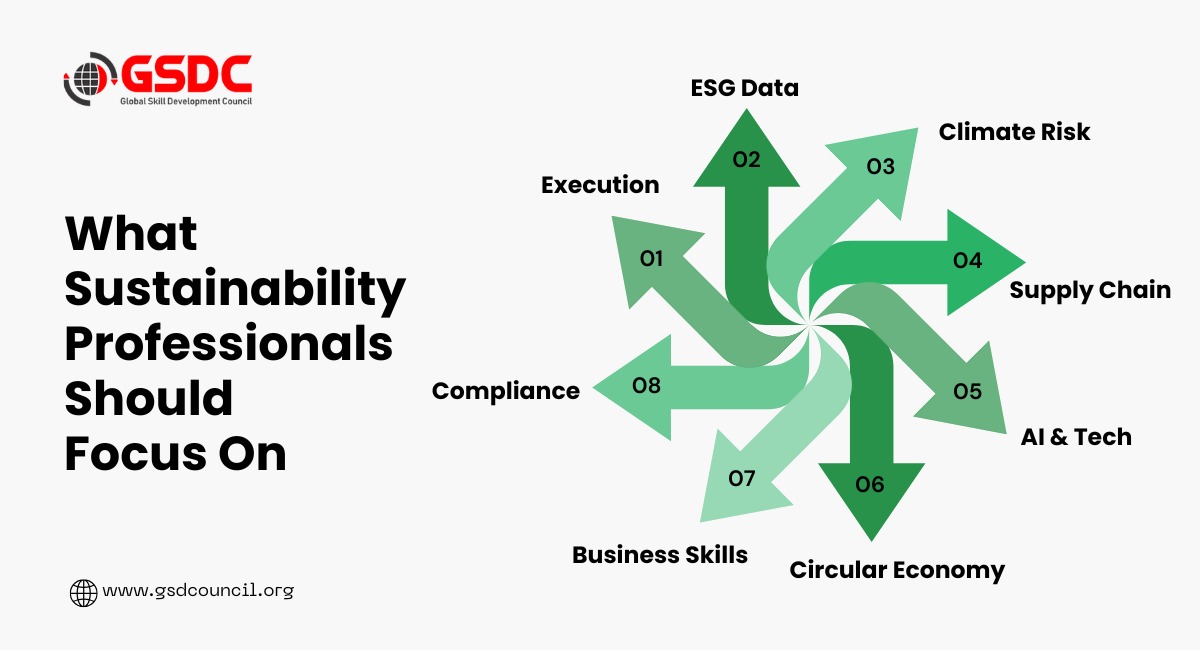
1. From Ambition to Execution: What Organisations Expect
The main change occurring in 2026 is undeniable: sustainability has moved from being just a strategy-only matter to an outcomes-focused one.
Companies expect sustainability practitioners to provide:
- Tangible results: For example, fewer emissions, energy savings, or waste reductions
- Detailed plans for execution: Specific actions, deadlines, and responsibilities, not only general objectives
- Significant advances towards climate and ESG targets: Tangible improvements that can be measured, not just promises
This is a transition from mere reporting to actual performance. Enterprises are now concentrating on the results that are achieved.
2. Connecting Sustainability with Business Value
Sustainability experts are not able to carry out their work in complete isolation anymore:
- They first have to link the sustainability efforts with the financial results
- Demonstrate how costs are reduced, risks are minimised, and profits are earned
- Coordinate with the overall business objectives
This strengthens the point of why sustainability matters for business.
In 2026, sustainability will be recognised as one of the factors of profitability and resilience beyond just compliance.
3. Mastering ESG Data, Reporting, and Compliance
Sustainability is now data-driven and regulated.
Professionals must focus on:
- ESG frameworks (GRI, SASB, TCFD)
- Carbon accounting
- Audit-ready ESG data
A sustainability certification or sustainability professional certification helps build practical skills in ESG reporting and compliance.
Certifications such as the Certified Sustainability Professional support job-ready expertise, which employers increasingly expect as roles become more integrated across business functions.
4. Developing Climate Risk and Resilience Strategies
Climate risk has transitioned from being a future risk to a current risk for companies.
Organisations are:
- Integrating climate risk into strategy
- Using scenario analysis
- Building resilience
Professionals must focus on long-term impact and risk management.
5. Strengthening Supply Chain Transparency
Due to the increasing importance of supply chains, companies are now required to track their Scope 3 emissions, require sustainability compliance from their suppliers, and create more transparent supply chains.
The demand for sustainability job roles is also increasing across all industries.
6. Embracing Technology and AI
Technology is reshaping sustainability.
Professionals are expected to:
- Use AI for ESG data analysis
- Automate tracking and reporting
- Improve decision-making
Sustainability is becoming more scalable and data-driven.
At the same time, companies are looking for professionals who can work across data, operations, and strategy, showing that sustainability is no longer a separate function - it is part of core business roles.
7. Focusing on Circular Economy and Efficiency
Some organisations are shifting their activities towards:
- Reducing waste
- Reusing resources
- Designing sustainable products
Such practices not only stand for the concepts of sustainable development but also contribute to making the world a better place.
8. Building Cross-Functional Skills and Knowledge about Business
People involved with sustainability work across many teams or areas of the organisation today. That includes:
- Partnering with: Finance, Operations and Procurement
- Communicating in business terms
- Influencing leadership
More commonly than ever before, the sustainability professional's role is becoming more strategic and focused on the organisation.
In particular, they are being tasked with the responsibility of working across various departments and converting their complex ideas into actionable decisions for the business. Therefore, communication and business acumen are critical skills for success in today’s workforce.
9. Adapting to Changing Regulations and Market Standards
There is an extreme increase in the number of regulations and market standards. Training and support are vital for professionals to stay current with the following:
- ESG standards
- Regulations for compliance
- Investor expectations
Sustainability is now a core part of doing business.
To keep up with these changes, professionals are increasingly using structured learning tools (such as certifications provided by GSDC) to align with the ever-changing standards within the industry.
What Motivates Sustainability Professionals
To understand the growth of this field, it’s important to look at what motivates sustainability professionals.
Studies suggest that most professionals who focus on sustainability do so because of their strong desire for meaning (purpose) in their careers; as such; these individuals consider themselves ‘change agents’ committed to creating positive environmental and social changes in the world.
There are several reasons for pursuing a career in sustainability, including:
- Purposeful Employment
- Contributing to a sustainable world
- Growing sustainability job opportunities
- Rising sustainability professional salary
A combination of purpose and income potential is responsible for creating greater interest in careers within the sustainability profession.
Sustainability Jobs and Salary Outlook in 2026
The demand for Sustainability jobs has been rapidly increasing in all industries.
Popular Sustainability job titles include:
- ESG Analyst
- Sustainability Manager
- Climate Risk Consultant
Sustainability Professionals are also seeing increased salary levels.
ESG Analysts typically earn $70K-$100K annually, while Sustainability Managers may expect to receive $100K-$150K annually.
As such, the average Sustainability professional makes approximately $110K annually and represents an increased importance of Sustainability professionals as economic specialists.
The Role of Sustainability Certification in Career Growth
A sustainability certification helps professionals:
- Build practical knowledge
- Validate their skills
- Stand out in a competitive job market
Today, many employers prefer candidates with a sustainability certification for professionals.
A strong sustainability professional certification can significantly improve career opportunities and long-term growth.

Conclusion
Sustainability has changed to an impact focus where professionals in sustainability will have to demonstrate an impact and demonstrate the alignment of sustainability with their businesses or organisation’s strategy, as well as develop a level of expertise in data, technology and compliance.
Professionals who stay ahead of the sustainability trends will be able to continue to remain relevant as a sustainability professional but be able to lead the way forward through their sustainability credential and accelerate their path to creating a sustainable world.

Related Certifications
Frequently Asked Questions
Stay up-to-date with the latest news, trends, and resources in GSDC
If you like this read then make sure to check out our previous blogs: Cracking Onboarding Challenges: Fresher Success Unveiled
Not sure which certification to pursue? Our advisors will help you decide!