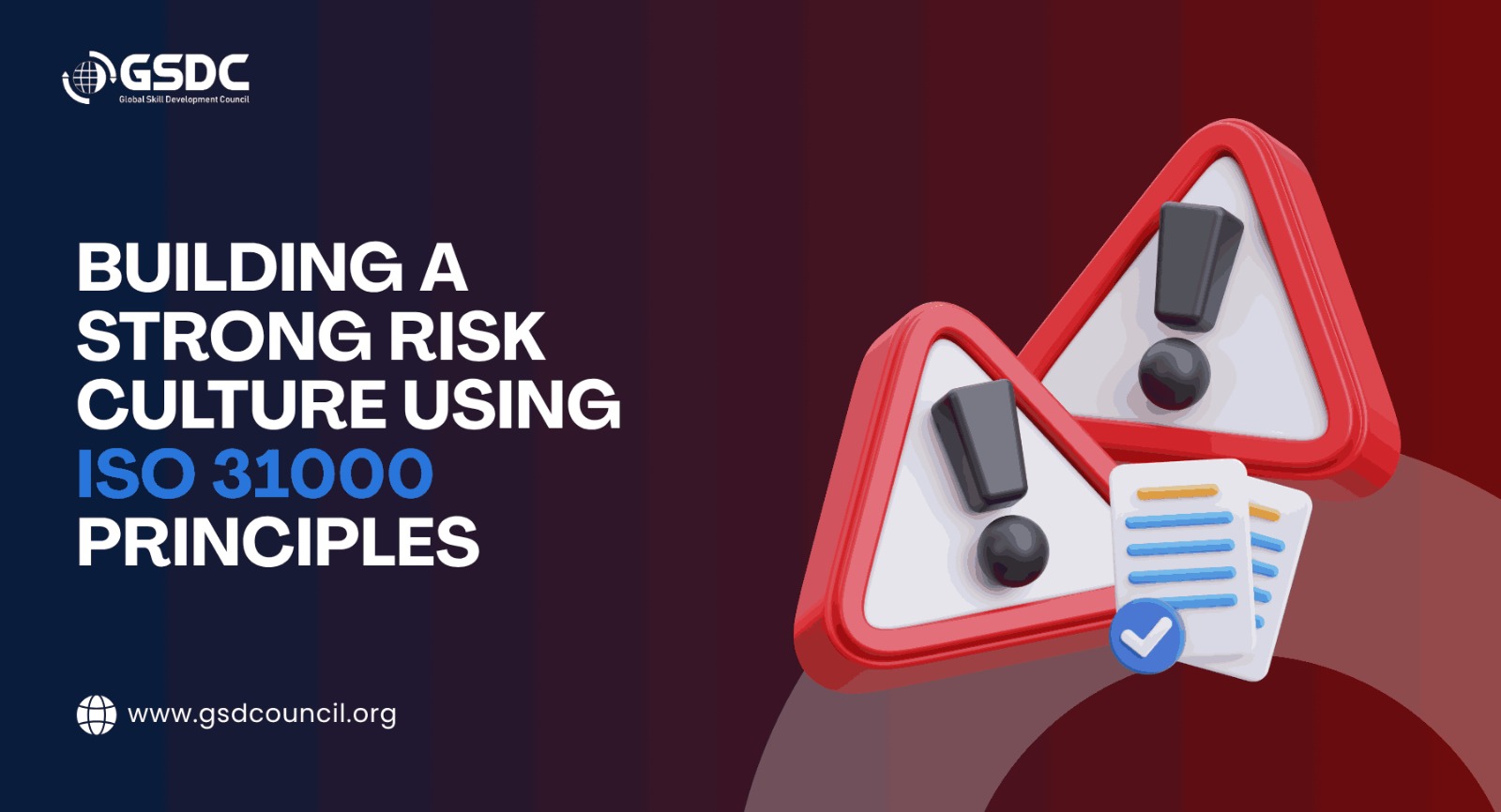
Building a Strong Risk Culture Using ISO 31000 Principles
Written by Krishni Arumugam
- Understanding Risk Culture
- Why Culture Often Overrides Strategy
- The Role of Leadership in Risk Culture
- Accountability: The Foundation of Risk Culture
- Personal and Organizational Risk Behaviors
- The Results Pyramid: Changing Outcomes Through Experience
- Early Warning Signs of Weak Risk Culture
- Risk Tools vs. Risk Culture
- Embedding Risk Culture Across Industries
- Master Risk Management Excellence with GSDC’s Certified ISO 31000:2018 Risk Manager
- Conclusion
Risk management frameworks are widely adopted across industries to identify, assess, and mitigate potential threats. However, organizations often assume that implementing a structured risk management framework alone is enough to manage risks effectively. In reality, frameworks such as ISO 31000 can only succeed when they are supported by a strong risk management culture within the organization.
Risk culture influences how individuals behave when faced with uncertainty, pressure, and decision-making challenges. While policies, procedures, and risk registers may define how organizational risk management should operate, the real test occurs when employees must apply those principles in real-world situations.
This blog explores the role of risk culture in effective risk management, explains how the principles of ISO 31000 support strong risk cultures, and highlights practical strategies for building risk culture in organizations and embedding risk awareness across teams and leadership.
Understanding Risk Culture
Risk culture refers to the shared values, attitudes, and behaviors that influence how individuals within an organization perceive and manage risk. It affects how employees respond to uncertainty, escalate concerns, and make decisions that could impact organizational outcomes.
One way to understand risk culture is through the “iceberg model.” In this model, the visible portion above the surface represents formal risk management elements such as:
- Policies and procedures
- Risk registers and dashboards
- Compliance programs
- Audits and governance frameworks
However, beneath the surface lies the real driver of risk culture. These invisible elements include:
- Individual incentives
- Organizational power dynamics
- Time pressures
- Fear of consequences
- Personal values and ethics
These hidden factors strongly influence whether employees follow processes or override them under pressure. When organizations ignore these cultural elements, even the most sophisticated risk frameworks can fail.
Why Culture Often Overrides Strategy
Many organizations invest heavily in risk frameworks but still experience major incidents. This happens because culture can override strategy, even when ISO 31000 risk management principles are in place.
Organizations may claim to encourage transparency, accountability, and learning from mistakes. However, if employees fear punishment for reporting issues, they may hide problems instead of escalating them undermining effective risk governance and compliance efforts.
For example:
- Employees may avoid reporting operational failures.
- Teams may conceal early warning signals to avoid blame.
- Managers may prioritize deadlines over safety or risk compliance.
Such behaviors create a blame culture, weakening enterprise risk management (ERM) practices, where individuals focus on protecting themselves instead of improving processes. Over time, this environment increases the likelihood of major risk events.
In contrast, a strong risk-aware culture promotes open communication and learning from mistakes, enabling organizations to detect problems early and prevent larger incidents.
The Role of Leadership in Risk Culture
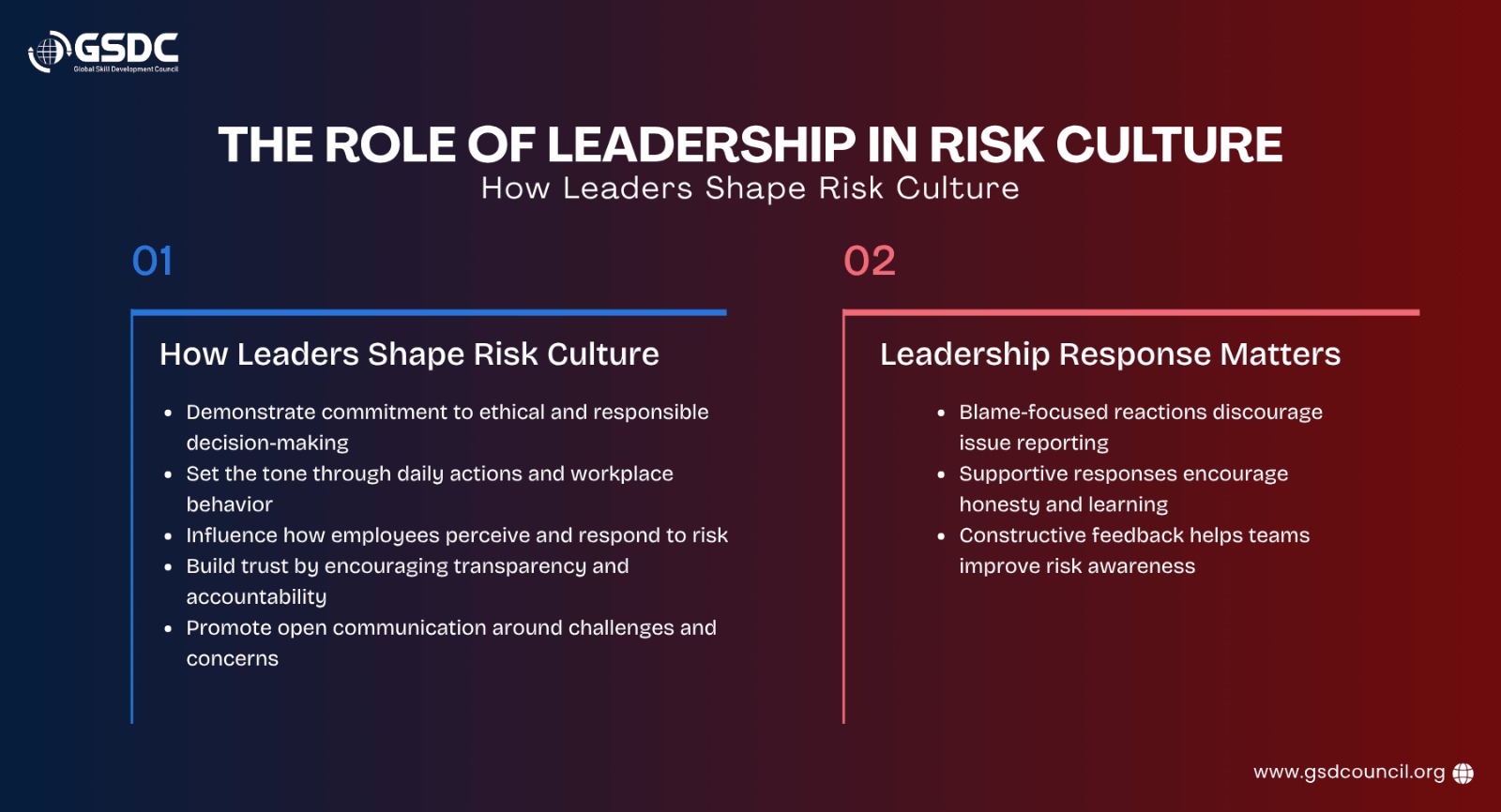
Leadership plays a critical role in shaping risk culture. According to the principles of ISO 31000, leadership commitment is essential for effective risk management.
Leaders influence risk culture through their daily behaviors and responses to challenges. For instance, how leaders react to bad news signals the true expectations of the organization.
If leaders respond to negative outcomes by searching for someone to blame, employees will become reluctant to report issues. However, if leaders treat incidents as learning opportunities, employees will feel safer sharing concerns and insights.
Ultimately, what leaders tolerate becomes the real standard within the organization. Leadership behavior therefore acts as a multiplier that can strengthen or weaken risk culture.
Accountability: The Foundation of Risk Culture
Accountability is one of the core elements required to build a strong risk culture. In risk management, accountability means taking ownership of outcomes rather than blaming systems, processes, or other individuals when failures occur.
In the context of ISO 31000, accountability includes:
- Clearly defining risk ownership
- Establishing decision-making authority
- Communicating risk appetite and thresholds
- Encouraging responsible risk-taking
Organizations with strong risk cultures ensure that risk acceptance is a conscious decision. Employees understand which risks are acceptable and which exceed organizational tolerance.
In weak risk cultures, risk acceptance often happens silently. Decisions are made without discussing potential consequences, leading to unexpected outcomes.
Personal and Organizational Risk Behaviors
Risk culture is influenced not only by organizational policies but also by individual behavior. Every employee brings their own attitudes, values, and experiences into the workplace.
These personal characteristics shape how individuals respond to uncertainty. For example:
- Some individuals naturally avoid risk.
- Others may accept higher levels of uncertainty.
- Personal ethics influence decision-making under pressure.
When these individual behaviors combine across teams, they form the broader organizational risk culture.
This means risk culture is not limited to senior management. It includes everyone from frontline employees to executives responsible for strategic decisions.
The Results Pyramid: Changing Outcomes Through Experience
Another useful concept for understanding risk culture is the results pyramid, derived from the Oz Principle framework.
Many organizations attempt to change outcomes by focusing only on actions and results. However, the results pyramid shows that deeper factors influence these outcomes.
The pyramid consists of several layers:
- Experiences
- Beliefs
- Actions
- Results
Employees’ experiences within the organization shape their beliefs. These beliefs influence their actions, which ultimately determine organizational results.
For example, if employees believe they cannot speak openly about risks, they will avoid reporting issues. Over time, this behavior leads to operational failures.
Early Warning Signs of Weak Risk Culture
Organizations often believe their risk management systems are effective until a major incident occurs. However, several warning signs may indicate that risk culture is deteriorating.
Common indicators include:
- Decisions made before risks are discussed
- Repeated deviations from procedures
- Normalization of unsafe practices
- Unclear ownership of responsibilities
- Limited discussion of risks in operational meetings
One example is the “normalization of deviation.” This occurs when employees repeatedly observe minor issues such as small operational faults but gradually accept them as normal. Over time, these small issues can escalate into major failures.
Recognizing these early signals allows organizations to correct cultural issues before they lead to significant consequences.
To change risk culture, organizations must therefore focus on improving employee experiences, creating environments where individuals feel safe discussing risks and raising concerns.
Risk Tools vs. Risk Culture
Organizations often rely on tools to support risk management. These may include:
- Risk registers
- Risk heat maps
- Bow-tie analysis models
- Incident investigations
- Risk dashboards and KPIs
These tools provide valuable insights into potential threats and control strategies. However, they cannot replace sound decision-making.
Risk tools inform decisions, but people ultimately make decisions. Without a strong risk culture, employees may ignore or misinterpret risk information.
For example, risk ratings may show that a risk falls within acceptable thresholds. However, if contextual factors change, the actual risk could be much greater than the rating suggests.
Therefore, risk culture ensures that tools are used effectively rather than treated as compliance checklists.
Embedding Risk Culture Across Industries
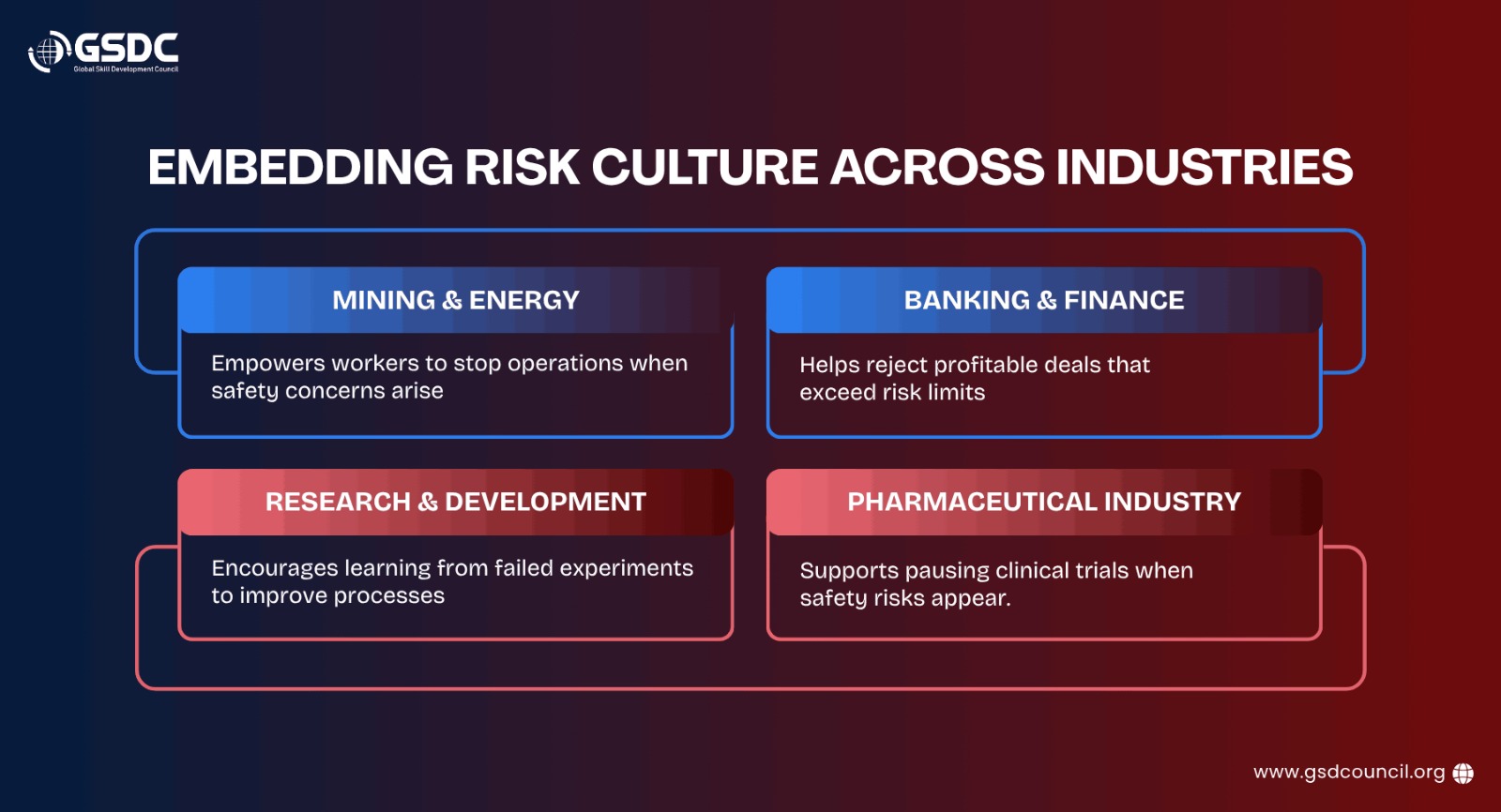
Risk culture is relevant across many industries. While the specific risks differ, the cultural principles remain the same.
Mining and Energy
In industries such as mining, a strong risk culture empowers workers to stop operations when safety concerns arise. Employees must feel confident raising issues even when production targets are under pressure.
Banking and Finance
Financial institutions rely on clearly defined risk appetites. Strong risk culture enables organizations to reject profitable deals if they exceed acceptable risk thresholds.
Research and Development
In research environments, analyzing failed experiments helps identify hidden risks and improve future processes.
Pharmaceutical Industry
Clinical trials often pause when early safety warnings emerge. This demonstrates responsible risk management and protects long-term value.
Across these sectors, risk culture enables employees to prioritize safety, transparency, and responsible decision-making.
Transparency and Open Risk Dialogue
Transparency is essential for building trust within organizations. When teams communicate openly about uncertainties and potential risks, they can identify problems earlier and implement preventive actions.
Transparent organizations typically demonstrate:
- Open discussions about risk during decision-making
- Early reporting of concerns or near misses
- Clear communication of risk appetite and thresholds
- Collaborative problem-solving across departments
In contrast, organizations with limited transparency often suppress bad news until it becomes a major crisis.
As the webinar emphasized, silence hides risk until it becomes an event.
Moving from Compliance to Risk Intelligence
Many organizations treat risk management as a compliance requirement rather than a strategic capability. They focus on documentation, audits, and regulatory obligations instead of building genuine risk awareness.
However, effective risk management goes beyond compliance. It integrates risk considerations into strategic planning, operational decisions, and innovation initiatives.
When organizations embed risk thinking into everyday decisions, they transform risk management into a strategic advantage rather than an administrative burden.
Master Risk Management Excellence with GSDC’s Certified ISO 31000:2018 Risk Manager
The ISO 31000 Risk Manager Certification by GSDC is designed for professionals seeking to build expertise in enterprise risk management and governance. This certification provides in-depth knowledge of ISO 31000 principles, risk assessment methodologies, and effective risk mitigation strategies.
Certified ISO 31000:2018 Risk Manager Certification equips candidates to identify, analyze, and manage risks across organizational functions while aligning risk practices with business objectives. Participants learn to strengthen risk culture, enhance decision-making, and ensure compliance with global standards.
Ideal for risk managers, auditors, and business leaders, this certification validates skills, boosts credibility, and prepares professionals to drive resilient and risk-aware organizations.
Conclusion
A risk management framework provides structure and guidance, but it cannot succeed without a supportive risk management culture. Building a risk culture in organizations ensures that employees understand risks, communicate openly, and take accountability for decisions, strengthening overall organizational risk management.
The principles of ISO 31000 risk management emphasize leadership commitment, transparency, and continuous learning as essential components of effective risk management. Organizations that prioritize these principles can transform risk management from a compliance exercise into a powerful tool for resilience and strategic decision-making.
Ultimately, risk culture acts as the operating system that enables risk frameworks to function effectively. Without it, even the most advanced risk management systems may fail to influence real-world decisions, highlighting the importance of consistently building risk culture in organizations.
Subscribe to Our Newsletter
Stay up-to-date with the latest news, trends, and resources in GSDC

Related Certifications
Frequently Asked Questions
Stay up-to-date with the latest news, trends, and resources in GSDC
If you like this read then make sure to check out our previous blogs: Cracking Onboarding Challenges: Fresher Success Unveiled
Not sure which certification to pursue? Our advisors will help you decide!