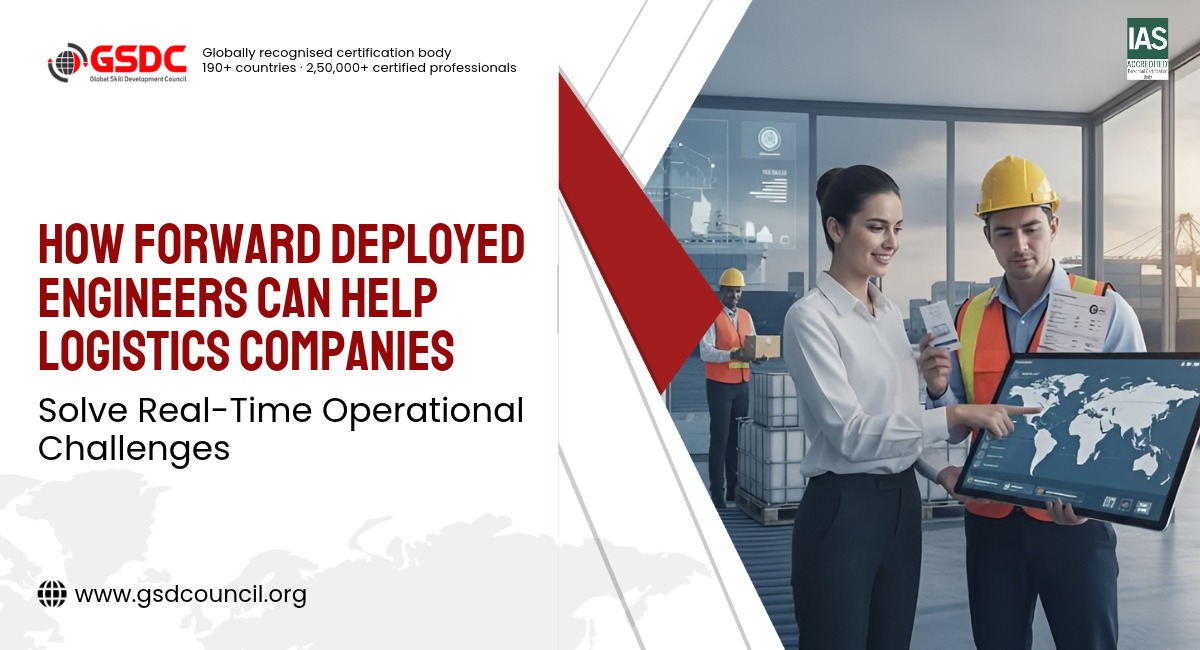
How Forward Deployed Engineers Can Help Logistics Companies Solve Real-Time Operational Challenges
Written by Matthew Hale
- What Is a Forward Deployed Engineer?
- How Is AI Used in Logistics Operations?
- How Forward Deployed Engineers Help Logistics Companies Solve Real-Time Operational Challenges
- Practical Example: How an FDE Can Help Prevent Delivery Delays
- Technical Challenges in Implementing AI in Logistics
- How GSDC Forward Deployed Engineer Certification Can Help You Build Relevant Skills
- Conclusion
Logistics companies manage several activities at the same time, including transportation, warehouse operations, inventory movement, order processing, and delivery coordination. A delay in one area can affect the entire supply chain. For example, a vehicle breakdown, unexpected traffic, inaccurate inventory records, or a sudden change in customer demand can disrupt delivery schedules and increase operational costs.
Today, many companies are adopting AI in logistics to manage these challenges. AI-powered systems can help predict delays, optimize delivery routes, monitor shipments, automate warehouse tasks, and improve supply chain visibility. However, implementing these solutions requires more than selecting an AI tool. Companies must connect different systems, work with real-time data, and ensure that AI solutions support their actual logistics operations.
Forward Deployed Engineers (FDEs) help companies address this gap. They work closely with business teams, understand operational problems, and build and integrate technical solutions that work in real business environments. In this blog, we will explore common logistics challenges and how Forward Deployed Engineers help companies use AI to improve their operations.
What Is a Forward Deployed Engineer?
A Forward Deployed Engineer is a technical professional who works directly with customers and business teams to understand their requirements and implement practical engineering solutions. Unlike traditional development roles that may focus mainly on building products, FDEs work closely with the people using those products and address problems that arise during implementation.
In logistics, an FDE may work with transportation managers, warehouse teams, supply chain professionals, and technology departments to understand operational issues. They use their knowledge of AI, software development, APIs, data systems, and system integration to develop solutions that fit the company's existing processes.
Their responsibilities may include connecting transportation management systems, automating warehouse workflows, developing AI-powered forecasting solutions, and monitoring the performance of deployed systems.
How Is AI Used in Logistics Operations?
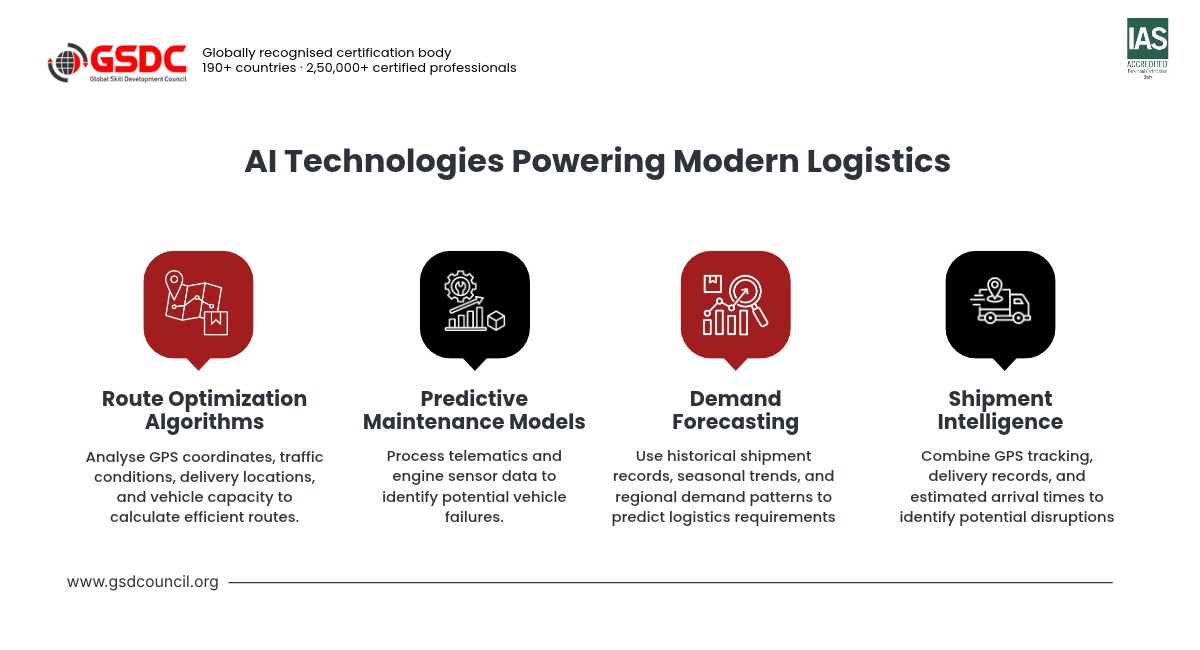
AI in logistics is helping companies manage complex operations, process large amounts of data, and respond to changing conditions. Some common applications include:
- Route Optimization: AI analyzes traffic, weather, delivery locations, and vehicle availability to suggest efficient delivery routes.
- Demand Forecasting: AI studies historical orders, seasonal trends, and market activity to estimate future transportation and inventory requirements.
- Warehouse Automation: AI-powered systems help manage inventory movement, order picking, sorting, and warehouse resource allocation.
- Predictive Maintenance: AI monitors vehicle and equipment data to identify possible failures before they interrupt operations.
- Shipment Tracking: AI processes shipment and location data to identify delays and provide updates to logistics teams.
- Supply Chain Visibility: AI combines information from suppliers, warehouses, carriers, and transportation systems to give businesses a clearer view of their operations.
These applications support logistics automation and help companies make faster decisions. However, their effectiveness depends on accurate data, reliable integrations, and solutions that match real operational requirements.
How Forward Deployed Engineers Help Logistics Companies Solve Real-Time Operational Challenges
Forward Deployed Engineers help logistics companies move from AI adoption to practical implementation. They work with operational teams to identify problems, connect existing systems, and build solutions that can respond to changing conditions.
1. Connect Disconnected Logistics Systems
Logistics companies often use separate platforms for transportation management, warehouse management, inventory tracking, order processing, and shipment monitoring. When these systems do not communicate properly, teams may work with incomplete or outdated information.
For example, a warehouse may update an order status, but the transportation team may not receive that information immediately. This can lead to vehicle scheduling issues, delayed dispatch, and poor delivery coordination.
FDEs help connect these systems so that information can move between departments without unnecessary manual work.
How FDEs approach this:
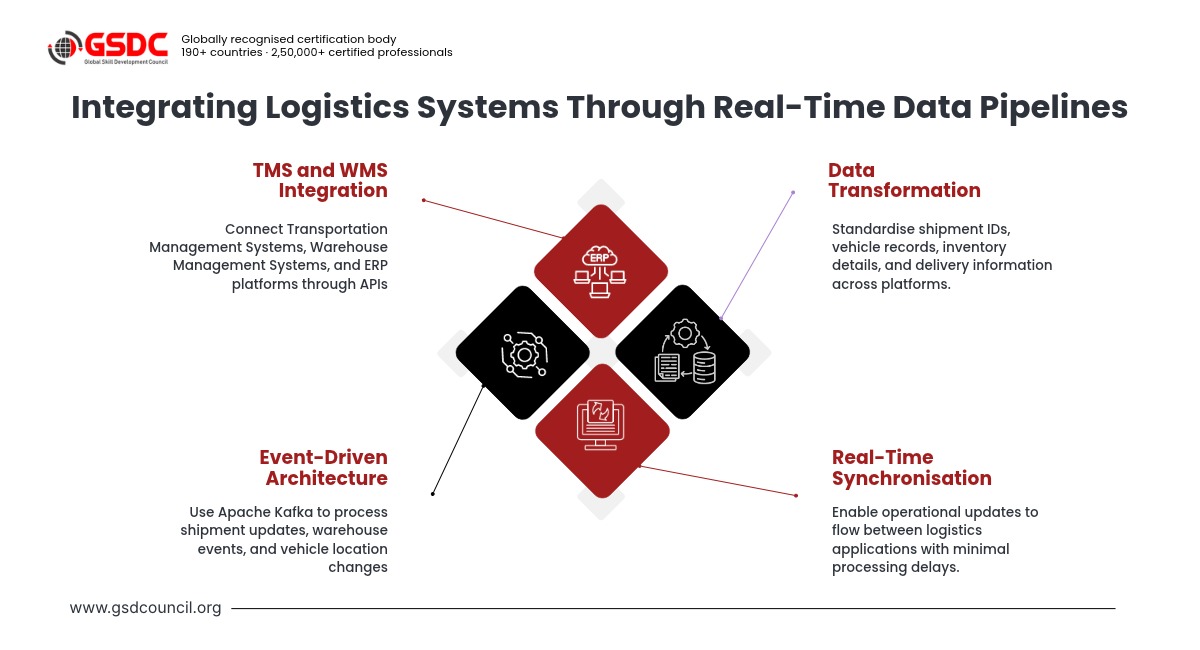
- Connect Existing Platforms: Integrate Transportation Management Systems (TMS), Warehouse Management Systems (WMS), Enterprise Resource Planning (ERP) platforms, and order management systems using APIs.
- Build Data Pipelines: Use tools such as Apache Kafka, cloud data platforms, and event-driven architecture to transfer operational information between systems.
- Improve Data Accuracy: Identify duplicate shipment records, missing delivery details, and inconsistent inventory information before using the data for AI applications.
- Enable Real-Time Updates: Configure event-based integrations so that changes in shipment status, warehouse availability, or vehicle location reach the relevant teams quickly.
This helps logistics companies maintain more consistent information across their operations.
2. Improve Route Planning and Transportation Management
Planning delivery routes is a complex task for logistics companies. Traffic conditions, road closures, fuel costs, vehicle capacity, delivery deadlines, and changing customer requirements can affect transportation schedules.
Traditional route planning may not respond quickly enough when these conditions change. AI-powered logistics optimization can help companies evaluate multiple factors and recommend suitable routes.
FDEs work with transportation teams to implement route optimization solutions that use real-time operational data.
How FDEs approach this:
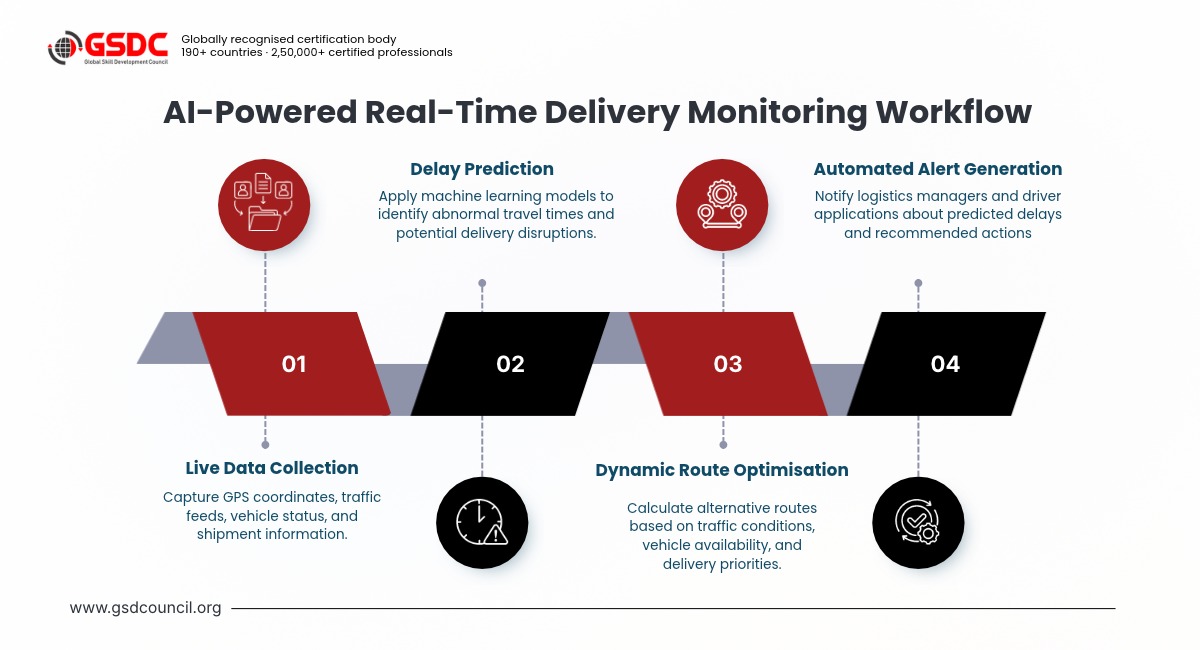
- Collect Transportation Data: Connect GPS devices, vehicle tracking platforms, traffic feeds, weather information, and delivery management systems.
- Develop Route Optimization Models: Implement AI and optimization algorithms that consider delivery locations, vehicle capacity, fuel consumption, and time constraints.
- Support Dynamic Route Changes: Configure systems to recalculate routes when traffic conditions, vehicle availability, or delivery priorities change.
- Integrate Driver Applications: Connect route recommendations with driver-facing applications so that updated instructions reach drivers without unnecessary delays.
For example, if a delivery vehicle encounters unexpected traffic, the system can evaluate alternative routes and share updated recommendations with the transportation team.
3. Improve Demand Forecasting and Inventory Movement
Logistics companies need to plan transportation capacity, warehouse space, and inventory movement based on expected demand. Incorrect forecasts can lead to excess inventory, insufficient stock, poor resource allocation, and increased storage or transportation costs.
AI can analyze historical orders, seasonal demand, sales patterns, supplier information, and regional trends to estimate future requirements.
FDEs help implement forecasting solutions that use relevant business data and support practical supply chain decisions.
How FDEs approach this:
- Integrate Business Data: Connect sales platforms, inventory systems, ERP software, supplier databases, and order management tools.
- Develop Forecasting Models: Implement machine learning models that identify demand patterns and estimate future inventory and transportation requirements.
- Monitor Inventory Movement: Connect warehouse and shipment data to identify stock shortages, excess inventory, and delays in product movement.
- Build Operational Alerts: Configure alerts when inventory levels fall below defined thresholds or when demand changes significantly.
These solutions help logistics teams plan inventory movement more effectively and respond to changing demand.
4. Automate Warehouse and Logistics Workflows
Warehouse and transportation teams handle several repetitive activities, including order verification, shipment documentation, inventory updates, dispatch coordination, and delivery status communication. Manual processes can slow down operations and increase the possibility of errors.
Logistics automation can reduce repetitive work by using AI-powered applications, workflow automation, and AI agents.
FDEs help companies identify suitable processes for automation and integrate these solutions into their existing systems.
How FDEs approach this:
- Identify Repetitive Tasks: Work with warehouse and logistics teams to identify activities such as order entry, document verification, shipment updates, and dispatch notifications.
- Implement Workflow Automation: Use APIs, workflow platforms, and automation frameworks to connect different operational tasks.
- Build AI Agents: Develop AI agents that can retrieve shipment information, check order details, summarize delivery updates, and support routine operational decisions.
- Add Human Approval: Configure approval steps for important actions such as shipment cancellations, changes to delivery schedules, and inventory adjustments.
For example, an AI agent can retrieve an order's shipment status, identify missing delivery information, and notify the responsible team. Actions that affect customers or operational commitments can still require human approval.
5. Improve Shipment Tracking and Delay Management
Delayed shipments can affect customer satisfaction, delivery commitments, and business operations. Logistics teams may receive updates from different carriers, GPS platforms, warehouses, and delivery partners. When this information is spread across multiple systems, identifying a delay and responding to it can take time.
AI-powered shipment monitoring can help companies identify unusual delivery patterns and flag possible disruptions.
FDEs help build systems that combine shipment information and make it easier for teams to respond to delays.
How FDEs approach this:
- Connect Tracking Systems: Integrate GPS devices, carrier platforms, shipment management software, and delivery applications.
- Monitor Real-Time Events: Process vehicle location, shipment status, estimated arrival times, and delivery updates.
- Identify Delay Patterns: Use machine learning models to detect unusual travel times, repeated route delays, and possible delivery disruptions.
- Generate Alerts: Notify logistics managers when a shipment is likely to miss its expected delivery time and provide relevant information for further action.
This allows teams to identify potential problems earlier and coordinate with drivers, carriers, and customers.
6. Monitor Vehicle Performance and Predict Maintenance Requirements
Vehicle breakdowns can interrupt transportation schedules, delay deliveries, and increase maintenance costs. Waiting until a vehicle develops a serious fault can create additional operational problems.
Predictive maintenance uses AI to analyze vehicle and equipment data and identify signs of possible failures.
FDEs help logistics companies connect vehicle monitoring systems with AI-based maintenance solutions.
How FDEs approach this:
- Collect Vehicle Data: Integrate telematics devices, engine sensors, GPS systems, and vehicle maintenance records.
- Analyze Performance Patterns: Use machine learning models to identify unusual temperature readings, engine performance changes, fuel consumption patterns, and other warning signs.
- Create Maintenance Alerts: Configure notifications when vehicle data indicates that an inspection or maintenance check may be required.
- Connect Maintenance Workflows: Integrate alerts with fleet management and maintenance systems so that teams can schedule inspections and track service activities.
This helps fleet managers make maintenance decisions based on vehicle condition rather than relying only on fixed schedules.
Practical Example: How an FDE Can Help Prevent Delivery Delays
Consider a logistics company that manages deliveries across multiple cities. Its transportation team uses GPS tracking, a separate shipment management platform, and spreadsheets to monitor delivery schedules. When traffic conditions change or a vehicle breaks down, the team struggles to identify affected shipments and update delivery plans quickly.
The company decides to implement an AI-powered shipment monitoring solution.
A Forward Deployed Engineer works with the transportation and technology teams to understand the problem and implement the solution.
The implementation process may include:
- Understand the Problem: The FDE works with transportation managers to identify why delivery delays are difficult to detect and manage.
- Connect Existing Systems: The FDE integrates GPS tracking, shipment management software, traffic data, and delivery records.
- Build AI-Based Monitoring: A machine learning model analyzes vehicle locations, delivery schedules, traffic conditions, and historical travel times to identify possible delays.
- Generate Real-Time Alerts: The system notifies logistics managers when a shipment is likely to arrive later than expected.
- Recommend Alternative Actions: The solution can suggest alternative routes or help teams identify other available vehicles.
- Monitor the Solution: The FDE evaluates system performance, checks the accuracy of delay predictions, and makes improvements based on operational feedback.
With this implementation, the logistics company can identify potential disruptions earlier and coordinate its response more effectively.
Technical Challenges in Implementing AI in Logistics
Although AI can support logistics optimization, implementing it across real operational environments involves several technical challenges.
- Fragmented Data: Information from warehouses, carriers, vehicles, and suppliers may be stored in different formats and systems.
- Real-Time Data Processing: Logistics applications need to process frequent updates from GPS devices, sensors, and shipment platforms.
- Legacy System Integration: Older transportation and warehouse platforms may not support modern APIs or direct integrations.
- Data Quality: Incorrect shipment records, missing location information, and outdated inventory data can affect AI predictions.
- System Reliability: AI applications must remain dependable during high-volume operations and unexpected disruptions.
- Security and Data Privacy: Logistics companies need to protect customer information, shipment records, business data, and connected systems.
- Model Performance: Changes in traffic patterns, demand, and operational conditions can affect prediction accuracy over time.
Forward Deployed Engineers work with technical and operational teams to address these challenges during development, integration, testing, and deployment.
How GSDC Forward Deployed Engineer Certification Can Help You Build Relevant Skills
As logistics companies adopt AI, automation, and connected technology, they need professionals who can understand business requirements and implement solutions in real operational environments.
The GSDC Forward Deployed Engineer Certification is designed for professionals who want to develop knowledge of AI applications, engineering implementation, system integration, and practical problem-solving.
The certification can be relevant to:
- Software developers and engineering professionals interested in AI implementation.
- AI and machine learning professionals working on real-world business applications.
- Solutions engineers and technical consultants involved in customer-facing projects.
- Logistics and supply chain technology professionals exploring AI-driven operations.
- Organizations looking to develop their employees' capabilities in AI and engineering implementation.
The FDE Certification helps learners build a foundation in Forward Deployed Engineering and understand how technical solutions can address business and operational requirements.
Explore the GSDC Certified Forward Deployed Engineer Certification to learn more.
Conclusion
Logistics companies face changing operational conditions every day. Delivery delays, disconnected systems, inaccurate forecasts, vehicle breakdowns, and warehouse inefficiencies can affect the entire supply chain.
AI can help companies manage these challenges through route optimization, predictive maintenance, shipment monitoring, demand forecasting, and logistics automation. However, these solutions need to work with existing systems and support the actual needs of logistics teams.
Forward Deployed Engineers help make this possible by connecting business requirements with engineering implementation. They work directly with operational teams, integrate AI into existing workflows, and monitor solutions after deployment. As AI adoption continues across logistics and supply chain operations, the role of FDEs will remain relevant to companies looking to turn AI capabilities into practical business solutions.

Related Certifications
Stay up-to-date with the latest news, trends, and resources in GSDC
If you like this read then make sure to check out our previous blogs: Cracking Onboarding Challenges: Fresher Success Unveiled
Not sure which certification to pursue? Our advisors will help you decide!