Full Stack Developer Report: Pay Scale, Skills & Opportunities
Written by Emily Hilton
In this era, businesses run on software and the people who build it are at the heart of innovation. Among them, full stack developers stand out for their versatility. They’re the ones who can design an interface, build server logic, and connect it all to a database, making them an invaluable bridge between ideas and execution.
If you’ve ever wondered what is a full stack developer, how to become a full stack developer, or what does a full stack developer do, this report will answer all three with insights into pay scale, essential skills, certifications, and the career roadmap ahead. Let’s break down why this profession is booming and how you can become a part of it.
What Is a Full Stack Developer?
Simply put, a full stack developer is a professional who can work on both the front-end (what users see) and the back-end (what powers it). That means they’re comfortable switching between building beautiful user interfaces and writing logic that processes data or interacts with servers.
To understand what does a full stack developer do, think of them as the architects of digital products. They code in HTML, CSS, and JavaScript for the front-end, use frameworks like React or Angular for interactive designs, and handle server-side tasks using Python, Node.js, or Java. They also connect applications to databases like MySQL or MongoDB and ensure smooth deployment using tools like Docker or AWS.
In short, a full stack developer is an all-rounder who can deliver a project from concept to deployment.
How to Become a Full Stack Developer?
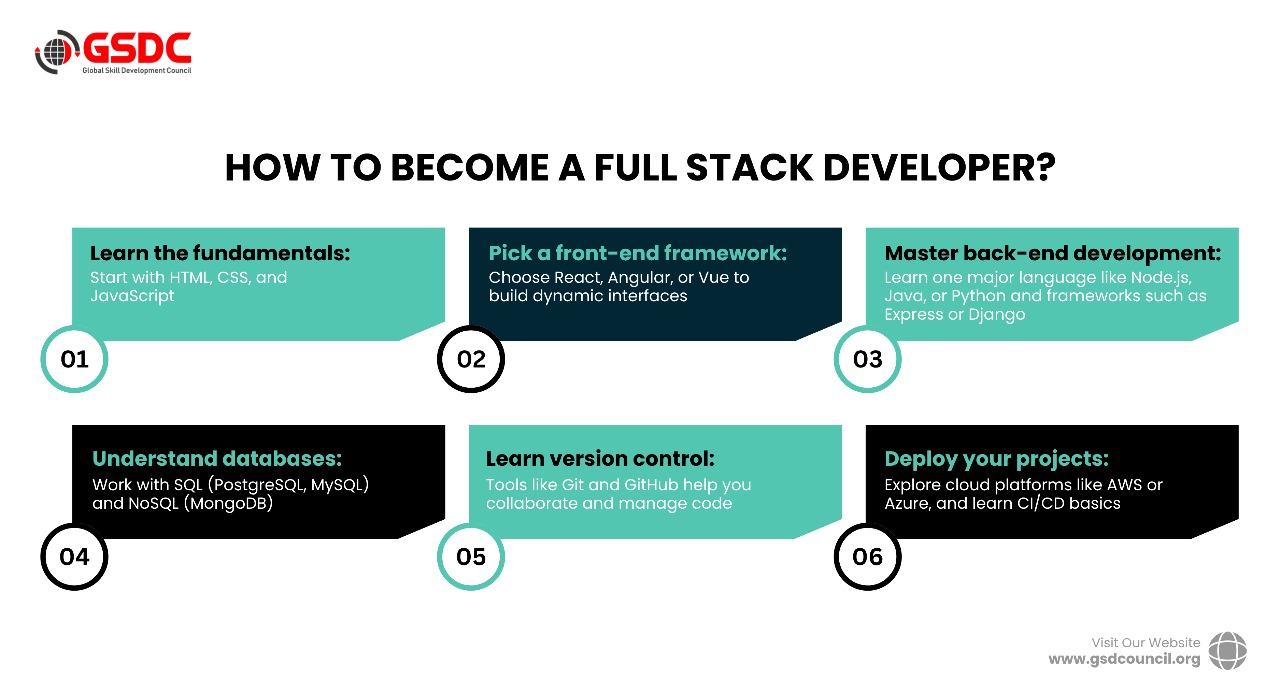
So, how to become a full stack developer in today’s competitive tech environment? It’s a mix of structured learning, hands-on projects, and consistent practice. The journey typically begins with understanding how web applications work from client to server to database.
A typical full stack developer roadmap looks like this:
- Learn the fundamentals: Start with HTML, CSS, and JavaScript.
- Pick a front-end framework: Choose React, Angular, or Vue to build dynamic interfaces.
- Master back-end development: Learn one major language like Node.js, Java, or Python and frameworks such as Express or Django.
- Understand databases: Work with SQL (PostgreSQL, MySQL) and NoSQL (MongoDB).
- Learn version control: Tools like Git and GitHub help you collaborate and manage code.
- Deploy your projects: Explore cloud platforms like AWS or Azure, and learn CI/CD basics.
Many professionals also pursue a full stack developer certification, which provides structured learning and validation of skills. These certifications from GSDC enhance employability and show recruiters that you’ve mastered both theory and practice.
Essential Full Stack Developer Skills
The demand for full stack professionals is high because they bring a diverse set of skills to the table. The most valuable full stack developer skills include:
- Front-end development: HTML, CSS, JavaScript, React, or Angular.
- Back-end programming: Node.js, Java, Python, PHP, or .NET.
- Database management: MySQL, PostgreSQL, MongoDB.
- APIs and web services: RESTful and GraphQL APIs.
- Version control: Git and GitHub for team collaboration.
- Cloud & DevOps basics: AWS, Azure, Docker, and Jenkins for deployment.
- Soft skills: Problem-solving, teamwork, adaptability, and communication.
With the right mix of these technical and interpersonal skills, full stack developers can take ownership of complex projects and deliver end-to-end solutions, a reason they’re so highly valued.
Full Stack Developer Certification: Is It Worth It?
In a competitive market, employers often look for credentials that prove real-world competence. That’s where a full stack developer certification can make a difference. These certifications usually cover both client-side and server-side technologies, project work, and real-world problem-solving.
Also learners completing professional certifications in full stack development report an average salary boost of 20–30% within a year of completion. It also helps career changers transition smoothly from other domains like design, IT support, or marketing into coding roles.
If you’re serious about your career, combining hands-on experience with certification is one of the most effective strategies in the full stack developer roadmap.
Pay Scale: What Does a Full Stack Developer Earn?
Now, let’s talk about what most professionals are curious about compensation. Full stack development is among the highest-paying roles in tech because it combines multiple competencies in one person.
- In the United States, the average full stack developer salary is around $132,000 per year, according to Indeed as per 2025 data.
- On Glassdoor, senior developers with 5–10 years of experience earn between $120,000 and $160,000 annually, with additional bonuses averaging $10,000–$15,000.
- In India, the average pay for a full stack developer is ₹9–12 lakhs per year, while highly experienced professionals earn upwards of ₹18–20 lakhs annually (source: AmbitionBox 2025).
- Entry-level developers typically start around ₹4–6 lakhs but can double that within 2–3 years of consistent upskilling.
Your pay largely depends on location, experience, the stack you specialize in, and the complexity of projects you handle. Developers skilled in React, Node.js, and cloud deployment usually command higher salaries.
Opportunities and Career Growth
Full stack developer careers are expanding faster than ever. With digital transformation sweeping across industries, companies want developers who understand both user experience and business logic.
Full stack developers can work across diverse industries from fintech and e-commerce to healthcare and AI startups. Roles can range from:
- Junior Full Stack Developer
- Software Engineer
- Full Stack Engineer / Architect
- Technical Lead
- Product Engineer or CTO (in startups)
According to the U.S. Bureau of Labor Statistics, software development jobs are expected to grow 25% by 2032, much faster than the average for all occupations. This ensures long-term job security and steady demand for skilled developers worldwide.
Those following a full stack developer roadmap also find it easier to transition into product management, DevOps, or cloud engineering roles thanks to their holistic technical understanding.
Why Choose Full Stack Development?
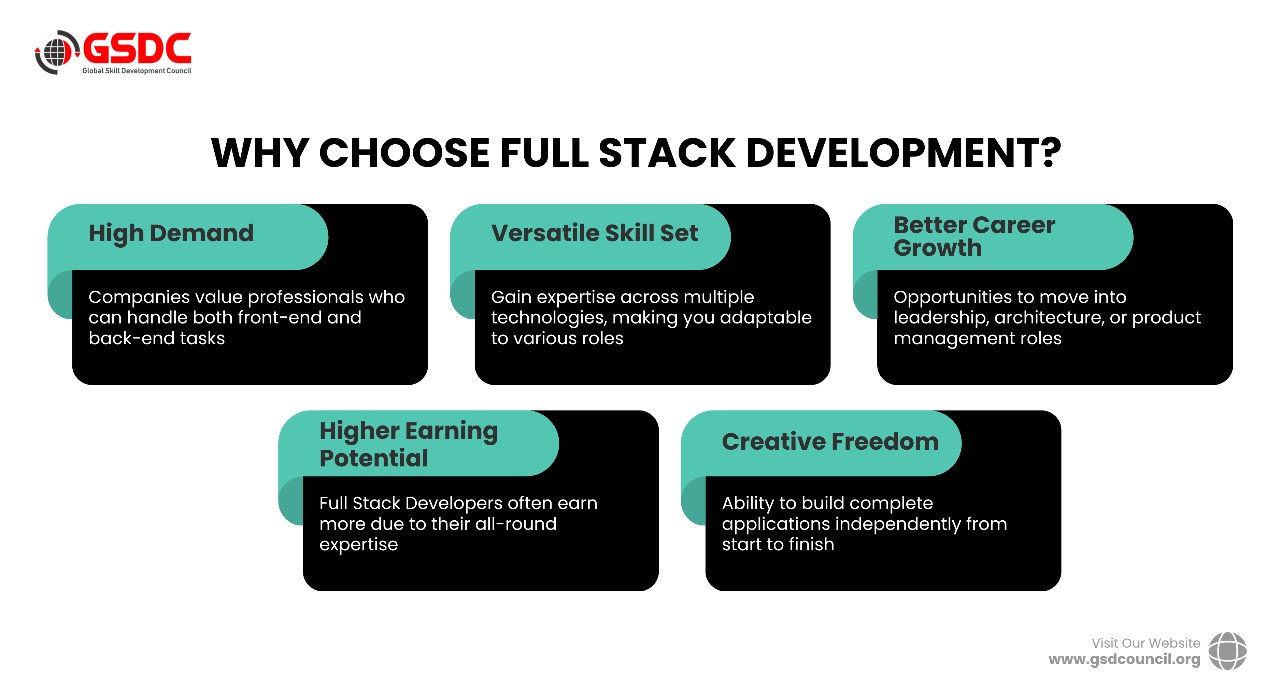
Choosing this career path means becoming a problem solver who can handle any part of a digital project. You’ll never be confined to just one layer of development you’ll have the flexibility to design, build, and launch applications end-to-end.
Moreover, as businesses move toward automation and AI-powered applications, the demand for developers who can integrate multiple technologies is skyrocketing. Whether you’re in a startup environment or a large enterprise, full stack developer careers offer constant learning, creativity, and global relevance.
Final Thoughts
If you’re still wondering what is a full stack developer think of them as the “Swiss Army knife” of the software world. They design, build, test, and deploy. The journey of how to become a full stack developer might seem long, but with the right full stack developer roadmap, strong full stack developer skills, and perhaps a recognized full stack developer certification, you can unlock an exciting career path filled with growth and high earning potential.
In summary, what does a full stack developer do? They make ideas real translating business goals into seamless digital experiences. And as technology continues to evolve, so will the full stack developer careers shaping the next wave of innovation.

Related Certifications
Stay up-to-date with the latest news, trends, and resources in GSDC
If you like this read then make sure to check out our previous blogs: Cracking Onboarding Challenges: Fresher Success Unveiled
Not sure which certification to pursue? Our advisors will help you decide!