Why Full Stack Development Is a Strong Career Choice in 2026
Written by Matthew Hale
The demand for full stack developers continues to grow as businesses seek faster development cycles and fewer handoffs between teams. Companies value professionals who understand the full system, which improves speed, collaboration, and delivery quality across projects.
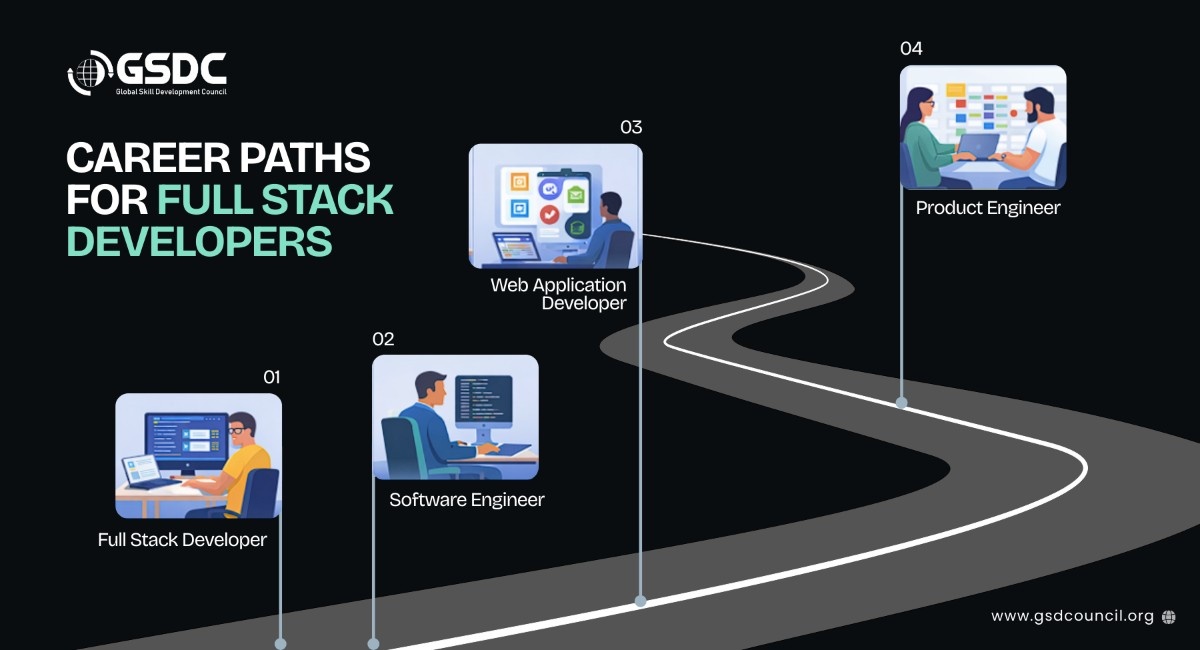
Strong demand across SaaS, fintech, healthcare, and e-commerce, along with flexible career paths into front-end, back-end, and product engineering roles, makes full stack development a versatile and future-ready career choice. According to a LinkedIn Global Jobs Report, full stack developer roles consistently rank among the top 5 most in-demand technology jobs worldwide, with job postings showing strong year-over-year growth.
In addition, full stack developer salary remain highly competitive in 2026, making this career path an attractive long-term option for both freshers and experienced professionals.
Essential Skills for a Full Stack Developer in 2026
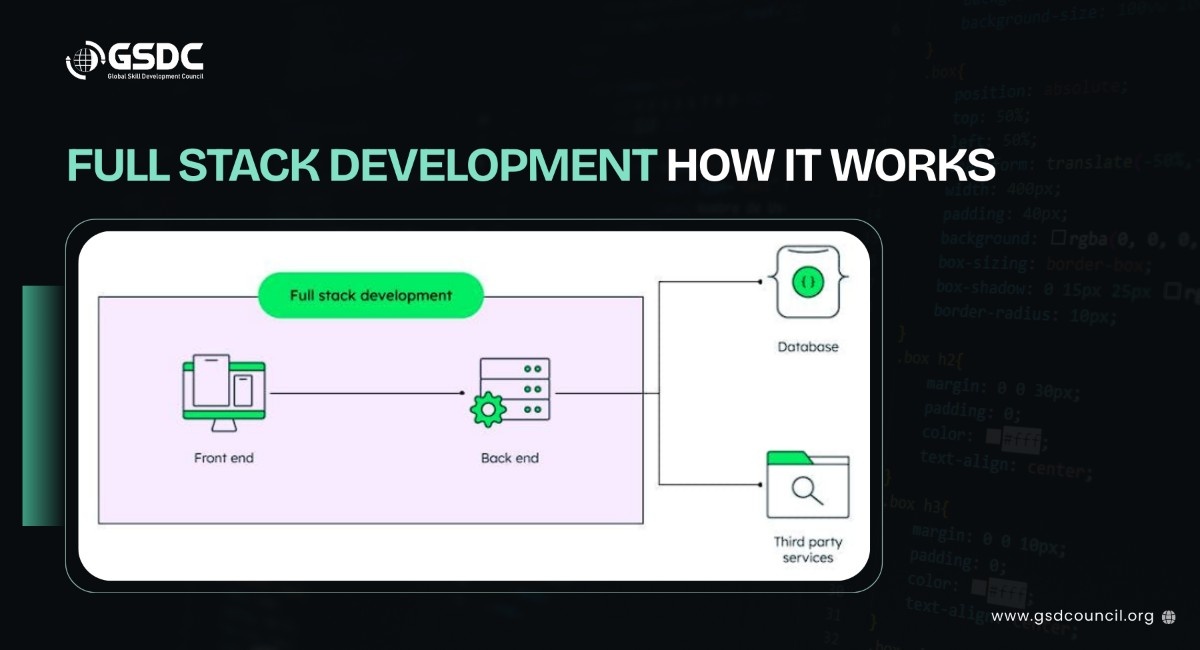
A modern full stack developer roadmap must include technical depth, system-level thinking, and cloud-native skills. Today’s industry expects full stack developers to contribute across the entire application lifecycle, from development to deployment and ongoing optimization.
1. Front-End Development Skills
Focus: Creating user interfaces and experiences.
The basics of front-end development include HTML5, CSS3, JavaScript (ES6+), and TypeScript. Then there are frameworks such as React.js, Next.js, Angular, and Vue.js, which are required for developing scalable user interfaces and are the key to how to become a full stack developer.
2. Skills for Back-End Development
Focus: Business logic and APIs.
Node.js, Python, Java, and PHP frameworks are used for back-end development. The major topics include REST APIs, authentication, security of APIs, and microservices.
Internal Imagel:
3. Database & Data Management
Focus: Application data and performance.
Full stack developers are familiar with SQL (PostgreSQL, MySQL) and NoSQL (MongoDB, Firebase, Redis) databases. Database schema design, optimisation, and security are essential for robust applications.
4. Version Control & Collaboration
Focus: Team-based development workflows.
Git and GitHub/GitLab are common tools. Code reviews and pull requests guarantee quality, collaboration, and efficient team development.
5. Cloud, DevOps & Deployment
Focus: Production deployment of applications.
AWS, Azure, and Google Cloud platforms, as well as Docker and CI/CD pipelines, are must-haves. Cloud expertise enhances job prospects and may impact full stack developer salary potential.
6. AI & Automation Awareness
Focus: Intelligent application features.
There is a growing need for AI APIs, chatbots, and automation solutions. These skills enhance the value of projects and overall professional relevance. Most professionals also enhance this skill set through learning initiatives and recognised programs offered by bodies such as GSDC (Global Skill Development Council) to keep up with the latest full stack and AI integration requirements.
Popular Full Stack Technology Stacks in 2026
There are many great technology stacks, which are the core of full stack development in 2026.
1. MERN Stack (MongoDB, Express. js, React. js, Node. js):
This is probably the most popular technology stack for developing web applications. The MERN stack is applauded because it enables developers to create applications based on JavaScript only.
2. MEAN Stack (MongoDB, Express. js, Angular, Node. js):
Though it is similar to the MERN stack, the only distinction is that Angular is used as the front-end framework here. It is generally an enterprise preference where the structured method of Angular is supported.
3. Python Stack (Django or Flask with React):
If one is developing a data-focused application with a strong backend, then this is the right stack. Python stacks are the talk of the town in startups, AI platforms, and rapid development settings.
4. Java Stack (Spring Boot with React or Angular):
Generally, it is the big conglomerates and verticals that use them. The Java stack is best known for its speed, security, and maintainability.
The JavaScript Stacks have continuously dominated the popularity charts due to their versatility, large community, and third-party support. A lot of people align their learning roadmaps and stack picks with Full Stack Developer Certification courses to ascertain their hands-on expertise in these popular technologies.
Step-by-Step Full Stack Developer Roadmap
This full stack developer roadmap is a guide to the skills you need to learn if you want to become a full stack developer.
1. Learn HTML, CSS, and JavaScript basics
It is necessary to take some basic web development courses to familiarise yourself with the creation of the structure and layout of a web page. This is a fundamental skill that you must have if you want to become a full stack developer.
2. Master a modern front-end framework (React recommended):
You need to learn how to develop user interfaces that can be scaled and reused. React can be used to build scalable user interfaces.
3. Learn one back-end language and framework:
Use Node. js, Python, Java, or PHP for server-side logic creation. You have to figure out how to develop APIs, manage business logic, and carry out authentication processes.
4. Work with SQL and NoSQL databases:
Get some practice working with SQL databases like PostgreSQL or MySQL and NoSQL databases like MongoDB. Learn how to create schemas, index data, optimise queries, and set up basic data security.
5. Build real-world projects:
Shine by creating dashboards, e-commerce applications, or SaaS platforms. Not only will we solidify our understanding of the concepts, but through these projects, we get to showcase our skills and create a portfolio that potential employers would really appreciate.
6. Use Git for version control:
Learn Git workflows to track changes, collaborate with teams, and manage code safely. Understanding branching, pull requests, and code reviews is essential for professional development environments.
7. Host your applications on the cloud:
Train yourself in launching web apps on cloud platforms like AWS, Azure and Google Cloud. Learn to complete the setup of the environment, basic DevOps and monitoring and managing live applications.
8. Incorporate AI and anti-fraud capabilities:
Integrate AI APIs, chatbots, and automation of workflows for deploying smart functionalities. Developing these skills will greatly improve your projects and keep your profile up to date with modern-day application requirements.
By following this roadmap, you will be doing the best thing possible to learn how to become a full stack developer from scratch.
Full Stack Developer Salary in 2026
Another major reason for the popularity of this profession is that the full stack developer salary is very competitive in 2026.
According to Glassdoor (January 2026), the average full stack developer salary in India is approximately $9,200 per year, with most people earning between $5,200 and $16,300 per year based on experience, location, and company.
Senior full stack developers and people with high expertise in cloud, DevOps, and AI can earn $24,000+ per year, and certification, tech stack, and company type can also impact the salary.
Full Stack Developer Learning Paths and Certifications
Many learners choose to speed up their learning process by enrolling in a full stack developer course that provides structured learning. This way, learners can develop skills that are job-ready and relevant to a professional environment.
Obtaining a certification in full stack development will further enhance your employability and help you get noticed for better-paying jobs. You can obtain certifications from globally recognised institutions such as GSDC (Global Skill Development Council), which will help you align your profile with global skill requirements.

Final Thoughts
Being a Full Stack Developer in the year 2026 is much more than just coding. It is all about understanding systems, designing scalable systems, and learning new technologies to keep up with the ever-changing world of technology.
Following a well-planned full stack developer roadmap, enrolling in a suitable full stack developer course, and obtaining a recognized full stack developer certification are the key elements that can help you achieve strong long-term career growth, high employability, and a competitive full stack developer salary potential across a variety of industries.
So, if you're really considering how to become a full stack developer, this roadmap is definitely going to lead you towards a successful career in one of the most future-proof and in-demand tech professions of 2026.

Related Certifications
Stay up-to-date with the latest news, trends, and resources in GSDC
If you like this read then make sure to check out our previous blogs: Cracking Onboarding Challenges: Fresher Success Unveiled
Not sure which certification to pursue? Our advisors will help you decide!