Generative AI in 2026: Key Trends Every Enterprise Leader Should Know
Written by Matthew Hale
Generative AI adoption surged in 2025, with usage rising from 33% of enterprises in 2023 to 71% in 2024, signaling a rapid shift from experimentation to real-world implementation.
In 2026, many business leaders have progressed from asking questions about what is generative AI to taking note of the latest generative AI trends in 2026 and how to leverage generative AI capabilities to enhance their strategy and operations, as well as their decision-making processes.
As the generative AI industry evolves, enterprises are shifting from isolated pilots to enterprise-wide platforms that embed intelligence into workflows and core systems. These generative AI market trends point to where the future of generative AI is defined by its role as foundational infrastructure rather than standalone tools.
Why Generative AI Matters for Enterprises
Generative AI is no longer just about creating content. As these models continue to become more advanced and widespread, businesses are increasingly integrating them into knowledge work, increasing speed for tasks that require repetition, as well as assisting strategic decisions. Business leaders are also backing up these gains by investing in more modern generative AI tools that will allow for seamless integration with their current enterprise applications.
Organisations are on the way to achieving these goals with the help of generative AI:
- Increase the operational efficiency through intelligent automation
- Elevate customer experience with AI-powered assistants
- Speed up research, analysis, and business reporting
- Assist product development and innovation
- Allow quicker, data, driven decision, making
As adoption expands, generative AI is thus becoming a core competence that underpins both daily operations and the long-term strategy of the entire enterprise. For practitioners, gaining hands-on experience through a well-organized reskilling program is a necessity if they want to play an effective role in enterprise AI initiatives; for instance, becoming a Certified Generative AI Professional.
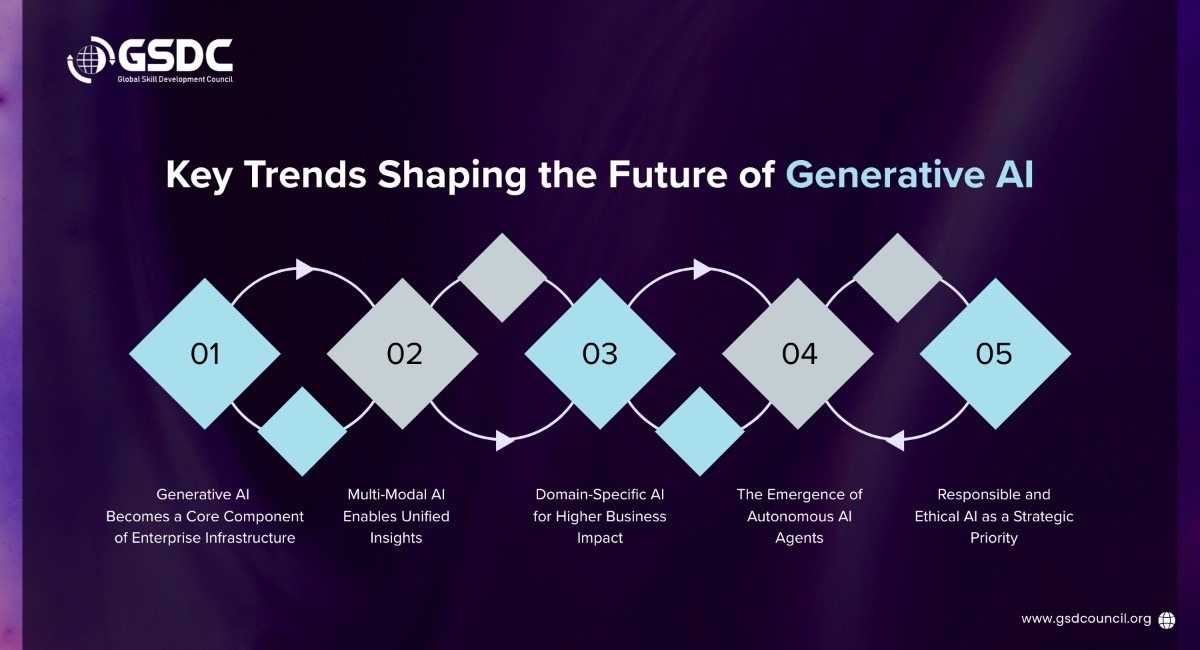
Key Trends Shaping the Future of Generative AI
In order to successfully implement and scale a generative AI strategy to the enterprise level, it's essential for leaders to understand the trends that will influence their organizations and the style of generative AI implementation between now and 2026. Here are five key trends impacting the movement towards enterprise-grade generative AI implementations:
1. Generative AI Becomes a Core Component of Enterprise Infrastructure.
The transition from generative AI as stand-alone components to becoming enterprise solutions that are integrated into an organization’s ERP system, CRM system, and service management system is a reflection of the overall trend towards integrating AI into workflows so that it is automatically present in the routine daily operations of the workforce.
2. Multi-Modal AI Enables Unified Insights.
The latest generation of generative AI models allows modern organizations to combine their many disparate data sources, so that they can use those combined sources to generate/produce insight that can be translated into reports, analytics, and strategic direction on a large scale.
3. Domain-Specific AI for Higher Business Impact
Enterprises are moving beyond generic AI implementations toward domain-specific solutions tailored to industry and functional needs. This trend across the generative AI industry improves relevance, accuracy, and business impact, helping organisations achieve stronger ROI.
4. The Emergence of Autonomous AI Agents
The AI landscape today includes agent-based systems as a notable trend in generative AI for 2026. Agents can be used to control workflows, conduct task management, and perform tasks with minimal human intervention. You will see them deployed in customer support, IT management, and internal support positions.
5. Responsible and Ethical AI as a Strategic Priority
As generative AI moves into essential operations, governance stands out prominently, along with transparency and responsible AI use, which emerge as top leadership imperatives. This, in turn, is shaping the future of generative AI, especially in regulated and enterprise contexts.
Practical Enterprise Use Cases
Many companies are now using Generative AI in ways that produce tangible and quantifiable benefits. The following are examples of the various ways generative AI is being applied practically across core functions of business:
- Customer Service: AI-based assistants are addressing repetitive inquiries and are providing real-time assistance for agents providing customer service. Companies such as Salesforce and Amazon are using generative AI within their Service Platforms to provide faster responses and to enhance the customer experience.
- IT Operations: AI is utilized for the purpose of examining incidents, retrieving knowledge, and for automating services. Firms using the Microsoft and ServiceNow platforms are leveraging the use of generative AI technologies to improve the efficiency of their IT Service Management (ITSM) processes.
- Knowledge Management: AI provides the means to summarize documents, policies, and research, thereby allowing for more rapid access to this information. Firms like Morgan Stanley leverage the generative AI capabilities of their Internal Knowledge Bases (IKBs) to support their advisors and teams with insights from those databases.
- Product and innovation teams: AI supports ideation, documentation, and early-stage design. Automotive leaders like BMW and Toyota apply generative AI to accelerate design exploration and concept development.
- Business Reporting and Analytics: AI can create executive summaries and identify trends from complex data sets. Companies like Amazon utilize AI to summarize feedback from customers and operational data to help facilitate faster decision-making.
Such use cases demonstrate the integration of generative AI models and tools into the daily work of enterprises from being isolated pilots, they are now scalable, production-ready impacts. Along with the rise in adoption, companies are also putting money into capability, building, and professional standards, with organisations like the Global Skill Development Council (GSDC) contributing to the workforce preparedness for enterprise AI adoption.
What This Means for Business Leaders
Leaders should not view understanding the latest trends in generative AI simply as keeping up with technology; it is also about how ready their organisations are. In fact, if the organisations want to get real long-term benefits out of generative AI tools and platforms, they have to:
- Ensure that generative AI projects support the overall business strategy
- Give priority to data quality, security, and system integration
- Develop their own staff to be able to collaborate productively with generative AI models
- Encourage responsible AI use through their corporate culture
- Stop working on isolated tests and start rolling out the solutions across the whole organisation
Basically, this turnaround is consistent with the overall generative AI market trends, where leadership maturity becomes the primary factor for success.
Challenges to Expect
Despite the pace at which they are advancing, all organisations are experiencing common challenges on the journey to scaled Generative AI:
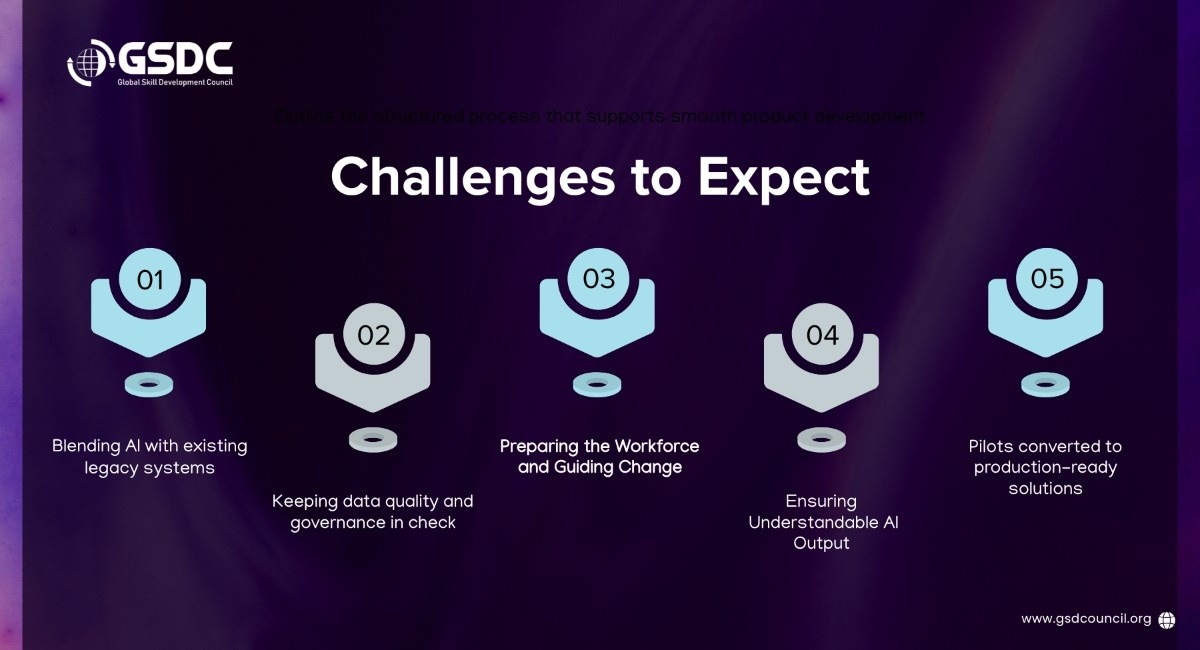
Addressing these early is essential for organisations looking to realise the full future of generative AI.
Preparing for the Next Phase of AI-Driven Transformation
To stay aligned with generative AI trends 2026, organisations should take a structured approach:
- Identify high-impact, low-risk use cases
- Establish AI governance frameworks
- Invest in upskilling through structured learning, including generative AI courses and internal training
- Pilot solutions before scaling enterprise-wide
- Measure business outcomes and continuously refine AI-enabled processes
As demand for skills grows, professional development options such as generative AI certification are also becoming part of enterprise talent strategies, helping teams build practical, role-relevant AI capabilities.
Developing AI-Ready Teams
As generative AI becomes part of everyday enterprise workflows, organisations are focusing on building internal capability alongside technology adoption. Industry bodies such as the Global Skill Development Council (GSDC) and credentials like the Certified Generative AI Professional reflect the growing emphasis on structured skill development to support responsible, scalable AI use.
Conclusion
In 2026 and beyond, generative AI trends will continue to reshape how organisations operate, innovate, and compete. The evolution of generative AI models, tools, and platforms reflects a broader transformation within the generative AI industry from experimentation to enterprise advantage.
Organisations that understand what are the emerging trends in generative AI, invest in skills, and embed AI responsibly into business processes will be best positioned to lead in the future of generative AI.

Related Certifications
Stay up-to-date with the latest news, trends, and resources in GSDC
If you like this read then make sure to check out our previous blogs: Cracking Onboarding Challenges: Fresher Success Unveiled
Not sure which certification to pursue? Our advisors will help you decide!