Generative AI Salaries 2026: Roles, Pay, and Careers
Written by Matthew Hale
- Generative AI Salaries in 2026: What the Market Looks Like
- Why Generative AI Roles Are Paid at a Premium
- Generative AI Examples in Real Business Use
- How Does Generative AI Work?
- Generative AI Career Path: Step-by-Step (with 2026 Salaries)
- How to start a career in generative AI:
- Strengthen Your Generative AI Profile
- The Future of AI Salaries
- Conclusion
Technology-shaped careers do tend to appear and disappear; however, generative AI is turning out to be much more than a mere flash in the pan. Companies are changing their workflows with AI-driven tools as the central element, resulting in the creation of new roles as well as the reshaping of existing ones.
Generative artificial intelligence is changing the nature of work, and a question that keeps arising is: how much can you make in a generative AI career?
Current patterns in generative AI salaries indicate two things: these reflect the pace at which the technology is being absorbed into various sectors; at the same time, the skills connected with working with large language models (LLMs), prompt engineering, and AI-driven workflows are so valuable that employers consider them a premium.
In this post, we discuss generative AI salaries in 2026, the main roles that are leading pay growth, the process of generative AI, some real-life generative AI use cases, and the implications of these for your generative AI career path in the long run.
Generative AI Salaries in 2026: What the Market Looks Like
One of the fastest-emerging roles in the generative AI ecosystem is the prompt engineer who designs and refines inputs to guide models toward useful, reliable outputs. Alongside this, organizations are also hiring AI engineers and applied AI specialists to move generative AI systems from pilots into production.
Here’s a simple snapshot of generative AI salaries based on global industry reports:
|
Role / Level |
Global Annual Salary Range |
|
Entry-level (Prompt / GenAI roles) |
$60,000–$120,000+ |
|
Mid-level (GenAI / ML Engineers) |
$90,000–$150,000+ |
|
Senior / Lead GenAI roles |
$150,000–$300,000+ |
Entry-level professionals with foundational generative AI skills already see competitive compensation, while experienced practitioners working on high-impact AI initiatives often command significantly higher pay.
Experience remains one of the strongest predictors of growth. As professionals build deeper technical understanding and apply generative AI at scale, generative AI salaries continue to rise, reflecting how organizations increasingly value real-world impact over experimentation.
Why Generative AI Roles Are Paid at a Premium
Various aspects supported by data explain that salaries for generative AI professionals are generally higher than those for many conventional technology positions:
High Demand and Limited Talent
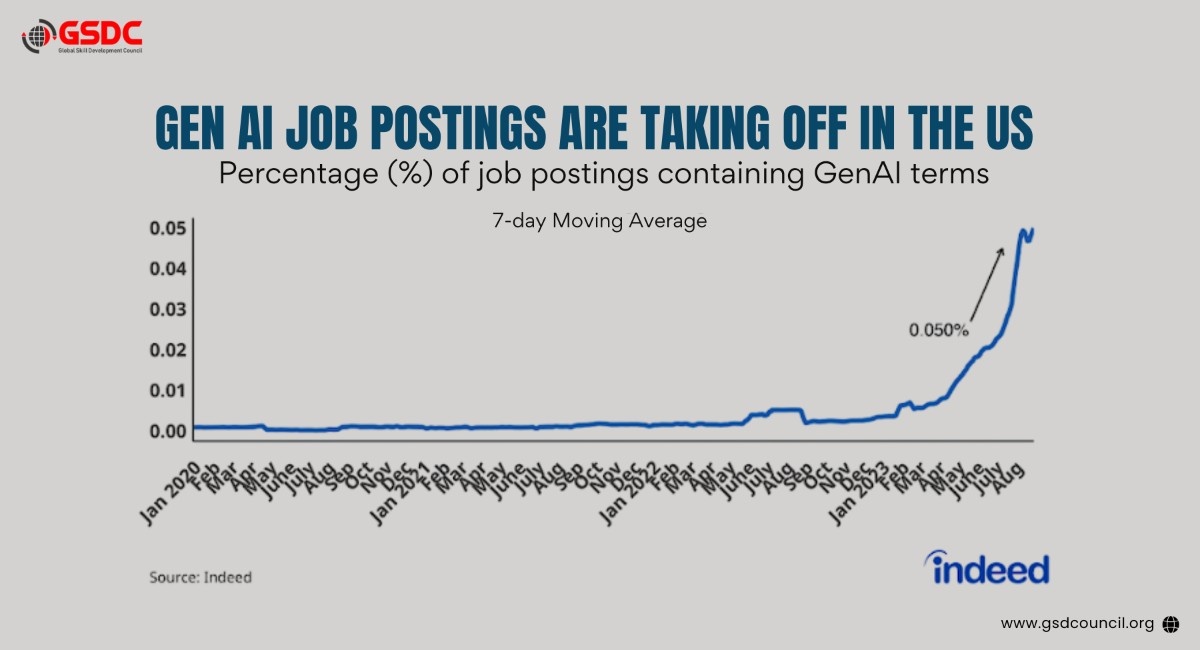
The hiring data indicates a swift increase in job openings requiring generative AI skill sets, and this continues to propel salary increases due to a limited number of professionals who can work with this technology.
Rapid Market Growth
The market for generative AI is increasing rapidly, and this is continuing to create demand for professionals who can work with AI.
Specialized Skill Sets
It is the professionals who thoroughly understand how generative AI works and are able to connect it to business needs who are most sought after. A growing number of businesses are turning to industry-recognized designations, like the Certified Generative AI Expert, as evidence that the person is capable of turning the technology into a practical tool.
Direct Business Impact
When companies leverage generative AI to improve their productivity and make more informed decisions, they are most likely to pay highly talented individuals capable of delivering quantifiable results.
Generative AI Examples in Real Business Use
Some of these real-world applications are reflecting the same environments that emerging areas of generative AI across industries have already identified, where organizations are experimenting with generative AI in practical, production-level workflows. There are more examples in the industry discussion, "Generative AI in Business: 7 Real Use Cases That Are Transforming Industries. "
Marketing and Content (Adobe, HubSpot)
Adobe and HubSpot are examples of companies that produce generative AI, which helps content creation, personalization, and campaign workflows, thus helping the teams to scale the creative output of the artists efficiently.
Customer Support (Amazon, Salesforce)
Amazon and Salesforce, for example, are the types of organizations that use generative AI to completely or partially automate the handling of customers' routine inquiries and to provide summaries of interaction, thus resulting in improved response time and overall service efficiency.
Software Development (GitHub, Google)
GitHub and Google are examples of platforms that incorporate generative AI into the developer's tools to provide help with coding, documentation, and testing, thus enabling faster software deliveries.
Decision Support (Microsoft, IBM)
Among Microsoft and IBM, generative AI is leveraged for summarizing reports and accompanying knowledge workflows; hence, decision, making process is done faster and it is more informed.
Practitioner-led perspectives and industry case studies are increasingly being shared by professional bodies such as the Global Skill Development Council (GSDC), reflecting how generative AI is being applied across real business contexts.
How Does Generative AI Work?
At a high level, generative AI follows a simple flow from learning patterns in data to producing new content based on context and prompts. The visual below breaks this process down into an easy-to-understand sequence.
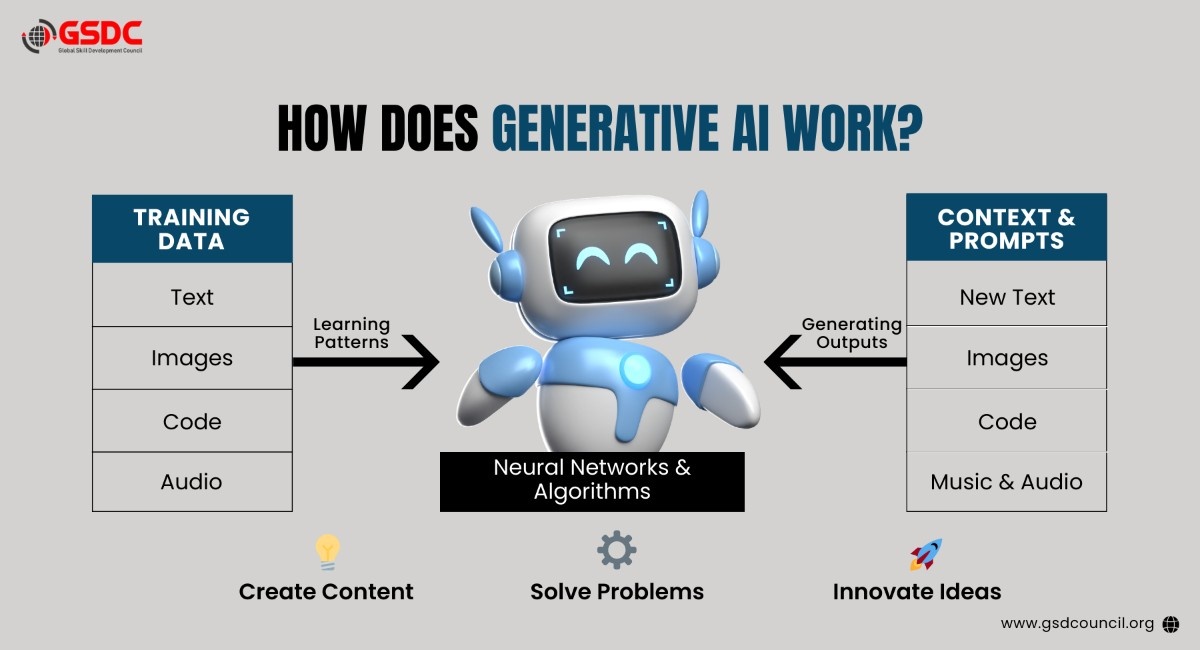
This simple flow explains why professionals who understand how generative AI works can design better prompts, evaluate outputs more effectively, and build AI-driven workflows that create real business value.
Generative AI Career Path: Step-by-Step (with 2026 Salaries)
A generative AI career path is diverse, encompassing technical, applied, and strategic roles. You don't need to start your career as a machine learning engineer; people choose applied AI roles first and advance their careers from there.
Step 1: Entry-Level AI Roles
Roles: Prompt Engineer, AI Analyst, Junior AI Engineer
Focus: Learn how generative AI works and apply AI tools in real workflows.
2026 Salary: ~$60,000–$100,000+
Step 2: Applied Generative AI Specialist
Roles: Generative AI Specialist, AI Solutions Engineer
Focus: Design and improve AI workflows, evaluate outputs, and support business use cases.
2026 Salary: ~$90,000–$140,000+
Step 3: AI Product or Strategy Roles
Roles: AI Product Manager, AI Strategy Lead
Focus: Lead AI initiatives and align generative AI with business goals.
2026 Salary: ~$120,000–$180,000+
Step 4: Senior AI Leadership
Roles: Head of AI, AI Program Lead
Focus: Set AI strategy, governance, and large-scale adoption.
2026 Salary: ~$180,000–$250,000+
How to start a career in generative AI:
Build core AI and prompt skills, get hands-on with real workflows, invest in structured learning, and focus on business impact, not just tools.
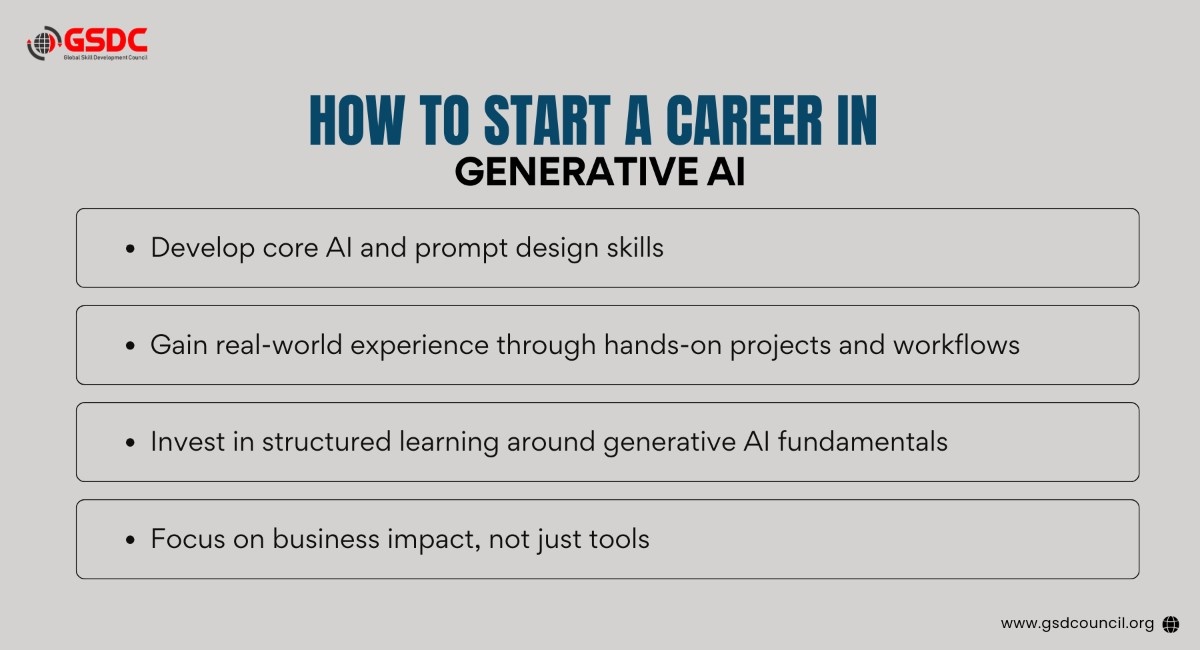
This approach builds a sustainable generative AI career and supports long-term earning potential.
Strengthen Your Generative AI Profile
Generative AI skills are becoming highly sought after, and legitimate credentials that assist professionals in distinguishing themselves. The Global Skill Development Council (GSDC) provides role-based certifications like the Certified Generative AI Expert, which aims to confirm the candidate's practical knowledge of what generative AI is and how it is used in the real world.
Those who want to make a generative AI career their main source of income or are just beginning and wondering how to get into a generative AI career, a professional certification path will undoubtedly build trust and indicate that the person is prepared for AI roles.

The Future of AI Salaries
As companies are implementing AI in a wider array of their operations, there will be a continuous strong demand for professionals who are able to translate AI functionalities into real business value. Generative AI salaries in the future will be more dependent on the evidence of impact rather than the job titles.
This development is also verified by the market forecast, which indicates that the generative AI market will increase from USD 71. 36 billion in 2025 to USD 890. 59 billion by 2032 at a 43. 4% CAGR. Specialists who not only know how generative AI operates but are also able to use it successfully in the context of businesses will most probably have the advantage of continuing their career fields long-term.
Conclusion
Generative AI is an exciting area that will pay well to those who seriously develop the right skills and show real-world impact. Given the upward trend in generative AI salaries, the widening range of business use cases, plus multiple ways to get into a generative AI career, this field will still be one of the most rewarding career paths for the next few years after 2026.
However, building a strong and stable career based on generative AI will be about delivering results, not just using generative AI tools. Those generative AI experts with in-depth knowledge of the technology, as well as the ability to demonstrate practical generative AI applications in real business situations, will be in the best spot to sustain enduring, future-proof careers as the technology keeps advancing.
Within cybersecurity specifically, professionals following the generative ai cybersecurity career path via CGAIC are reaching the $186K–$215K senior band within 12–18 months of certification one of the fastest salary growth trajectories in the AI field.

Related Certifications
Stay up-to-date with the latest news, trends, and resources in GSDC
If you like this read then make sure to check out our previous blogs: Cracking Onboarding Challenges: Fresher Success Unveiled
Not sure which certification to pursue? Our advisors will help you decide!