Human Resources Job Interview Questions and Answers Guide
Written by Matthew Hale
HR interview questions test far more than technical knowledge. Interviewers assess judgment, communication and the ability to handle sensitive people issues with consistency and care. This guide covers 15 common HR interview questions and answers, each with a short note on why the question is asked and a sample response suited to an HR position interview.
Human resource management is the strategic and coherent approach to managing employees so that a business runs effectively and efficiently. The HR department designs, develops and oversees the policies and procedures that guide employees and improve productivity.
The field continues to offer steady opportunity. The U.S. Bureau of Labor Statistics projects 6 percent growth for human resources specialists from 2024 to 2034, faster than the average for all occupations, with about 81,800 openings a year and a median wage of $72,910 as of May 2024. Strong demand draws strong candidates, which makes structured preparation for HR job interview questions a clear advantage.
Interviews for HR roles have also evolved. Panels lean on behavioral and situational questions, hiring teams use AI tools to screen and schedule, and employers expect familiarity with HR technology and data. Several questions below call for a real example from past work, not a textbook definition.
15 Common HR Interview Questions and Answers
These HR questions for interview preparation work best as a framework. Sample answers should be adapted with real details from the candidate's own experience.
1. What is the role of a human resources department?
This question checks understanding of HR fundamentals. For entry-level positions, interviewers want to confirm that the job is clearly understood. At a senior level, the answer reveals strategic thinking and depth of knowledge. A deeper look at learning and development in HR helps build that foundation.
Sample answer:
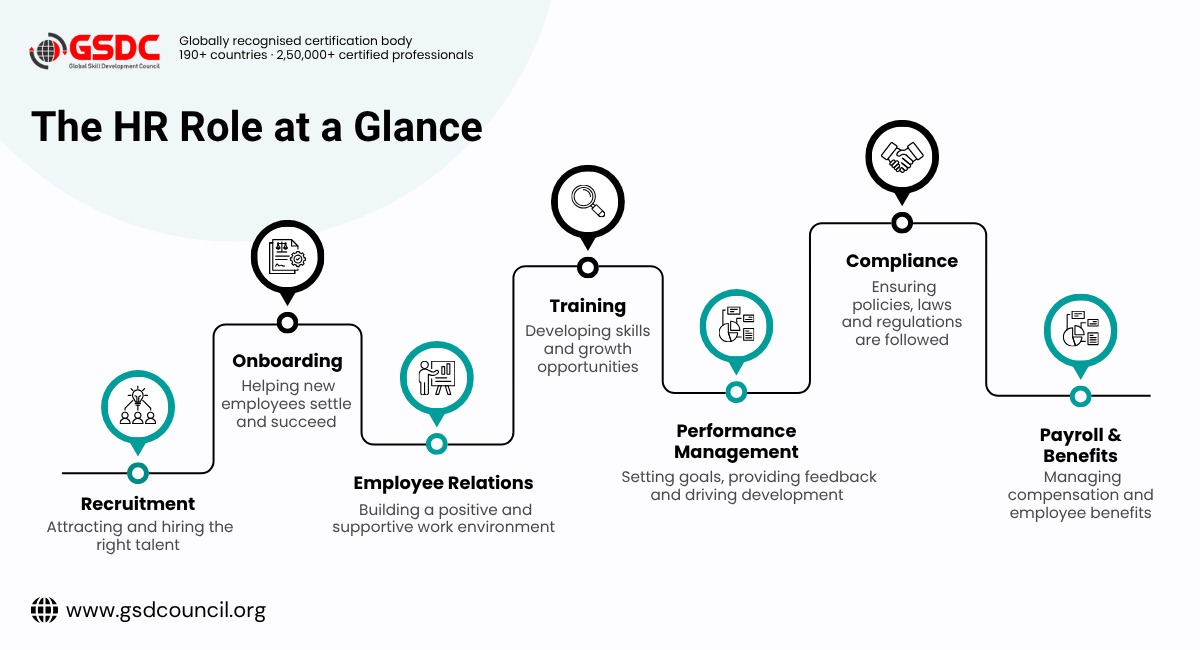
Human resources is responsible for recruitment and selection, onboarding, training, payroll and benefits administration, employee relations, disciplinary action and exit procedures. The department also acts as a link between management and employees, resolving concerns and keeping policies fair and compliant. A well-run HR function shapes company culture and directly supports productivity.
2. What does end-to-end HR process management involve?
Interviewers want evidence of practical exposure to HR operations, so concrete examples carry more weight than a list of duties.
Sample answer:
Managing HR processes covers recruitment, onboarding, employee relations, performance management and offboarding. Strong practice means documenting policies clearly, applying them consistently and reviewing them regularly so that operations stay compliant and run smoothly. The best examples name a specific process that was streamlined and the result it produced.
3. How is a positive workplace culture built and employee engagement sustained?
This is one of the most common human resources job interview questions. It shows how HR is expected to shape the working environment.
Sample answer:
A motivated, engaged workforce is more productive and contributes directly to business success. Culture is built through open communication channels, recognition programs, professional development, inclusive initiatives, autonomy, flexible and hybrid working options, and regular feedback and performance reviews.
4. How is a challenging HR situation, such as organizational change, managed?
This question tests problem-solving skills and the ability to work through complex people issues.
Sample answer:
A common example is resistance to a new performance management system. Employees used to the old evaluation process may struggle with the transition. A strategic and empathetic response includes a clear communication plan, employee workshops and training, open dialogue and feedback sessions, and customized support for those finding the change difficult.
5. How is workplace conflict resolved?
Interviewers use this question to see how conflict is handled and how impartial and structured the approach is.
Sample answer:
Conflict is best addressed promptly and impartially. That means listening to every party, keeping communication channels open, using mediation sessions when needed and documenting the outcome so that a positive, collaborative environment is restored.
6. How are employee grievances and underperformance handled?
This question tests fairness and process discipline, two qualities every HR team depends on.
Sample answer:
Grievances move through a documented, confidential process: acknowledge the complaint, investigate fairly, communicate the outcome and follow up. Underperformance is addressed through clear expectations, regular feedback and, when needed, a structured improvement plan with defined goals and timelines before any formal action is considered.
7. How is confidential information protected in HR?
This question checks understanding of confidentiality, awareness of privacy rules and the safeguards used in practice. It also gauges communication skills, since a strong answer shows openness with employees alongside strict privacy standards.
Sample answer:
Confidentiality is a core part of HR work. Sensitive information is shared only with people who need it to do their work, records are kept in secure systems with controlled access, and cases are never discussed casually. Data protection rules such as GDPR and local privacy laws guide how employee data is collected, stored and deleted. When an employee raises a sensitive matter, the limits of confidentiality, such as safety or legal risk, are explained upfront so that nobody is surprised later.
8. Which employment laws and compliance requirements matter most in HR?
HR errors create legal exposure, so interviewers look for a working knowledge of compliance in the relevant region.
Sample answer:
The specifics depend on location, but core areas typically include equal opportunity and anti-discrimination rules, wage and hour requirements, leave entitlements, workplace health and safety, and data protection. Compliance works best when policies are updated regularly, managers are trained and decisions are documented.
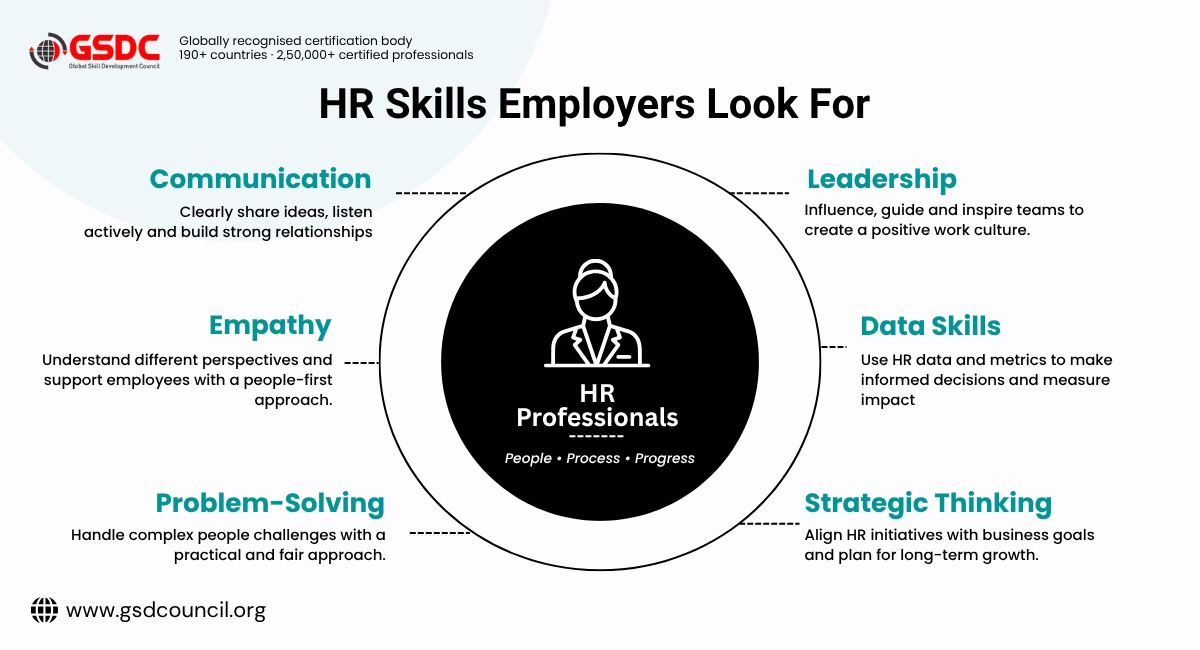
Compliance is also where formal study tends to show in an interview. A structured program such as the Certified Human Resources (HR) Professional Certification can help candidates organize what they know about HR law and policy, which makes answers to questions like this one more precise and easier to back with examples.
9. How is diversity and inclusion built into HR practice?
The interviewer wants to see awareness of this part of the role and how much a diverse workforce is valued.
Sample answer:
Diversity and inclusion are built into everyday HR practice through inclusive hiring, diversity training, employee resource groups and pay and promotion reviews that check for bias. The goal is a workplace where different backgrounds are valued and every employee can contribute fully.
10. How are training and development programs designed and evaluated?
This question tests communication skills, instructional thinking and the ability to link training to results.
Sample answer:
Effective programs begin with a needs assessment, move to engaging and relevant materials and are measured through feedback, skill assessments and performance metrics. Results then guide the next round of improvements.
Training design is an area where structured learning helps. Organizations such as the Global Skill Development Council (GSDC) publish HR and learning and development resources that give candidates a clearer framework for talking about needs analysis, delivery and measurement in an interview.
11. How does effective onboarding work?
The first months shape retention, so interviewers look for a clear, structured view of onboarding.
Sample answer:
Strong onboarding starts before day one with paperwork, equipment and a clear schedule. It continues with role expectations, team introductions, a mentor or buddy and check-ins at 30, 60 and 90 days. Feedback from new hires is then used to refine the process.
12. How is employee turnover analyzed and reduced?
This question shows whether HR decisions are grounded in data rather than assumption.
Sample answer:
Analysis begins with turnover data by team, tenure and role, supported by exit and stay interviews that uncover the real reasons people leave. Common fixes include improving manager quality, clarifying career paths, reviewing pay and benefits, and addressing workload. Progress is tracked against a baseline so that changes can be tested and adjusted.
13. How is the success of HR programs measured?
This question shows whether HR initiatives can be linked to measurable outcomes and business goals.
Sample answer:
Clear objectives are set for every HR initiative and its impact is reviewed regularly. Key performance indicators such as turnover, time to hire and engagement scores are tracked, employee feedback is collected and the strategy is adjusted so that the program keeps improving.
14. How can AI be used responsibly in recruitment and HR decisions?
This is one of the newer HR interview questions and answers topics. It shows awareness of both the efficiency gains and the risks.
Sample answer:
AI works well for repetitive tasks such as drafting job descriptions, screening for basic criteria and scheduling interviews. Final decisions about people stay with trained humans, tools are checked regularly for bias, candidates are told when AI is used and personal data is handled under privacy rules. Transparency and human oversight keep efficiency gains from turning into unfair outcomes.
15. How should a human resources division be managed?
With this question, the interviewer is assessing leadership style and whether it fits the company culture.
Sample answer:
A people-focused, strategic approach aligns the department with the organization's core values and objectives. The first priority is a solid HR team built on cooperation, ongoing learning and honest communication, with a mix of viewpoints and skill sets and visible development of current talent.
In talent acquisition, close work with hiring managers clarifies the needs of every division, so recruiting stays effective and attracts applicants who share the company's values.
These are the interview questions for an HR position that deserve the most preparation. A successful HR specialist combines technical proficiency, a sincere interest in people and a commitment to the shared success of the company and its staff. Candidates stand out by answering to the job requirements, showing a results-oriented mindset and demonstrating the ability to handle delicate HR issues. Self-awareness, confidence and a clear understanding of the company's objectives leave a lasting impression.
Where Formal HR Credentials Fit In
Interview answers carry more weight when they rest on structured knowledge. For candidates early in their careers, or those moving into HR from another field, a recognized human resources certification can fill gaps in areas such as employment law, talent management and HR analytics, and gives concrete material to draw on when an interviewer asks for examples.
The Global Skill Development Council (GSDC) offers one such option, the Certified Human Resources (HR) Professional certification, which covers the core functions discussed above, from recruitment and onboarding to employee relations and performance management. Whether a credential is the right step depends on career stage and goals, so comparing a few HR professional certification options against the target role is a sensible starting point.

Final Thoughts
Preparing for HR interviews helps candidates highlight the skills, background and qualities that make them stand out. Understanding why human resource management matters, and making sure answers reflect the company's values, shapes every response.
Strong communication, problem-solving and a commitment to a healthy company culture carry most of the questions covered here. Thorough preparation, backed by real examples from past work, is what turns a good interview into a convincing one.

Related Certifications
Frequently Asked Questions
Conflict resolution, employee engagement, compliance, confidentiality and HR metrics appear most often. Most interviews also add behavioral questions that ask for a real example from past work.
Examples from internships, academic projects, volunteering or part-time work work well. The focus should be on the skills behind them: communication, empathy, organization and good judgment.
Questions about team structure, the HR tools in use, how success is measured in the role and what the first 90 days look like. These show interest in the work itself, not only the offer.
It can. A credential such as the Certified HR Professional shows investment in the field and provides concrete examples to discuss, which helps most early in a career or when changing roles.
Stay up-to-date with the latest news, trends, and resources in GSDC
If you like this read then make sure to check out our previous blogs: Cracking Onboarding Challenges: Fresher Success Unveiled
Not sure which certification to pursue? Our advisors will help you decide!