HR Transformation in the Age of AI
Written by Emily Hilton
HR trends 2026 show a function at a turning point. AI, economic pressure and changing employee expectations are reshaping the work of HR, yet many teams still run on short-term planning and scattered systems. McKinsey's HR Monitor 2026, drawn from about 1,300 HR professionals and 5,500 employees in ten countries, finds that the shift now needed is from doing HR well to transforming how the whole system works. Deloitte's 2026 Global Human Capital Trends points the same way: leaders want speed and adaptability, but few are making real progress. This report explains what that means and how to respond.
Background: what is HR transformation?
HR transformation is the process of changing how the people function creates value. It covers three areas:
- Processes: how hiring, onboarding, payroll and reviews run
- Technology: the tools, data and automation HR uses
- Mindset: moving from administration to strategic partnership
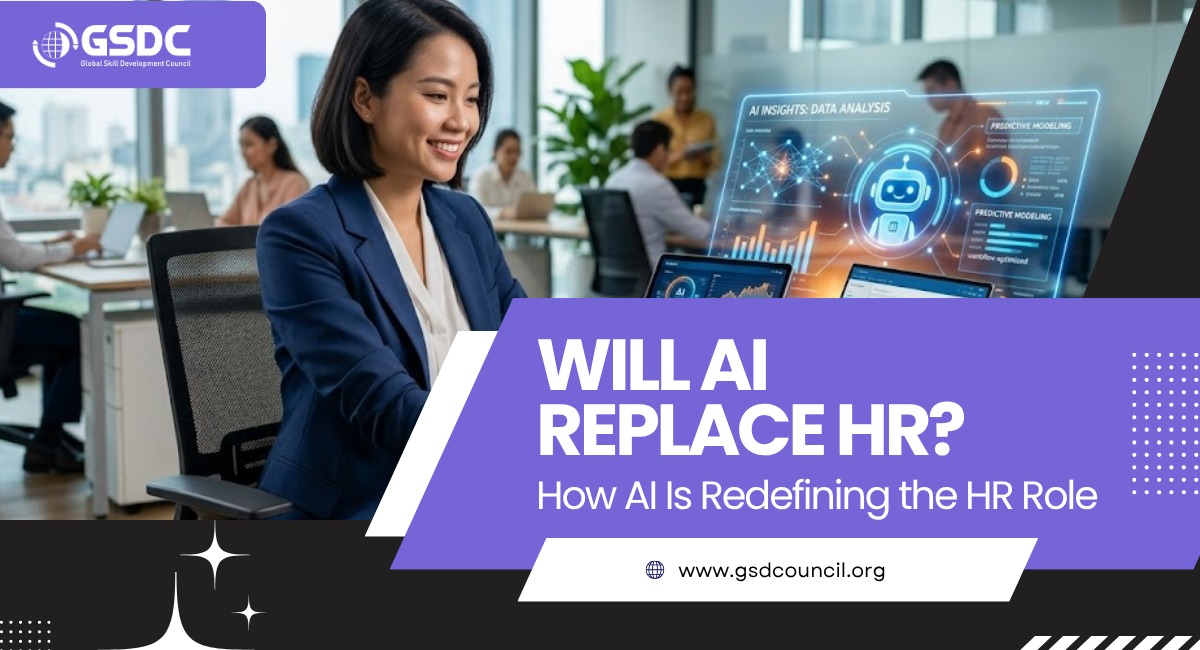
The idea is not new, but AI has raised the stakes. Digital HR transformation is no longer only about moving forms online. It is about deciding which work people should do, which work machines can do, and how the two fit together.
Key findings
Planning still looks at headcount, not skills.
Most organizations plan their workforce for the short term. Only 11% take a strategic, long-term approach. This matters because AI is changing which skills are needed, with demand moving away from routine tasks and toward people-centered and AI-related capabilities.
Hiring has improved, but the process still needs work.
Offer acceptance and hiring success both rose year over year, since the labor market currently favors employers. However, higher application volumes and long hiring cycles remain a risk. AI can help, but only when it sits inside a simple, well-designed process.
Learning and feedback lag behind ambition.
Leaders say development is a priority, yet 24% of employees report no training at all, and more than half receive feedback once a year or never. HR teams also tend to overestimate how much training happens and how much employees value it.
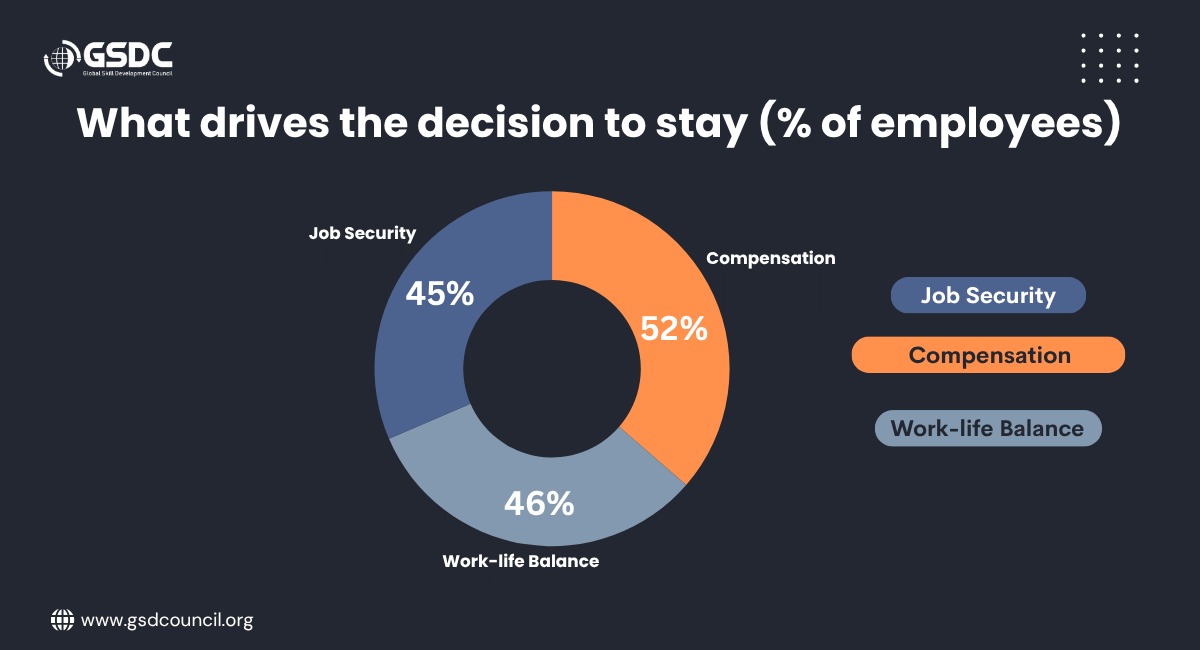
Employees are staying for practical reasons.
Voluntary attrition fell by two percentage points, but the report reads this as caution rather than loyalty. When employees weigh staying or leaving, three factors lead.
AI adoption in HR is slow.
Most organizations are still piloting, mainly in administrative work. Operational use rose by only zero to six percentage points depending on the HR area. Fragmented HR technology and limited skills are the main barriers. The traditional Ulrich model is slowly giving way to more flexible, technology-enabled structures, but most companies sit somewhere in between.
A second view: Deloitte's Global Human Capital Trends
A separate large survey, Deloitte's 2026 Global Human Capital Trends, supports the McKinsey picture. It finds that 7 in 10 business leaders say their main competitive strategy over the next three years is to be fast and nimble. Yet the ability to act on that goal is lagging behind. The table below shows the gap between what leaders say matters and what they are actually achieving.
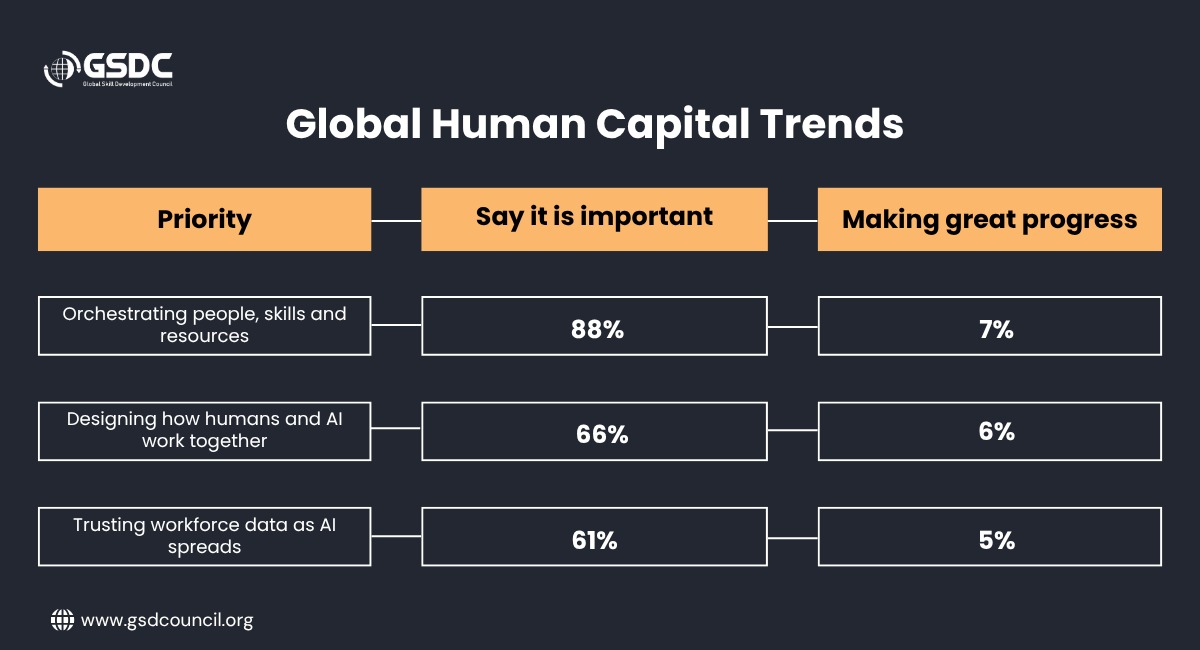
Two further points matter for HR teams:
- Most organizations (59%) take a tech-focused approach to AI. Deloitte research cited in the report says these firms are 1.6 times more likely to miss their expected returns than those taking a human-centric approach.
- 95% of executives worry about the accuracy of the skills data collected on candidates, which shows why clean, trusted people data is the base of any HR analytics effort.
HR analytics and technology
Many of the gaps above trace back to one issue: decisions made without enough evidence. HR analytics addresses this. It means collecting and studying people data, such as attrition, hiring speed, engagement and skills, so that leaders act on facts rather than instinct.
Choosing among the best tools for HR analytics depends on size, budget and data quality. Most teams pick from four categories:
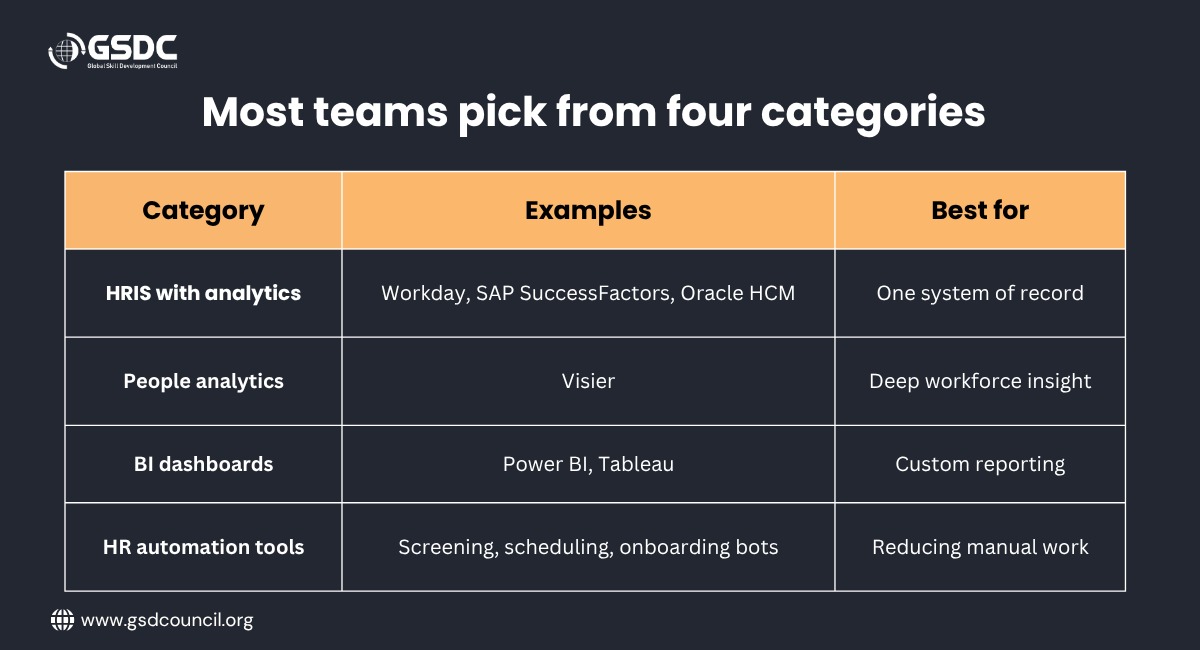
A sound HR technology strategy starts with the business problem, not the product. It asks whether the data is ready, whether people will use the tool, and how success will be measured. Current HR technology trends point toward AI assistants, skills-based talent platforms, unified data layers and stronger checks for bias and privacy.
Implications for HR leaders
The report describes two possible futures. In one, technology moves faster than HR, and more of its work is absorbed by IT and digital teams. In the other, HR takes the lead in shaping how human and AI-driven workforces operate together. The difference will come down to whether HR builds a fact-based view of its own maturity and turns it into clear priorities.
Recommended HR transformation roadmap
Stage | Focus |
1. Assess | Review HR maturity and data quality |
2. Prioritize | Choose two or three high-impact areas |
3. Pilot | Test on a small scale and aim for early wins |
4. Scale | Roll out with training and one shared data source |
5. Improve | Track results and adjust |
Build Future-Ready HR Skills with GSDC
A roadmap only works if the people running it have the right skills. For HR professionals who want to build them, the Global Skill Development Council (GSDC) offers one option. It is an independent, vendor-neutral certification body, accredited by the International Accreditation Service (IAS) under ISO/IEC 17024, the international standard for certifying people.
Its Certified HR Professional certification covers core HR areas such as recruitment, performance management, employee relations and compliance. It can be a useful way to structure your learning and keep up with how the field is changing.
Conclusion
HR does not need a bigger budget to start. It needs a clearer view of where it stands, a skills-first way of planning, and the confidence to use data and AI with care. The teams that build these habits now will be the ones shaping the future of HR rather than reacting to it.

Related Certifications
Stay up-to-date with the latest news, trends, and resources in GSDC
If you like this read then make sure to check out our previous blogs: Cracking Onboarding Challenges: Fresher Success Unveiled
Not sure which certification to pursue? Our advisors will help you decide!