What Is AI-Ready Data? How to Prepare Your Data for Agentic AI
Written by Matthew Hale
- What Is AI-Ready Data?
- Why AI-Ready Data Matters for Agentic AI
- The 5 Characteristics of AI-Ready Data
- AI Data Governance and Protection
- How to Make Your Data AI-Ready and Why It Matters
- Agentic AI Data Readiness Roadmap
- Skills Professionals Need for AI Data Governance
- Where to Build These Skills
- Bringing It All Together
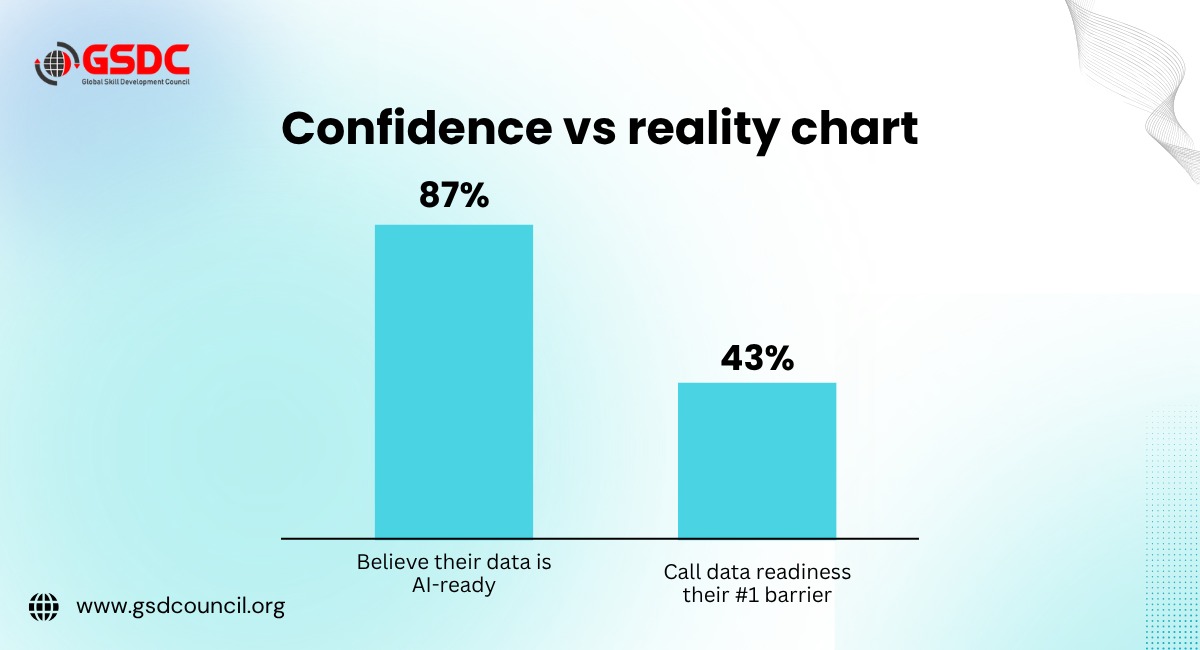
Every company wants to plug agentic AI into its business tomorrow. Far fewer have checked whether their data can actually support it. In a 2026 survey of over 500 data and analytics leaders by Precisely and Drexel University's LeBow College of Business, 87% said their data was ready for AI, but 43% of that same group named data readiness as the biggest barrier standing between them and real AI value. That gap between confidence and reality is exactly where most agentic AI projects quietly fall apart.
This isn't a small technical detail. It's the whole game. Agentic AI systems don't just read your data the way a human analyst does. They act on it: placing orders, approving refunds, updating records, and making decisions in seconds, without a person double checking the number first.
In this blog, we'll break down what "AI-ready" data actually means, why it matters so much for agentic AI, how to build the governance and protection practices that get you there, and what it means for your career if you want to work in this space.
What Is AI-Ready Data?
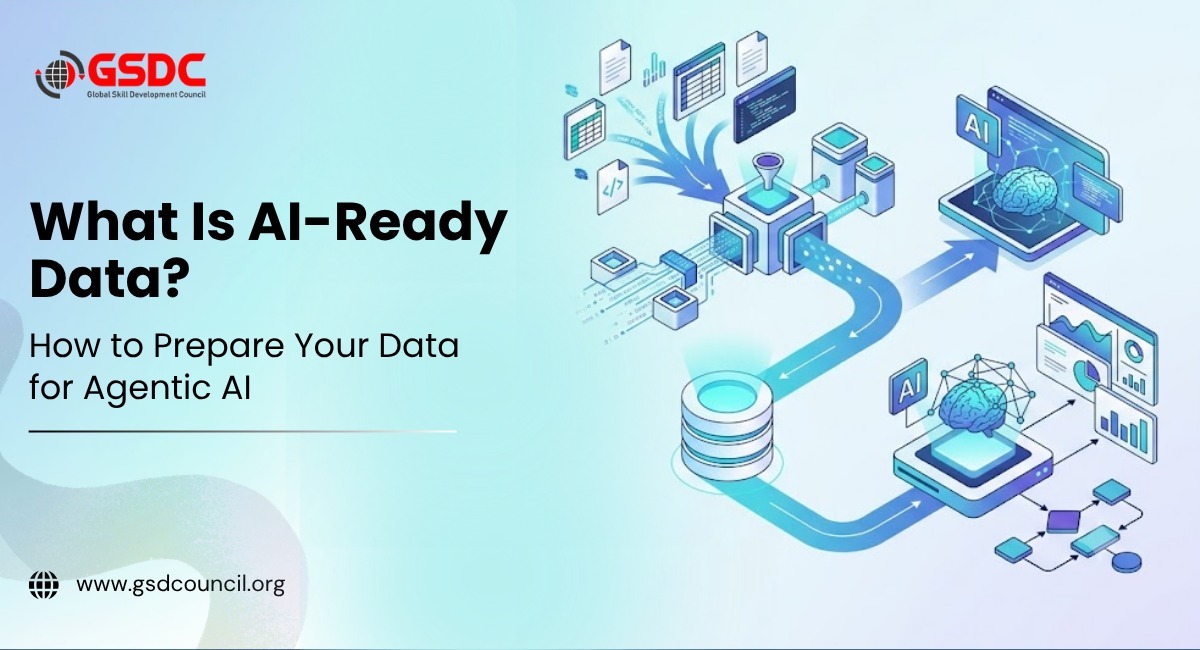
AI-ready data is data that a machine, not a human, can trust, understand, and act on without supervision. That's a much higher bar than "good enough for a dashboard."
For decades, data systems were built for human consumers. A person looking at a report brings context automatically. They know that "revenue" excludes returns, that a suspiciously round number is worth a second look, and that a date falling on a public holiday might explain a dip in sales. Humans fill in these gaps instinctively.
Agents don't have that instinct. They take data at face value and act on it immediately. So everything a human used to figure out on the fly now has to be built directly into the data itself, before the agent ever sees it.
Why AI-Ready Data Matters for Agentic AI
Here's a simple example. Imagine an AI pricing agent asked for the current price of a product. Yesterday, the price changed from $49.99 to $59.99, but the data source hasn't refreshed. The agent has no way of knowing that. It quotes the old price, the customer buys, and the company loses money on every sale, all while the agent believes it did everything right.
A human sales rep would have paused and asked, "Didn't we update this last week?" An agent won't. This is exactly the kind of silent failure that shows up at scale once organizations rely more heavily on agentic systems for real operational decisions.
The cost of this adds up. In KPMG's Q2 2026 Global AI Pulse survey of over 2,100 senior leaders, 49% said they had already scaled back AI agent deployments because operating costs outweighed the benefits. Data readiness gaps can be one reason those costs spiral, leading to bad decisions, rework, and lost trust that add to the overall cost of running agents.
The 5 Characteristics of AI-Ready Data
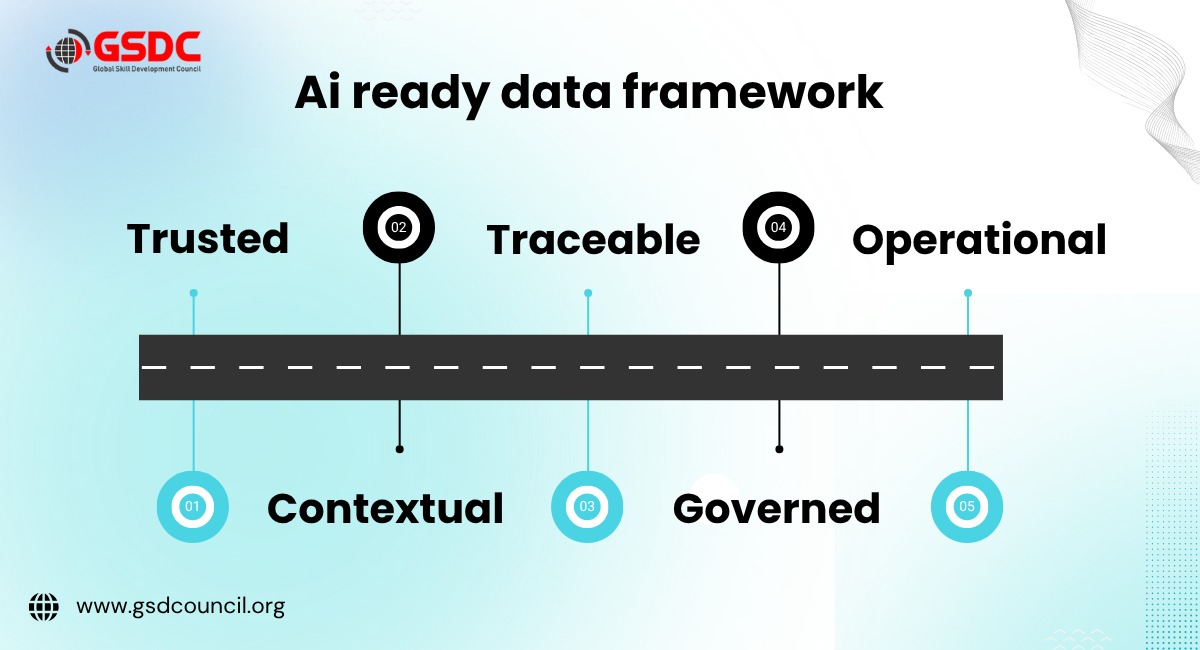
AI-ready data generally has five qualities. Miss even one, and an agent won't fail gracefully the way a person would. It fails confidently, and that's a far more expensive mistake.
- Trusted – Accurate, fresh, and validated before an agent ever touches it.
- Contextual – Business meaning (like what "active customer" means) is defined explicitly, not left to guesswork.
- Traceable – Every action an agent takes can be reconstructed and explained later.
- Governed – Access is scoped, controlled, and auditable by design, not by policy on paper.
Operational – The data isn't just readable. It's connected to systems the agent can actually act on.
AI Data Governance and Protection
Strong data governance is what turns those five qualities from a wish list into something real. It isn't just about locking data down. It's about making sure that whatever an agent touches is accurate, current, and traceable back to its source, and that the agent itself only ever has as much access as its task requires.
On the governance side, a few practical building blocks matter most:
Governance Layer | What It Does | Why Agents Need It |
Data contracts | Define schema, quality rules, and freshness limits as code | Blocks stale or malformed data before it reaches an agent |
Access controls | Scope permissions to the specific task and user | Stops agents from reaching data or systems they shouldn't |
Audit trails | Log what an agent accessed and why | Lets teams reconstruct a decision months later |
Quality gates | Validate data automatically before deployment | Stops bad data from silently poisoning downstream decisions |
On the protection side, three practices matter most as agents gain more autonomy:
- Delegated access – An agent acting on behalf of a specific user should only have that user's permissions, not a broad shared service account.
- Just-in-time credentials – Instead of permanent API keys, issue short-lived tokens scoped to a single task, which expire the moment the task is done.
- Least privilege – Give agents only the access their specific task requires, nothing more.
Together, these protect against what security researchers call the "lethal trifecta": an agent with access to private data, exposure to untrusted content, and a way to send information externally. Close off any one of those three, and the risk of a hijacked agent quietly leaking sensitive data drops sharply.
Think of it like hiring a new employee. You wouldn't hand a first-day hire the keys to every system and hope for the best. You'd give them scoped access, clear rules, and a way to check their work. Agentic AI needs the same discipline, except the "employee" here can act at machine speed, which means mistakes multiply just as fast as good decisions do.
Getting good at this, writing data contracts, setting up audit trails, designing least-privilege access, is largely what a credential like the Agentic AI Professional Certification is built to test for, which says something about how central this work has become to agentic AI roles.
How to Make Your Data AI-Ready and Why It Matters
Making data AI-ready isn't a single project you finish and move on from. It's a discipline you build in stages, and the order matters because each layer depends on the one below it.
- Set freshness rules for every dataset an agent touches.
A pricing table might be fine on a nightly refresh for a dashboard, but a quoting agent may need near real-time updates.
- Add quality checks before data reaches agent-facing storage.
Start with your highest-risk datasets, like pricing, inventory, and customer records. Route agents through this certified layer only, never raw or unvalidated tables.
- Define your metrics once, in one place.
Most organizations have multiple, conflicting definitions of "revenue" or "active customer." Agents will pick whichever one they stumble on unless you fix this first.
- Build in traceability from day one.
Every agent action should log what it did, what data it used, and why. Retrofitting this later is far harder than building it in from the start.
- Grant autonomy gradually.
Start with agents that only recommend actions for a human to approve. Move to full autonomy only once you've proven accuracy over time.
You can't add meaningful context to data you can't trust, and you can't safely let an agent act without that context in place. Skipping ahead is exactly why so many agentic AI pilots stall after the demo stage.
This staged approach is also roughly how GSDC structures its learning paths for this space: foundations first, then context, then controlled autonomy. It's a useful way to think about upskilling a team, not just building the data stack.
Agentic AI Data Readiness Roadmap
If you're building this out at an organizational level, resist the urge to tackle everything at once. A realistic roadmap usually looks like this:
- Phase 1: Foundation – Data contracts, quality gates, and governance basics on your highest-risk datasets.
- Phase 2: Context – Clear, agreed definitions for your core business metrics and entities.
- Phase 3: Controlled access – Read-only access for agents first, expanding to real-time queries and write access only under strict governance.
- Phase 4: Scaled autonomy – Gradual rollout from shadow mode (agent recommends, human decides) to full autonomy, backed by continuous monitoring.
Organizations that skip straight to Phase 4 without the earlier foundation are the ones most likely to show up in the "costs exceeding benefits" statistic mentioned earlier.
Skills Professionals Need for AI Data Governance
Everything above, data contracts, governance, protection, and staged autonomy, has to be built and maintained by people. That's created real demand for agentic AI roles like data governance specialists, AI data architects, and agentic AI engineers, and the skills behind them are fairly consistent:
- Data governance and data contract design
- Understanding of semantic layers and metric definitions
- Familiarity with agent frameworks and access protocols
- Risk assessment for autonomous systems
- Security practices for AI-driven access control
These are the exact skills this article has walked through. Someone who can define a data contract, set up a quarantine process, or design least-privilege access for an agent is someone who can make an agentic AI rollout succeed instead of stall.
Where to Build These Skills
Because agentic AI hiring is still catching up to demand, most professionals working in this space today are self-taught or learned on the job, which means skill levels vary a lot even among people with similar titles. Employers are starting to notice this gap too, especially when it comes to the practical side: data governance, access control, and readiness for autonomous systems, rather than just knowing how to prompt a model.
This is part of why structured learning paths and certifications have started to matter more in this field. The Global Skill Development Council (GSDC), for instance, offers an Agentic AI Professional Certification built around the kind of practical, real-world work covered in this guide, aimed at both individuals building a career in this space and teams looking to upskill existing staff internally.
A certification like this doesn't replace hands-on experience, but it does give employers and hiring managers a clearer way to see that someone understands the fundamentals covered here, rather than just the buzzwords.

Bringing It All Together
Agentic AI doesn't fail because the model isn't smart enough. It fails because the data underneath it was never built for a consumer that acts without hesitation. Getting to genuine AI-ready data means treating governance, protection, and readiness as one connected system, not separate checkboxes tackled in isolation.
The organizations that get this right won't be the ones with the flashiest agent demos. They'll be the ones that quietly did the unglamorous work of contracts, ownership, and traceability first, and built the skills to keep doing it as agentic AI takes on more.

Related Certifications
Frequently Asked Questions
AI-ready data is data that's trusted, contextual, traceable, governed, and operational enough for an agent to act on without a human checking it first. Clean data isn't automatically AI-ready if it lacks freshness guarantees or clear metric definitions.
The terms are used interchangeably. Both mean the policies and controls that keep data accurate and properly scoped before agents use it. The main shift is that rules once left to human judgment now have to be enforced automatically.
It means routing agents through validated data only, quarantining anything that fails a quality check, applying freshness rules to structured and unstructured data alike, and reviewing agent query patterns to catch new gaps early.
The core agentic AI skills are data governance and contract design, semantic layers and metric definitions, agent frameworks and access protocols, and scoped access security. Most agentic AI roles are built on this same skill set.
It depends where you're starting from. It won't replace hands-on experience with agentic AI tools, but it gives hiring managers a faster way to verify you understand data governance fundamentals, especially useful for agentic AI engineer jobs when your practical experience is still limited.
Stay up-to-date with the latest news, trends, and resources in GSDC
If you like this read then make sure to check out our previous blogs: Cracking Onboarding Challenges: Fresher Success Unveiled
Not sure which certification to pursue? Our advisors will help you decide!